· Car Removals Whangarei
Car Removal Northland: The Complete Local Guide
A dead car on a Northland farm rarely becomes a problem at a convenient time. It may be a non-running sedan blocking a shed, a flood-damaged vehicle sitting in a Whangārei driveway, or an old ute that has slowly become part of the property. The practical question isn't only who can tow it away. You also need to know what it's worth, how it will be loaded, whether hazardous components are handled properly, and when your responsibility to NZTA truly ends.
Car removal in Northland works best when the dismantler treats the job as a complete disposal process rather than a simple tow. That means assessing the vehicle thoroughly, planning access, recovering reusable parts, managing scrap metal, and completing the correct ownership notification at handover.
Table of Contents
- Understanding the Northland Vehicle Disposal Landscape
- How Scrap Car Pricing and Phone Quotes Actually Work
- Navigating Free Towing and Rural Pickup Logistics
- Specialized Handling for EVs, Trucks, and Write-Offs
- Mastering NZTA Ownership Transfer and Liability Timing
- Environmental Compliance and Licensed Dismantling Standards
- Preparing Your Vehicle for a Seamless Same-Day Handover
Understanding the Northland Vehicle Disposal Landscape
A vehicle can look worthless from the driver's seat and still have value to a dismantler. A failed engine may leave a van immobile, but its gearbox, doors, wheels, interior, electronics, or catalytic components may remain useful. A damaged 4WD may be unsuitable for repair yet valuable as a source of parts. Even a stripped shell has a metal value, provided the yard can collect and process it safely.
Northland has the vehicle base and recovery infrastructure to support this kind of work. The NZ motor vehicle register records about 129,646 registered vehicles in Whangārei District, placing the district seventh among territorial authorities nationwide and representing roughly 2.2% of all registered vehicles in New Zealand. Passenger cars and vans make up nearly two-thirds of the national registered fleet, which helps explain the steady flow of unwanted, damaged, and replacement vehicles into the local disposal market. These figures are reported through the NZ vehicle fleet and Whangārei District data.
Why local recovery matters
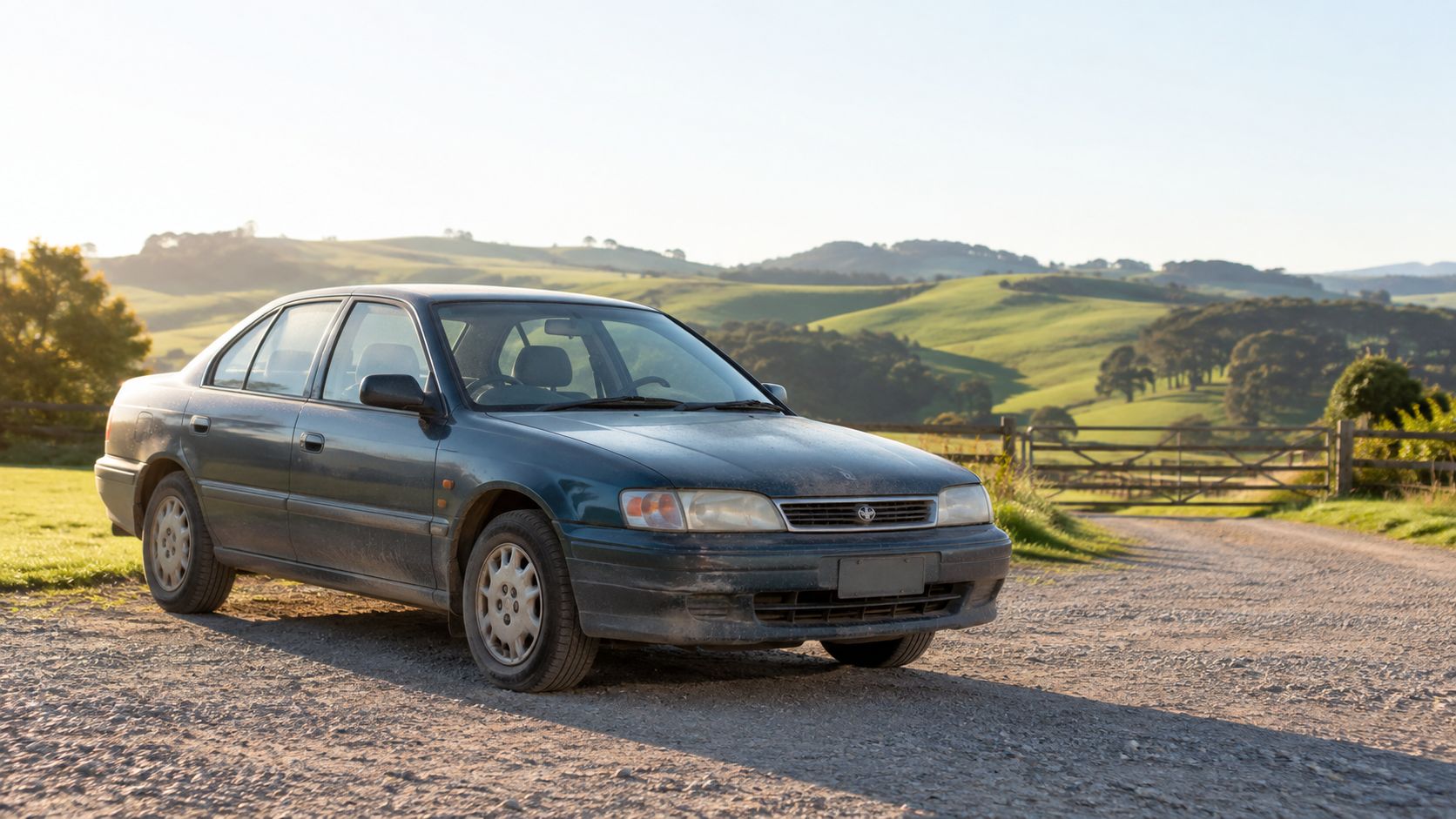
A rural pickup has different requirements from a city collection. The car may be parked behind a locked gate, down a narrow farm track, partly sunk into soft ground, or surrounded by machinery. A dismantler with local knowledge can ask the useful questions before dispatching a truck, including whether the vehicle rolls, whether the site has turning room, and whether another vehicle is blocking access.
Northland's wider waste system already handles substantial metal and construction recovery. Northland Waste's May 2025 reporting records repeated scrap-metal movements from transfer stations in Whangārei, Kaikohe, Waipāpa, and nearby settlements. The same reporting states that the company recycled 30,000 tonnes of commodity recycling in the prior year and kept more than 15,000 tonnes of construction waste out of landfill. That established recovery network creates a practical setting for vehicle dismantling, parts recovery, and responsible metal processing.
The right operator doesn't just make a car disappear. They identify what can be reused, isolate what is hazardous, recover the metal stream, and leave the owner with a clear record of the handover.
How Scrap Car Pricing and Phone Quotes Actually Work
There isn't one flat scrap-car price in New Zealand. A dismantler normally considers two separate sources of value, the vehicle's kerb weight and the value of its recoverable parts. The balance changes with the model, condition, completeness, current parts demand, and the cost of collecting it.
Kerb weight matters because a complete car contains ferrous and non-ferrous metals that can enter established recycling channels. Official guidance confirms that unwanted vehicles can be sold to a recycler or wrecker as scrap metal. Market commentary published in 2026 cites an average scrap-car payout of about $834, with a 12-month range of $769 to $957, while ferrous benchmark pricing was around $120 per tonne for a complete car compared with $100 per tonne for a stripped car. The figures are provided in the Ministry of Transport guidance on scrapping a vehicle.
Those benchmarks explain why a complete, rolling vehicle usually attracts a better offer than a bare shell. The dismantler receives more usable material, spends less time dealing with missing components, and may be able to recover saleable assemblies before the remaining metal is processed.
What raises or lowers an offer
| Vehicle Condition | Primary Value Driver | Relative Payout Potential |
|---|---|---|
| Complete, rolling vehicle | Metal weight plus reusable parts | Higher |
| Non-running vehicle with major components intact | Parts demand and accessible metal | Variable to higher |
| Accident-damaged vehicle | Model-specific parts and salvageable assemblies | Variable |
| Stripped or rusted shell | Recoverable ferrous metal | Lower |
| Non-rolling shell with difficult access | Metal value reduced by loading cost | Often lower |
A blown motor doesn't automatically make a vehicle low value. A popular ute or van may still provide doors, panels, axles, transmissions, seats, control modules, or glass that customers need. Conversely, a tidy-looking older car may produce a modest offer if its parts have little demand and its metal is the main remaining value.
What a firm phone quote requires
Give the buyer more than the registration number. Describe the make, model, year if known, engine type, damage, missing parts, wheel condition, whether it rolls, and the pickup location. Photos can help where access is awkward or the vehicle has been damaged by water, fire, or an accident.
A firm quote should reflect the information supplied. Ask whether the offer includes towing and whether the amount can change at pickup. A clear process should not introduce a surprise transport deduction because the car is further from the yard, nor should it reduce the agreed amount because the engine doesn't start when that fact was disclosed in advance. For a practical explanation of how completeness and condition affect value, see how cars sold for scrap are assessed.
Navigating Free Towing and Rural Pickup Logistics
Northland's distance and terrain make collection planning part of the valuation. A tow truck that can load a rolling hatchback on a paved Whangārei street may not be the right equipment for a seized ute behind a farm shed. The owner can prevent most delays by describing the site accurately before the booking is confirmed.
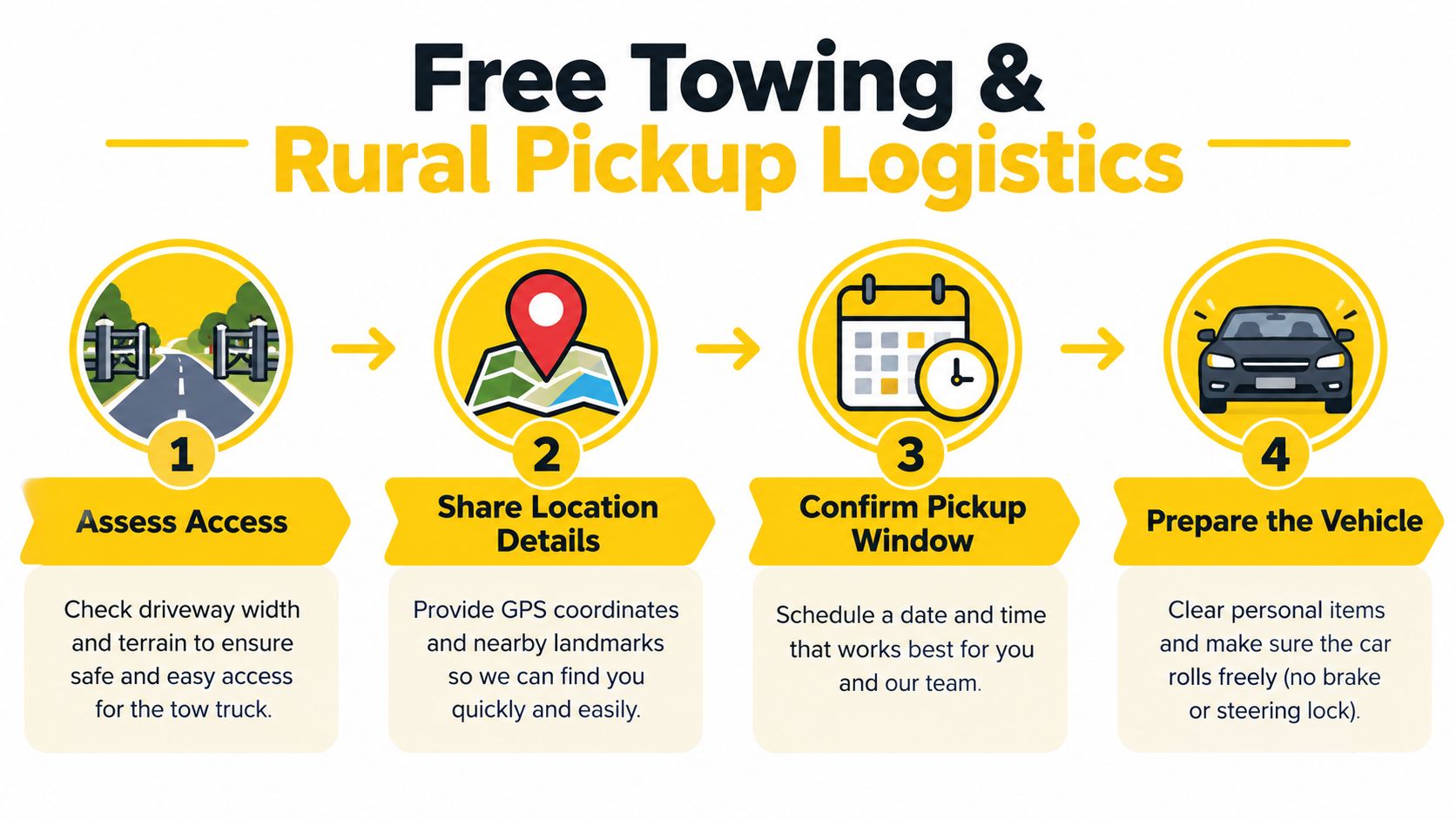
A useful rural pickup follows a simple sequence:
- Assess access. Check the width of the driveway, the gate opening, overhead branches, slope, surface, and turning area. Tell the operator if the vehicle is nose-in against a building or surrounded by other equipment.
- Share location details. A rural address may cover a large property. Provide a GPS pin, entrance description, nearby landmark, and the best phone number for the driver.
- Confirm the pickup window. City collections can often be organised on the same day, while rural Northland removals are commonly arranged around scheduled routes. A planned run usually gives better timing than promising an immediate arrival across a wide area.
- Prepare the vehicle. Remove personal property, grant the driver access, release the handbrake if safe, and mention whether the wheels turn. Don't attempt to make a dangerous vehicle roll without suitable help.
Why owned equipment changes the pickup
An owned tow fleet gives the removal company more control over timing, loading methods, and communication. It also reduces the hand-offs that occur when a buyer sends a third-party contractor who hasn't seen the vehicle details. For a non-rolling car, the operator may need winching equipment, skates, a tilt tray, or enough room to approach the vehicle from a safe angle.
The practical service area around Whangārei can extend to roughly 100 km, so the job may be handled as a city collection or as part of a rural route. Operating availability is commonly organised within a 7am to 7pm window, with urgent city disposals handled sooner when a truck is nearby. Rural owners should give as much notice as possible, particularly where a vehicle is behind a locked gate or needs extra loading equipment.
Don't conceal difficult access to secure a quick booking. Accurate information lets the operator send the right truck and avoids a failed visit. Guidance on planning the vehicle collection is available in this Whangārei tow truck service guide.
Specialized Handling for EVs, Trucks, and Write-Offs
A conventional petrol car, a hybrid, a battery electric vehicle, and a light truck shouldn't all enter the yard through the same process. Their weight, loading points, stored energy, fluid systems, and parts markets differ. The safest quote begins with identifying the vehicle category before anyone attempts to move it.
EV and hybrid vehicles need a different assessment
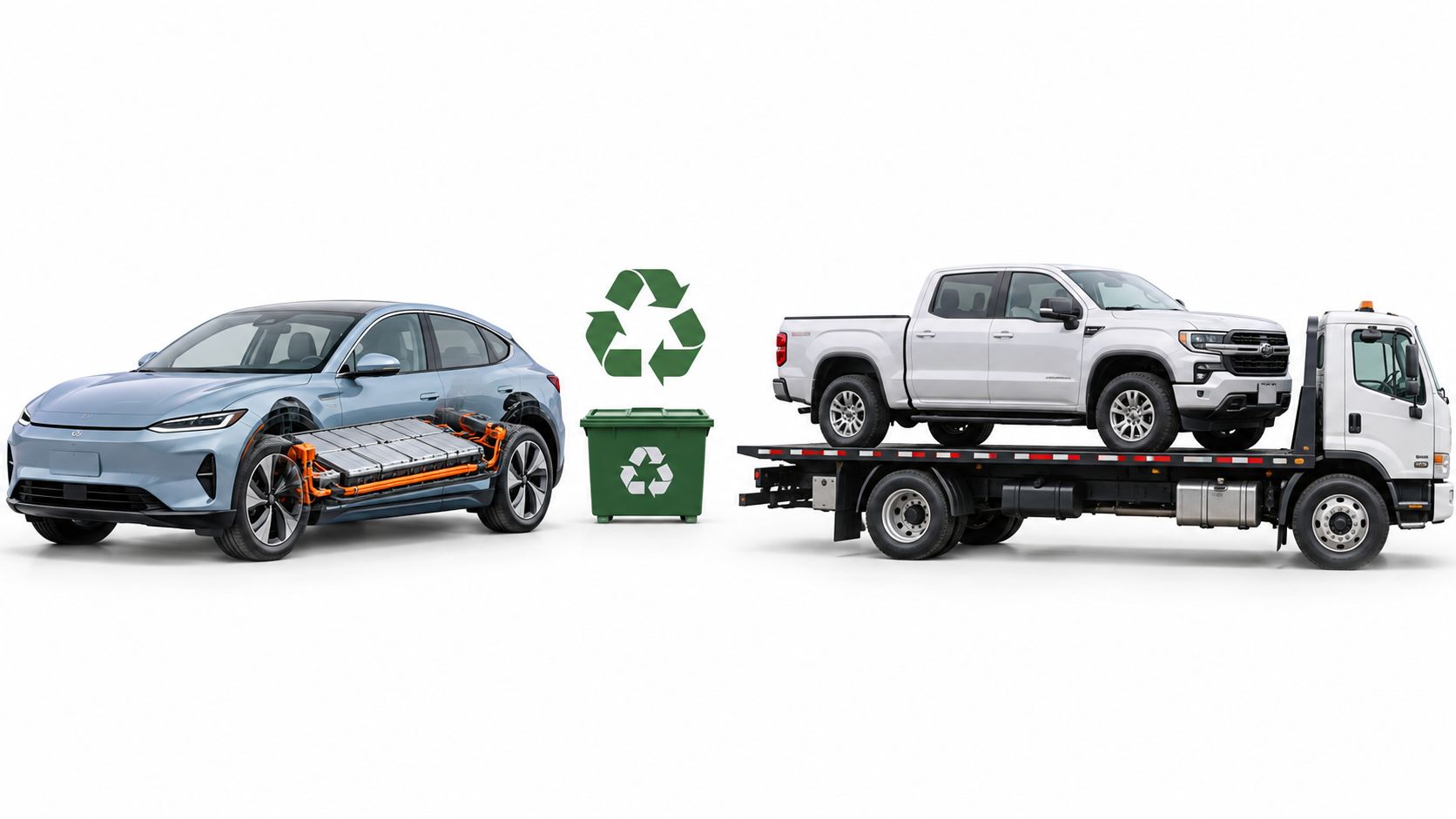
High-voltage systems create a safety issue that ordinary scrap pages often skip. A damaged EV may still contain a charged traction battery, and an imported hybrid may use a battery chemistry or configuration unfamiliar to a general towing operator. Battery condition, isolation requirements, and downstream recovery can affect both the safe handling plan and the payout.
Northland coverage of this issue remains limited. Independent local material notes that New Zealand still lacks a complete end-of-life EV battery system and doesn't provide official guidance for some ageing nickel-metal hydride batteries found in imported hybrids. The practical question is therefore not just whether someone can tow the vehicle. It is whether the operator can identify the system, isolate it safely, and explain how battery condition affects the offer. The safety and valuation gap is discussed in this local guide to cars for parts.
Don't cut orange high-voltage cables, remove a battery pack, or probe damaged components yourself. Tell the removal company if the vehicle has been in a crash, exposed to flooding, or shows warning lights, smoke, heat, or physical battery damage.
Heavy vehicles require access planning
Light trucks, buses, tractors, diggers, implements, utes, and 4WDs may need on-site assessment before a price is finalised. A seized engine isn't the only concern. Rusted chassis sections, oversized tyres, sunk wheels, uneven ground, and limited clearance can determine which loading equipment is safe.
A complete truck may carry valuable drivetrain or body components, but its weight and dimensions can increase recovery cost. A heavily damaged machine may be worth more as parts than as bare steel, yet only if the operator can load it without creating a risk to people, buildings, or nearby equipment.
Write-offs need paperwork as well as transport
Flood, fire, hail, accident, and statutory write-offs can follow a different disposal route from an ordinary unwanted car. Have insurer correspondence, deregistration information, keys, and ownership details ready. The operator should establish whether the vehicle is available for disposal and what documentation is needed before removing it.
That approach is often more straightforward than sending a damaged vehicle through an uncertain salvage process. It also prevents a write-off from being treated like a normal scrap car when its legal and safety status needs closer attention.
Mastering NZTA Ownership Transfer and Liability Timing
Handing over the keys isn't the same as completing the legal disposal. If the vehicle leaves your property but the Motor Vehicle Register still records you as the registered person, you may remain exposed to problems connected with the vehicle.
NZTA says a vehicle's registered person must be changed when the vehicle is sold, given away, or otherwise disposed of. Both buyer and seller have obligations to notify NZTA, and the seller should make sure the record is updated rather than assuming the other party will do it. The NZTA ownership transfer guidance warns that a seller can remain exposed to the buyer's fees, fines, tolls, or speeding tickets until the change is recorded.
Disposal covers more than a private sale
The obligation applies when a vehicle is sold, destroyed, removed permanently, written off, or becomes permanently useless. If the car is no longer roadworthy, deregistration may also be appropriate. NZTA's vehicle buying and selling guidance states that the seller must notify NZTA immediately when a vehicle is sold or disposed of, including when it is destroyed.
That matters for a car sitting on a farm, rural section, shared driveway, body corporate site, or commercial yard. The vehicle may be out of your possession physically, but the paperwork determines whether the record has moved on.
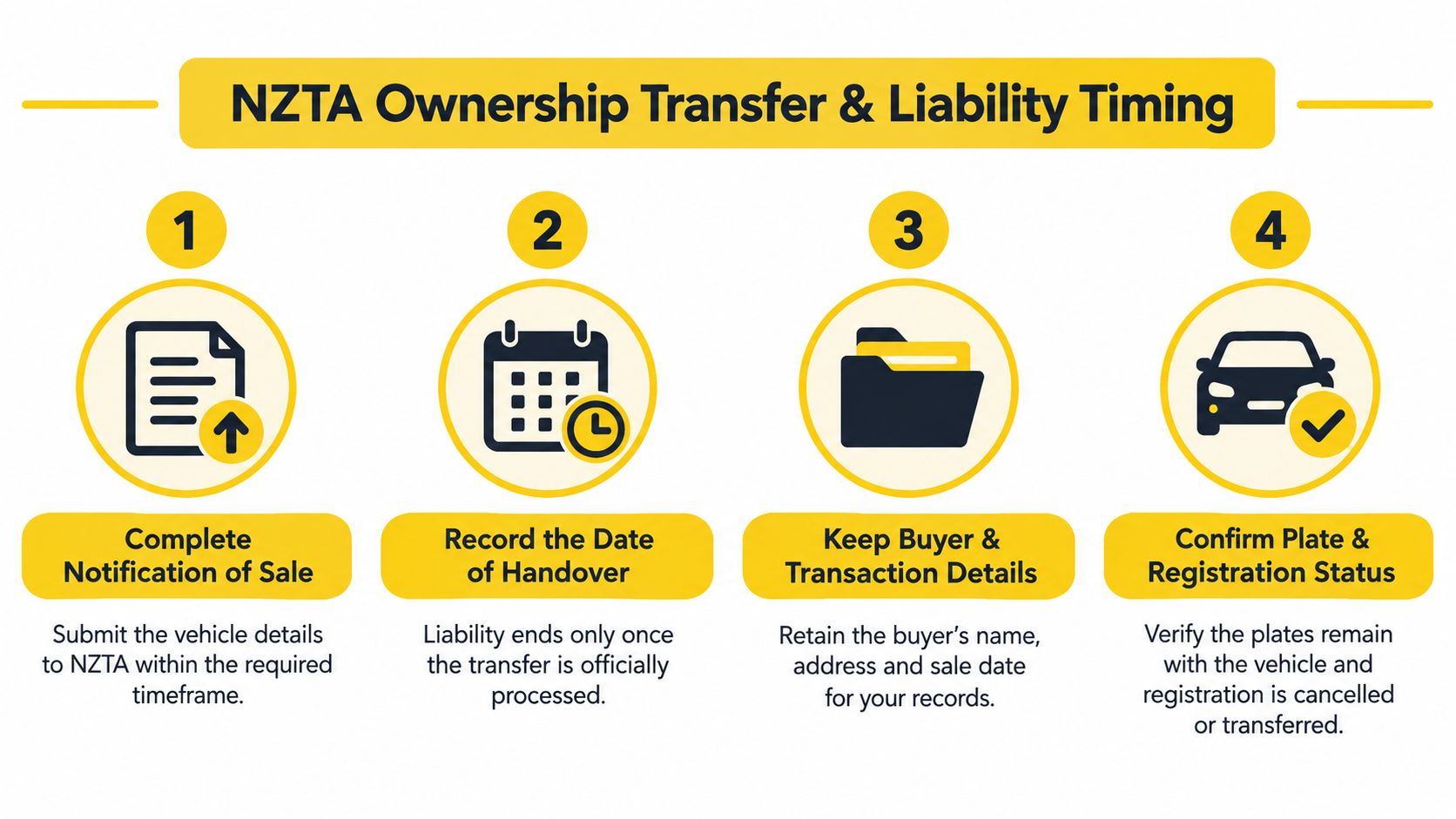
Practical rule: Record the handover date, the buyer's details, the vehicle registration, and confirmation that the disposal notification was submitted.
What should happen at pickup
A professional removal process should deal with the notification at handover, not leave the owner to remember it later. Ask who is completing the NZTA transaction, what information is required, and how you'll receive confirmation. If the vehicle is being removed on behalf of a landlord, farm owner, insurer, or body corporate, the operator may also need proof that the person arranging removal is entitled to authorise it.
For an abandoned vehicle, don't assume that possession of the site makes you the owner. Establish who is the registered person or who is legally entitled to authorise disposal, then keep a written record of that authorisation. Councils may deal differently with abandoned vehicles, and removal, storage, or disposal costs can become an issue when responsibility hasn't been clarified.
The safe sequence is simple. Confirm authority, record the handover, submit the disposal notification, and retain the transaction details. A truck leaving the driveway is only one part of closing the liability loop.
Environmental Compliance and Licensed Dismantling Standards
A scrap vehicle is a bundle of recoverable materials and hazardous components. Crushing it without preparation can release fuel, oil, coolant, battery chemicals, or other contaminants into the yard and surrounding ground. Responsible dismantling separates those risks before the metal enters the recycling stream.
WorkSafe's metal-recycling guidance identifies vehicle components that must be removed before processing, including fuel tanks, batteries, oil, coolants, airbags, and seat-belt pre-tensioners. These items require controlled handling rather than casual disposal. The guidance is summarised in this vehicle dismantling and hazardous-component resource.
What compliant processing looks like
The dismantler should first stabilise the vehicle and identify stored energy, fluids, and pressurised or explosive systems. Batteries are separated, fluids are drained into suitable containers, airbags and pre-tensioners are made safe, and tyres or other reusable materials are directed to the appropriate recovery route.
After depollution, the vehicle can be dismantled for usable parts. Doors, lights, engines, transmissions, wheels, electronic modules, and interior components may be tested or graded before the remaining shell is sent into a metal recovery stream. That sequence protects workers and improves the chance that the vehicle produces useful value instead of becoming an uncontrolled waste load.
Northland already has active scrap-metal and recycling movements through transfer stations and regional recovery facilities. The Northland Waste reporting described earlier records multiple scrap-metal consignments during May 2025, alongside the organisation's recovery of 30,000 tonnes of commodity recycling in the prior year and more than 15,000 tonnes of construction waste. Those figures appear in the Far North District Council meeting attachment on waste and recycling activity.
Choosing a licensed dismantler connects your unwanted car to that recovery chain. It also gives you a clear answer when you need to know whether fluids, batteries, airbags, and metals were handled as separate waste streams rather than mixed into a general load. More detail on the disposal process is available in this New Zealand vehicle disposal guide.
Preparing Your Vehicle for a Seamless Same-Day Handover
A few minutes of preparation can prevent a missed collection. Remove personal items from the cabin, boot, glovebox, tool tray, and under-seat storage. Check for documents, garage remotes, child seats, toll tags, aftermarket stereos, roof racks, and accessories you intend to keep.
Have the keys and ownership paperwork ready, and tell the operator about missing keys, flat tyres, locked steering, seized wheels, flood damage, or a vehicle that doesn't roll. Clear a path to the car, open gates, secure pets, and make sure the driver can reach the loading position without moving other machinery.
Use this short checklist:
- Personal property: Remove belongings and anything with personal data.
- Accessories: Detach items you want to retain before the truck arrives.
- Documents: Keep registration and ownership information available.
- Access: Open gates and clear branches, trailers, tools, and other obstructions.
- Vehicle condition: Explain whether it starts, rolls, steers, or needs winching.
- Payment: Confirm the agreed amount and payment method before loading.
Payment should be issued before loading by cash or instant bank transfer, with no cheques or hold-backs. For an abandoned vehicle on a shared site or farm, obtain written owner authorisation before booking removal. Landlords, property managers, body corporates, and farm owners should keep that authorisation with the pickup record.
Car removal northland is easiest when the quote, access plan, paperwork, and payment terms are settled before the truck arrives. For a firm, obligation-free phone quote, contact the Whangārei-based team for vehicle assessment, free towing within the local service area, and NZTA notification at handover.
Car Removals Whangarei offers firm phone quotes, free towing for eligible Northland pickups, and removal for cars, vans, 4WDs, trucks, machinery, write-offs, hybrids, and EVs. Visit Car Removals Whangarei to arrange a practical assessment and a clear handover plan.
- car removal northland
- scrap cars whangarei
- cash for cars
- vehicle dismantling
- nzta disposal