· Car Removals Whangarei
How to Sell Car for Cash in Whangarei and Northland
Your car failed its warrant, the repair quote is higher than the car feels worth, and it's now sitting in the driveway taking up space. You don't want strangers test driving it, and you can't legally drive it far anyway. That's exactly the point where a sell car for cash deal makes sense, provided the payment and paperwork are handled properly on the day.
Table of Contents
- Why Older Cars Still Fetch Cash in Northland
- Valuing Your Car Before You Ask for a Quote
- Comparing Ways to Sell an Unwanted Car
- Gathering the Records That Protect You
- Pickup Day From Payment to Ownership Transfer
- Handling EVs, Write-Offs and Abandoned Cars
- Booking a Firm Cash Quote in Whangarei
Why Older Cars Still Fetch Cash in Northland
A rusted hatchback behind a shed in Maungatapere or a ute parked up on a farm near Dargaville looks like a dead end to most private buyers. It won't start, the registration has lapsed, and the tyres are flat. To a dismantler, it's a different calculation.
Age alone doesn't wipe out value. New Zealand's light vehicle fleet had an average age of 14.1 years in 2018, up from 11.7 years in 2000, and almost one in five light vehicles was more than 20 years old. With so many older vehicles still on Northland roads, there's steady demand for the parts that keep them running.
Where the value actually sits
A buyer isn't only paying for a drivable car. Value can come from several places at once:
- Reusable parts: Engines, gearboxes, alternators, panels and interior trim that suit other vehicles of the same model.
- Recoverable metal: Steel in the shell and non-ferrous metal in components such as wheels and radiators.
- Working extras: A good battery, decent tyres, a tow bar or a canopy on a ute can lift a quote.
That's why a car with a blown motor can still fetch cash if the body is straight, and why a rusted shell with a healthy engine isn't worthless either. The reverse is also true. A stripped car missing its catalytic converter, wheels and battery will price much lower than a complete one, even if both look similar from the road.
For you, the trade-off is simple. Paying for repairs, a fresh warrant and advertising might get a higher private price, but it costs money up front with no guarantee of a buyer. A cash sale swaps that uncertainty for a fixed amount and a cleared driveway. The key is knowing what your car really contains before you ring for a quote.
Valuing Your Car Before You Ask for a Quote
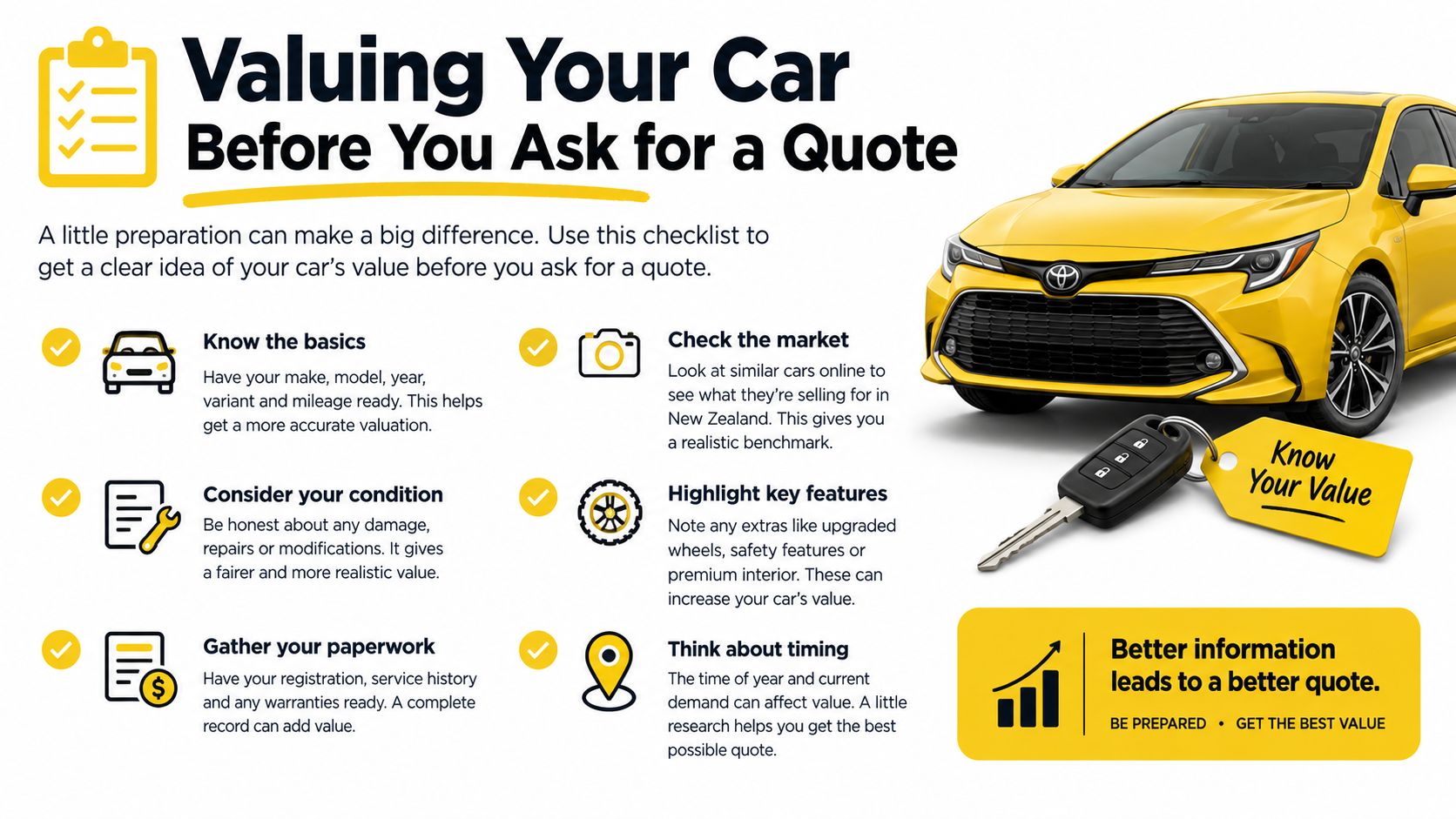
A long-idle car on a Northland farm can look like scrap, but whether it rolls, what parts remain and how it can be collected all affect the offer. You don't need mechanical training to give a buyer a useful first assessment. Start with what you can see and describe.
Does it roll? A vehicle with inflated tyres that moves freely is quicker to winch onto a truck than a seized shell sitting on rims in long grass. Check whether the engine turns over, starts and whether the gearbox engages. Note visible problems such as rust through the sills, a smashed windscreen or panels already removed.
How a buyer builds the number
A buyer weighs recoverable parts, ferrous and non-ferrous metal, transport and hazardous-material handling. Your car is priced on the parts that can be reused and the metal that can be recovered, less the cost of collection and handling items such as fluids, batteries and tyres.
Clear photos help turn an initial estimate into a firmer quote. Before calling, take pictures of:
- Engine bay and odometer: Shows whether key parts are present and gives a sense of wear.
- All four sides: Reveals panel damage, rust and missing parts.
- Wheels, tyres and interior: Confirms whether the car rolls and what may be salvageable inside.
- VIN plate and registration: Helps the buyer confirm the model and year.
Be upfront about the awkward details. Missing keys, money owing, flood exposure, major modifications or a removed catalytic converter can change the offer. If these details only come out at pickup, the buyer may revise the quote before loading. Describe them early, and ask what conditions the quoted amount depends on.
Before spending on repairs, compare their likely cost with how much you could realistically sell your car for in its current state. A car's remembered value can be very different from what its condition and collection needs support today.
Practical rule: Describe the car you'd be annoyed to receive, not the one you remember driving. Accurate details help keep the phone quote intact when the buyer arrives.
Comparing Ways to Sell an Unwanted Car
Four routes cover most unwanted cars in Northland, and the right one depends on condition more than anything else.
A private sale suits a car with a current warrant and registration that still drives well. You'll likely get the strongest price, but you'll write the listing, answer messages, host viewings and handle payment risk yourself. For a failed warrant car, private buyers mostly disappear.
A trade-in only works if you're buying another vehicle from a dealer, and dealers rarely want non-runners. A dealer buyback can be quick for tidy, later model cars, but accident damage, deregistration or high kilometres usually end the conversation. Both options also mean getting the car to the yard, which is a problem if it can't be driven legally.
A cash removal service is built for the cars the other channels reject. Within that option, Car Removals Whangarei gives firm phone quotes honoured at pickup, provides free towing within roughly 100 km of Whangarei, runs same-day city collections and regular rural routes, and pays before loading during a 7am to 7pm window. Cash payouts for sedans, hatchbacks, wagons and people movers range from about $200 to $15,000 before loading, with condition, completeness and parts demand deciding where a car lands.
Ways to Sell an Unwanted Car Compared
| Option | Best For | Typical Effort | Speed to Cash | Handles Non-Running Cars |
|---|---|---|---|---|
| Private sale | Warranted, drivable cars | High | Slow | Rarely |
| Trade-in | Owners buying a replacement | Low | At purchase | Rarely |
| Dealer buyback | Tidy later model cars | Low | Fast if accepted | No |
| Cash removal | Damaged, deregistered, failed warrant cars | Very low | Same day to next day | Yes |
If you're still deciding which route fits your situation, working through how to sell a car step by step will clarify the effort involved in each. For a car that can't be driven, the comparison usually settles itself.
Gathering the Records That Protect You
A long-idle farm ute may still be registered to a relative, or a car from a deceased estate may have incomplete paperwork. Before arranging removal, gather enough information to show which vehicle is being sold and why you have authority to sell it. That can prevent a paperwork gap from holding up the handover.
Record the registration number, VIN or chassis number and odometer reading. Photograph the car from all sides, along with any major damage, the VIN plate and its number plates if fitted. Keep the images with your sale records so you can identify the vehicle later if a question comes up.
The vehicle inspection form describing evidence of prior registration or a clear ownership trail, including make, model, VIN or chassis number, purchase date and seller details is a useful reference when you are checking what records you have. Treat keeping a clear record of the vehicle and sale as practical good practice, not as a guarantee that one particular set of papers will satisfy every situation. Deregistered, abandoned, written-off or previously re-registered vehicles can have a less complete history, so gather what is available before pickup.
Your pre-pickup record set
- Receipt details: Prepare the buyer's legal name and address, vehicle description, agreed price and pickup date. Leave space for both parties to sign.
- Ownership trail: Collect any old registration papers, purchase receipts, insurer letters or estate documents that help explain your connection to the vehicle.
- Disclosure notes: Write down missing keys, finance interests, flood history or hazardous damage. Do not rely on a quick verbal mention being remembered.
Check that the registration, VIN or chassis number and seller details are consistent across the records you have. Keep a signed receipt and any paperwork or confirmation you receive about the sale. These records make it easier to explain what was sold and who took possession.
If the plates, VIN and your paperwork do not line up, pause before agreeing to the sale. Resolve the mismatch first rather than accepting a lower price to make a paperwork problem disappear.
This preparation matters with rural vehicles that have sat unused for years, cars still recorded under a deceased owner, and abandoned vehicles on private property. If ownership is unclear, find the relevant documents or establish who can act before booking collection. A clear trail can save a wasted trip and reduce disputes after the vehicle leaves your property.
Pickup Day From Payment to Ownership Transfer
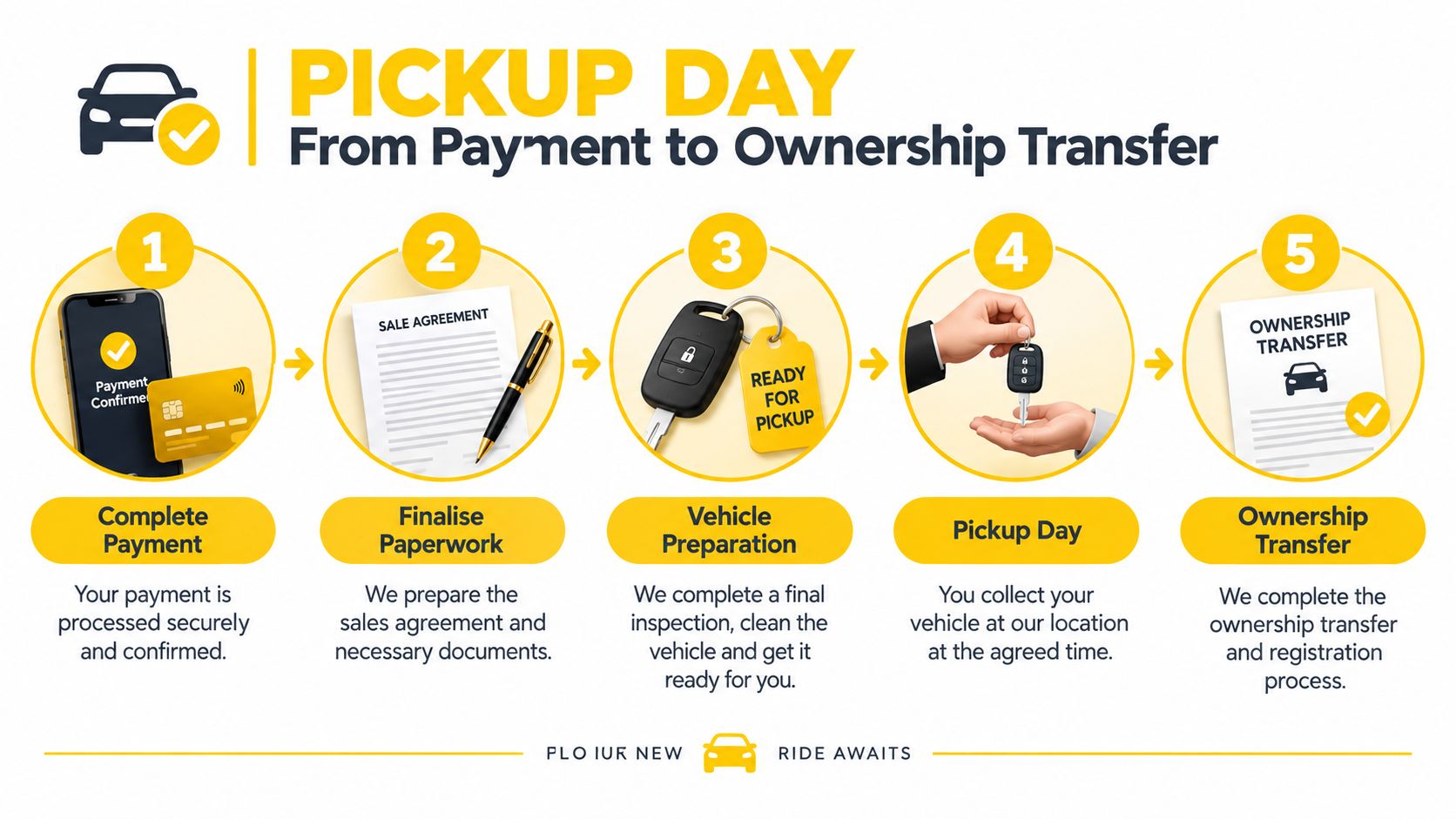
The driver is waiting, the car is ready to load, and the payment notification has arrived. Keep the order clear: confirm the vehicle and buyer, verify the money, then record the change of ownership before the truck leaves.
First, check who is collecting the car. Confirm the driver's identity and that the business name matches your booking. Walk around the vehicle together, compare its plates and VIN with your records, and make sure it matches the description used for the quote. If anything differs, pause and agree on the details before loading.
Next, confirm payment while the car is still on your property. Accept cash in hand or a bank transfer you can see in your own banking app. A screenshot from the buyer is not proof that funds have arrived. Don't accept a cheque, part payment or a promise to pay after the vehicle reaches the yard.
Notify NZTA before the truck leaves
After payment is confirmed, notify NZTA that you have sold the vehicle. The seller and buyer each have a role in recording a change of registered person, so don't assume the buyer will complete your part. Check the NZTA registration and change of ownership requirements beforehand, and follow the current process for your vehicle. Keep the confirmation with your signed receipt.
Before loading, do a quick final check:
- Personal items: Check the glovebox, boot and space under the seats. Take any documents or belongings you want to keep.
- Plates and accounts: Agree what happens with the plates, licensing and toll accounts, and note any relevant arrangements on the receipt.
- Keys and remotes: Hand over the keys and any spares included in the quote.
Keep the receipt and notification confirmation together. They give you a clear record of the agreed sale and the ownership change. Loading comes last, once the money is in your account, the details are recorded and the buyer has what was agreed.
Handling EVs, Write-Offs and Abandoned Cars
A long-idle farm vehicle, a damaged EV and a car left by a former tenant all need different checks before removal. The key is to confirm what can be sold, what needs careful handling, and which records should stay with you.
Hybrids and EVs
A traction battery can retain value even if the vehicle will not start. Its condition affects the quote: crash, flood or fire damage can require specialist isolation, lifting and storage. Do not try to access or remove a high-voltage battery yourself.
When requesting a quote, give the make, model and year, and describe any warning lights, known battery condition, damage history and whether the vehicle rolls. If the battery's condition is unknown, say so rather than guessing.
New Zealand government material reports roughly 25,000 abandoned cars each year and about $6 million in annual council disposal costs.
Write-offs
For an accident, flood or fire write-off, keep the insurer's letters and any disposal records. Tell the buyer what caused the damage and provide the paperwork you have. If you do not know whether the vehicle can return to the road, do not describe it as roadworthy or promise that it can be repaired for road use.
These records help the buyer assess the car and leave a clear account of what was disclosed. Keep copies after the vehicle is collected.
Abandoned vehicles on private property
A vehicle left by a tenant or stored on a farm does not automatically belong to the landowner. Council abandoned-vehicle processes apply to public places; for a car on private land, get authorisation from its owner before arranging a sale or removal. Landlords, property managers and body corporates should establish who owns the vehicle and secure permission first.
If several authorised vehicles are being cleared from one property, arrange their removal together where practical. Confirm that each vehicle is covered by the authorisation, especially if ownership is unclear.
A non-running EV may still have value. A car left on your land may still belong to someone else. Check the battery condition and ownership before agreeing to a price or collection.
Booking a Firm Cash Quote in Whangarei
A firm quote is mostly earned before you pick up the phone. Have the registration, VIN and your photos ready, and be ready to state plainly whether the car rolls, starts or is missing parts.
Disclose crash, flood or fire history in the first conversation, not at the gate. Then ask for the quote in writing, and check it states whether towing, dismantling, tyre disposal and battery handling are included. If a quote can't answer those points, it isn't really a firm quote yet.

What to confirm when you book
- How the price was built: Quotes calculated from parts demand and steel pricing, based on your photos and description.
- That the price holds: The agreed amount honoured at pickup with no deductions for towing or loading.
- Paperwork on site: NZTA ownership notification completed at collection, with confirmation left with you.
- A realistic window: Same-day pickups within Whangarei city, and next-day runs on regular rural routes for the wider Northland area.
Clear access helps more than people expect. If the car is down a long driveway in Kamo or behind a locked gate on a rural block, say so when booking and move anything blocking the truck. Ten minutes of preparation saves a second trip.
Gather your details, request a phone quote, and choose a collection window that suits you. With accurate information up front, the price you're quoted is the price you're paid, and the car is gone the same visit.
If you've got a failed warrant, damaged or deregistered vehicle sitting around Whangarei or wider Northland, get a firm quote, get paid before loading, and have the ownership notification completed on site so your responsibility ends when the car leaves. Visit Car Removals Whangarei to request your cash quote and book a collection time that works for you.
- sell car for cash
- cash for cars NZ
- Whangarei car removal
- NZTA ownership transfer
- sell car Northland