· Car Removals Whangarei
Car Removal Quote: How to Get a Firm Price in Whangarei

The car has been sitting since the WOF failed, and you're weighing a phone figure against the hassle of getting it off the property. A car removal quote is only useful if you compare the net outcome: the payout, minus towing, minus the time you spend clearing the site, minus any liability still attached to the registration. A bigger headline that leaves those costs with you is often the worse deal.
Table of Contents
- What Details a Firm Quote Needs Before You Call
- How a Phone Quote Is Worked Out
- How to Prepare the Vehicle for an Accurate Valuation
- Comparing Offers on Net Value
- What Happens at Pickup and Who Is Liable After
- Special Cases That Change the Price
- Get Your Firm Quote in Whangarei
What Details a Firm Quote Needs Before You Call
A quote is only as firm as the details behind it. Five minutes of checking before you ring stops a revised offer at the gate.
Start with the registration plate and VIN. A vehicle can stay registered while its licence is not current. A lapsed registration follows 12 months without a valid licence, and the vehicle is then automatically deregistered. That status decides the paperwork, and an unlicensed, failed-WOF, stored, or non-running car can still have recoverable value.
As at 31 March 2023, the NZ Transport Agency Motor Vehicle Register recorded 4,648,853 vehicles with a current licence, 453,897 exempt from registration, and 604,206 with no current licence. Those counts cover vehicles already on the register, not every private import. Removal isn't only crash shells. A large national pool is an administrative or mechanical disposal job, and Northland has plenty of both.
Nine details that move the figure
| Detail | What it changes in the quote | What to record |
|---|---|---|
| Registration plate and VIN | Confirms make, model and year, and whether the record is current, lapsed or cancelled | Plate number and VIN from the windscreen plate or registration |
| WOF status and expiry | A failed or expired WOF means the vehicle can't be driven on the road | Date of last pass and any failed items listed |
| Licence and registration status | Current, lapsed or exempt vehicles follow different paperwork steps | Status as shown in your last NZTA notice or the online record |
| Drives, rolls and steers | A non-rolling vehicle needs winching and extra loading time | Whether it starts, moves in gear and the wheels turn |
| Accident, flood or fire history | Damage can reduce panel, engine and electronics value | Date and type of event, plus any insurer write-off notice |
| Drivetrain and body style | Four-wheel drive, ute, van and people movers carry different parts demand | Two-wheel or four-wheel drive, and body type |
| Odometer reading | Used with age and model to judge how usable the parts are | Reading from the dash, not from the service book |
| Missing or damaged components | Missing engine, gearbox, catalytic converter or wheels lower the quote | List what is gone and what is untested |
| Location and access | Rural tracks, narrow gates and remote paddocks change towing and loading time | Suburb, road name, gate width and any access notes |
Location and access is the row most often missed. A narrow farm gate or a soft paddock track adds winch time and a second person on the ground. If you leave it out, the figure assumes hard standing beside a road.
Practical rule: Write the nine details in one note, add four corner photos, an engine bay photo and any damage shots, then call with the note in front of you.
Car Removals Whangarei quotes from these details and holds the figure at pickup when the vehicle matches them.
How a Phone Quote Is Worked Out
A firm phone quote is built in layers. It isn't read off a market price for that model.
Parts demand comes first. A sound engine, gearbox, catalytic converter, wheels, airbags, panels and electronics each carry value only if they're present, undamaged and testable. Each one is discounted when it's missing, seized or impossible to check. A stripped shell doesn't get a parts allowance just because that model sells well.
Steel value comes next. It's the kerb mass, the weight of the vehicle as it sits, multiplied by the current ferrous rate. A mid-size sedan is often around 1.2 to 1.5 tonnes. The rate moves with the scrap market, so the same car can be quoted differently in different weeks. Nobody honest locks a metal price for a month.
Handling is the third layer. Deductions cover a non-rolling vehicle that needs winching, a rural track, and fluids, tyres and batteries that have to be dealt with lawfully. Those items aren't free scrap. They're work.
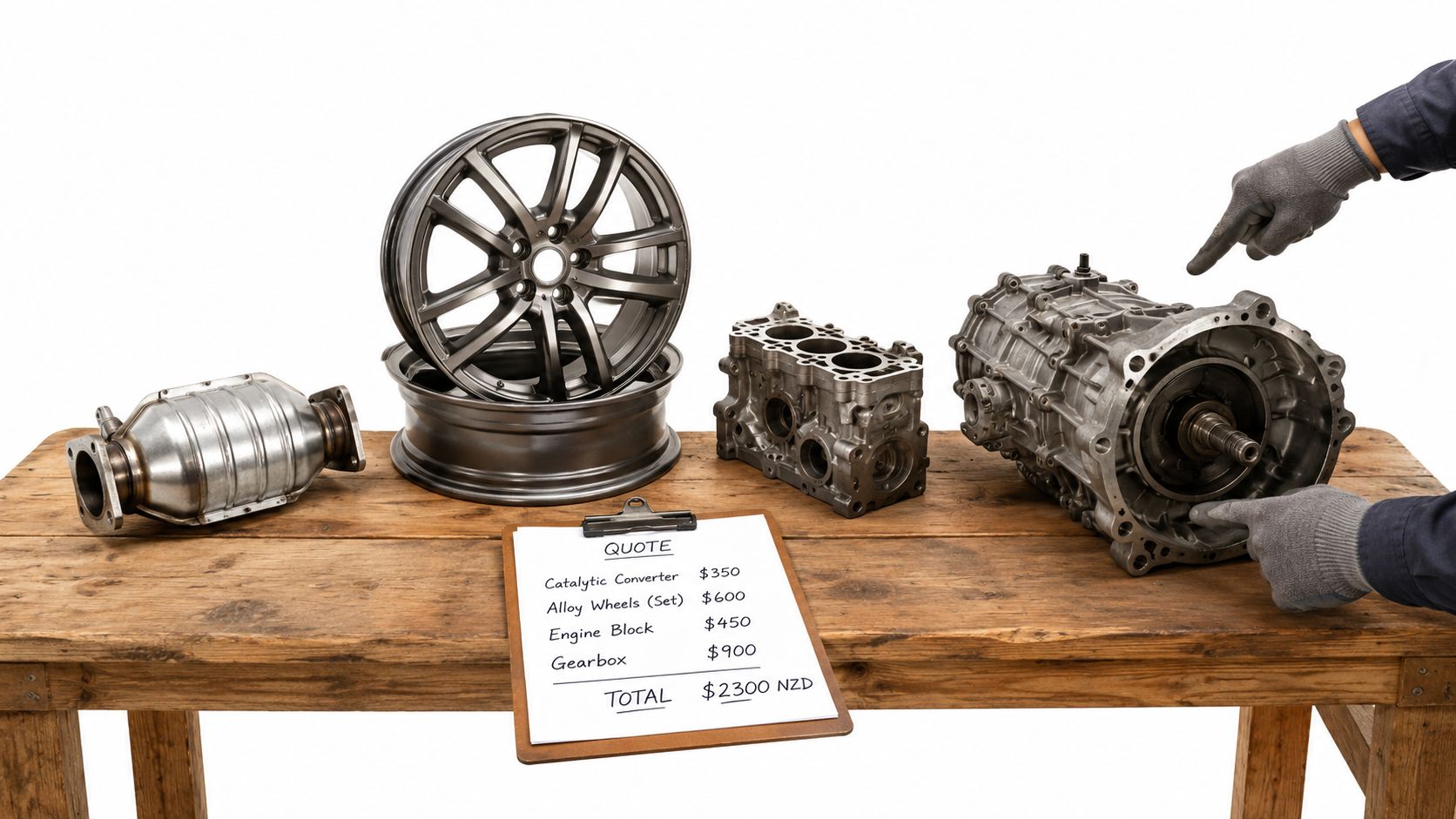
Say a sound 1.3 tonne sedan still has a good engine and gearbox. It sits near the top of its band because the parts layer and the steel layer both count. The same car with a seized engine and no catalytic converter loses the parts component and keeps the metal, minus loading. That's why two quotes for "a 2012 sedan" can be far apart without either being wrong.
A photo-only estimate is the quote most likely to shift at pickup. Have the preparation details in hand before you ask for a figure, and read how scrap car valuation separates parts from weight so you know which layer you're being paid for.
How to Prepare the Vehicle for an Accurate Valuation
You can do this in under an hour. Each step protects the figure or stops a dispute on the day.
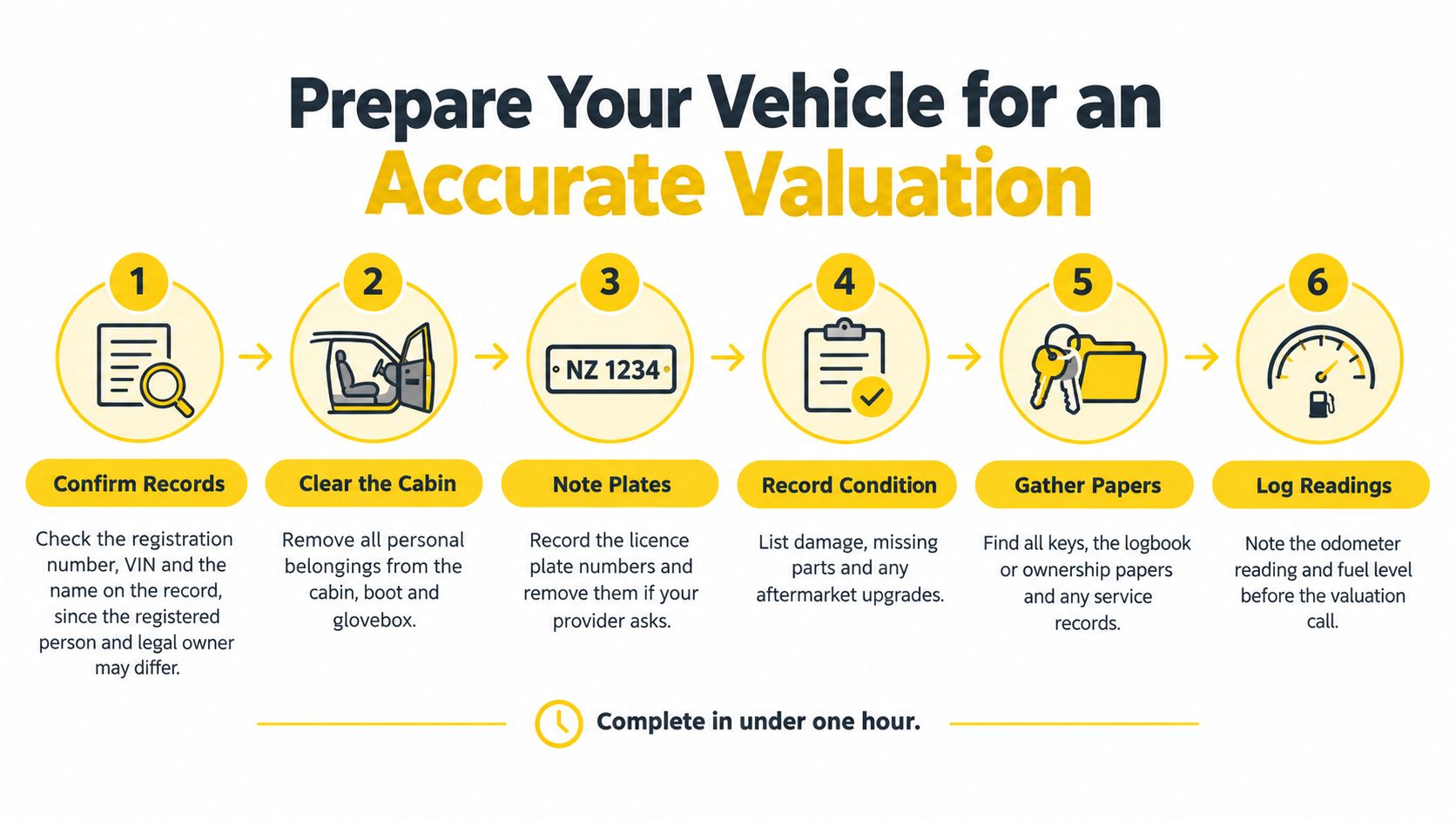
- Confirm the registration number, VIN and the name on the record, because the registered person and the legal owner aren't always the same person, and the wrong name stalls the handover.
- Photograph all four corners, the odometer, the engine bay, the interior and any damage, including the underside if a leak is visible, so the quote is tied to what is there.
- Test whether it rolls, steers and releases the brakes, and write the result down, because that single test decides whether winching is in the price.
- Remove personal items, toll tags and loose parts you're not selling, and keep the keys and remotes together, so nothing you still want leaves with the car.
- Leave fluids, tyres and the battery in place unless the remover asks otherwise, and ask before you drain anything, because stripping or draining often lowers the offer and can create a spill.
- Clear the access path, open the gate and shift trailers or stock, because a blocked track turns a short load into a long one.
- Send the photos and details and ask for the quote in writing or by text, so the basis of the figure is on record before anyone drives out.
Why the odometer and the fluids matter
Read the odometer off the dash, not the service book. A guessed kilometre figure makes parts look better or worse than they are, and the quote gets rebuilt when the dash doesn't match. Draining oil or pulling the catalytic converter before the call doesn't help you. It removes the very items the parts layer was going to pay for, and it leaves the yard with a mess to contain.
Comparing Offers on Net Value
The mistake that costs owners most is comparing headline payouts. Compare what you walk away with.
Use this for a Northland comparison: payout, minus towing, minus your time and site clearance, minus any liability left on the register. A lower-looking scrap quote beats a higher one when the higher one excludes towing, a winch, or lawful handling of fluids and batteries.
End-of-life vehicles contain hazardous materials, including used oil, refrigerants, batteries and circuit boards, that need appropriate treatment. The Ministry for the Environment previously estimated about 25,000 cars were illegally dumped nationally each year, costing authorities $6 million. Disposal logistics, not metal weight alone, decide the outcome, especially on a rural block where distance and access change the collection cost.
Clauses worth reading twice
| Quote clause | Firm quote says | Weak quote says |
|---|---|---|
| Towing | Free within about 100 km of Whangarei, stated in writing | Towing charged later, or distance not mentioned |
| Pickup area | Named suburbs and rural routes, with same-day city and next-day rural timing | No area named, or pickup date left open |
| Payment timing | Paid before loading by cash or instant bank transfer | Cheque, or payment after the vehicle leaves |
| Loading conditions | Non-rolling, winched and rural-access vehicles covered in the figure | Quote assumes the vehicle rolls and is on hard standing |
| Hazardous handling | Fluids, batteries, tyres and airbags handled through compliant processes | Silent on fluids and batteries |
| Tyres and batteries | Priced or deducted separately and stated | Tyres treated as positive scrap value |
| Quote basis | Based on your details and photos, held on arrival | Based on advertised market value |
| Deductions | Listed before pickup | Found on arrival, after the vehicle is loaded |
Ask every provider three things. What is included. What is deducted, and when. Whether the figure is held on arrival if the car matches the details you sent.
A higher number that assumes the car rolls, and a lower number that includes the winch, are not the same offer.
What Happens at Pickup and Who Is Liable After
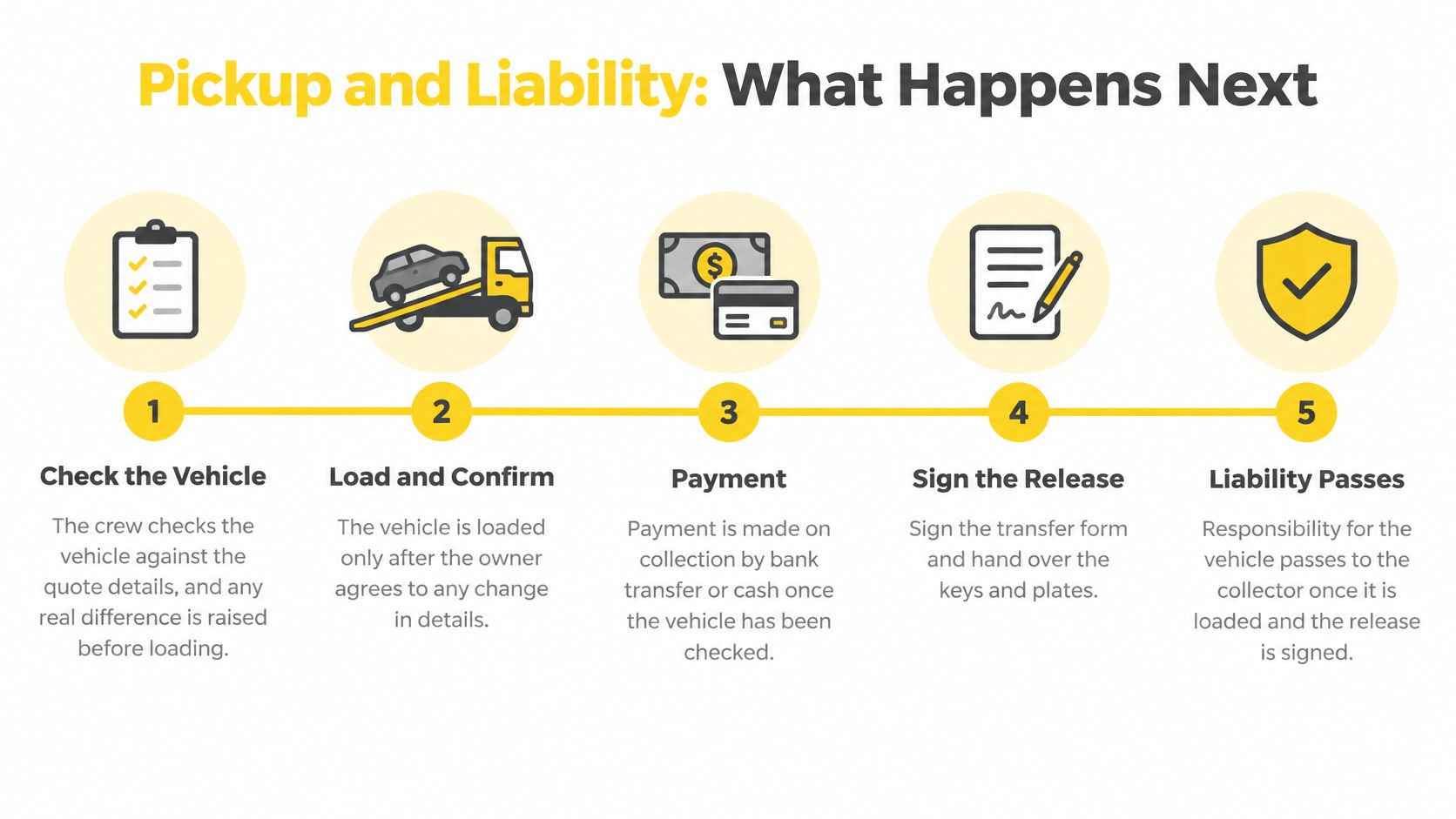
Picture the pickup as a short sequence. Each stage has a piece of proof you should keep.
The crew checks the vehicle against the quote. Any real difference, a missing converter, wheels that don't turn, a track the note didn't mention, should be raised before loading. If you agree a change, get the new figure before the winch comes out. Keep the original written quote on your phone.
Payment is made before loading, by cash or instant bank transfer. No cheques and no hold-back after the car leaves your sight. Watch the transfer land, or count the cash, then let them load.
The NZTA notification is completed on site. That's when your exposure as seller is meant to end, as the vehicle departs. The NZTA factsheet on buying or selling a vehicle states that both buyer and seller must notify the agency immediately of a transfer. If that doesn't happen, the seller may remain exposed to licensing fees, tolls, speeding tickets and other fines.
The registered person on the Motor Vehicle Register is the person responsible for the vehicle in that register, not necessarily the legal owner. That matters on farms, in rentals and in families, where the person booking the truck isn't the name on the record. You need the buyer's full name and New Zealand address. The steps for an NZTA registration change of ownership are worth reading before the truck arrives.
Keep a dated receipt, the registration number, the VIN and a pickup confirmation. Whangarei city collections are usually same day. Rural Northland runs are typically next day on regular routes. Urgent jobs can use a 7am to 7pm window.
Special Cases That Change the Price
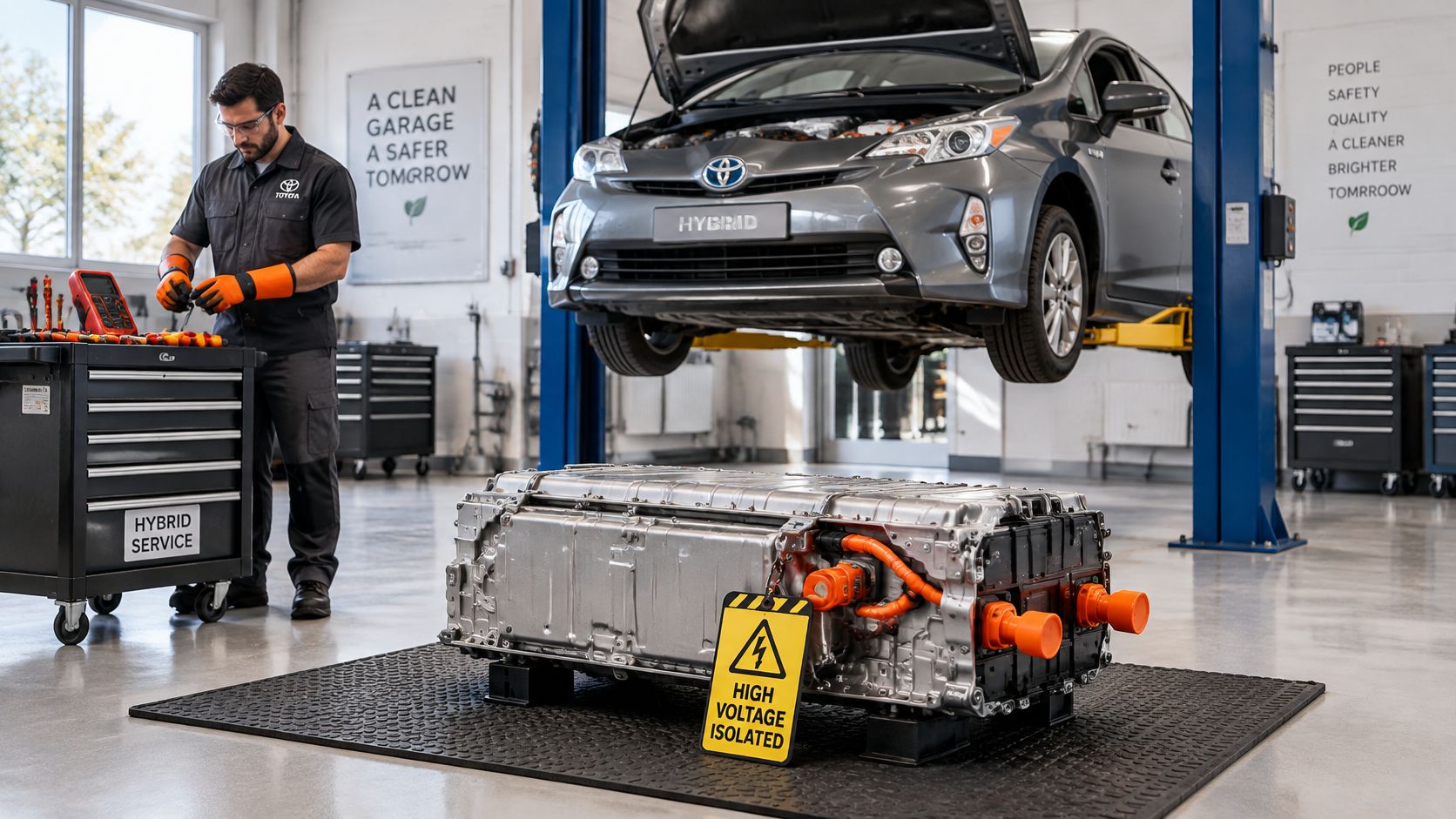
The common error is valuing a hybrid or EV like a petrol car. The traction battery is priced separately from the body and the scrap, and the high-voltage system has to be isolated and secured before loading.
NZTA in-service inspection rules treat high-voltage wiring as unacceptable when it's insecure, damaged or deteriorated, and battery packs as defective when they're insecure, damaged, deteriorated or leaking. Damaged or missing shields are a further safety concern. An electrically damaged car is not an ordinary tow.
The Ministry for the Environment reports that approximately 6.5 million tyres reach end of life annually, and only about 40% are estimated to be recycled or exported. A separate assessment, set out in an NZTA OIA attachment, reported that New Zealand imported 5.1 million tyres annually, with roughly 70% of worn tyres going to some form of land disposal. Tyres are a disposal obligation, not automatic scrap value. A quote should say whether attached tyres are reusable, contaminated, or destined for Tyrewise collection.
| Case | How the quote changes | What to confirm before pickup |
|---|---|---|
| Hybrid or EV | Traction battery priced separately, and isolation done before loading | Battery model, damage history and whether it has been disturbed |
| Non-rolling shell | Winching and loading time added as a handling deduction | Whether wheels turn, and whether the vehicle is on a track or hard standing |
| Flood or fire damage | Battery and wiring quarantined, with specialist loading where needed | Date and type of event, and whether any electrical parts were submerged |
| Abandoned on private or rural land | Consolidated collection, with dump fees avoided for the owner | Written owner authorisation and the list of vehicles on site |
| Insurance write-off | Deregistration paperwork and insurer documents accepted | Insurer's write-off notice and the registered owner's details |
| Farm machinery or light truck | Loading equipment and on-site assessment priced in | Make, model, weight estimate and access for the loading equipment |
Abandoned vehicles need the owner's written authorisation. One visit can clear several vehicles on the same property. Flood-damaged batteries need a quarantine plan before any towing. If you're holding an insurer's notice, the write-off car paperwork should travel with the quote, not turn up after the truck is booked.
Get Your Firm Quote in Whangarei
Send the details and photos from your preparation, ask for a firm figure that names towing, deductions and payment timing, and book once that figure is in writing.
Car Removals Whangarei is a licensed Northland dismantler based in Port Whangarei, with a yard on Kioreroa Road. Free towing and scheduling sit inside about 100 km. City pickups are typically same day, rural runs next day on regular routes, and urgent disposals can use a 7am to 7pm window. Coverage takes in 46 suburbs and towns around Whangarei, and the yard takes cars, vans, 4WDs, trucks and machinery in any condition.
The figure stays firm only when the details are accurate. Call with the note from your first check, not from memory.
This week, write the plate, VIN, roll test and access notes in one message, attach the photos, and don't accept a number that won't say what happens if the car doesn't roll.
Car Removals Whangarei buys unwanted and damaged vehicles across Whangarei and Northland and builds a car removal quote from parts, steel and the actual loading job, then completes the ownership notification at pickup. If you want the net figure rather than a headline, send your details and photos and book a collection that matches them. Visit Car Removals Whangarei to request your quote.
- car removal quote
- Whangarei car removal
- cash for cars
- NZTA ownership
- scrap car removal