· Car Removals Whangarei
Write Off Car in NZ: What Owners Need to Know

You're sitting there with a dead car, a phone call from the insurer, and a word you didn't ask for, write-off. Maybe it's bent from a crash, flooded, burnt, or just too smashed to justify repairing. Either way, the car's not the only thing in trouble, because the paperwork and the decision you make next matter just as much as the payout.
Treat this as a triage job, not a panic job. First, pin down what the insurer is calling it. Then work out whether you are taking the settlement, selling the vehicle, or trying to keep it alive. That order saves money, avoids bad assumptions, and stops owners in Northland from paying twice for the same mistake.
Table of Contents
- What Happens When Your Car Is Written Off
- Understanding Write-Off Categories in New Zealand
- How Insurers Calculate Your Write-Off Payout
- Your Three Real Options After a Write-Off
- Paperwork Owners Need to Keep and Complete
- Why the Write-Off Stays on the Vehicle's Record
- Triage by Damage Type Flood Fire Hail and High-Voltage
- Your First 48 Hours and Common Questions
What Happens When Your Car Is Written Off
The call usually comes after the assessor has looked at the damage and the numbers don't line up. The insurer says total loss, write-off, or something equally blunt, and suddenly you're meant to make sense of a vehicle that's stopped being a vehicle in the insurer's eyes.
Start with the label, not the emotion
A write-off isn't one single thing. It can mean the vehicle is uneconomic to repair, it can mean the damage is severe enough that NZTA rules kick in, and it can also mean the car's history now follows it around whether you repair it or not. That's why owners need to slow down and ask for the loss type in writing before they agree to anything.
Practical rule: don't talk yourself into repairs until you know whether the vehicle is only a payout problem or also a registration problem.
The Ministry for the Environment has long treated dumped and end-of-life vehicles as a serious waste stream, with an estimated 25,000 cars illegally dumped each year and an estimated cost of NZ$6 million to authorities in the 2007 assessment, Environment New Zealand 2007 waste assessment. That history matters because a written-off car is often not just “old metal”, it's fluids, batteries, refrigerants, circuit boards, and other hazardous parts that need proper handling.
What you should do immediately
A write-off is not the moment to guess. It's the moment to collect proof.
Keep the insurer's settlement note, the loss description, the photos, and anything that shows the vehicle's condition before it moved. If the car is staying on private land for any length of time, don't let it become an abandoned-vehicle headache as well. In Northland, the practical answer is usually one of three things, accept the payout, dispose of it properly, or repair it only if the paperwork allows it.
Understanding Write-Off Categories in New Zealand
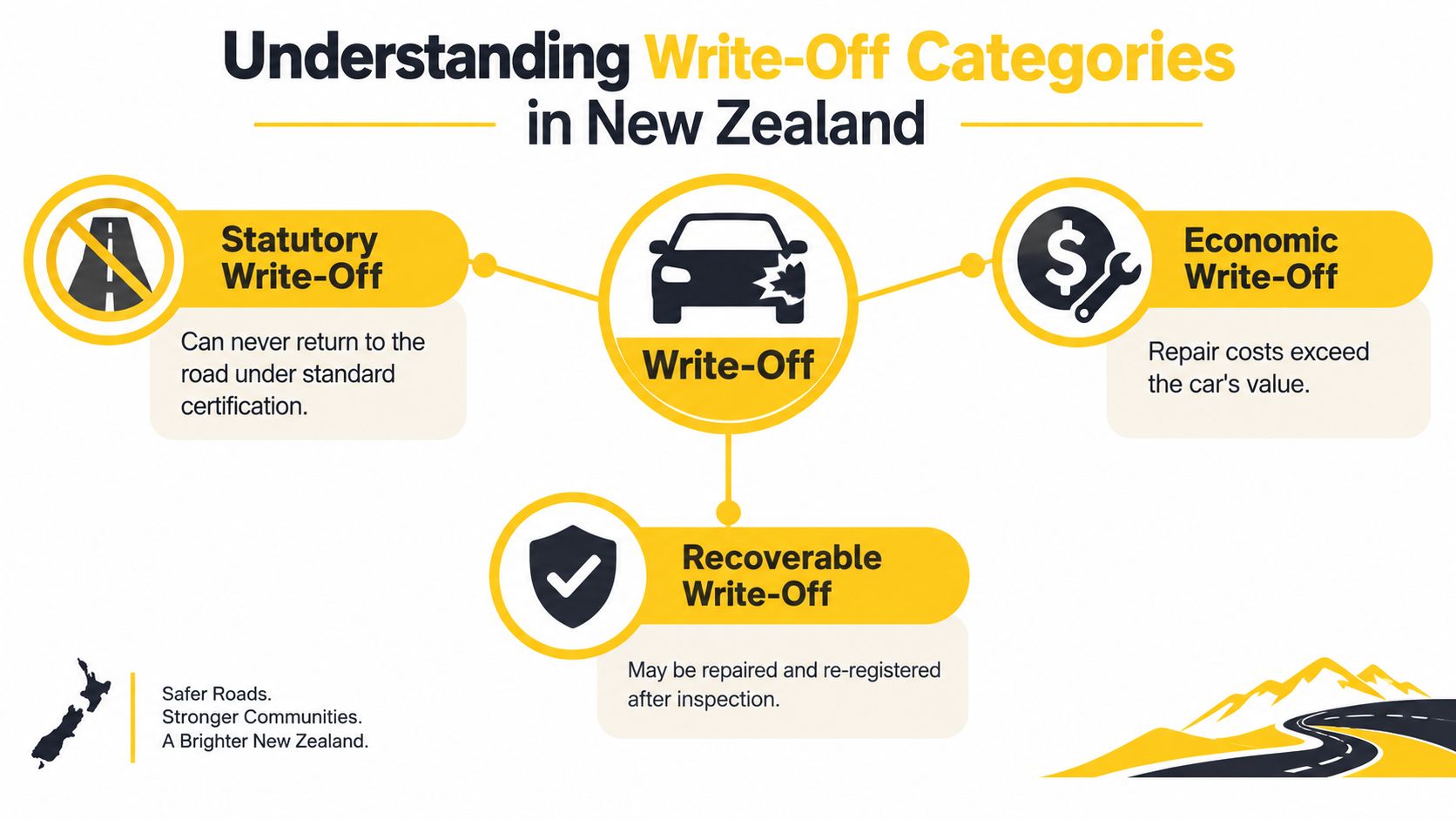
Write-off categories sort risk and decide what happens next. They are paperwork labels first, repair opinions second. If you get the category wrong, you will waste time, money, or both.
The three labels that matter
A statutory write-off is the hard stop. NZTA treats vehicles recorded with terms like statutory, write-off, salvage, junked, or non-repairable as needing specialist repair-certifier involvement if they ever come back through the registration system, and some are not sensible road candidates. If you want the plain version of that category, see what a statutory write-off vehicle means. This is not a case for a casual driveway fix and a hopeful WOF check later.
An economic write-off is different. The vehicle may still be repairable, but the repair bill and the insurer's numbers do not justify treating it as a normal claim outcome. That does not make it roadworthy. It means the insurer has decided the economics fail first.
A recoverable write-off sits in the middle. Repair and re-registration may still be possible if the right evidence, inspection, and certification are done. That distinction matters because an insurer calling a car “repairable” does not make it road legal. The roadworthiness decision comes later through NZTA channels.
Don't confuse category with safety
For a buyer, seller, dismantler, or insurer, the category is the starting point, not the finish line. Waka Kotahi records damaged and written-off vehicles by VIN or chassis number, and that identity-based record matters more than the way the car looks today, as explained in Waka Kotahi's written-off and damaged vehicles guidance.
Flood, fire, hail, hybrids, and EVs need tighter triage. Flood damage can hide corrosion and contaminated electronics. Fire damage can turn wiring, plastics, and trim into a mess that looks repairable until you start pricing parts. Hail can be cosmetic on one car and enough to tip an insurer into an economic write-off on another. Hybrid and high-voltage vehicles need extra caution because battery damage changes both repair cost and disposal risk.
The clean rule is simple. Statutory means the paper trail is heavy and the road return path is narrow, economic means the insurer has priced it out, and recoverable means the owner still has to prove the vehicle is safe before anyone assumes it can go back on the road.
How Insurers Calculate Your Write-Off Payout
Insurers don't pay on sympathy. They pay on what they say the car was worth, what's left of it, and how the claim file reads when the assessor finishes. That's why two owners with the same model can end up with different offers, because condition, mileage, options, and local market evidence all move the number.
What pushes the figure
| Factor | Effect on Payout | Owner Action |
|---|---|---|
| Service history | Cleaner records usually support value | Gather invoices and service stamps |
| Pre-loss condition | Better condition can lift the valuation | Photograph the car before handover |
| Comparable listings | Strong market listings can support a higher figure | Save matching Northland and national listings |
| Missing features or wear | Heavy wear usually pulls value down | Challenge anything the assessor has overstated |
| Salvage retention | Keeping the wreck usually lowers the cash payout | Ask how the insurer priced the salvage |
The best move is to treat the insurer's number as a starting point, not a verdict. If the vehicle had new tyres, fresh servicing, good trim, or a tidy body before the incident, show it. If the insurer missed a feature grade, a canopy, a tow bar, or a higher trim level, push back.
Use evidence, not emotion
A late-model SUV written off after a collision is usually valued differently from an older work ute written off by hail, because the repair economics and pre-loss market sit in different places. You do not need to guess which category feels fair; you need to ask whether the insurer's valuation reflects the actual vehicle, not a generic listing.
Owner rule: if you can't prove the car's condition, the insurer will price it as average. That's where money leaks out.
If you're comparing settlement numbers against a replacement vehicle or a repair plan, keep the valuation trail together. The article on car valuation for insurance is useful if you're trying to understand how owners usually sanity-check the assessor's figure before accepting it.
Your Three Real Options After a Write-Off
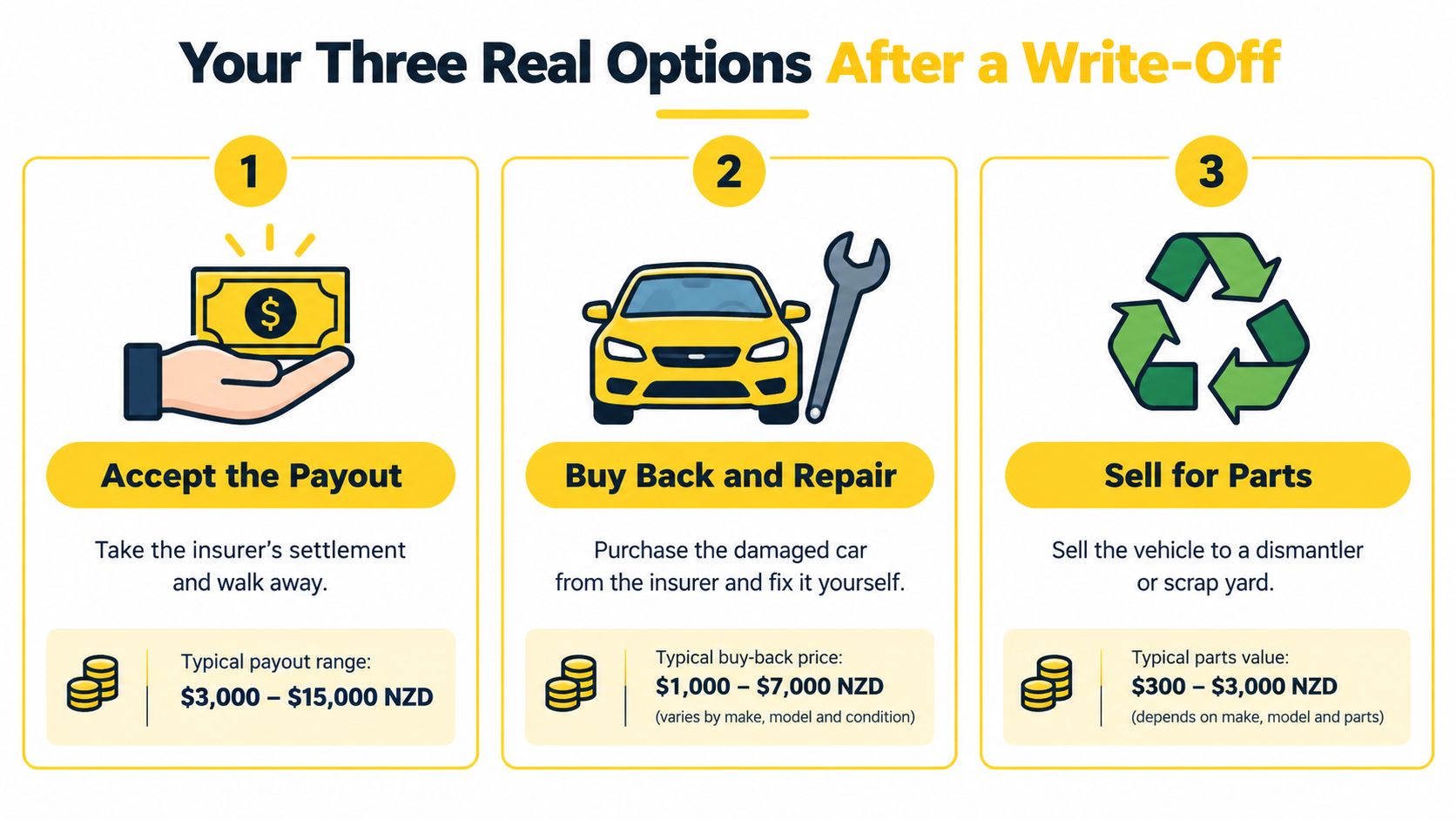
A write-off decision usually comes down to three choices, and only three. Anything else is just delay dressed up as optimism.
Compare the options properly
| Option | Best for | Downside | Paperwork load |
|---|---|---|---|
| Accept the payout | Owners who want a clean exit | You lose the vehicle | Low |
| Buy back and repair | Owners with time, money, and a repairable category | Long-term history stays with the car | High |
| Sell for parts | Owners who want fast disposal and cash | No road-use future | Low to moderate |
Accepting the payout is the clean break. You let the insurer close the claim and move on. That's usually the right call when the car's market value is modest, the damage is severe, or the paperwork looks ugly.
Buying the vehicle back and repairing it only makes sense if the write-off category and certification path support it. It is not a casual option. Once you keep the vehicle, you own the repair risk, the compliance risk, and the future resale discount.
Selling directly to a dismantler makes sense when the goal is to remove the car quickly and avoid waiting on salvage tender delays. A licensed dismantler will normally factor usable parts, metal value, and transport into the offer. In Northland, that can be more practical than leaving the car to sit while everyone argues over a salvage price.
Know when an option is off the table
A statutory or non-repairable vehicle isn't a cute project car. If the paperwork points that way, your decision is about disposal, not dream restoration. That's the blunt truth owners need to hear before they spend money on parts they may never legally use.
A Northland dismantler like Car Removals Whangarei buys accident and insurance write-offs, handles deregistration paperwork, and removes vehicles that are no longer worth repairing. That's a disposal path, not a miracle cure, and it's exactly how most write-offs should be treated.
Paperwork Owners Need to Keep and Complete
A write-off turns into a recordkeeping job fast. If you don't keep the right documents, the vehicle's history can come back and bite you later when you sell, deregister, or query liability.
Keep the insurer trail
Start with the insurer's settlement letter. Keep the loss description, the payout basis, and any note that says why the vehicle was written off. That paperwork matters because it proves what happened, not just what the car looks like today.
You should also keep ownership evidence and any loss-type documentation tied to the claim. If the car later moves through another sale or a dismantling process, that file is what stops arguments about whether it was a statutory loss, an economic loss, or something else.
Complete the NZTA side properly
The registration side matters just as much. Use the correct change-of-ownership process when the vehicle leaves your hands, and make sure the deregistration or disposal record is updated so the vehicle doesn't keep living in your name. The practical sequence is simple, insurer settlement first, ownership change next, and NZTA records last.
Keep copies of everything. If a future buyer, insurer, or agency asks questions, the person with the clean paper trail wins the argument.
For ownership transfer specifics, the NZTA change-of-ownership guide is worth checking alongside the formal record you get from the claim and disposal process.
Why the Write-Off Stays on the Vehicle's Record
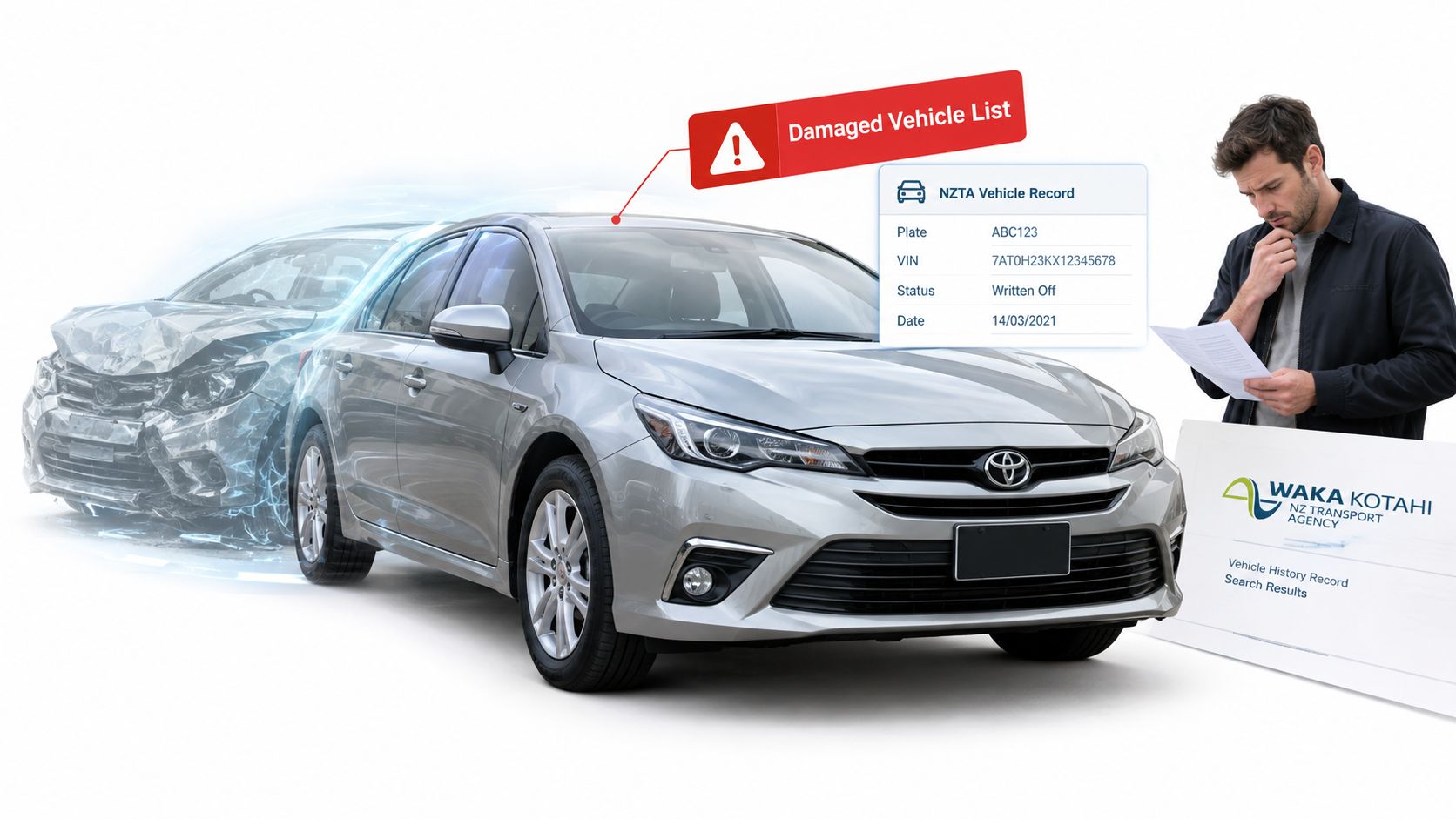
A repaired written-off car does not return to a clean slate. Waka Kotahi says repaired vehicles stay on the damaged-vehicles list even after repair and certification, so the history remains tied to the vehicle's identity for future buyers, insurers, and sellers. That record is permanent.
A permanent mark, not a fresh start
The issue is simple. Buyers can still check the damage status by VIN or chassis number, and that affects value and trust.
Do not base a repair decision only on whether the car can pass a road check. The question is whether you want to own a vehicle that keeps its write-off history, because the market will keep pricing that history into the sale.
Think beyond the repair bill
If you keep the vehicle, account for the long tail now. A tidy repair does not erase disclosure problems, and it does not remove the vehicle from the damaged record. That matters later when you sell, trade, or insure it again.
For Northland owners, the right question is plain: is it worth fixing once the history stays attached? Often the answer is no, and that is the part that saves money.
Triage by Damage Type Flood Fire Hail and High-Voltage
Stop lumping every written-off vehicle into one bucket. Flood, fire, hail, hybrid, and EV cases need different handling, because the risks underneath the panel damage are not the same.
Flood and water damage
If you can see broken glazing, damp carpets, or a hydro-locked engine, treat the vehicle as water damaged. NZTA's light-vehicle repair guidance is clear on that point, and it matters because water can hide inside wiring, connectors, restraint components, lubricants, and intake systems even after the cabin starts to dry out. If the vehicle is a hybrid or EV, don't energise it and don't assume it's safe because the outside looks clean.
Fire damage
Fire is a nasty one because the outside can look more forgiving than the wiring underneath. Melted looms, damaged airbags, and heat-affected plastics don't always show themselves fully in a quick glance. If the car's burnt, keep it untouched until a proper assessment is done, because guessing with a fire loss usually ends in extra cost.
Hail and cosmetic damage
Hail is often a money problem more than a structure problem. That's why it can be economically written off without the kind of hidden contamination you see in flood or fire cases. Owners should still check the insurer's category and ask whether the vehicle is being treated as a repairable loss or a payout decision.
High-voltage hybrid and EV cases
Owners get reckless fastest. A flooded or burnt EV or hybrid needs isolation, not optimism, because the traction battery can change the disposal equation completely. Don't reconnect the vehicle, don't try to wake it up, and don't accept a generic “sell your damaged car” offer without asking how the battery will be handled.
Practical rule: if the loss involved water, fire, or high voltage, leave the vehicle alone until someone competent has checked it.
The most useful mindset is simple, cosmetic hail can be a valuation issue, flood is a contamination issue, fire is a hidden-damage issue, and EV or hybrid incidents are a high-voltage handling issue. Mix those together and you'll make the wrong call.
Your First 48 Hours and Common Questions
For the first two days, keep the job tight. Get the insurer's loss type in writing, save every message and photo, pull together evidence of the car's pre-loss condition, and get a second quote if you're thinking about disposal rather than repair. If you're selling, contact a licensed dismantler in parallel so you know what the vehicle is worth outside the insurer's number.
Quick 48-hour checklist
- Confirm the write-off category in writing.
- Collect service records, photos, and comparable market evidence.
- Decide whether you're accepting the payout, selling, or repairing.
- Ask for a dismantler quote if the vehicle is going to be removed.
- Complete ownership transfer at pickup so the liability trail ends cleanly.
Common questions owners ask
Can a written-off car ever go back on the road in New Zealand? Sometimes, but not by wishful thinking. If the paperwork uses statutory, salvage, junked, or non-repairable language, NZTA requires specialist certification and proper documentation before any re-registration path is even considered.
What if I just leave the car where it is? Then it becomes a property problem as well as a vehicle problem. An abandoned written-off car can create contamination, liability, and clearance issues fast.
Can the insurer force me into their salvage path? They can set the claim terms, but you still need to understand the settlement basis and your ownership obligations. Don't sign away control without reading the loss and disposal paperwork.
Does selling to a local Northland dismantler change the paperwork? No, it changes the handling, not the need for records. The ownership trail and NZTA notification still matter.
If your write-off is sitting in Whangarei, Kamo, Tikipunga, or anywhere else in Northland, Car Removals Whangarei can take a damaged, deregistered, or non-running vehicle off your hands and handle the pickup paperwork properly. Visit Car Removals Whangarei if you want a direct removal option and a clean ownership transfer without dragging the car through another round of delays.
- write off car
- car write-off NZ
- insurance write-off
- NZTA deregistration
- total loss car