· Car Removals Whangarei
What Is a Statutory Write-Off Vehicle in NZ
A statutory write-off is a vehicle recorded as permanently unsuitable for normal road use because of the nature or extent of its damage, rather than only because repairs cost too much. For vehicles manufactured after 1 January 1991, structural damage can also require a full structural inspection before any possible return to the road.
If your car has just come through a Northland hailstorm, flood or fire, the insurer's call can leave you with more questions than answers. You may hear “total loss” and assume the matter ends when the settlement arrives, but a statutory write-off is a legal status attached to the vehicle, not just a figure on an insurance letter.
That distinction matters if the vehicle is sitting in your driveway, at a panel shop or in an insurer's salvage yard. The status affects the NZTA record, registration, future inspection requirements and whether the car should be considered a road vehicle at all.
Table of Contents
- Why a Statutory Write-Off Is More Serious Than a Normal Insurance Payout
- Statutory, Economic, Salvage and Non-Repairable Compared
- How NZTA Records a Statutory Write-Off on the Register
- Real-World Examples of How a Car Becomes a Statutory Write-Off
- The Specialist Certifier and LT308 Pathway Back to the Road
- Why Selling for Parts or Scrap Often Beats Repair
- Disposing of a Statutory Write-Off in Whangarei and Northland
- Your Statutory Write-Off Decision Checklist
Why a Statutory Write-Off Is More Serious Than a Normal Insurance Payout
A Whangārei family might discover the difference after a February downpour leaves their car sitting in floodwater. The insurer assesses the damage, agrees that the vehicle is a total loss and arranges a payout. From the family's point of view, the claim appears finished.
The vehicle's legal position may be very different. Under New Zealand's statutory framework, a vehicle can be classified as a statutory write-off when it has become permanently unsuitable for normal road use because of the nature or extent of its damage. The law also requires the relevant owner to notify the Registrar when a registered vehicle is destroyed, written off by an insurer or owner, or becomes permanently useless as a motor vehicle. If an insurer writes off the vehicle, the law treats the insurer as the owner for those notification responsibilities. New Zealand's vehicle registration legislation sets out those registration consequences.
The payout and the vehicle are separate issues
An insurance settlement deals with the financial claim. It doesn't automatically mean the car can be repaired, registered and sold to another driver. A statutory classification deals with the vehicle's legal and safety status, even if the insurer has already paid the owner.
Once the statutory conditions apply, the vehicle's registration is cancelled. The registration certificate, number plates and current licence must also be surrendered where practicable. That is why a statutory write-off isn't just a cheap car with a bad-looking insurance history.
Practical rule: Treat the settlement letter as financial paperwork and the NZTA record as the vehicle's legal history. You need to understand both before selling, storing or repairing the car.
An ordinary economic write-off is different. An insurer may decide that repairs aren't financially sensible, while the vehicle could still be repaired and pass the relevant safety and certification process. A statutory write-off carries a much more serious warning. Any possible road re-entry requires specialist scrutiny, documentary evidence and the correct certification pathway. Some vehicles won't be suitable for re-registration at all.
Statutory, Economic, Salvage and Non-Repairable Compared
After a Northland hailstorm, an insurer may call a car a write-off while the owner is still asking a simpler question: can it legally return to the road? The answer depends on the exact label in the paperwork. “Write-off” describes several different outcomes, and statutory, economic, salvage and non-repairable are not interchangeable terms.
A salvage listing may show that a vehicle was damaged or sold after an insurance claim. It does not, by itself, prove that the car is permanently barred from road use. An economic write-off normally reflects repair cost compared with the vehicle's value. A statutory classification carries a separate regulatory and safety meaning.
NZTA guidance identifies terms such as “statutory,” “write-off,” “salvage,” “junked” and “non-repairable” as reasons for referral to a specialist repair certifier. NZTA's inspection guidance explains how those descriptions affect the inspection route.
| Category | Recorded by | Can be repaired | Re-registration path | Typical use |
|---|---|---|---|---|
| Statutory write-off | NZTA and the insurer or owner through the statutory process | Only where the required specialist assessment establishes safe compliance | Specialist repair certifier, structural assessment where applicable, and the required registration process | Parts recovery, dismantling or tightly controlled repair assessment |
| Economic write-off | Usually recorded through the insurer's loss decision and vehicle history | Often possible, if repairs meet safety and certification requirements | Repair, inspection and any certification required by the vehicle's history | Repairable vehicle, resale after proper disclosure |
| Salvage | Insurer, auction or vehicle-history documentation | Potentially, depending on the damage and records | The appropriate inspection and certification route for the vehicle | Repair project or parts source |
| Non-repairable | Insurer, seller or vehicle-history documentation | Not normally suitable for lawful road return | No ordinary return to the road. Confirm status before buying | Dismantling and material recovery |
Why the labels cannot be used interchangeably
An economic write-off is usually an insurer's financial decision. For example, hail damage may make replacement panels, paint and electrical checks cost more than the car's market value. That does not automatically mean the structure or safety systems are permanently unsuitable.
A statutory write-off is a regulatory and engineering warning. The certifier must examine the vehicle's structure, systems, components and equipment, then decide whether repairs restore safe tolerances comparable with its manufactured or modified condition. NZTA's guidance on written-off and damaged vehicles explains how a safety or damage flag can prevent a vehicle from receiving a WoF or CoF until repairs and inspection verify compliance.
The table shows one practical rule: the wording on the paperwork determines the inspection route. Read the insurer's letter before ordering parts, agreeing to repairs or advertising the vehicle.
A running engine and clean-looking panels are not enough. The status, VIN history, insurer records and structural evidence carry more weight than appearance.
How NZTA Records a Statutory Write-Off on the Register
The insurance claim may feel finished once the payout is agreed, but the NZTA record can affect the vehicle long afterwards. Owners often discover this when they try to sell the car, change its ownership or put it back on the road. Renewing the licence or applying for another warrant does not remove a statutory write-off status.
Section 1 explains why the registration is cancelled. Here, the important point is that the vehicle's history can continue to show the statutory status after the plates and licence are no longer in use. The insurer is treated as the owner when it has written off the vehicle, so it may handle the required registration steps after the claim. Keep the insurer's decision and any NZTA correspondence because those documents connect the insurance paperwork with the vehicle's official history.
What the record means for a future buyer
A vehicle-history check may reveal a statutory or related write-off description. During the re-entry process, an appointed certifier must check whether the vehicle appears on NZTA's list of damaged and written-off vehicles. The record acts like a warning label. It tells a later buyer that the car needs more than ordinary ownership paperwork before it can be treated as a normal road vehicle.
That status affects the practical choices available:
- Road return: The owner must show that the vehicle has followed the specialist inspection and certification pathway.
- Parts recovery: A dismantler can handle it as a regulated end-of-life or parts asset rather than an ordinary used car.
- Documentation: Keep the insurer's decision, ownership evidence, registration information and disposal records together.
Keep the handover organised
Before the vehicle leaves your property, make copies of the write-off decision, registration details, ownership evidence and any correspondence with NZTA. A verbal promise from a buyer or dismantler does not give you a reliable paper trail. Confirm that the ownership or disposal notification has been completed, then retain proof of what was submitted and when.
For plain-language help with managing an NZTA registration change of ownership, check the required details before handing over the vehicle. The register is the authoritative record, so do not treat the car as fully disposed of until the relevant notification has been handled.
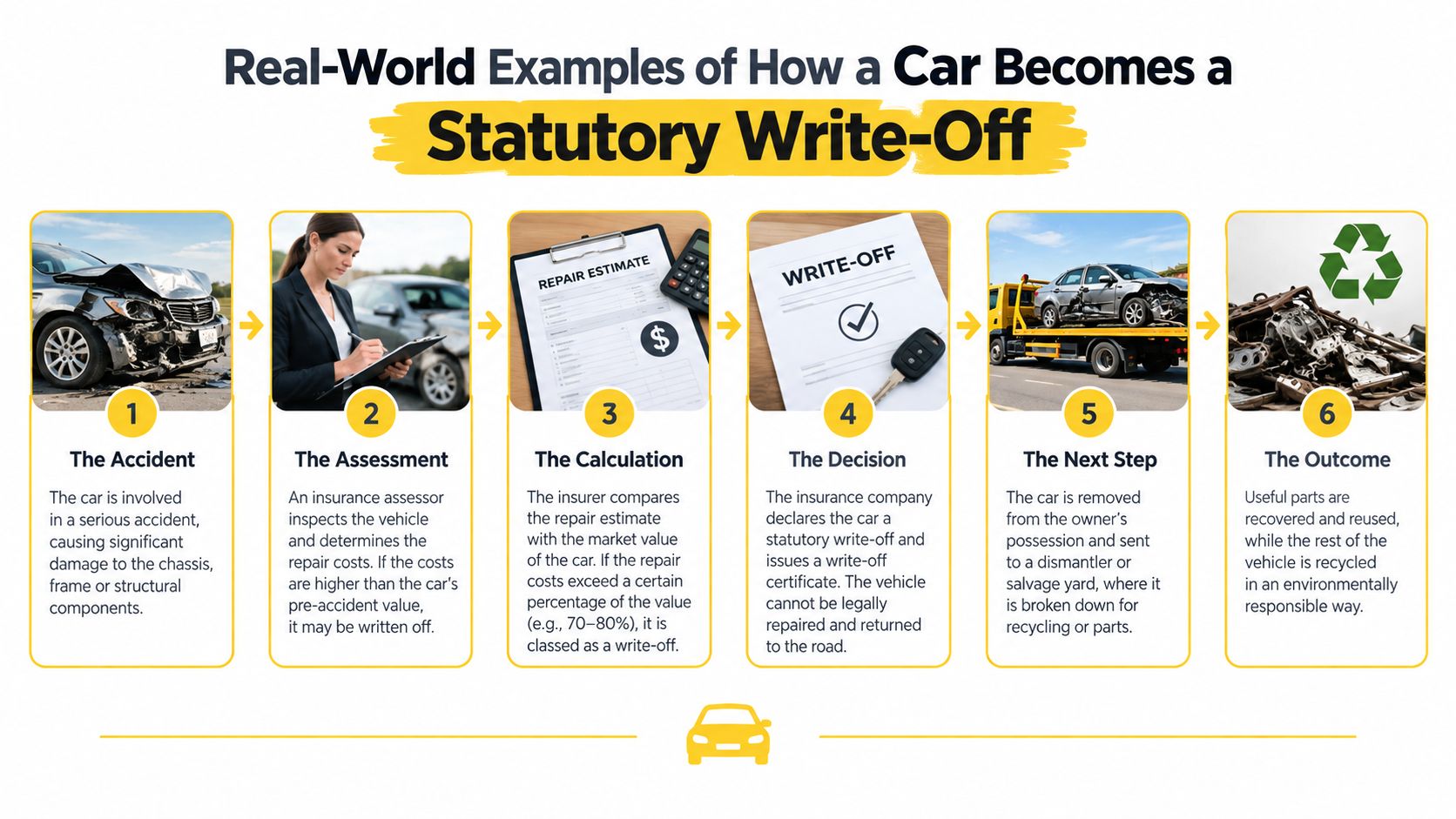
Real-World Examples of How a Car Becomes a Statutory Write-Off
The damage doesn't always look dramatic from the roadside. A car can have a tidy exterior while water, heat or impact has compromised systems that a normal visual inspection cannot confirm.
Hail damage in Whangārei
After a severe hail event, every panel may carry dents and the glass may be damaged. That doesn't automatically make the vehicle statutory. The insurer and its assessor must consider the full condition, including whether the damage affects safety, structure or systems and whether the vehicle can follow a lawful repair pathway.
If the insurer classifies the vehicle as statutory, the owner should expect written insurance documentation and registration consequences rather than a simple repair authorisation. The owner should keep the insurer's letter, any vehicle-history information, registration documents and instructions about the plates.
Flood damage near Hikurangi
A flooded car may start after drying out, but that doesn't establish electrical or safety compliance. Water can reach control modules, restraint systems and wiring, while contamination can continue to create faults after the visible water has gone.
NZTA guidance says certifiers must consider evidence of water damage, along with accident damage, structural repairs, corrosion and fire damage. The written-off vehicle inspection rules show why a running engine isn't enough to support road use.
Fire damage near Dargaville
Heat can affect wiring, restraint systems, mounting points and structural metal even when the fire appears localised. A burnt vehicle may therefore be more than an insurance salvage project. If the damage prevents the required safety evidence and certification, dismantling may be the responsible outcome.
The paperwork can include the insurer's decision, vehicle registration information, ownership or disposal forms and instructions for surrendering or transferring the plates. Don't rely on a panel replacement estimate until the vehicle's NZTA status and certification route have been checked.
The Specialist Certifier and LT308 Pathway Back to the Road
After a hailstorm, a car may look straight enough to repair, yet the insurer's statutory write-off decision changes its path back to the road. An ordinary registration renewal or routine WoF inspection cannot put it back into normal use. The vehicle needs specialist assessment, with records that show how each major repair was completed.
NZTA states that a written-off vehicle, whether statutory or economic, requires an LT308 certification document, not an LT307. In practice, the ordinary WoF lane is closed until a specialist repair certifier has examined the vehicle and signed off the required work. Terms such as statutory, write-off, salvage, junked or non-repairable in the record or paperwork can trigger that referral. NZTA's certification document guidance explains the documentary trigger.
What the certifier needs to establish
The certifier is checking the vehicle's safety history, not just whether the engine starts. The process can involve:
- Structural condition: Repairs must restore safe tolerances comparable with the vehicle's manufactured or modified condition.
- Collision evidence: Split seam welds, distorted suspension members, damaged mounting points and torn metal structures may require further assessment.
- Water and fire evidence: Corrosion, contamination, damaged electrical systems and heat effects must be considered.
- Repair records: The owner needs a clear account of the damage, the parts used and the people who completed the work.
- Safety systems: Structural components, restraint systems and related equipment must meet applicable requirements.
A failed or incomplete inspection stops certification. The LT308 is one part of the evidence, not a shortcut around the assessment. Without the required certification and supporting records, the vehicle cannot lawfully regain normal registration and road-use credentials.
Re-registration requires an ownership trail
Registration cancellation creates a second paperwork problem. The owner must use an entry-certification process to register the vehicle again, and must show that it was previously registered in New Zealand. The documents also need to connect the person presenting the vehicle with a clear ownership trail.
Acceptable evidence can include a signed receipt from the last registered owner, an eligible auction organisation's original buyer tax invoice or a signed statutory declaration. NZTA's re-registration documentation sets out these ownership requirements.
Get the certifier's view before buying parts or beginning repairs. The practical question is whether the work can be documented and certified well enough for the vehicle to complete the legal entry pathway, not merely whether it can be made presentable.
Why Selling for Parts or Scrap Often Beats Repair
Repairing a statutory write-off can look attractive when the engine, drivetrain or interior appears valuable. The purchase or settlement situation may make the vehicle feel like an opportunity, but the headline value doesn't show the complete project.
You need to account for specialist assessment, structural inspection, repair documentation, compliant parts, possible dismantling and reassembly work, entry certification, re-registration, licensing and plates. You also need to consider whether the vehicle's statutory history will reduce its appeal after the work is finished. The verified NZTA process confirms that these are not optional checks, particularly where registration has been cancelled or structural assessment is required.
| Factor | Repair and LT308 recertification | Sell to licensed dismantler |
|---|---|---|
| Initial decision | Obtain a specialist assessment before committing to repairs | Obtain a quote based on the vehicle, its parts and material value |
| Documentation | Build a complete ownership, damage and repair file | Provide insurer, ownership and registration documents |
| Inspection | Specialist certifier and applicable structural process | Dismantler receives the vehicle as a parts or end-of-life asset |
| Road use | Possible only if every requirement is satisfied | No attempt is made to return the vehicle to normal road use |
| Financial exposure | Repair and certification costs remain with the owner | The owner receives an agreed disposal payment and avoids repair risk |
| Best fit | A vehicle with strong records and a credible repair pathway | A vehicle with structural, fire, flood or documentation uncertainty |
The decision should use exit value
Compare the complete repair-and-certification cost with the vehicle's likely value after lawful re-entry. Then compare both with the parts and scrap value available today. If the ownership trail is incomplete, the structure is uncertain or the certifier cannot support the proposed repairs, the road-return option becomes harder to justify.
Selling for parts isn't necessarily “giving up”. It can prevent further storage, transport and repair spending on a vehicle whose legal road life has already ended unless it completes a demanding process. For an explanation of the parts route, see how to sell a car for parts.
Disposing of a Statutory Write-Off in Whangarei and Northland
Once the insurance claim is settled, disposal should be organised as a documented handover rather than an informal sale. Start by contacting a licensed vehicle dismantler or scrap merchant and explain that the vehicle is a statutory write-off. Give the make, model, condition, location and the status shown in the insurer or NZTA paperwork.
A responsible operator should be able to explain what documents it needs and how the ownership notification will be completed. Ask whether it is authorised to receive statutory write-offs, and confirm the payment and collection arrangements before the tow truck arrives.
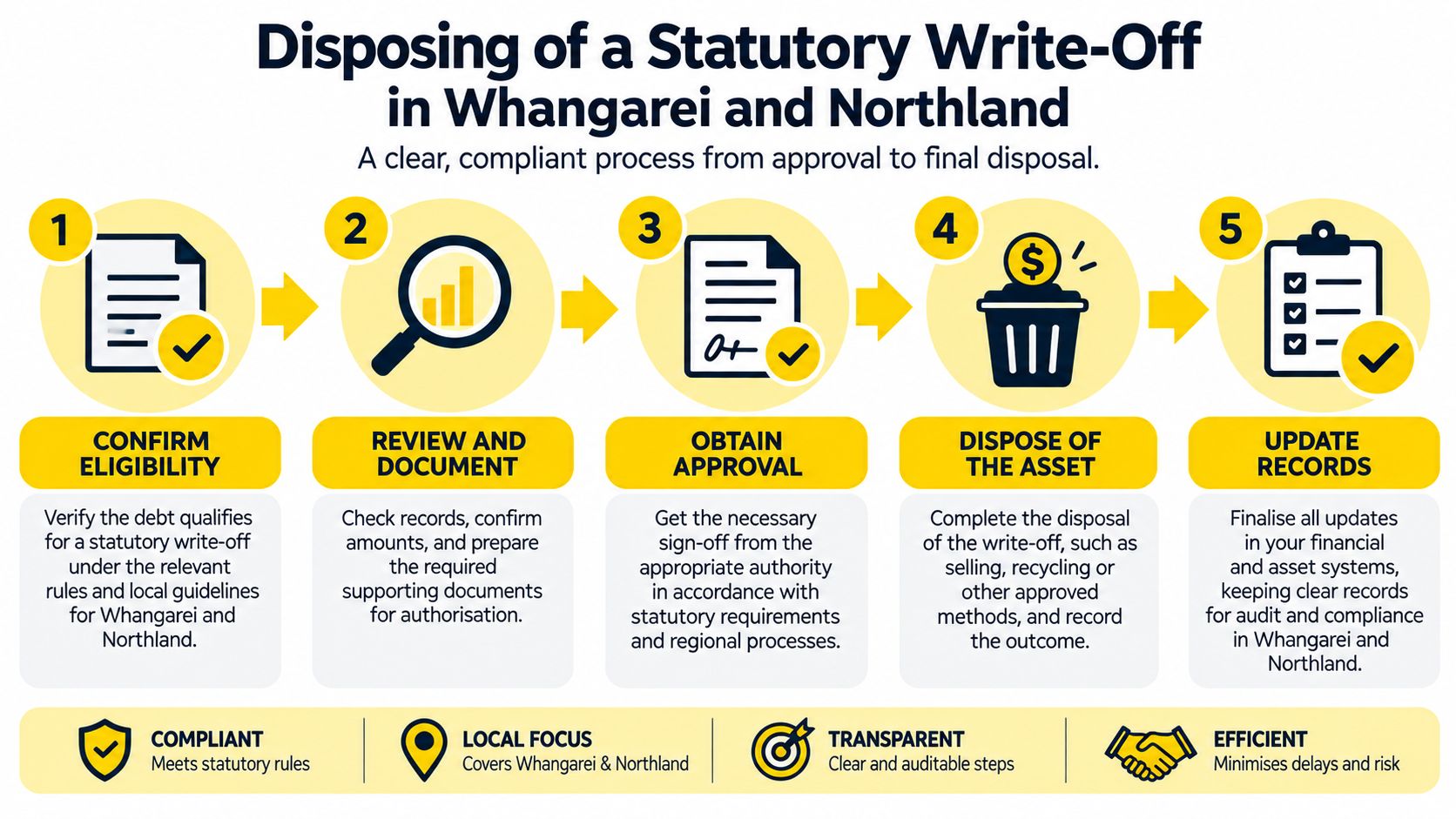
Prepare the handover file
Keep photocopies or clear photographs of:
- Insurance paperwork: The write-off decision, insurer release or salvage documentation.
- Vehicle records: The registration certificate, VIN details and any NZTA correspondence.
- Ownership evidence: Documents showing that you can lawfully dispose of the vehicle.
- Finance information: Written confirmation from the finance company if a lender still has an interest.
- Plate instructions: Details of whether the personalised plates will be retained, surrendered or transferred separately.
The vehicle may be at a home, workshop, farm or insurer's yard in Whangārei, Kerikeri, Kaitaia or Dargaville. Confirm access, keys, whether it rolls and whether loading equipment is needed. A non-running or damaged vehicle needs a collection plan that matches the site.
Confirm the final notification
At collection, complete the relevant ownership and disposal paperwork with the receiving operator. Ask for written confirmation that the NZTA notification has been submitted and keep the receipt with your insurance file. Don't leave the car, plates or documents with an unknown buyer without a clear record of who accepted them and why.
You can review the practical arrangements involved in scrap car collection. If the vehicle is financed, contact the lender before disposal. The lender may need to approve the settlement or release, and a dismantler shouldn't be expected to resolve that ownership issue without written authority.
Your Statutory Write-Off Decision Checklist
Use the insurer's documents, the NZTA record and the certifier's advice together. No single detail, such as a repaired panel or a running engine, can answer the whole question.
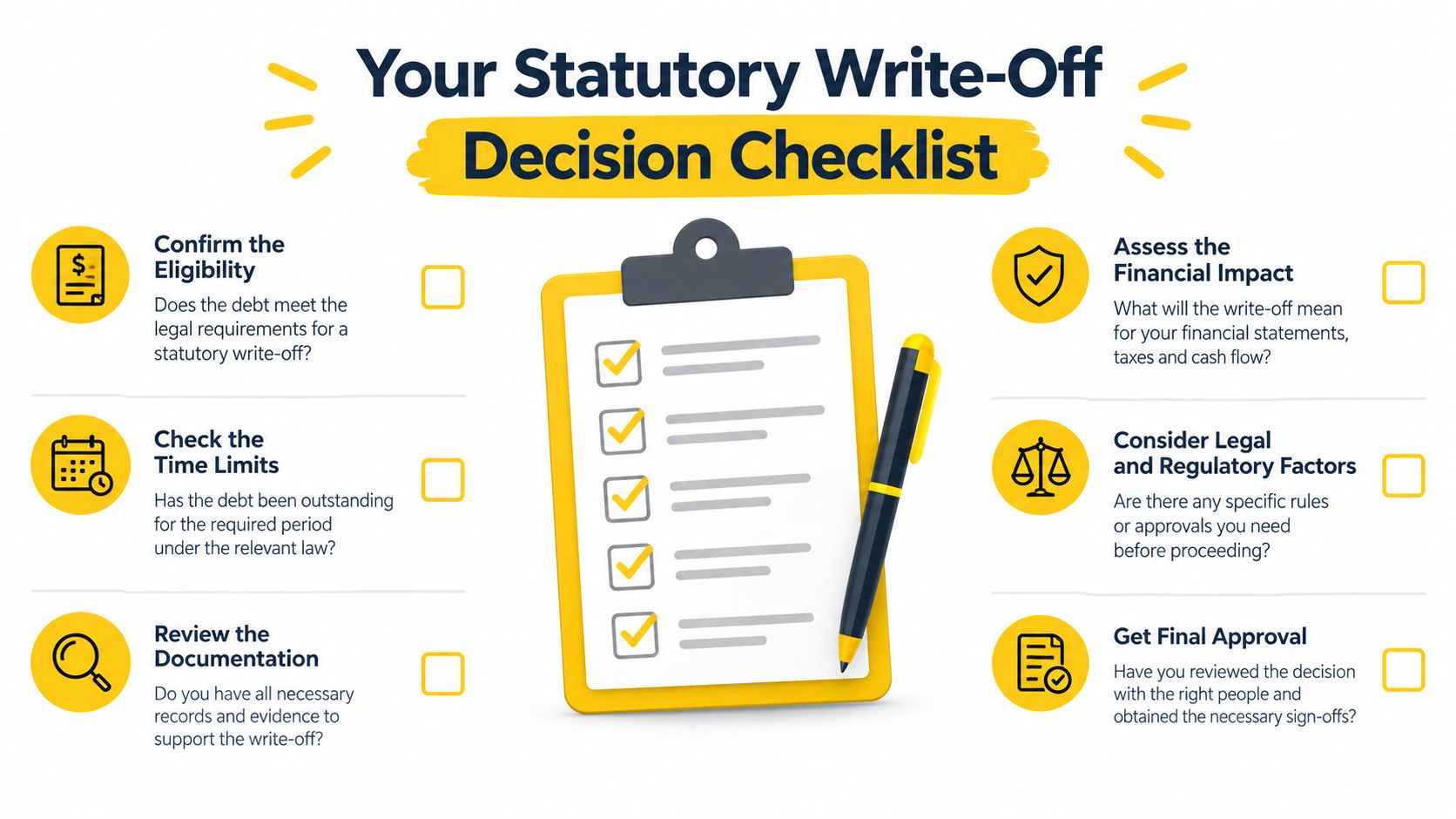
Ask these questions before spending more
- What status has the insurer issued? Is the paperwork statutory, economic, salvage or non-repairable?
- What does NZTA show? Check the registration and vehicle-history position before buying parts or advertising the car.
- What caused the loss? Separate cosmetic damage from structural, water, fire or safety-system damage.
- Can you prove ownership? Gather the previous New Zealand registration evidence and a complete ownership trail.
- What does a specialist certifier say? Obtain an assessment of the LT308 pathway before authorising major repairs.
- What is the likely exit value? Compare the completed repair and certification cost with the vehicle's likely value, parts value and scrap value.
- Is finance still owing? Contact the finance company before transferring or dismantling the vehicle.
- Are personalised plates or special equipment involved? Arrange their separate treatment before collection.
- Does sentimental value change the decision? A personal attachment may justify a project, but it doesn't remove the inspection and registration requirements.
Follow the branch that matches the evidence
If the specialist certifier confirms a credible repair pathway, the ownership records are complete and the projected value supports the work, proceed cautiously with documented repairs and the required entry-certification process.
If the structure, records or certification pathway remain uncertain, choose compliant dismantling and material recovery instead. Statutory status doesn't destroy every useful component, but it ends ordinary road use until the vehicle is lawfully re-entered through the required process.
Car Removals Whangarei accepts statutory, hail, flood and fire-damaged vehicles and can arrange collection for owners in Whangārei and wider Northland. To discuss the paperwork, vehicle condition and removal arrangements, visit Car Removals Whangarei for a quote and next steps.
- statutory write-off
- write-off vehicle NZ
- NZTA vehicle status
- insurance write-off
- deregistered car