· Car Removals Whangarei
Scrap Car Valuation in NZ: What Really Drives the Price
A Hilux has been sitting behind the implement shed for years. The chassis is rusty, a door is missing, the engine hasn't run in ages, and nobody's sure whether the registration is still current. You want the space back, but you don't want to accept an offer without knowing what it covers.
That's a familiar Northland situation, and it's exactly where scrap car valuation matters. The offer isn't the vehicle's weight multiplied by a steel rate. It reflects the parts that can be reused, the metals that can be recovered, the costs of collection and processing, and whether the paperwork lets the vehicle be handed over properly.
Table of Contents
- A Rusted Hilux in the Back Paddock
- What Scrap Car Valuation Actually Means in NZ
- Vehicle Condition and What It Does to the Number
- How Metals, Parts Demand and the NZ Market Set the Price
- Cash for Cars, Scrap Yards, Private Buyers and Councils Compared
- Towing, Tyres, Fluids and the Hidden Cost Ledger
- Five Myths That Cost Northland Owners Real Money
- What to Have Ready Before You Accept a Quote
A Rusted Hilux in the Back Paddock
On a rural block outside Whangārei, an old Hilux can look like little more than a rusted shell. Maybe it's been parked on grass since its last Warrant of Fitness expired. One wheel is flat, the bonnet is gone, and the owner can't remember when the plates were last renewed.
That doesn't make the vehicle worthless, but it does make its value a practical question rather than a tidy calculation. A dismantler will want to know whether the engine and transmission are still there, whether the catalytic converter is present, and whether the ute can be winched onto a truck. A complete vehicle may offer reusable parts as well as metal. A stripped, badly corroded shell may have little beyond its recoverable steel.
The other questions matter just as much. Who pays for towing and safe handling? Is there any value in the wheels, panels or drivetrain? And can the person arranging removal prove they're entitled to sell or dispose of the vehicle?
Those are separate issues, even if they all affect the final transaction. Physical condition helps determine the vehicle's practical value. Access and hazardous materials affect the cost of taking it away. Ownership and registration details determine what needs to be documented.
A fair offer should make sense against the vehicle sitting in front of you, not against an imagined price for a tidy, road-ready ute. The useful starting point is to look at what can be recovered, what has to be managed, and what needs to be signed off before the vehicle leaves the property.
What Scrap Car Valuation Actually Means in NZ
A scrap car valuation is the net result of three ledgers, adjusted for the work required to collect and process the vehicle. Looking at those ledgers separately makes it easier to understand why two vehicles of similar size can receive different offers.
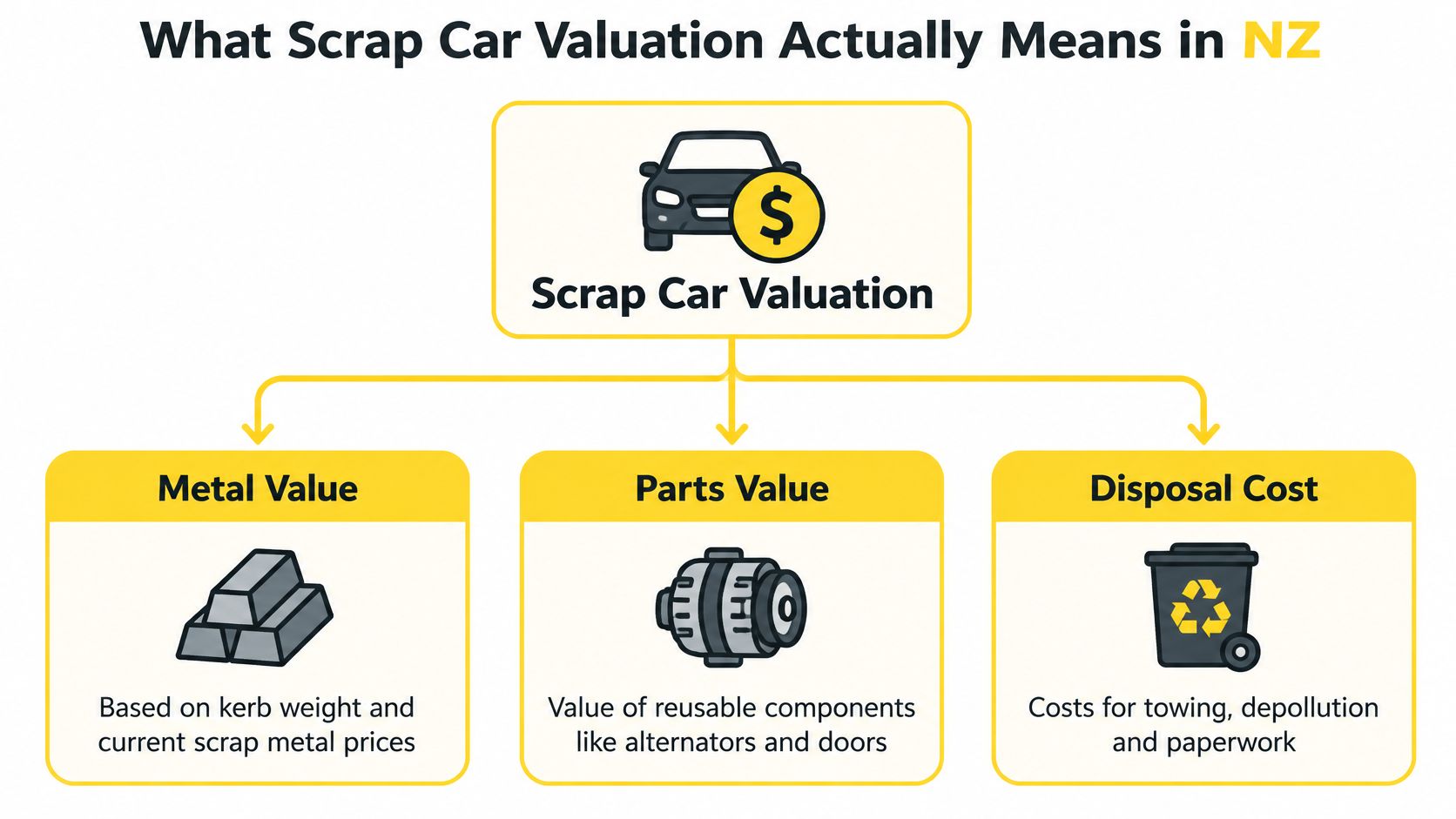
The three ledgers
Parts value is the value of components that a dismantler can identify and potentially reuse. That can include an engine, transmission, doors, seats, glass, wheels, electronic components or a catalytic converter. Demand matters: a sound part for a vehicle people still repair may be more useful than a similar part that's difficult to resell.
Metal value comes from sorting and recovering materials such as steel, iron, aluminium and copper. The body and chassis contribute to this ledger, but they aren't the whole calculation. The Ministry for the Environment advises separating components such as engines, body parts, radiators and catalytic converters because different materials can be handled and valued differently. It also recommends draining oils and other fluids before recycling. (Ministry guidance on managing vehicle waste)
Disposal liabilities are the items and work that add cost rather than saleable value. Fluids need controlled handling; tyres and batteries need appropriate routes; and towing takes time, equipment and fuel. A vehicle that's hard to reach or can't roll may take more effort to load than one parked on a clear, firm driveway.
What a quote should account for
Before quoting, a dismantler should establish what's present, what's missing, whether the vehicle can roll, and where it's sitting. They'll also need to understand the collection and processing work the vehicle requires.
The basic model is reusable parts plus recoverable metals, minus liabilities, adjusted for logistics. A written quote should be based on the vehicle as described and should make clear what the offer includes. That's why a parts-based dismantler, a metal buyer and a private buyer may reach different figures without using the same valuation method.
Vehicle Condition and What It Does to the Number
A dismantler can't value a rusted ute from its badge alone. Condition determines whether the vehicle contributes mainly reusable components, sorted materials or a shell that takes work to move and process.
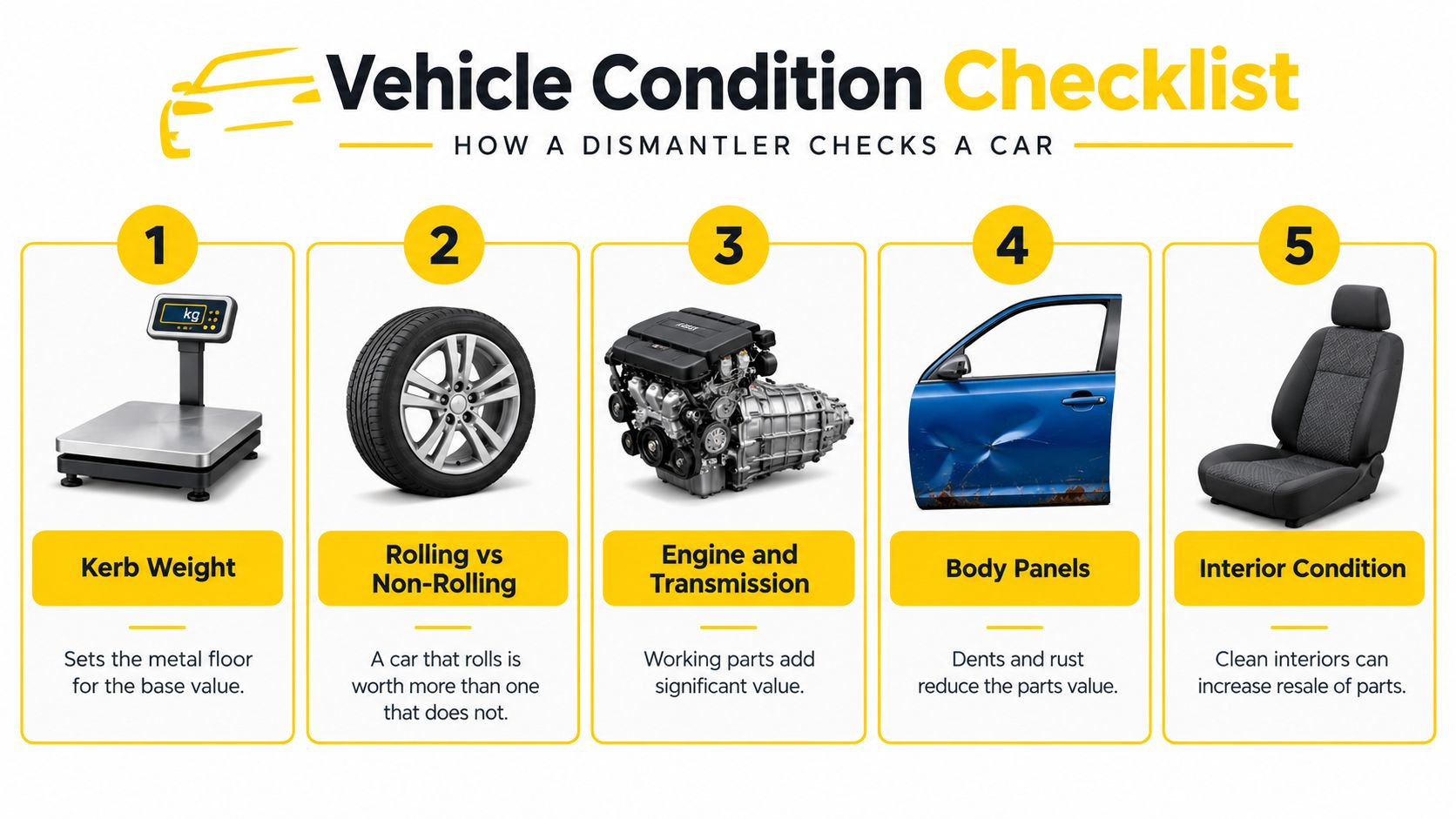
Start with the kerb weight, which gives a rough sense of how much material is present. It doesn't tell you what the net offer will be: a heavy vehicle can still have low recoverable value if major components are missing or collection is difficult.
Then check whether it rolls, steers and brakes. A vehicle that can be moved into position is simpler to load than one with seized wheels, no wheels, or a locked steering column. A non-runner can still be collected, but the required equipment and access affect the job.
The engine and transmission matter as identifiable parts, even when the vehicle won't start. A dismantler will want to know whether they're present and whether anything is visibly damaged. A complete drivetrain may offer more recovery potential than an engine bay stripped of its useful components.
Look beyond the paint
Body panels, wheels and interior parts can also count. Straight, saleable doors or panels are different from panels crushed or rusted through. Aluminium wheels, copper-rich wiring and a complete dashboard may be useful, while missing glass or a stripped interior leaves less to recover.
A catalytic converter can affect an offer separately from the rest of the vehicle, so tell the valuer whether it's present rather than assuming its condition is obvious from a photo.
In Northland, look underneath as well as along the body. Surface rust on a panel isn't the same as corrosion through a chassis rail or subframe. Structural rust can make a vehicle unsuitable for road use even when the visible bodywork looks presentable.
If you're unsure what can be sold separately before collection, this guide to selling a car for parts can help you think through what's present. Be clear with the valuer about anything you remove, because a quote for a complete vehicle won't describe a stripped shell.
How Metals, Parts Demand and the NZ Market Set the Price
The metal ledger sets part of an offer, but demand for usable parts can change the picture. Steel, aluminium and copper don't all follow the same recovery route, and the value of a component depends on whether a dismantler can identify it and has a practical way to reuse or sell it.
A complete ute with an engine, transmission, doors and wheels still in place gives a dismantler more to assess than a bare body. A vehicle with the same general size but no drivetrain, missing panels and a removed catalytic converter is a different proposition. The badge and model still matter, but only alongside condition, completeness and demand.
New Zealand has a sizeable older-vehicle group. An NZTA discussion document reported about 128,000 light vehicles aged 40 years or more in the 2024 fleet, a group that includes vehicles approaching or past the point where continued road use makes economic sense. (NZTA discussion document on vehicle safety requirements) Age alone doesn't set a scrap value. It can, however, be a reason to look closely at whether the vehicle's useful value now lies in its parts rather than its continued use on the road.
Ask what the offer is based on: a weight-only buyer is valuing the materials, while a dismantler may also account for parts that can be recovered.
That difference explains why the same vehicle can receive different offers from different buyers. A metal yard may focus on the shell and sorted materials. A private buyer may care most about whether the vehicle can still be driven. A dismantler considers recoverable parts and metals alongside the costs of collection and handling.
For a closer look at what influences the metal side of an offer, see this explanation of scrap metal prices in New Zealand. The useful comparison isn't the biggest number you've heard. It's whether the quote reflects your vehicle's actual condition and clearly states what's included.
Cash for Cars, Scrap Yards, Private Buyers and Councils Compared
The disposal route changes what the buyer is paying for and what you need to organise yourself. Compare the whole transaction, not just the headline offer.
| Path | Pays for | Handles towing | Best fit |
|---|---|---|---|
| Cash-for-cars service or licensed dismantler | A combination of recoverable parts and materials, subject to the vehicle and collection details | Often arranged as part of the service, but confirm what the quote includes | A vehicle that's unwanted, damaged or not worth repairing |
| Scrap-metal yard | Mainly recoverable metal, often assessed by weight and condition | Usually the seller's responsibility unless agreed otherwise | A complete, accessible vehicle when you can arrange transport |
| Private part-out | Individual parts sold to separate buyers | The owner organises removal and disposal of what's left | A vehicle with sought-after components, where the owner has time and space |
| Council or insurer process | Depends on the circumstances; it may be about disposal or an insurance write-off rather than a normal private sale | Arranged under the relevant process | An abandoned vehicle on council land or an insurer-managed write-off |
A private part-out can make sense if you can identify the parts, store them safely, handle enquiries and arrange disposal of the remaining shell. That work doesn't disappear just because individual components may be worth more separately.
A scrap-metal sale is more direct, but it's not the same as a dismantler's quote. If you take a non-rolling vehicle to a yard, you'll need to factor in loading and transport. A removal service can bundle collection with the vehicle assessment, but ask whether the amount is firm and what could change it.
Council processes are different again. Councils can seek to recover towing, storage and disposal costs from the last registered owner of an abandoned vehicle. (New Zealand Government information on vehicle registration and related responsibilities) A council removal shouldn't be confused with a private sale that pays the owner for recoverable value.
Towing, Tyres, Fluids and the Hidden Cost Ledger
A scrap offer works like three ledgers: one for parts, one for metal, and one for the costs of collecting the vehicle and dealing with it legally. That third ledger is the one sellers rarely see itemised.
“Free towing” means you aren't invoiced for collection. The truck still has to reach the vehicle, load it and cart it, so the cost sits inside the quote either way. Tell the collector how far the vehicle is from a spot a truck can safely stop. Mention a locked gate, soft ground, a narrow track, or a car blocked in by machinery. Say whether it rolls, because a car that can't move under its own wheels needs a winch or a different loading plan.
Access detail changes the number. A Hilux rusting in a back paddock is a different job from one parked at the kerb.
Tyres and fluids need a proper route
Tyres carry their own cost line in the ledger. The Ministry for the Environment estimates that about 6.5 million tyres reach end of life in New Zealand each year, with roughly 40% recycled or exported. (Government information on end-of-life tyres and batteries) Under New Zealand's tyre regulations, worn tyres move through proper collection and processing under Tyrewise. Tell the valuer how many are on the vehicle and whether any are still usable.
Used oil, coolant and refrigerant need controlled handling too. None of it should reach soil or stormwater, and the same applies to batteries and components that need safe removal. Draining fluids or stripping hazardous parts yourself won't raise an offer and can create a bigger problem. Ask the dismantler what the quote covers.
Hybrid and electric vehicles add one more line to this ledger. An identifiable, intact traction battery can hold recovery value, while damage from a crash, fire or flood changes the handling requirements and can turn the pack into a cost. The same Ministry for the Environment consultation projects that EV batteries reaching end of life could rise from an estimated 1,000 in 2020 to 84,000 annually by 2030, which is why battery assessment is becoming a standard part of quoting rather than a rare case.
For a hybrid or EV, name the model and describe the battery history. Don't remove or transport high-voltage components yourself.
A sound quote includes the collection and compliance work, whether it shows as a separate line or is folded into the figure you hear on the phone.
Five Myths That Cost Northland Owners Real Money
Myth one: the offer is just weight times a rate. Weight feeds only the metals ledger. A Hilux with a complete engine, gearbox and full set of wheels carries a second ledger of parts value that the scales never see, so a stripped shell and a complete vehicle of identical weight produce two different quotes. Describe what is missing as plainly as what remains.
Myth two: deregistration makes a car worthless. Cancelling registration changes a vehicle's status for road use. The steel, the reusable parts and the record NZTA holds all stay put. The Motor Vehicle Register keeps the vehicle's history after cancellation, which means a deregistered vehicle can still be identified, priced and sold. (NZTA information on cancelled registration and vehicle records)
Myth three: a hybrid or EV battery is always a liability. An intact, identifiable pack can sit in the parts ledger as recovery value. Damage from a crash, fire or flood shifts it into the liability ledger, where assessment and safe handling cost more. The pack's history decides which ledger it lands in, so give the valuer the vehicle's story rather than a guess.
Myth four: a phone quote is a firm quote. A quote is only as reliable as the description behind it. A missing catalytic converter, a car that cannot roll, or a track too soft for a truck can each move the number when the driver arrives. Say it early and the figure you agreed on the phone is the figure you get.
Myth five: handing over the keys ends the job. Pickup and paperwork are separate tasks, and the register's record outlives the tow truck's visit. As the NZTA material in myth two sets out, cancellation leaves the vehicle's history on file, so confirm which documents the buyer completes and which stay with you. Put the arrangement in writing before the vehicle leaves the property, with towing, disposal and registration steps each given one named owner.
What to Have Ready Before You Accept a Quote
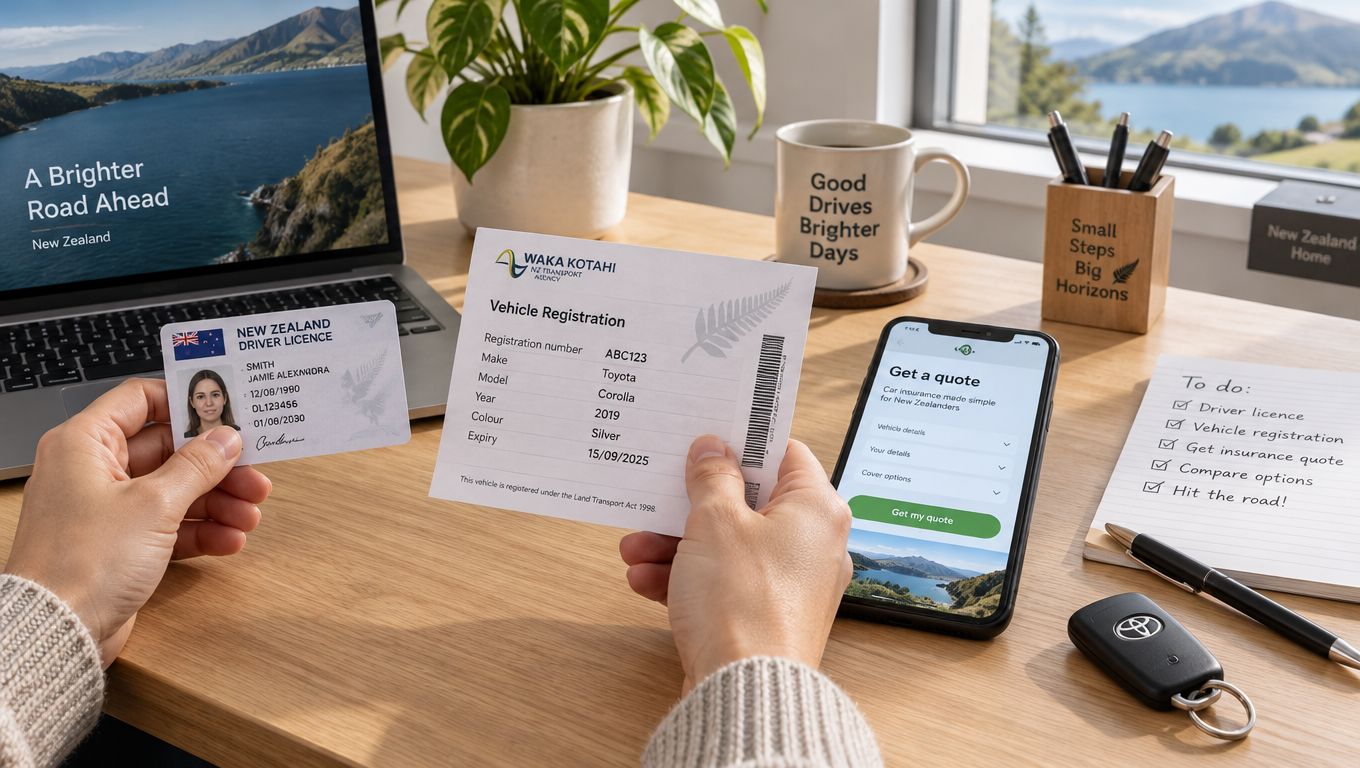
A clear description helps the valuer make an offer that matches what's at the gate. Start with the vehicle's make, model, approximate year and location, then gather the details that affect ownership, condition and collection.
Sort out the ownership details
Have proof of identity and the registration details, if available. If the vehicle is financed, find out who has authority to sell it and whether the finance needs to be cleared first. For an insurer write-off, keep the insurer's documents to hand. If you're arranging removal for a deceased owner, a farm, a landlord or someone else, be ready to show written authority.
Deregistration and collection aren't the same action. A deregistered vehicle still has a record in the Motor Vehicle Register, so tell the valuer its known status and ask how the handover and any registration-related steps will be documented.
Make the physical description easy to check
A few useful photos can answer questions faster than a long call. Take pictures of:
- The whole vehicle: include each side and show missing panels or visible collision damage.
- The engine bay and interior: make it clear whether the engine, seats, dashboard and other components remain.
- The wheels and tyres: note missing wheels, flat tyres or tyres that are worn or damaged.
- The battery and catalytic converter: photograph them if they're visible, and don't remove anything to get a better view.
Also say whether the vehicle rolls, steers and brakes. Describe any fluid leaks, flood or fire exposure, and how close a collection truck can get. A vehicle behind a locked gate or on soft ground isn't the same collection job as one beside a firm driveway.
For more detail on what information helps with a car wreckers quote, prepare those facts before calling. A short, accurate photo set and clear access notes often give the valuer a better basis for an offer than an extended description from memory.
A fair valuation is a written figure based on the vehicle's parts, metals, condition and collection needs, not a bare per-kilo rate. Before you accept, check that the quote describes the car accurately, says what's included, and explains how payment and ownership notification will be handled. Car Removals Whangarei provides quotes for unwanted vehicles and arranges removal across Northland, with collection details confirmed for the vehicle and its location.
If your car, ute or machinery has stopped earning its space, gather your ID, registration details, photos and access notes, then ask Car Removals Whangarei for a quote based on its actual parts and condition. Confirm the amount, towing arrangements and NZTA ownership notification before pickup.
- scrap car valuation
- cash for cars
- car removal
- scrap metal prices
- end of life vehicle