· Car Removals Whangarei
How Do I Sell a Car in Northland: Your Complete Guide
You've got an unwanted car sitting beside the shed, outside a Whangarei rental, or tucked behind the house in Dargaville. It may have failed its WOF, stopped starting after a trip along State Highway 1, or just reached the point where every repair quote feels hard to justify. The question is straightforward, how do I sell a car without being left with the paperwork, transport problem, or future liability?
Northland adds a few complications. Rural distances make inspections and towing less convenient, older vehicles are common, and a non-rolling car can't be handled like an ordinary private sale. The right selling route depends on the vehicle's condition, your timeframe, and how much effort you're prepared to put into finding a buyer.
Table of Contents
- Choosing Your Selling Route
- Navigating NZTA Transfer Requirements
- Pricing Your Vehicle Accurately
- Preparing Your Car for Sale
- Finalising the Sale Securely
- Key Takeaways for Northland Sellers
Choosing Your Selling Route
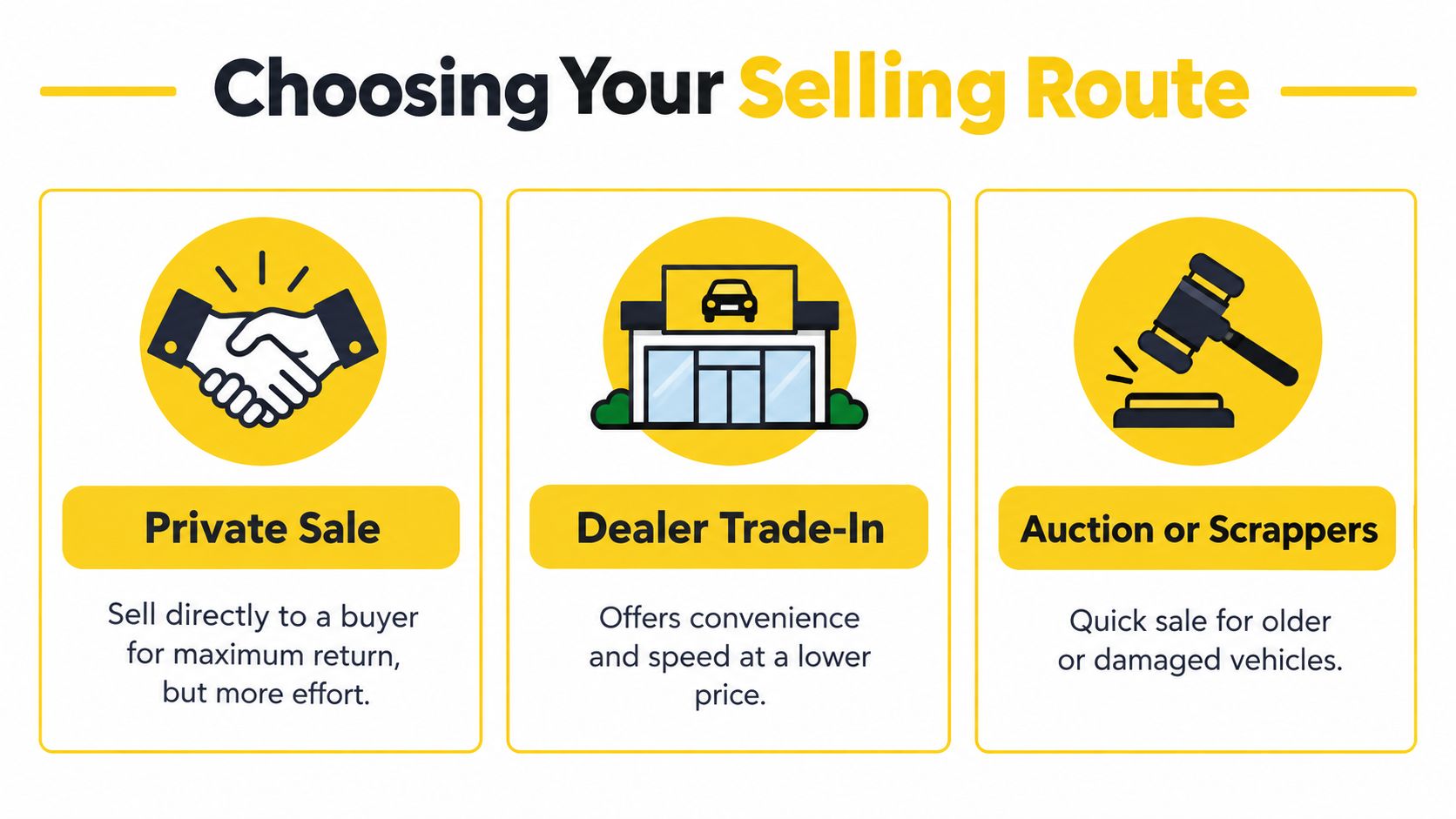
Start by deciding whether your priority is the highest possible advertised price, a simple vehicle changeover, or a quick removal. A tidy, road-ready car with service records may suit a private sale. A vehicle you're replacing immediately may be easier to trade in. A failed-WOF car, damaged ute, or vehicle that won't roll usually needs a dealer with the right equipment or a dismantler.
New Zealand's light fleet is old by international standards. The Ministry of Transport vehicle fleet report records the average age rising from 11.7 years in 2000 to 14.1 years in 2018, with nearly one in five light vehicles more than 20 years old. That matters in Northland because an older car can still have value through its engine, gearbox, panels, four-wheel-drive components, or recoverable metal, even when putting it back on the road doesn't make financial sense.
| Method | Potential Price | Effort Required | Speed |
|---|---|---|---|
| Private sale | Often the strongest gross price for a sound, desirable vehicle | High, including advertising, viewings and paperwork | Variable |
| Dealer trade-in | Convenient, especially when buying another vehicle | Low to moderate | Usually tied to the purchase |
| Dismantler or scrapper | Based on parts, condition and recoverable materials | Low, particularly for non-running vehicles | Often quick |
A private sale gives you control, but you manage messages, test drives, negotiations, buyer inspections and disclosure. It works poorly when the car is parked down a steep farm driveway, has no current WOF, or can't safely travel between Whangarei and a buyer's location. A trade-in reduces that work, though the dealer has to account for reconditioning, transport and resale risk.
A dismantler or removal service is often the practical choice for a seized engine, stripped shell, accident-damaged vehicle or old car that won't roll. Before choosing, collect the registration number, odometer reading, service records, WOF and registration status, then compare a private-sale estimate, a dealer offer and a dismantling or salvage quote. The Northland guide to selling a car privately can help you judge whether the extra effort is justified.
Practical rule: Compare the amount you keep after repairs, advertising, transport and your time, not just the biggest headline offer.
Navigating NZTA Transfer Requirements
The handover is not complete when the buyer's payment arrives or a tow truck leaves your driveway. In New Zealand, the seller and buyer must notify Waka Kotahi NZ Transport Agency when the registered person changes. Submit your seller notification immediately. It creates a record of the handover and helps keep later licensing charges, tolls or infringement notices from being linked to you.
Complete the seller notification at handover
Before the vehicle or keys leave, confirm the buyer's identity and check that the payment has cleared. Write a receipt showing the buyer's full details, vehicle identification, agreed price, handover date and payment method. Remove personal belongings, private documents and anything excluded from the sale.
The online seller process requires your New Zealand driver licence, the vehicle plate number, and the full name and address of the person or organisation receiving it. Complete the disposal notification yourself instead of relying on the buyer to handle both sides. Save the confirmation or a copy with your sale records.
The NZIER vehicle report identifies ownership paperwork as a foundation of the transaction. The same record matters whether the vehicle goes to a private buyer in Raumanga, a dealer in Maunu, or a wrecker collecting a non-rolling car from a rural property outside Kamo. For a vehicle removed by Car Removals Whangarei, keep the collection details and notification confirmation after the tow.
Check the vehicle's status before advertising
Registration status affects what the buyer can legally do next. If the vehicle is no longer roadworthy, NZTA says it must be deregistered. Tell the buyer if it is unregistered or deregistered before payment, because the buyer cannot become the registered person until the vehicle is registered again.
Check its finance, stolen status, recorded damage, unpaid licensing costs and road-user charges. If the vehicle requires RUC, confirm that the distance licence is current, or state clearly what you and the buyer have agreed. Selling vehicles regularly may also create motor-vehicle trader obligations. If you sell more than six vehicles in a 12-month period, check the requirement in Waka Kotahi's ownership guidance.
A wrecker handover still requires your seller notification. The wrecker can cancel the registration, or you can cancel it before collection. If you cancel first, keep the vehicle off public roads and surrender the plates through a registration agent. This is particularly important when an old ute cannot roll safely from a farm track or rural driveway to a buyer.
Pricing Your Vehicle Accurately
A vehicle sitting on a rural driveway near Kaikohe may have a very different value from the same model ready for a test drive in Whangarei. Start by separating road-going value from parts and salvage value. A tidy exterior does not confirm that the engine, gearbox or chassis is sound. An older Hilux, Navara, Ranger or four-wheel drive may still attract interest because its panels, interior and mechanical components remain useful.
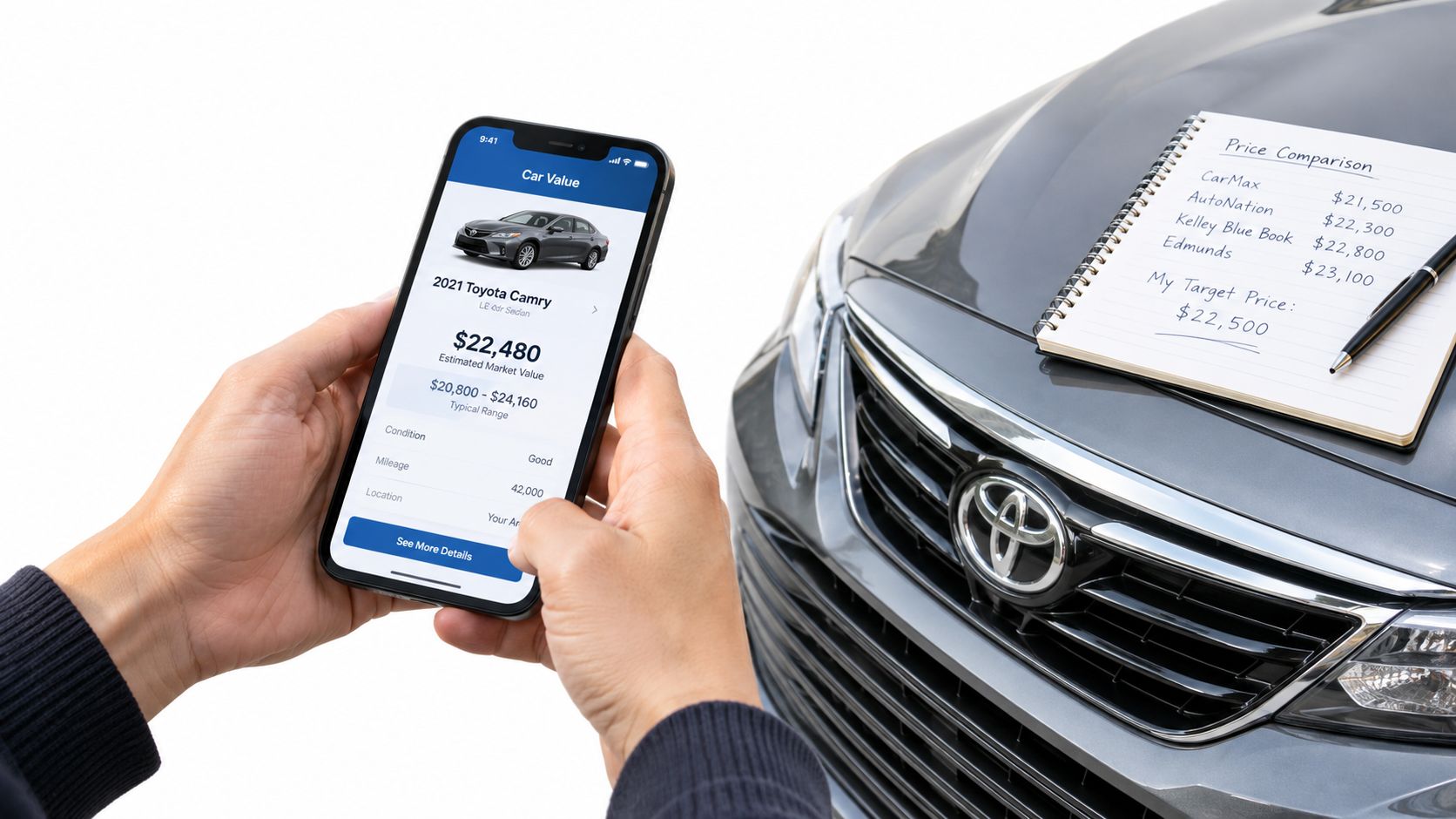
For a private sale, compare similar New Zealand listings and adjust for location, condition, WOF, registration, tyres, rust, service history and known faults. The original purchase price is not a useful benchmark. Buyers may reduce their offer if they must collect the vehicle from a remote property, a steep driveway near Kamo or a difficult rural road.
Build a private-sale baseline
Use the vehicle's plate, VIN or chassis number, odometer reading, maintenance records and damage history to support the description and asking price. Work through these checks:
- Confirm that you are the registered person.
- Gather the plate, VIN or chassis number, odometer reading, service records and damage records.
- Disclose known faults, finance, damage, and whether the vehicle is unregistered or deregistered.
- Compare similar New Zealand listings and set a sensible asking price.
- Check identification and record the buyer's details before an inspection or test drive.
- Give both parties a written receipt stating the vehicle, price, date, condition and payment method.
- Submit the seller transaction to Waka Kotahi immediately before handing over the keys.
A running car with a current WOF and clear history may command more, but repairs do not always increase the final sale price. Compare the likely repair bill with realistic local demand before spending money. The car estimate guide can provide another reference point, but treat any estimate as a starting point rather than a promise.
Understand a dismantler's offer
A wrecker's quote reflects parts demand, steel pricing, vehicle completeness, loading difficulty and transport distance. A car with a blown motor may still be worth more than a stripped shell if its panels, gearbox, interior or electrical components are usable. For a non-rolling vehicle, state whether the wheels turn, the brakes are seized and the property has safe access for loading.
Ask whether the quote is firm and whether towing, paperwork or later deductions apply. The amount left after those costs is the figure to compare with a private buyer's offer. Car Removals Whangarei can assess collection requirements for vehicles that cannot roll from a rural driveway, so provide accurate details before agreeing to a price.
Preparing Your Car for Sale
Preparation depends on who is buying. A private buyer wants a vehicle they can inspect and understand. A removal operator needs clear access, accurate condition information and the correct person available to authorise the collection.
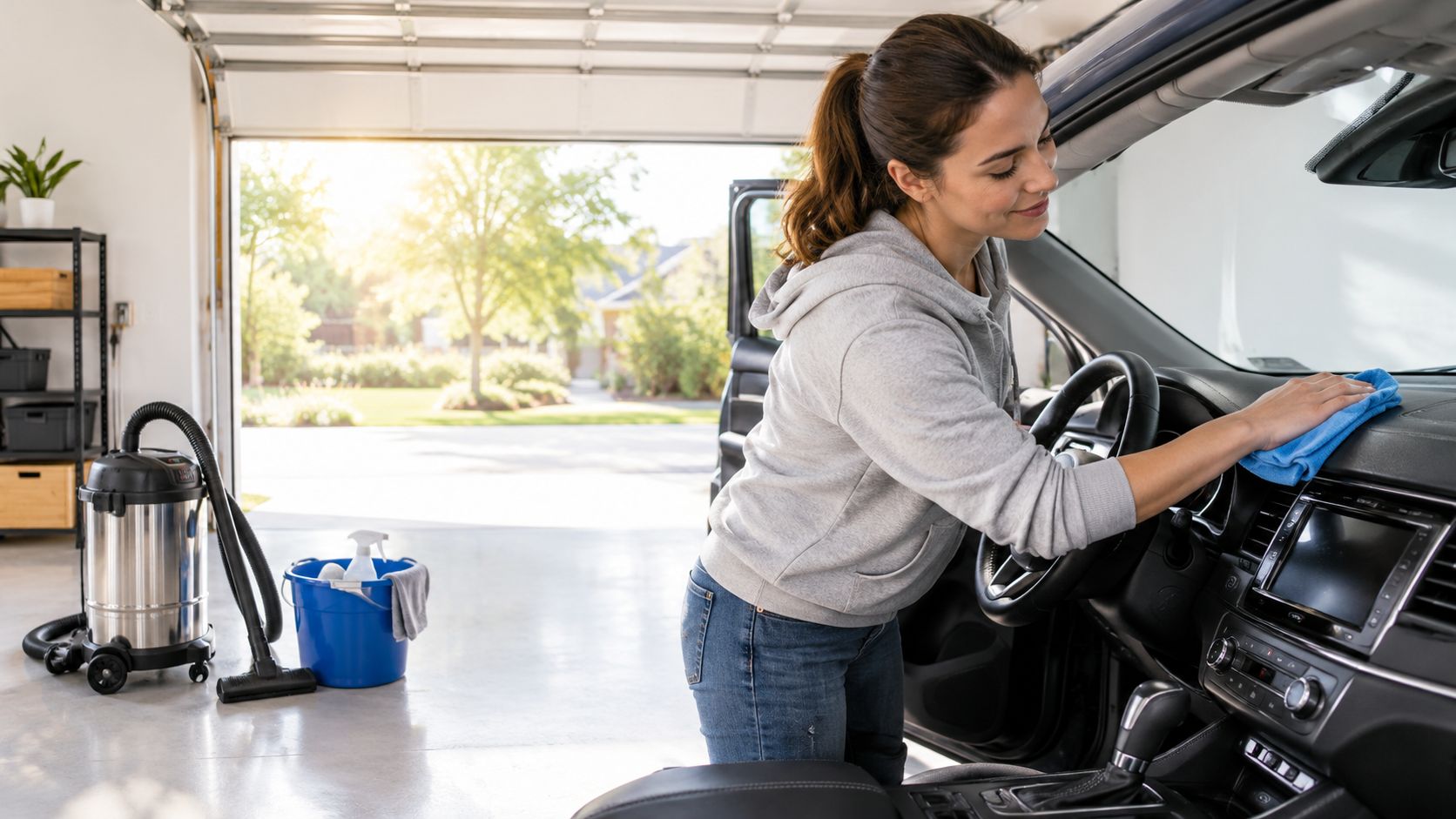
For a road-going car, remove rubbish and personal items, wash the exterior, vacuum the interior and clean the dashboard. A modest clean-up helps buyers see the vehicle's actual condition, but don't conceal oil leaks, warning lights, water damage or rust with temporary fixes. Gather the service book, repair invoices, WOF details, registration information, spare keys and any reports relating to previous damage.
Make viewings safer and more useful
Don't allow an unknown person to take the car for a test drive without checking identification and recording their details. Meet in a visible place where possible, take a second person with you, and keep the keys and paperwork under your control until payment is confirmed.
Describe the vehicle plainly in the listing. Include whether it starts, drives, rolls, has a current WOF, is registered, has warning lights, or has known mechanical or structural faults. Private sales generally aren't covered by the statutory consumer guarantees that apply when a trader sells goods in trade, as explained by Consumer Protection New Zealand. That doesn't remove your responsibility to avoid misleading statements.
Prepare a non-running vehicle for collection
Move loose objects from inside and the boot, open the vehicle if safe, and leave the keys in the agreed place. Tell the removal operator about narrow gates, soft ground, steep driveways, low sheds and access from roads such as State Highway 14 or rural routes around Mangakahia. Send clear photographs of the vehicle and its position before collection.
A car that can't roll may require a winch, skates or different loading equipment. Don't attempt to move it with unsafe chains or improvised towing arrangements. Make sure the registered person or an authorised representative is present to confirm the sale and complete the handover record.
Finalising the Sale Securely
Treat the handover as a controlled exchange, not a casual farewell. Confirm the final amount in writing, verify the buyer's identity, and check that the money has arrived in your own bank account before releasing the keys, plates or vehicle. A screenshot of a pending transfer isn't the same as cleared funds.
For a private sale, meet somewhere public and well-lit where practical. A bank branch or another visible location can make payment verification easier, while a second person can help with the inspection and handover. Don't let pressure about a long drive, an urgent ferry connection or a supposedly limited offer make you skip the receipt or NZTA notification.
Finish the record before the vehicle leaves
Use the written receipt to record:
- Vehicle details: Plate, VIN or chassis number, make and model.
- Condition: WOF, registration, known faults, damage and whether it drives.
- Transaction details: Agreed price, date, payment method and both parties' names and addresses.
- Handover evidence: The time the keys and vehicle changed possession, plus photographs if the condition may later be disputed.
Submit your seller notification to NZTA immediately. Remove the vehicle from any linked toll account as well, because selling a car doesn't automatically remove it from the account's vehicle list. Outstanding licensing fees can remain associated with the recorded registered person, so check the account after the sale and retain your records. The post-sale checklist for NZ vehicle owners is useful when you want to confirm that no administrative task remains.
Handle a wrecker or dismantler handover
If the vehicle is no longer roadworthy, don't let the buyer drive it away. Tell the buyer its registration status before agreeing to the sale. When a vehicle goes to a wrecker, NZTA requires you to notify the agency, while the wrecker handles cancellation unless you cancel registration before collection.
For an EV or hybrid, disclose charging faults, warning lights, crash or flood history, battery replacement history, whether it rolls, and whether it can be accessed safely. Don't remove a high-voltage battery yourself. A professional removal pathway should account for isolation and loading safety rather than treating every battery vehicle as an ordinary scrap car.
The safest handover is the one where payment, identity, condition, receipt and NZTA notification are all dealt with before the vehicle departs.
Key Takeaways for Northland Sellers
The best answer to how do I sell a car depends on the car in front of you. A clean, road-ready hatchback with records may justify a private listing. A vehicle you're replacing may suit a dealer trade-in. A rusted farm ute, failed-WOF wagon, flood-damaged car or non-rolling shell usually needs a dismantler who can assess parts value and arrange suitable loading.
Use this checklist before accepting an offer:
- Choose the route deliberately: Compare private sale, trade-in and dismantling based on net value, effort and urgency.
- Gather the facts: Record the plate, VIN or chassis number, odometer reading, WOF, registration status, service history and known damage.
- Price the actual condition: Separate the value of a running vehicle from the value of its parts, metal and transport requirements.
- Describe faults clearly: State whether the car starts, drives, rolls, has warning lights, has finance, or is unregistered.
- Protect private viewings: Check identification, record buyer details and don't release the car for a test drive casually.
- Verify payment: Wait for cleared funds in your own account before handing over keys or authorising loading.
- Keep a receipt: Include the vehicle, price, date, condition, payment method and both parties' details.
- Notify NZTA immediately: This is the practical step that helps end your exposure after the vehicle leaves your possession.
- Account for the site: Tell the collector about rural distances, narrow entrances, soft ground, steep driveways and whether the vehicle rolls.
- Treat EVs and hybrids carefully: Disclose battery and damage issues, and leave high-voltage isolation to suitably equipped professionals.
Northland's distances make an apparently high offer less attractive if you need to organise transport, pay for repairs, or wait through repeated missed appointments. A lower gross price can produce a better result when it includes collection, clear paperwork and no later deductions. The sensible comparison is always the amount you receive, the work you avoid and the liability you close.
Selling an old vehicle also clears more than driveway space. It removes a hazard from a farm, prevents a non-running car becoming a rental-property problem, and gives you a documented point at which responsibility changes hands. Once the vehicle, payment and NZTA notification are all recorded, you can move on without relying on a buyer's promise to complete the process later.
If your unwanted car, ute, van, 4WD, machinery or non-rolling vehicle is in Whangarei or rural Northland, Car Removals Whangarei can assess it for removal and arrange pickup, including vehicles that aren't roadworthy. Contact the team with the vehicle details and access information, then complete the NZTA handover at collection so the sale is documented before it leaves your property.
- sell my car
- car removal
- NZTA transfer
- private car sale
- cash for cars