· Car Removals Whangarei
Ive Sold My Car

You've handed over the keys, watched the buyer drive away from a Whangārei kerb, and finally feel the sale is finished. It isn't quite finished yet. The payment, NZTA notification, insurance, records, and any removal paperwork still need closing out, particularly when the buyer takes an old ute, a failed-WOF car, or a vehicle that won't start.
The phrase “I've sold my car” should mean more than money changing hands. It should mean you can prove when the vehicle left you, show that NZTA was told, and stop future tolls, infringements, licensing charges, and disputes landing at your address.
Table of Contents
- Handing Over a Car You Have Sold in New Zealand
- Confirming Payment and Notifying NZTA of the Sale
- Cancelling Insurance, WOF and Rego After the Sale
- What to Do When the Buyer Never Transfers the Vehicle
- Selling Non-Running or End-of-Life Cars in Northland
- Keeping the Right Records After You Have Sold Your Car
- Your Post-Sale Checklist and When to Call a Removal Service
Handing Over a Car You Have Sold in New Zealand
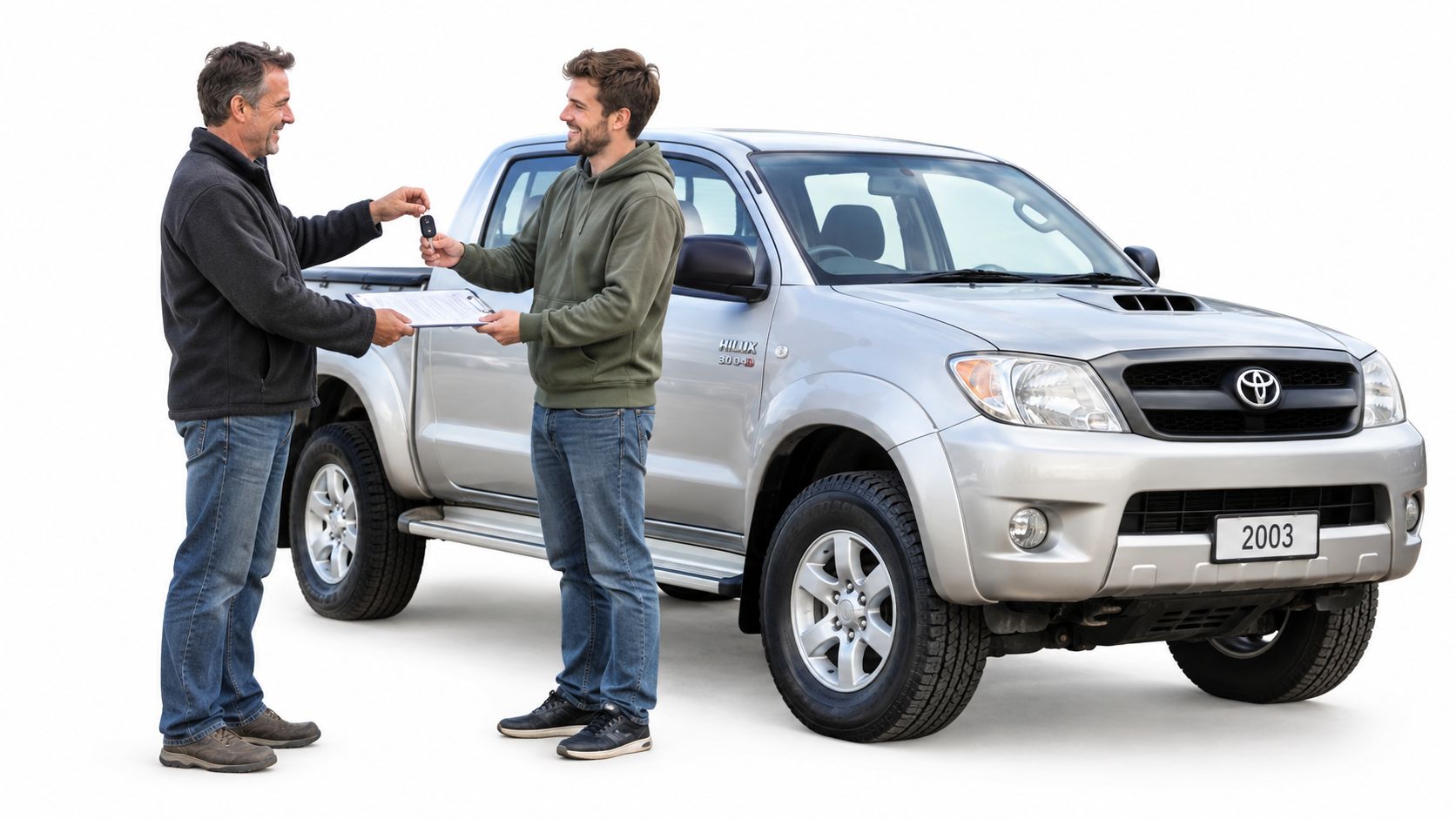
The buyer may be waiting beside an older Hilux in Whangārei, ready to load tools and drive north. Before the keys, car, and signed paperwork change hands, finish the seller's side of the handover.
Start by confirming the money has cleared. Check your own banking app and confirm the full agreed amount is available in the nominated account. A payment screenshot, promise of a transfer, or deposit slip does not prove settlement. If the funds are still pending, keep the vehicle and documents until the bank shows cleared money.
Record the agreed amount, registration plate, VIN, and exact handover time on the receipt. Have both parties sign it, then keep a copy with your sale records.
Notify NZTA straight away using NZTA's selling-a-vehicle guidance. Complete the notice online at the time of sale where possible. You will need the buyer's full legal name, address, driver licence number, and the precise date and time ownership was handed over.
The first 24 hours matter
NZTA records the registered person, which may differ from the legal owner. Until the change is recorded, licensing charges, tolls, parking fines, and speeding infringements may still be directed to that person, as NZTA explains in its buying and selling guidance.
The buyer must also notify NZTA and put the vehicle into their name. Do not rely on that step alone. Your notification proves when you reported the sale, while the buyer's notification completes their side.
Practical rule: Release the keys only after payment has cleared, the receipt is signed, and your NZTA notification is complete.
That process applies to a non-running car, a farm ute, and a vehicle heading for dismantling. Condition affects transport and price, not the need to close the registered-person trail.
Confirming Payment and Notifying NZTA of the Sale
Payment and the NZTA notification belong in the same handover sequence. Finish both before the buyer drives away, particularly with a farm ute, a non-runner, or a vehicle being collected for dismantling.
Step one, verify the funds
Check your own banking app and confirm that the money is available in your account. A transfer marked pending has not cleared. A screenshot from the buyer does not prove settlement, and deposit slips can be forged or show an incorrect amount, old transaction, or wrong account.
If the buyer cannot wait for cleared funds, delay releasing the vehicle. That protects you from carrying the payment risk after the keys, plates, or vehicle have left your control.
Your receipt should show the agreed amount, payment method, registration plate, VIN, and exact handover time. Have both parties sign it, then keep a copy before the buyer leaves.
Step two, tell NZTA straight away
Use the NZTA vehicle sale notification service through nzta.govt.nz and select “Tell NZTA you've sold your vehicle”. Enter:
- Buyer details: Their full legal name, address, and driver licence number.
- Vehicle details: The registration plate and other identifying information requested.
- Transaction details: The exact date and time the sale and handover took place.
- Your evidence: Save the confirmation screen, email, or reference number.
The buyer must complete the change into their own name, but do not wait for that to happen. Your notification records when you reported disposing of the vehicle and helps limit problems while your name remains attached to it.
For a plain-language explanation of the paperwork, use this NZTA change-of-ownership guide.
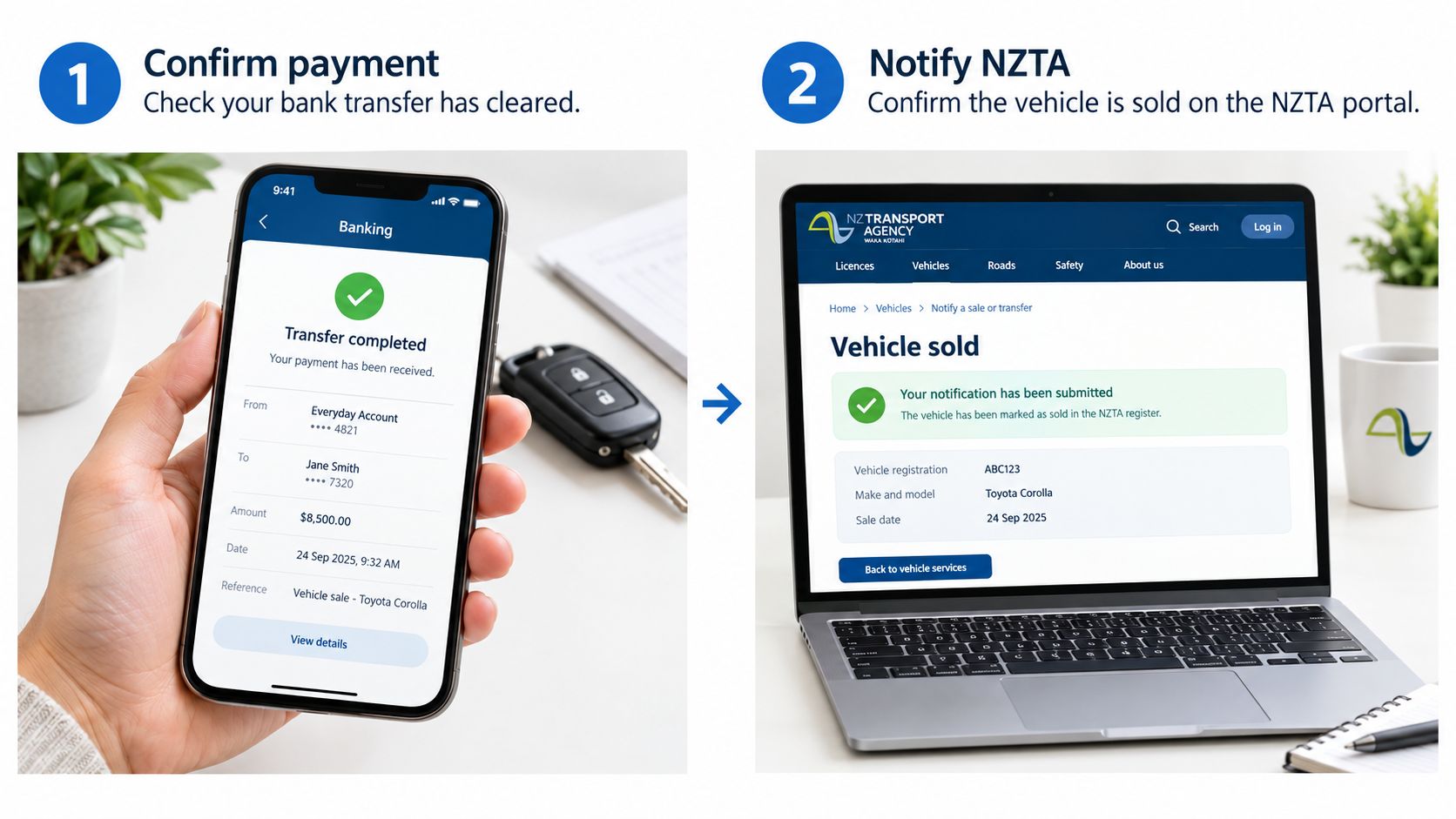
Complete the notification from your phone at the meeting place if possible. If the buyer is arranging a tow from a Northland property, finish it before the transporter takes the vehicle. That small timing choice avoids returning home with an unfinished handover and no clear record of when responsibility changed.
Cancelling Insurance, WOF and Rego After the Sale
The clean-up starts once your NZTA sale notification has been lodged. Insurance comes first because the policy should reflect the exact point at which you stopped owning or controlling the vehicle.
Contact your insurer or use its policy portal on the day of sale. Give the exact date and time of handover, ask for written confirmation of cancellation or removal, and check whether any unused premium is being refunded. Don't cancel cover before the sale is complete. Until the vehicle leaves your control, theft, damage, or a test-drive incident can still create a problem.
A WOF isn't something the seller formally cancels. Give the buyer the existing certificate and state its expiry date in the receipt or sale agreement. Keep any inspection and repair paperwork you have, especially where the vehicle has known faults or has been sold as a project.
Rego and RUC need more care. Once the buyer completes registration in their name, Continuous Vehicle Licensing applies again under NZTA's trader and vehicle guidance. If you have an unused RUC licence, return it to NZTA for a refund within 60 days, as set out in NZTA's vehicle sale factsheet.
Keep the timing exact: Your insurer, receipt, and NZTA notification should all show the same handover date and time.
| Item | Who Cancels | When | How |
|---|---|---|---|
| Insurance | Seller | On the sale date, after handover is complete | Contact the insurer and obtain written confirmation |
| WOF record | No formal seller cancellation | At handover | Give the certificate and record its expiry date |
| Registration | Buyer completes the change | Immediately after sale | Buyer notifies NZTA into their name |
| RUC | Seller, where a refund is due | After sale | Return the unused licence to NZTA within 60 days |
| Licence label | Seller should remove or deface it | At handover | Prevent the buyer from using the seller's paid entitlement |
What to Do When the Buyer Never Transfers the Vehicle
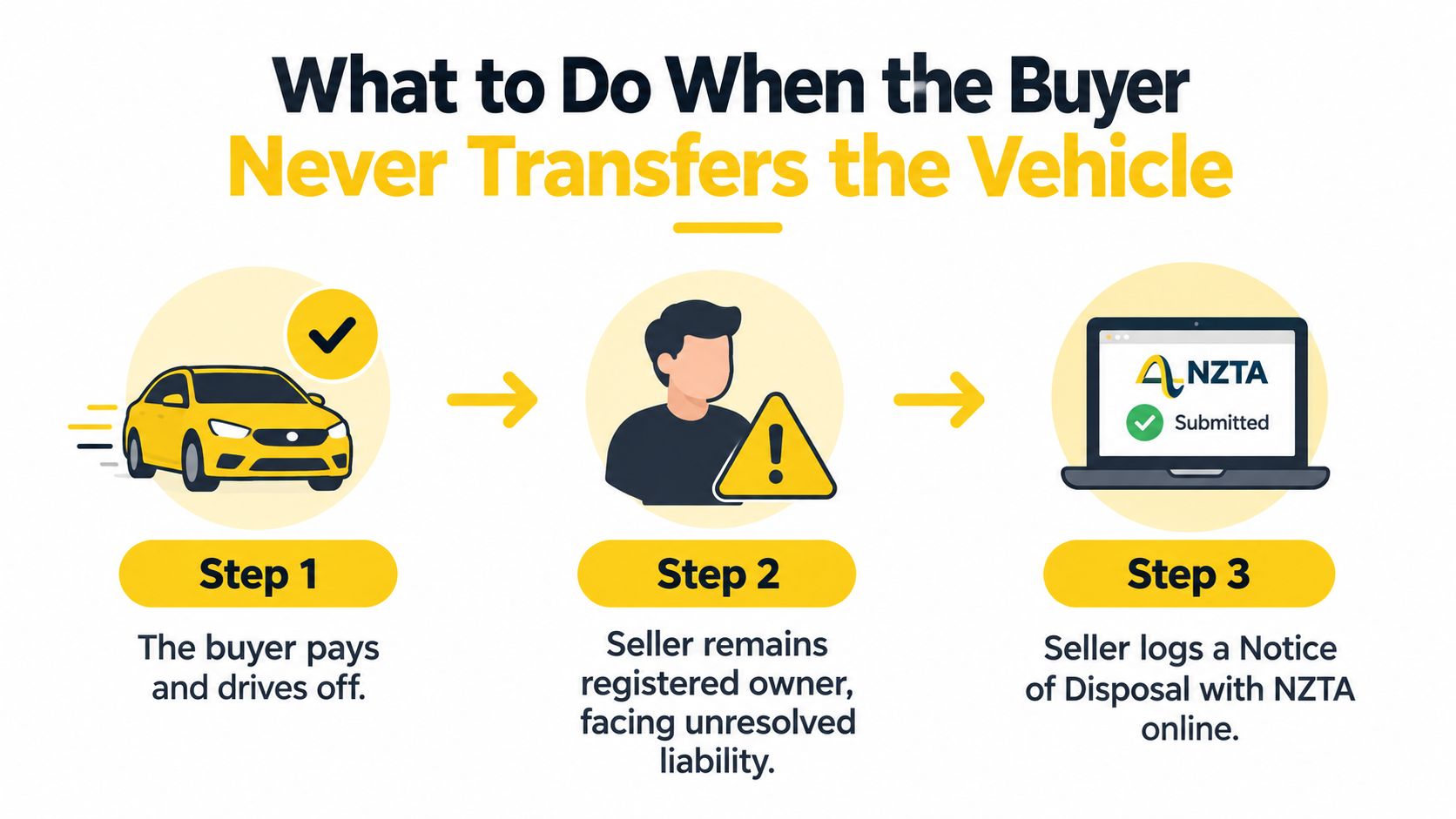
The buyer paid, drove away, and promised to sort the paperwork. Weeks later, a toll notice or infringement arrives. That is the failure mode many simple “I've sold my car” guides overlook.
Until NZTA records the change, you can remain the registered person. NZTA warns that a seller may still receive the buyer's tolls, speeding tickets, or overdue licensing fees if the seller hasn't notified the sale. The practical answer is to prepare evidence before the buyer leaves.
Build the evidence at handover
Your receipt should identify the plate, VIN, agreed price, date, exact time, and both parties' details. Photograph the vehicle, odometer, number plate, and signed paperwork. Keep the buyer's driver licence information exactly as entered in the NZTA notification.
Respond to notices instead of ignoring them
If a notice arrives after the sale, contact the issuing agency promptly and tell it the vehicle had already changed hands. Lodge a vehicle sold but not transferred dispute with NZTA where appropriate, and ring 0800 822 422 if you need help with the registered-person record or the notification process.
NZTA may need evidence such as:
- Sale proof: The signed receipt or agreement.
- Buyer identification: The name, address, and licence details used at handover.
- Vehicle identification: The registration plate and VIN.
- Timing proof: The exact date and time of disposal.
- Notification proof: Your NZTA confirmation reference or acknowledgement.
A Section 14 declaration can help protect a seller from fines in court where the seller can declare that the vehicle was disposed of and provide the relevant buyer information. It isn't a substitute for notifying NZTA at handover, and it doesn't make unsupported statements safe.
If the buyer has disappeared, exported the vehicle, or left a deregistered vehicle attached to your record, keep the matter in writing with NZTA. Ask what evidence is required to record a written-off or deregistered outcome and retain every reference number. The aim is to create a documented end point, not rely on a phone conversation that leaves no trail.
Selling Non-Running or End-of-Life Cars in Northland
A failed-WOF car on a lifestyle block isn't the same product as a tidy daily driver. Around Northland, sellers also deal with flood-damaged vehicles in the Kaipara, old farm utes, seized engines, rusted chassis, and cars sitting on grass that haven't moved for months.
There are three realistic exit routes.
| Path | Typical payout | Who notifies NZTA | Your effort | Main risk |
|---|---|---|---|---|
| Private sale at scrap value | Based on condition, parts, and metal value | Seller and buyer | Advertise, answer questions, arrange collection | Buyer delays transfer or leaves the vehicle partly dismantled |
| Trade-in at a yard | Often limited for non-runners | Yard and seller, depending on the transaction | Obtain an assessment and arrange delivery | A yard may decline the vehicle or reduce the offer for transport |
| Licensed dismantler removal | Quote based on recoverable parts and scrap value | Confirm the dismantler's process before pickup | Provide access, keys, and ownership details | Assuming removal includes paperwork without checking |
The value of a scrap vehicle isn't determined by appearance alone. Local recycling price lists show examples of heavy steel around $180 to $240 per tonne and complete-car or stripped-car categories around $100 to $120 per tonne at the listed market, as shown in Metalcorp's Christchurch price list. A dismantler may also assess the catalytic converter, alloy wheels, battery, tyres, reusable panels, and demand for parts.
Private sale can produce more money if a buyer wants a specific ute or component, but it takes time and leaves you managing transport and transfer risk. Trade-in is convenient but rarely attractive for a car that won't roll. Removal is often the cleaner option when the vehicle has no sensible road-use future.
Before the tow truck arrives, ask whether the dismantler will issue a Certificate of Destruction, handle the NZTA notification, and provide a receipt showing the vehicle left your possession. For a Northland removal option, see selling a car for cash.
Keeping the Right Records After You Have Sold Your Car
Keep the sale file even after the vehicle has gone. A tidy record can answer a later infringement, insurer query, or buyer complaint without forcing you to reconstruct the handover from memory.
The two essential documents are the signed receipt or sale agreement and the NZTA notification confirmation. The receipt should show the price, plate, VIN, date, time, and both parties' details. Your own NZTA lodgement reference is the strongest seller-side record, while the buyer's acknowledgement can be kept as supporting evidence.
Use a simple digital folder
Create a folder named with the vehicle plate and sale date. Store:
- Signed transaction record: Receipt or agreement, plus proof of cleared payment.
- Vehicle condition file: Photos, odometer image, last WOF, and repair invoices.
- Government records: NZTA confirmation, rego or RUC surrender receipt, and any Certificate of Destruction.
- Insurance records: Cancellation confirmation and any refund correspondence.
- Handover evidence: Photos of the car, keys, plates, and signed documents.
Keep the file for at least 12 months. Store digital copies in two places, such as your phone or computer and a cloud folder. A single printout in a glovebox can fade in the Northland sun, get lost in the vehicle, or disappear with the rest of the paperwork.
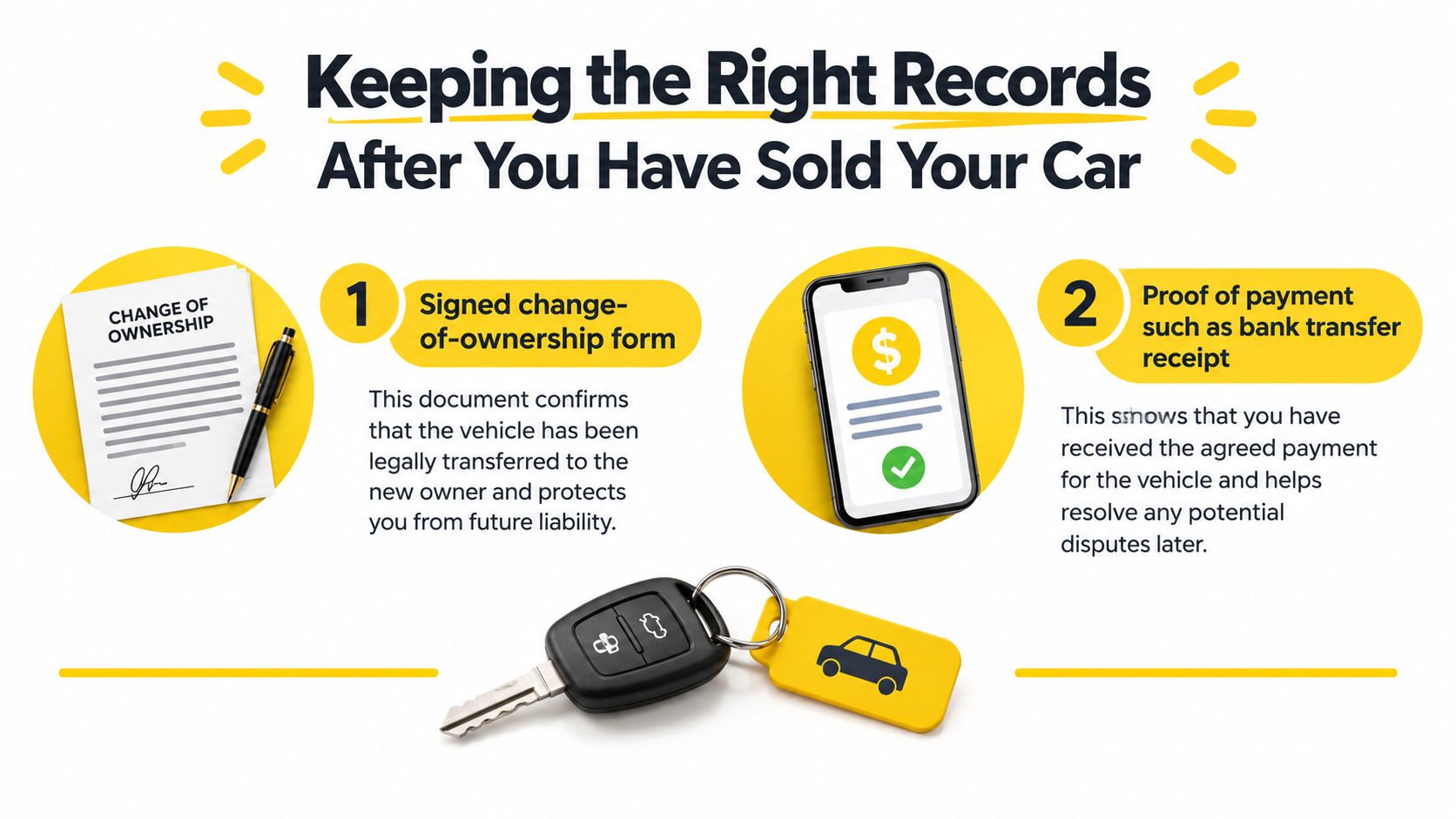
Don't rely on memory for the time of sale. That detail can matter when a notice refers to an event shortly after the vehicle left your driveway.
Your Post-Sale Checklist and When to Call a Removal Service
Print this checklist or keep it open on your phone during handover:
- Clear the payment: Confirm the full amount is available in your account before releasing the keys.
- Record the transaction: Sign a receipt with the price, plate, VIN, buyer details, and exact handover time.
- Notify NZTA: Lodge your seller notification immediately and save the reference number.
- Close insurance: Tell the insurer the precise date and time of sale and keep written confirmation.
- Pass on WOF information: Give the buyer the certificate and record its expiry date.
- Handle rego and RUC: Don't renew the vehicle after sale, and return unused RUC where a refund applies.
- Deal with labels and plates: Remove or deface the licence label and return plates if NZTA requires it.
- File everything: Keep the digital and paper records together for at least 12 months.
Some cars shouldn't go through a private-sale listing at all. A vehicle with no current WOF, a seized engine or transmission, severe rust, accident damage, flood damage, or months of grass growth may create more transport and liability work than its resale value justifies.
Call a dismantler when the vehicle has reached its practical end
Ask for a removal quote when the car won't start, won't roll, has been written off by an insurer, or has become an unwanted farm or estate vehicle. A licensed Northland dismantler can assess the vehicle for parts and scrap, organise collection, pay before loading where agreed, and provide paperwork showing what happened next.
Collection needs to match the property. Whangārei city jobs may be scheduled quickly, while rural runs through places such as Dargaville and Kaikohe need access details and suitable loading arrangements. Ask specifically whether the pickup includes NZTA notification and a receipt, rather than assuming the tow itself ends your responsibility.
The free car removal service is one possible route for vehicles that are no longer sensible private-sale candidates. The NZTA notification still matters whether the buyer is a private owner, a dismantler, or a yard operating under a dealer licence number.
Car Removals Whangarei buys cars, vans, 4WDs, trucks, and machinery in any condition, with free towing within roughly 100 km of Whangārei and payment by cash or instant bank transfer before loading. If your vehicle is non-running, damaged, deregistered, or ready for dismantling, visit Car Removals Whangarei for a firm quote and pickup arrangement that includes the NZTA ownership notification at collection.
- sold car NZ
- NZTA change of ownership
- cash for cars Whangarei
- cancel car insurance NZ
- vehicle removal Northland