· Car Removals Whangarei
How to Sell My Truck in Whangarei: Quote to Payment
There's a truck behind the shed that you've stopped seeing. It was going to be fixed, then it was going to be sold, and now it's a landmark you mow around. The rego lapsed, the COF sticker is two inspections old, and the only thing you're certain of is that it's worth less every month it sits there.
Selling it is easier than most owners expect, and the part that goes wrong is almost never the price. It's the record. A truck can leave your yard on a transporter and still be yours on paper months later, which is how toll notices and infringement letters turn up for a vehicle you last saw heading out the gate.
Get the sequence right and the job takes one phone call, one visit and one form. Most sell my truck advice stops at the payment. The finish line is the change of registered person, because that's the moment the truck stops being your problem.
Table of Contents
- What to Check Before You Ask for a Quote
- How Your Truck Is Priced in Two Parts
- Selling a Damaged, Flooded or Insured Truck
- Arranging Free Towing, Pickup and Payment
- Completing the NZTA Paperwork That Ends Your Liability
- Request Your Free Quote and Pickup in Whangarei
What to Check Before You Ask for a Quote
Say a tipper has sat behind the shed for two years. The rego ran out eighteen months ago, the COF is older still, and the owner's first question is whether any of that rules out a sale. It doesn't. It shifts the number.
The five statuses below cover nearly every truck quoted in Northland, and each one takes the conversation somewhere different. Work out which row your truck belongs in before you ring, because where it sits moves the price far more than the badge on the grille.
| Truck status | Paperwork to have ready | What it does to the quote |
|---|---|---|
| Running and registered | Registration, current WOF or COF, RUC status, plate and VIN | Priced on operating value plus parts demand |
| Non-running or seized | Registration, plate and VIN, keys if you have them | Priced on components and kerb weight |
| Deregistered or long parked | Plate and VIN, last registration record if found | Priced on components and kerb weight |
| Expired WOF or COF, failed inspection | Current registration, plate and VIN, inspection report | Expired certificate is priced as a liability |
| Insurance write-off | Insurer letter, plate and VIN, damage photos | Insurer salvage rights checked before the quote |
Two of those rows cause the most hesitation. A truck with no current WOF or COF can still be sold, and no WOF or registration is needed to sell a vehicle to us. We buy trucks with an expired COF, a failed inspection or a long deregistration, so there's no reason to spend a fortnight hunting paperwork before you pick up the phone.
Before you ring: a lapsed certificate is a pricing issue, not a permission issue.
What to Write Down Before the Call
Four minutes with a notebook saves twenty on the phone, and it's the difference between a firm figure and a vague one.
- The basics: make, model and year, plus the GVM off the compliance plate rather than the brochure.
- The odometer: the current reading, even if the dash display is dim or the cluster was swapped.
- Four photos: the cab from both front corners, the tray or body side on, the tyres, and any damage up close. Photos settle condition questions that words can't.
- The plate and VIN: both, written in the same place.
Then do one check today. Find the VIN or chassis number stamped on the plate or the chassis rail, compare it with the registration papers, and write it down. A mismatch is a five-minute fix before the truck is on a tow truck and a far longer argument afterwards, especially on a truck that has had a cab swap or a replacement deck in its working life.
How Your Truck Is Priced in Two Parts
Two numbers sit under every quote on a truck. The first is what it earns as a working vehicle. The second is what it returns as parts and steel. A real offer tracks the higher of the two, capped by what buyers in Northland will pay for that model this season, so a quote that can't say which number it's built on is a guess with a dollar sign in front of it.
Operating value exists only where there's evidence behind it. Engine condition, transmission, driveline, chassis integrity, tyres, hydraulics and body equipment all count, along with whether the WOF or COF, registration and RUC are in order. A running Isuzu with a current COF and clean RUC history is being bought to work. The same truck with a slipped timing gear and four flat tyres is being bought for what's bolted to the chassis.
Dismantling value sets the floor under that. It totals the assemblies buyers want: engines, gearboxes, diffs and axle assemblies, cabs, doors, bumpers, grilles and mirrors, decks, tipper bodies, hoists and hiabs, air systems, tanks, wheels and tyres. Add recoverable ferrous and non-ferrous metal, then subtract the genuine costs of getting the truck to the yard, which means towing, loading, hazardous fluid handling, storage and any testing before a part can be sold on.
That market is deep enough to make the arithmetic real. Waka Kotahi's fleet analysis counted about 182,000 heavy vehicles in the national fleet in 2023, including roughly 170,000 trucks and 10,000 buses, which is enough of an installed base to price a second-hand engine or diff against genuine demand rather than wishful thinking. Light commercials feed the same trade: Ministry of Transport fleet statistics put 775,441 light commercial vehicles on New Zealand roads in 2024, 16.3% of the national fleet.
Condition is what separates a working truck from a parts truck, and it's also the thing a phone description gets wrong most often. A photo of the cab corner, the deck and the tyres tells a quoter more than any adjective.
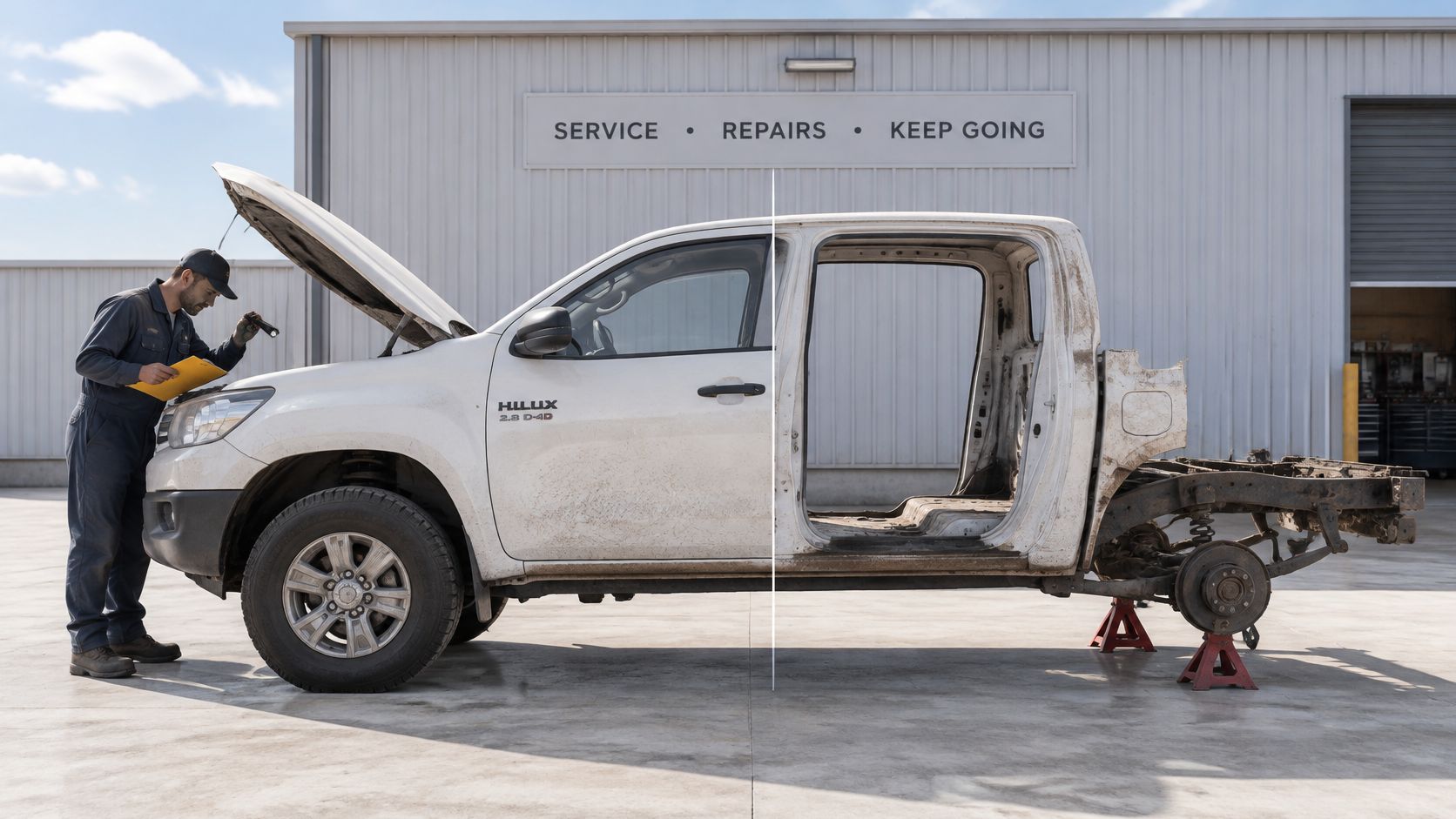
Where the Floor Comes From
| Value driver | What to check | Effect on the quote |
|---|---|---|
| Operating value | Engine condition, transmission, WOF or COF, registration and RUC status | Raises the offer when documented |
| Driveline and chassis | Engine, gearbox, axles, chassis integrity | A missing driveline pulls the offer toward weight value |
| Dismantling value | Engines, gearboxes, diffs, cabs, hoists, tyres and wheels | Sets the floor under the offer |
| Recoverable metal | Kerb weight, steel and non-ferrous content | Sets the scrap base |
| Liabilities to price | Overdue RUC, toll account balances, licensing costs | Agreed in writing, not assumed |
The Tipper That Still Has Value
Take a tipper with a seized engine and a straight body. The engine is gone, so operating value drops out of the conversation entirely. The hoist, the tipper body, the cab, the diffs and the wheels are all still wanted by someone repairing a working truck, and that is what the offer is built on. A missing driveline pulls a truck back toward its weight value, but a truck missing its engine can still be sold, with the chassis, cab and body carrying the rest of the number.
Three mistakes come up often enough to guard against.
- Overstating scrap weight: kerb weight is what the truck weighs empty, not what the seller hopes it weighs, and buying on inflated weight drags the whole quote down.
- Forgetting how it moves: a non-rolling truck needs specialist loading, and that cost comes out of the offer whether the seller counted it or not.
- Valuing a write-off against road prices: a statutory write-off isn't priced as a road-going truck, and treating it that way sets up a disappointment at the kerb.
What to Tell the Quoter
Give the exact model year, the engine family, the transmission code, the axle configuration, the GVM and the attachment specifications, then ask one direct question: does this figure stand at pickup. If you want to see how the offer is assembled before you call, what cash for trucks in Whangarei covers sets out the components in plain terms. Model and year alone isn't enough, because two trucks that look identical on Trade Me can carry different engines, different diffs and different body equipment.
Selling a Damaged, Flooded or Insured Truck
A damaged truck isn't a cheaper version of a sound one. In New Zealand it can be a different category of vehicle altogether, and the assumption that it can be sold like any other truck is the one that costs sellers the most time.
When an insurer cancels a vehicle's registration because of fire, structural damage or water damage, Waka Kotahi can place a safety flag on the Motor Vehicle Register and record it on the damaged-vehicles list. While the flag stands, the truck cannot receive a WOF or COF at all. Lifting it means proper repairs followed by an inspection confirming the vehicle sits within the manufacturer's safe specifications, and repairs to a cancelled vehicle must be inspected, repaired and certified by an NZTA-approved repair certifier before it can be registered for road use again.
A flagged truck isn't waiting on a lenient inspector. It's waiting on certification, and new steel welded over a bent chassis rail doesn't change that.
| Damage path | Needed before sale | Effect on the quote |
|---|---|---|
| Insurer cancelled with safety flag | Insurer letter, NZTA safety flag status, dated damage photos | Road sale blocked while the flag remains; quote on parts and metal |
| Repair under certification | Entry certifier inspection, repair records, NZTA-approved certifier sign-off | Priced as repaired only after certification |
| Crash or flood, not cancelled | Insurer decision, registration status, dated photos | Priced on dismantling value unless operating value is documented |
Choosing Between Repair and Parts
Three things decide the path, and they're best worked through in order.
First, check with the insurer before you sell anything. If the insurer keeps salvage rights, the truck isn't yours to sell until that's resolved, and a phone call now prevents a mess later.
Second, weigh repair against disposal. Certification, certifier fees and the time off the road add up fast, and a tipper that was worth repairing at three years old is rarely worth the same effort at fifteen.
Third, photograph everything with dates visible. Damage photos taken the week it happened carry more weight than a description given three months later, and they let the quote reflect what's on the truck.
Two cases show how differently this runs. A crash-damaged tipper with a bent chassis rail and a sound engine, hoist and body usually goes the parts route, because the assemblies are worth more than the wreck is as a project. A flood-damaged van sits at the other end: water in the cab, harness and electronics means the mechanical value drops away and the quote leans on body panels and metal. Either way, how a write-off is handled in New Zealand is worth reading before you agree to anything, because the flag follows the vehicle, not the owner.
A damaged truck is normally sold for its parts and its metal rather than as a road vehicle, so ask for a quote built on that basis. A figure quoted as though the truck will drive out of the yard isn't a figure anyone can honour.
Arranging Free Towing, Pickup and Payment
Northland is a hard place to move a dead truck across. Census-based figures reported in the Northland Regional Council's regional transport report showed about 87% of Northland households had access to at least one motor vehicle, against 88% nationally, and the report ties that reliance to the region's spread-out geography. Those household numbers are a historical baseline rather than a current count, but the distance hasn't changed. A truck that won't roll is expensive to shift far, which is why local pickup does most of the work.
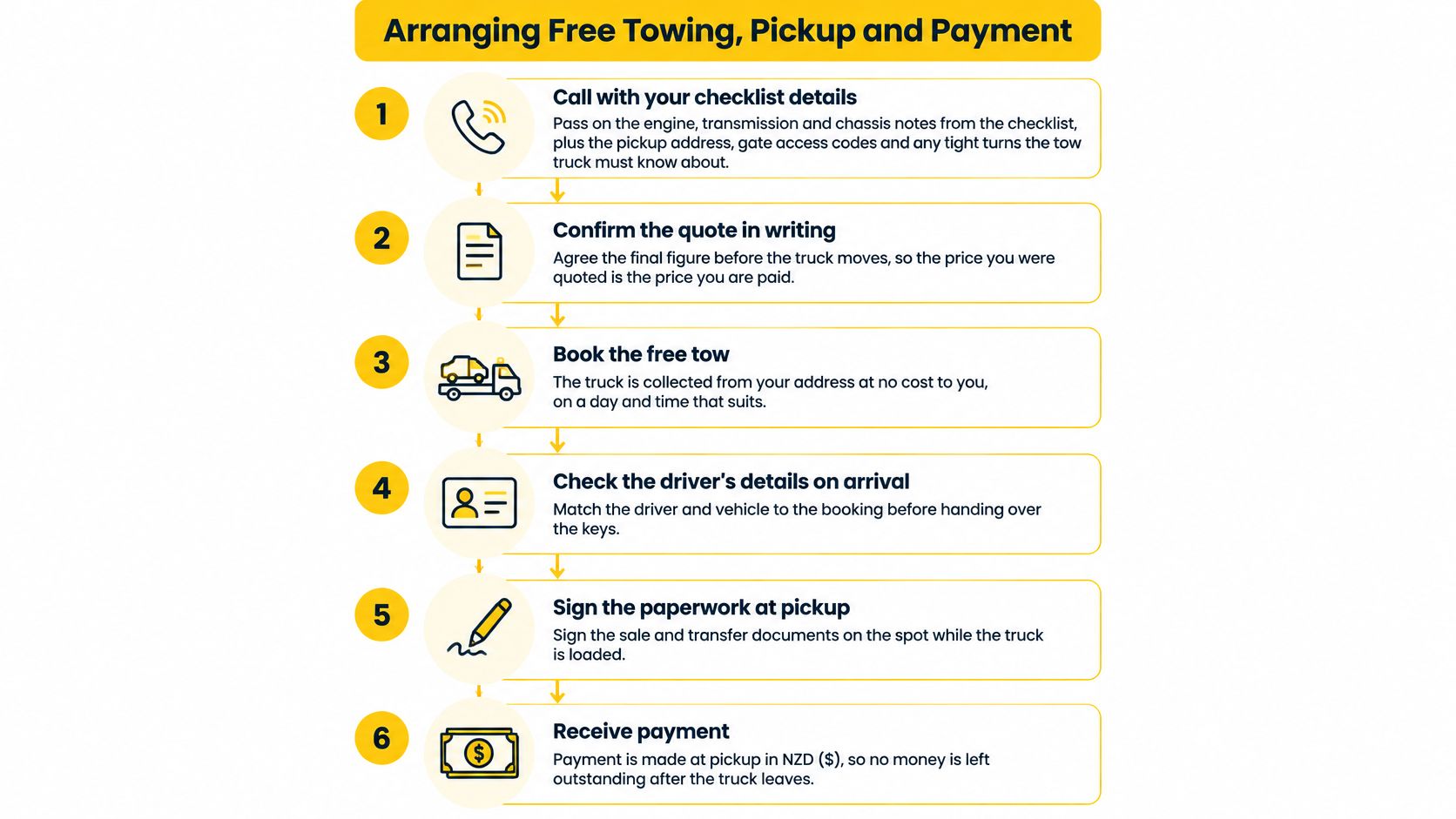
Here's how the day runs once the price is agreed.
- Ring with the checklist in front of you. Make, model, year, GVM, odometer and whether it runs or rolls, plus the address, gate width and any tight turns between the road and the truck. A driver who knows about the low branch and the narrow gate arrives with the right gear first time.
- Say whether it can be towed conventionally. Trucks too big for that get winch recovery, tilt-tray or transporter equipment brought on site, so mention hiabs, hoists and anything that changes the height or the weight.
- Clear the cab and tray. Personal tools, fuel cards, permits, straps, the good jack. Take the plates if you're keeping them for a replacement vehicle.
- Open the route. Remove the padlock, shift the pallets. Have the keys and any remote ready so loading isn't held up while someone searches a kitchen drawer.
- Be there when it's loaded. Confirm the truck matches what you described and sign off the description rather than letting the driver guess at what was meant.
- Take payment before loading. The seller is paid at pickup, before the vehicle is loaded, by cash or instant bank transfer at the seller's choice, with no hold-backs and no cheques in the post.
When the Quote Changes at the Kerb
A quote can be revised at pickup if the truck differs materially from the description, such as major parts missing or no tow-truck access to where it sits. You can decline at that point and the truck stays where it is, at no cost. That's the fair version of a revision, and it's also why an accurate description on the phone protects both sides.
Confirm the revision terms with whoever is collecting before the day, and have the NZTA notification ready to lodge at the same handover. The paperwork and the payment happen in the same ten minutes, and it's easier if both are planned for.
Completing the NZTA Paperwork That Ends Your Liability
Most sellers think the job is done when the truck leaves. It isn't, and the gap is the one piece of information that matters most here: the registered person is not the same as the legal owner. NZTA's guidance on selling a vehicle requires both buyer and seller to notify the change immediately, and if that notification is missed, tolls, infringements and other vehicle obligations can still reach the seller. That applies when the truck goes to a wrecker as well.
The trap is the private receipt and the handshake. Neither changes the register, and cancelling the registration doesn't change the registered person either. A deregistered truck with your name still attached to the plate is your problem on paper.
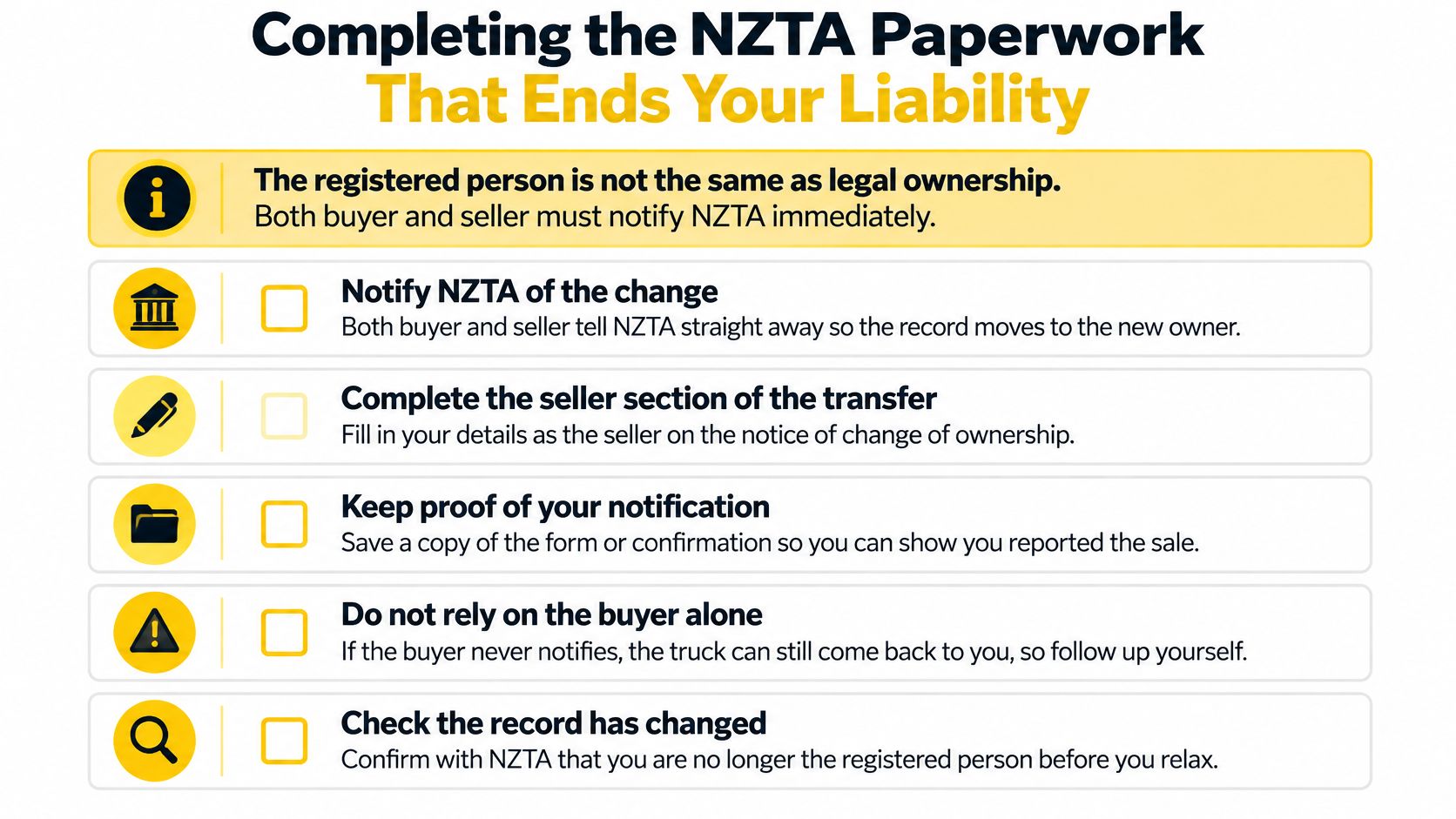
The Steps That End Your Liability
- Confirm who is taking it. Check that the person collecting matches the business you agreed with, and note their name on the receipt.
- Record the identifiers. Plate, VIN, make, model, GVM and odometer, plus photos of the truck before it moves. This is the record you compare against if a query arrives months later.
- Lodge the change of registered person at the time of sale. Both parties must notify, so don't leave it entirely to the other side. Keep the confirmation somewhere you'll find it again.
- Ask who cancels the registration. When a vehicle is sold to a wrecker, the wrecker is responsible for cancelling registration, but you still notify the sale. Get a straight answer on who does what before the truck is loaded.
- Unhook the accounts. Remove any toll-account links, clear what you can of RUC and licensing amounts, and cancel automatic payments tied to the plate.
- Keep a dated receipt. Payment and collection on one document, filed with your tax records. We handle the notice of disposal so the truck comes out of your name, and can supply written confirmation of removal for fleet or accounting records.
Fleet sellers and anyone running a company vehicle should ask for that written confirmation every time, because an accountant will want it beside the disposal entry and a fleet audit will ask for it eventually.
If you'd rather see the form itself line by line, our walkthrough of the NZTA registration change of ownership goes through each field.
Practical rule: don't hand over the keys until the change of registered person is lodged and the receipt is in your hand. Payment clearing first makes the rest straightforward.
At pickup, compare the truck against the details and photos you recorded at the start rather than beginning the list again. You're confirming, not renegotiating.
Request Your Free Quote and Pickup in Whangarei
A quote is only as good as the description behind it. Have the checklist from earlier in front of you, add the specification detail that decides parts fitment, and send the photos and VIN along with it. Then get a firm number while the truck is still there to look at.
The cash offer depends on make, model, year, weight, completeness and current parts demand, and we pay from $200 to $15,000, with complete units landing at the top of that range. A truck missing its engine can still be sold: the offer reflects the missing driveline, and the chassis, cab and body still carry value. Partial trucks sell; they just sell differently.
Two things are worth doing before you accept anything. Get a second firm number and compare, because a quote you never tested isn't a market price, and comparing our number against an offer you already hold costs nothing. And ask each buyer to put in writing what the quote covers and whether it stands at pickup, so the figure you agreed is the figure you're paid.
Then book it. Ring or send the details through the Car Removals Whangarei website, confirm how the NZTA notification will be handled at handover, and pick a pickup window that matches your gate and your schedule. The sale is finished when the truck has gone, the payment has cleared and the change of registered person is recorded.
Car Removals Whangarei buys light trucks, tippers, flatdecks and curtainsiders in any condition, including deregistered, failed-inspection and non-running units, with free towing across Whangarei and roughly 100 km of Northland. We pay before loading by cash or instant bank transfer and lodge the notice of disposal at pickup, so the truck stops being yours on paper the day it leaves. Send the make, model, year and photos through Car Removals Whangarei and get a firm figure to compare.
- sell my truck
- truck removal Whangarei
- sell a truck NZ
- NZTA notification
- Northland truck buyers