· Car Removals Whangarei
Free Car Removal Whangarei How It Works and What You Get
The car has been sitting beside the shed in Whangarei for months. It won't start, the WOF has expired, and every time you look at it, you're reminded that it still takes up useful space. Perhaps you're a farmer clearing rusted vehicles from a paddock, a landlord dealing with an abandoned car, or a Northland driver whose accident-damaged vehicle has nowhere to go.
Free car removal is designed for exactly these situations. The service usually combines a cash offer for the vehicle, towing at no transport cost within the agreed service area, loading equipment for cars that won't roll, and paperwork to notify NZTA that the vehicle has left your responsibility. The important point is that “free” describes the collection, not the value of the car.
In Whangarei and surrounding Northland areas, the process can be straightforward. You describe the vehicle by phone, receive a firm quote, arrange a pickup, get paid before loading, and complete the relevant NZTA notification at the property. The vehicle then goes through a dismantling and recycling pathway rather than remaining on your driveway or farm.
This guide explains what qualifies, how the quote is worked out, why EV and hybrid batteries need separate attention, and which details help prevent delays. It also covers the paperwork that protects you from ongoing registration costs, tolls, fines, and disputes about when the vehicle stopped being your responsibility.
Table of Contents
- Introduction to Free Car Removal in Whangarei and Northland
- What Free Car Removal Really Means and Who Qualifies
- How Your Cash Quote Is Calculated Before Towing
- How Free Car Removal Works From Quote to Pickup
- Vehicle Types and Situations We Handle Across Northland
- Tips to Get the Best Outcome From Your Free Removal
- Ready for Free Car Removal Your Next Steps in Whangarei
Introduction to Free Car Removal in Whangarei and Northland
A non-running car creates more than a parking problem. It may block access to a garage, occupy a tenant's space, sit exposed to weather on a rural property, or become difficult to move once its tyres deflate and brakes seize. Trying to sell it privately can also mean explaining faults to several callers, arranging inspections, and finding a buyer willing to organise transport.
Free car removal gives owners a simpler disposal route. A dismantler assesses the vehicle's reusable parts, metal, battery, tyres, fluids, and overall condition, then arranges collection with equipment suited to the site. The car doesn't need to be roadworthy, registered, or able to drive itself.
Practical rule: Tell the remover the truth about the vehicle's condition and access before accepting a quote. Accurate information protects the agreed price and helps the operator send the right truck.
The Whangarei location matters because Northland collections depend on route planning. City pickups can often be arranged promptly, while rural jobs may need to fit into an organised run. A vehicle hidden behind another car, parked on soft ground, or sitting as a non-rolling shell needs a different loading plan from a hatchback that still starts.
There's also a legal reason to complete the paperwork at collection. NZTA's vehicle selling guidance says the registered person must notify NZTA immediately when a vehicle is sold, given away, or disposed of. The notification needs the number plate and the full name and address of the recipient.
That detail is easy to overlook when you're focused on getting the vehicle loaded. Completing it at pickup creates a clear record of when your responsibility ended, which helps reduce the risk of later tickets, registration charges, or arguments about the handover date.
A practical solution for different owners
Private owners often want the driveway cleared without paying a separate tow bill. Farmers may need several old vehicles, implements, or machinery moved during one organised visit. Property managers may need authorisation and documentation handled carefully when an abandoned vehicle is occupying private land.
The underlying system is larger than a single tow. Research summarised in Massey University's repository estimates that New Zealand generates about 150,000 end-of-life vehicles each year from a fleet of roughly 3 million registered vehicles, with at least 75% of each vehicle by weight entering recycling streams recovered as reused material (Massey University research). That recovery pipeline is why a vehicle can have value even when it has no value as transport.
What Free Car Removal Really Means and Who Qualifies
The easiest way to understand free removal is to compare it with a broken appliance. You might take an old washing machine to someone who can recover its motor, wiring, metal, and useful components. You aren't paying them to take it away because the item itself has recoverable value.
A dismantler treats an unwanted vehicle in a similar way. Free towing means the collection cost is covered within the agreed service area, while the vehicle is assessed for a cash purchase. The amount depends on what can be reused, dismantled, recycled, or safely processed.
Vehicles that commonly qualify
A call is usually worthwhile if you have one of these:
- Everyday cars: Sedans, hatchbacks, wagons, people movers, and other passenger vehicles can qualify whether they run or not.
- Scrap vehicles: Rusted, stripped, seized, deregistered, or failed-WOF cars can still contain recoverable steel and parts.
- 4WDs, utes, and vans: A Hilux, Ranger, Navara, Hiace, or similar vehicle may retain strong parts demand even with a blown motor or damaged chassis.
- Heavy vehicles and machinery: Trucks, buses, tractors, diggers, and implements may require an on-site assessment and specialised loading equipment.
- Write-offs: Accident, flood, hail, fire, and statutory write-offs can have salvage value, although their condition and documentation need to be explained clearly.
- Non-rolling shells: Locked wheels, missing tyres, seized brakes, or stripped bodies don't automatically prevent collection. The operator needs to know before dispatch.
Free towing is available within roughly 100 km of Whangarei, subject to practical access and scheduling. Rural distance, steep driveways, soft ground, narrow entrances, and vehicles positioned behind buildings can affect how quickly the job can be arranged.
Situations that need an honest conversation
A vehicle may need extra planning if it contains hazardous damage, has been partly dismantled, sits in a difficult location, or belongs to someone who isn't present. An abandoned car on private property also needs the owner or authorised party to confirm that removal is permitted.
Distance outside the normal service radius doesn't always mean refusal, but it should be discussed before a quote is treated as final. The same applies to heavy machinery, flooded vehicles, EVs, and hybrids. These vehicles can involve battery isolation, specialised loading, or additional documentation, so a clear phone description saves time for everyone.
How Your Cash Quote Is Calculated Before Towing
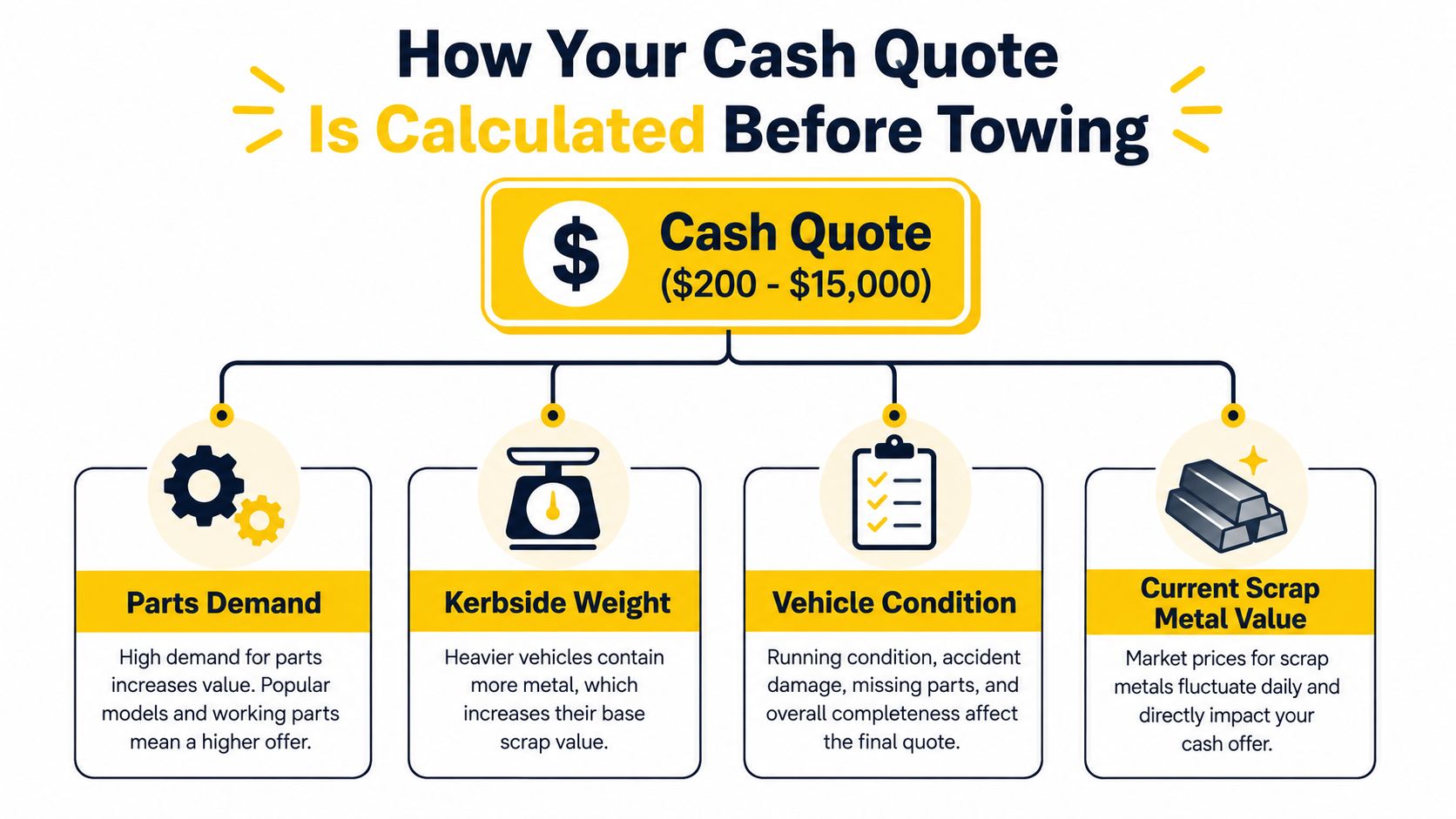
A car can be worth more than its ability to drive. A firm phone quote measures what the dismantler can recover from the vehicle, then sets the removal cost at zero rather than subtracting towing later. Car Removals Whangarei's service information describes offers from $200 to $15,000, with the amount shaped by parts demand, kerb weight, condition, and current scrap value. The quoted figure should be honoured at pickup when the vehicle matches the description.
Parts can matter more than roadworthiness
A running small hatchback may have limited demand for its components. A damaged Hilux with a blown motor may not move under its own power, yet its doors, tray, suspension, interior, wheels, and other model-specific parts could still help repairers or owners of similar vehicles.
The assessment therefore covers the make, model, year, body style, drivetrain, damage, and missing parts. A vehicle with wanted components can be worth more than its scrap shell. Condition still matters. Corrosion, flood contamination, fire damage, and missing assemblies can reduce the value of otherwise useful parts.
How metal value enters the calculation
After reusable parts are assessed, the remaining shell is valued as recoverable material. Kerb weight gives an indication of the steel and other material available, while current scrap pricing affects the cost of processing it. A complete vehicle, stripped shell, and crushed body can receive different offers because each leaves a different recovery job.
New Zealand's end-of-life vehicle stream includes steel, parts, tyres, batteries, fluids, and plastics. The research cited earlier records at least 75% recovery by weight for vehicles entering recycling streams. The practical point is simple: the quote follows the material and components the dismantler can recover, not the car's appearance alone.
Why EVs and hybrids need a separate valuation
An EV or hybrid needs a battery-aware assessment. Battery condition, visible damage, isolation requirements, and the route for downstream recovery can affect both its value and how it must be handled. Research and industry reporting suggest recovered critical materials from EV batteries can be worth up to NZ$2,580 per vehicle, as referenced in NZTA's vehicle disposal transaction information.
That figure is an indication of why battery condition matters, not a promised payment for every EV or hybrid. A damaged or flooded battery pack may require safe isolation and official handling instead of ordinary scrap processing. The operator needs to know about warning lights, impact damage, flooding, smoke, or a pack that has already been removed.
Paperwork also belongs in the quote conversation. Confirm the registered person or authorised seller, and have the registration plate ready. At pickup, the vehicle description, payment, collection, and NZTA disposal notification should fit together like matching parts. Cash for cars Whangarei service information provides further detail on the purchasing service. Clear photos, battery information where relevant, and the exact pickup location help keep the phone quote firm when the truck arrives.
How Free Car Removal Works From Quote to Pickup
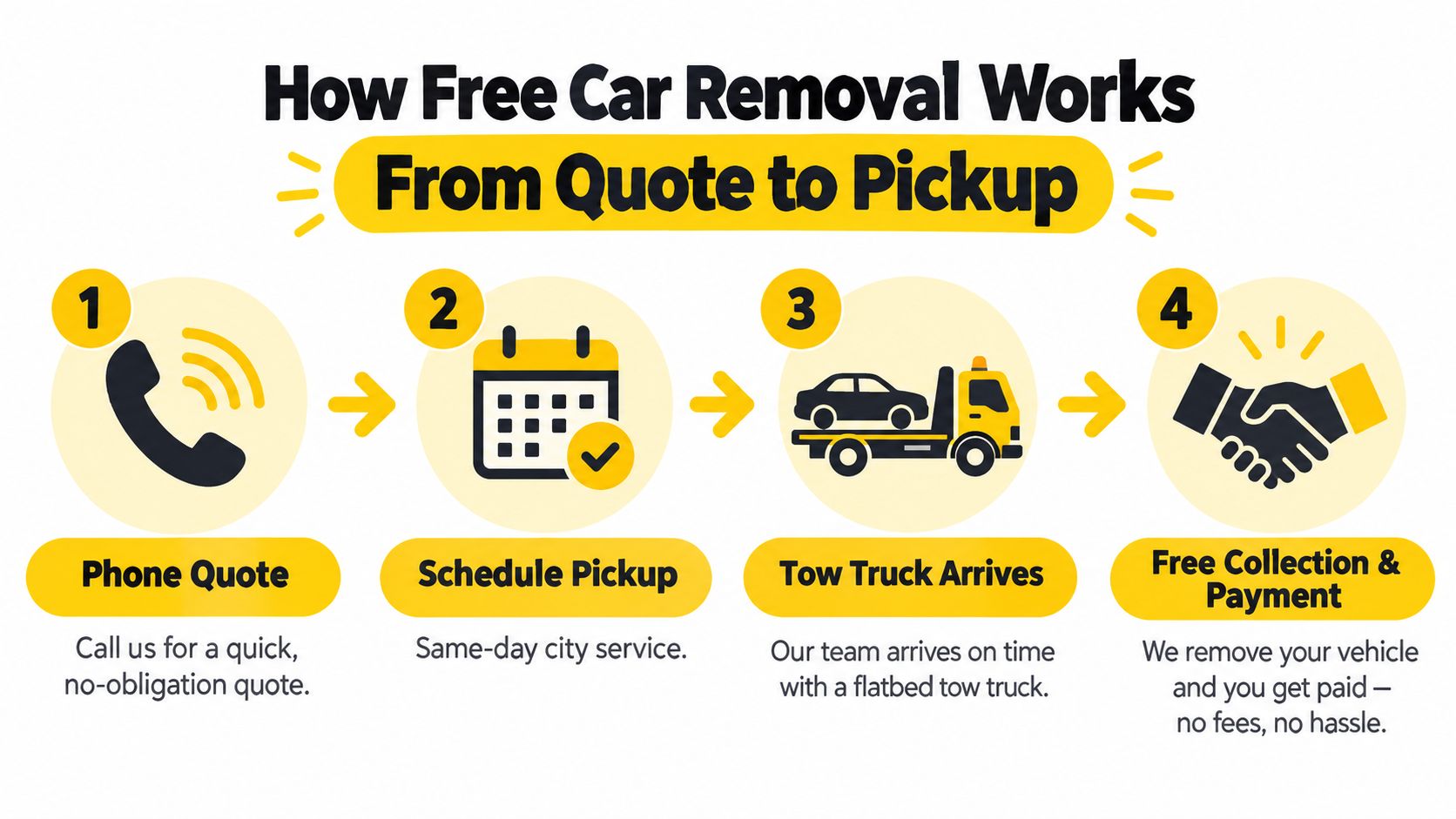
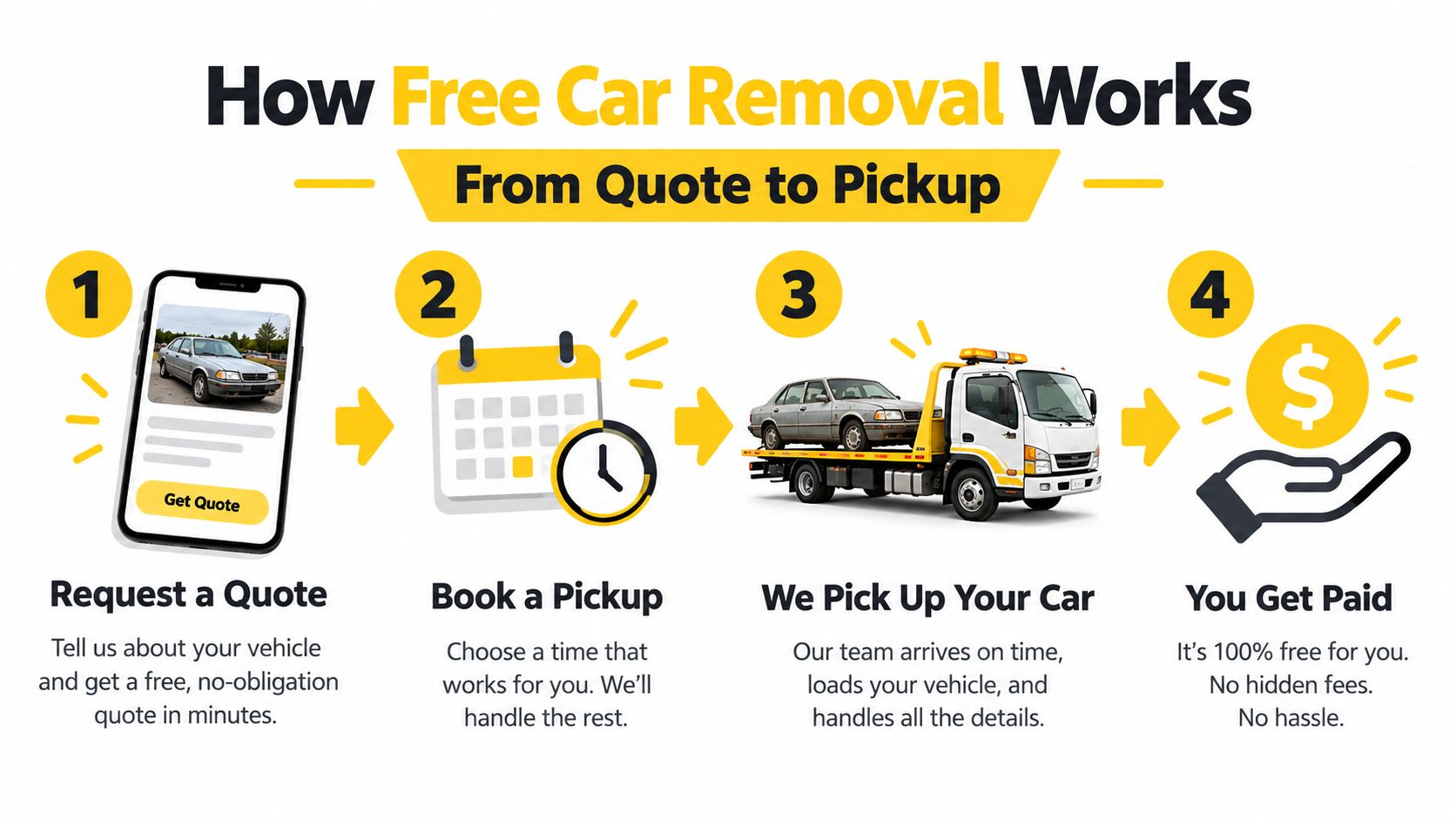
The process is easiest when you treat it as four linked tasks. First, establish the vehicle's value and access requirements. Next, book a suitable collection time. Then arrange payment and loading. Finally, complete the NZTA notification so the administrative handover matches the physical one.
Start with a detailed phone quote
The first call should cover the basics:
- The vehicle's make, model, year, and registration plate.
- Whether it starts, rolls, steers, or has locked wheels.
- Missing parts, accident damage, rust, flood exposure, or fire damage.
- Whether it's a hybrid or EV, and whether the battery has visible damage.
- The property address, access route, surface, slope, and clearance.
- Whether the caller is the registered person or has authority to arrange removal.
A firm quote only works when the description is accurate. If the vehicle is substantially different from what was described, the operator may need to reassess it. That's avoidable in most cases by sending clear photos or explaining the difficult parts during the initial call.
Choose a collection window
Whangarei city collections are commonly arranged for same-day service when capacity and access allow. Rural Northland jobs are generally planned around next-day routes, so the operator can combine travel and send suitable equipment.
The service operates within a 7am to 7pm Monday-to-Saturday window, according to the publisher's service information. Tell the operator if the pickup must happen before a property inspection, tenancy change, insurance deadline, or access restriction. A precise time may depend on the route, but early notice makes scheduling easier.
Prepare the site, not the vehicle
The car doesn't need to be made roadworthy. Instead, create a safe working area around it. Move loose items, open gates, secure pets, identify overhead obstacles, and tell the driver about soft ground or steep access.
An owned tow fleet can handle non-rolling and difficult-access vehicles with controlled loading equipment. If the car is behind another vehicle, wedged beside a building, or sitting without usable wheels, mention that before arrival. The operator may need a different approach than a standard wheel-lift collection.
For examples of how difficult pickups are organised, the car wreckers pickup guide provides additional practical context.
Payment and NZTA notification happen at the handover
Payment is issued before loading, using cash or instant bank transfer. There are no cheques or hold-backs described in the service terms, and the agreed quote is not reduced by a separate towing charge.
The registered person must notify NZTA immediately when the vehicle is sold, given away, or disposed of. NZTA records the registered person, not legal ownership, and both buyer and seller have notification responsibilities (NZTA's vehicle ownership guidance). The seller's notification should be completed at the time of sale and requires the plate plus the recipient's full name and address.
This timing matters because failing to notify can leave the former registered person exposed to fees or fines, including tolls and speeding tickets. Completing the notification at pickup creates a clean line between your possession and the dismantler's responsibility.
Vehicle Types and Situations We Handle Across Northland
The same collection method doesn't suit every vehicle. A complete sedan on a driveway may be loaded quickly, while a seized farm ute, a bus, or an EV with suspected battery damage requires different checks and equipment. The value also changes according to parts demand, recoverable metal, condition, and safe handling needs.
Everyday cars compared with scrap shells
A running hatchback, wagon, or people mover may be suitable for parts recovery or resale preparation. A rusted sedan with a seized engine may still be purchased, but its value is more likely to rest on metal weight and the components that remain usable.
A stripped shell needs accurate information about wheels, brakes, steering, and access. It may need winching or lifting rather than ordinary towing. This is why a non-rolling vehicle shouldn't be described as “a car that doesn't start”.
Utes, 4WDs, vans, and heavy machinery
A Hilux, Ranger, Navara, or Hiace can retain valuable parts even when the engine has failed or the chassis is badly affected by rust. A 4WD may also need a heavier truck or more careful loading because of its size, position, or damaged drivetrain.
Trucks, buses, tractors, diggers, and implements are assessed on site when the weight, dimensions, or position make a phone-only estimate unsuitable. The right equipment protects the property and reduces the chance of an unsuccessful visit.
Write-offs, floods, and abandoned vehicles
Accident, hail, flood, fire, and statutory write-offs can have a useful salvage pathway. The seller should explain whether an insurer, panel beater, finance company, or other party has an interest in the vehicle. Insurance and deregistration documents can help establish authority and prevent a delay.
For landlords, body corporates, and property managers, an abandoned vehicle requires clear owner authorisation. Farmers may also have several unwanted vehicles spread across one property. Consolidating them into one planned visit can make site clearance more practical.
The junk car removal information covers common disposal situations, including vehicles that have been sitting unused for long periods.
Hybrid and EV handling
Hybrid and EV removals need battery awareness. High-voltage systems should be isolated through appropriate procedures, especially after a collision, flood, or fire. Battery condition can affect the offer, but safety and official downstream handling come first.
Coverage extends across 46 suburbs and towns around Whangarei, with the Kioreroa Road yard serving as the local base, according to the publisher's service information. That local route knowledge helps when a vehicle is on a farm, in a yard, or on a private access road rather than parked in the city.
Tips to Get the Best Outcome From Your Free Removal
The strongest quote usually starts with the clearest description. You don't need technical language, but you should mention anything that changes value or loading difficulty. Saying “the engine is blown” is useful. Saying “the engine is blown, the front wheels are locked, and the vehicle is behind a narrow gate” is much better.
Put the useful facts together
Have these details ready before calling:
- Vehicle identity: Make, model, year, registration plate, and body style.
- Mechanical state: Whether it starts, drives, rolls, steers, or has locked wheels.
- Damage history: Accident, flood, fire, hail, rust, missing panels, or stripped parts.
- Electrified system: Whether it's a hybrid or EV, plus any known battery damage.
- Access information: Gate width, ground conditions, slopes, overhead branches, and nearby obstacles.
- Collection authority: Ownership details, insurer information, or written authorisation where someone else is arranging removal.
Keep the keys and available documents together, and remove personal belongings from the glovebox, boot, centre console, and under the seats. Keys aren't always essential, but they can make steering and loading easier.
Check the paperwork before the truck arrives
Overdue registration deserves attention. NZTA's selling guidance says the seller remains responsible for licensing fees owing up to the date NZTA is told about the sale when registration is overdue. If road user charges are overdue, the seller may also be committing an offence under the Road User Charges Act 2012.
That doesn't mean you should delay asking for removal. It means you should disclose the issue and make sure the notification is completed promptly at handover. The paperwork is like closing a utility account when you move house. Until the provider receives the update, the old account holder may continue receiving charges.
Make rural collections easier
For a farm or large property, identify the clearest route to the vehicle and move other obstacles before arrival. If several vehicles are ready, mention them together rather than booking separate visits. Route planning can reduce repeated disruption and make it easier to send equipment suited to the whole job.
The 7am to 7pm operating window gives rural owners room to arrange access during daylight, while early booking helps fit the pickup into a planned run. Clear photos can also show whether a vehicle is on firm ground, partly dismantled, or blocked by another machine.
Ready for Free Car Removal Your Next Steps in Whangarei
A vehicle doesn't need to run to have a useful next step. A failed WOF, seized engine, rusted shell, accident write-off, abandoned car, or damaged EV can still have recoverable value, but the handling route depends on its condition and components.
The practical decision is simple. Describe the vehicle, confirm that the location is within the agreed service area, ask for a firm phone quote, and check what paperwork will be completed at pickup. A suitable service can arrange free towing within roughly 100 km of Whangarei, pay before loading, and complete the NZTA notification on site.
Responsible dismantling also matters. Licensed processes help direct fluids, batteries, tyres, airbags, metals, plastics, and reusable parts into appropriate handling and recycling pathways. For EVs and hybrids, battery isolation and official downstream handling should be treated as essential parts of the job, not optional extras.
Once payment and notification are complete, the vehicle is no longer sitting on your property and the responsibility handover has been recorded. That's useful for private owners, farmers, landlords, property managers, panel beaters, and insurers managing unwanted vehicles across Northland.
If the car is ready to go, gather the plate details, keys, photos, access information, and any authorisation documents. Then request a quote and arrange a same-day Whangarei pickup or a planned rural collection.
Car Removals Whangarei buys cars, vans, 4WDs, trucks, machinery, hybrids, and EVs in varying conditions, with firm phone quotes, payment before loading, and free towing within the local service area. Visit Car Removals Whangarei to check eligibility and arrange a practical collection for your vehicle.
- free car removal
- car removal Whangarei
- cash for cars
- scrap car removal
- NZTA vehicle disposal