· Car Removals Whangarei
Car Buyers for Scrap in Whangarei: 7 Options Compared
Your seized car is blocking the shed, the ute needs that space, and the offers on your phone look much the same. One buyer promises collection, another quotes a higher amount but hasn't mentioned towing, and another wants you to deliver a car that won't move. For a Whangarei owner, the useful number isn't the offer. It's what's left after collection, vehicle preparation and any holding costs.
Paperwork matters just as much. Handing over the keys doesn't automatically settle the vehicle's registration record, and a buyer who can collect a hatchback from a driveway might struggle with a stripped shell behind a rural shed. Missing wheels, soft ground and a locked steering column all need to be disclosed before collection.
The practical choices are a local removal service, general cash-for-cars buyers, licensed dismantlers, scrap metal yards, insurance salvage, heavy-vehicle specialists and transfer-station disposal. These aren't interchangeable routes, and the last isn't really a buyer at all.
When comparing car buyers for scrap, match the vehicle to the buyer's equipment and resale opportunities. Then compare the confirmed amount you'll keep, not the largest number offered before anyone has checked the details.
Table of Contents
- 1. Car Removals Whangarei
- 2. Cash-for-Cars Buyers
- 3. Licensed Dismantlers
- 4. Scrap Metal Yards
- 5. Insurance Salvage Sales
- 6. Specialised Removers for 4WDs, Trucks and Machinery
- 7. Council Transfer Stations and Dump Drop-Offs
- How the seven seller options compare on payout basis, towing, paperwork and best use
- Turning the Shortlist Into a Same-Week Sale
1. Car Removals Whangarei
Best fit: Northland owners who want collection, payment and disposal handled together, particularly when the vehicle cannot be driven.
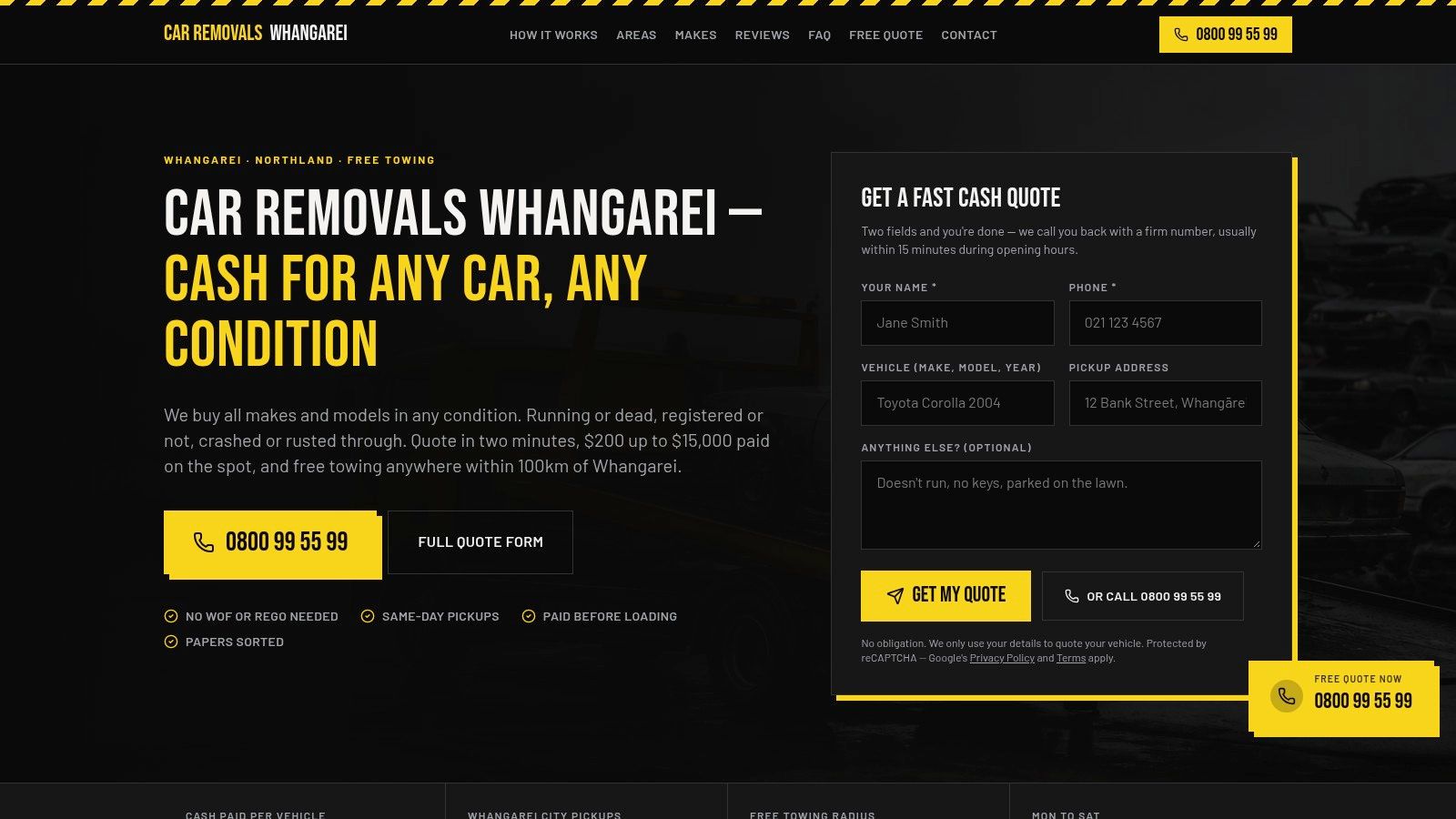
Car Removals Whangarei is a licensed vehicle dismantler based in Port Whangarei. It buys cars, vans, utes, 4WDs, trucks, machinery, hybrids and EVs in any condition, including non-runners, damaged vehicles, deregistered cars and non-rolling shells. Payment ranges from $200 to $15,000 per vehicle, depending on make, model, year, weight, completeness and current parts demand.
A complete vehicle with reusable components generally has more value than a stripped shell. Catalytic converters and alloy wheels can add to the quote, while the scrap portion is priced on weight and remaining salvage value.
What the seller keeps
Phone quotes are firm, with payment by cash or instant bank transfer before loading. Towing is free within roughly 100 km of Whangarei. City collections may be available the same day, while rural pickups are scheduled around regular runs.
Give an accurate account of the vehicle and access. Say whether it rolls or steers, whether keys are available, and whether it is on soft ground. A scrap car that is empty, flat or bogged can still be collected at no charge, but access details help determine the equipment needed.
- Features: Collection, on-site NZTA ownership notification and dismantling for parts recovery and recycling.
- Pros: No towing deduction within the service area, payment before loading, and acceptance of vehicles without plates or papers when the seller shows ID and confirms entitlement to sell.
- Cons: Free towing has a geographical limit, and a stripped or low-demand vehicle may attract a lower offer.
Fluids, batteries, tyres and airbags are removed and handled to New Zealand environmental standards. Reusable parts return to Northland vehicles, and the bare shell is baled for steel recovery. Before collection, agree on the vehicle being sold, access arrangements, payment and pickup details.
Net-return verdict: A practical option when avoiding separate towing and disposal arrangements matters as much as the sale price.
2. Cash-for-Cars Buyers
A fast phone offer can be useful when a dead car needs to leave a driveway. The weakness is that cash-for-cars describes a sales approach, not a consistent standard of service.
Best fit: Owners prioritising a simple enquiry and prompt collection over negotiating every recoverable component.
These buyers commonly take details by phone or online form and arrange cash or bank payment at collection. Some accept unlicensed vehicles or cars without plates, but missing documents still require a clear explanation of who's entitled to sell.
- Features: Remote quoting, collection arrangements and payment at handover.
- Pros: Accessible for first-time sellers and convenient for unwanted non-runners.
- Cons: Quote conditions, paperwork support and environmental handling vary between operators.
Keep control of the handover
The NZTA vehicle ownership guide distinguishes the registered person from the legal owner and requires both parties to notify it immediately when a vehicle is sold or disposed of, including sales to wreckers. Failing to complete the seller transaction can leave the previous registered person exposed to licensing charges, tolls or infringements.
Complete your seller notification yourself, retain the sale receipt and check that the vehicle is no longer registered to you. Our on-site buyer notification supports that process; it doesn't replace your own notification.
Handover rule: A tow truck leaving the driveway is evidence of collection, not proof that every administrative step is finished.
Net-return verdict: Convenient when the offer is firm and collection is included. Treat an unexplained price reduction at pickup as a changed deal, not an unavoidable cost of selling.
3. Licensed Dismantlers
Best fit: Complete vehicles with reusable engines, transmissions, panels, electronics or other components.
A dismantler assesses what can be sold as parts before treating the remaining shell as metal. That makes this route worth comparing when the car won't drive but still contains useful components, particularly on models with established parts demand.
A failed engine doesn't make every other component worthless. Conversely, a popular badge won't support a strong offer if the valuable parts have already been removed or damaged.
Parts recovery versus metal-only value
- Features: Component assessment, dismantling and separation of recoverable materials.
- Pros: The offer can recognise parts rather than weight alone, with dismantling and hazardous-material handling managed together.
- Cons: Demand changes, stripped shells offer fewer resale opportunities, and collection isn't automatically included.
Environmental handling is a practical part of the comparison. The Ministry for the Environment's waste chapter identifies used oil, refrigerants, batteries and circuit boards as materials requiring removal and appropriate treatment from end-of-life vehicles.
A licensing claim alone doesn't explain how a particular yard handles those materials. Look for a clear collection-to-dismantling process rather than assuming that accepting a vehicle means every component will be managed properly.
Net-return verdict: Often a sensible starting point for a parts-rich vehicle, provided the collection cost doesn't erase the advantage. Supply photographs of intact components, disclose missing parts and establish how long the offer remains valid.
Don't strip desirable components before comparing whole-vehicle offers. Selling something separately can reduce the remaining vehicle's value and make loading more difficult.
4. Scrap Metal Yards
If the vehicle is already a bare shell, a weight-based offer can be easier to evaluate than a speculative parts quote. Scrap metal yards make most sense when little recoverable component value remains, especially if you already have suitable transport.
Best fit: Stripped vehicles and property clear-outs involving other accepted metal.
Pricing generally follows accepted weight and the yard's current material rate. Our guide to scrap metal prices in NZ explains the pricing considerations, but the relevant figure is the yard's confirmed offer for your actual load.
- Features: Weight-based assessment, yard drop-off and collection where arranged.
- Pros: A practical route for metal-only shells and combined clear-outs.
- Cons: Parts value may go unrecognised, while transport and preparation can fall to the seller.
Count the delivery costs
Trailer hire, suitable loading equipment and the return journey all belong in your comparison. A shell without wheels or accessible lifting points isn't a routine trailer load, and improvised recovery can create more trouble than the sale solves.
The Ministry of Transport's vehicle outcomes report identifies a policy gap around permanent end-of-life vehicle disposal and insufficient information about why owners scrap otherwise operating vehicles. For sellers, that's a reason to distinguish disposal value from remaining vehicle value, rather than assuming every unwanted car belongs in a metal load.
A clear weight-based price is useful only when you also know what the yard accepts and what delivery will cost.
Net-return verdict: Competitive for a stripped shell with economical transport. Less convincing when usable components or difficult loading deserve separate valuation.
5. Insurance Salvage Sales
Best fit: Accident, flood or other total-loss vehicles already moving through an insurer's claim process.
Before comparing salvage bids with direct buyers, establish who controls the salvage. If your insurer retains salvage rights, check with the insurer before agreeing to any separate sale.
An insurer-managed tender or auction can be administratively straightforward. However, the claim settlement and the salvage sale aren't necessarily separate amounts you can both keep, so compare the actual settlement choices rather than adding a salvage estimate to the claim payment.
Establish the decision you actually have
Read the settlement correspondence for salvage ownership, storage arrangements and release conditions. Our explanation of selling a write-off car helps distinguish disposal decisions from the insurance process.
- Features: Insurer-managed tender or auction, documented release and transfer through the claim arrangements.
- Pros: A defined route when the insurer already controls the vehicle and documentation.
- Cons: Limited control over timing, uncertain bidding outcomes and possible restrictions on selling elsewhere.
A direct offer can be worth comparing if you're entitled to retain and sell the vehicle. It isn't automatically better: retaining salvage may change the settlement, and storage or collection obligations can affect the amount you keep.
Before accepting: Confirm salvage rights first. A promising offer is irrelevant if you aren't authorised to sell the vehicle.
Net-return verdict: Use the insurer's process when it removes administrative uncertainty without weakening your settlement. Where retention is available, compare the settlement adjustment, direct sale proceeds and collection costs together.
Keep the insurer's written decision and any yard release with your sale records. Don't arrange collection while those permissions remain unresolved.
6. Specialised Removers for 4WDs, Trucks and Machinery
A seized tractor behind a farm shed presents a different job from a hatchback beside the road. Recovery equipment and access can matter more than the advertised scrap rate.
Best fit: Heavy, immobile or awkwardly positioned vehicles, including light trucks, tractors, diggers and damaged 4WDs.
Specialist assessment considers components as well as weight. An intact engine, gearbox, differential, deck or hydraulic assembly can justify closer inspection before treating the machine as bulk metal.
- Features: On-site assessment, suitable loading equipment and collection from authorised holding locations.
- Pros: Better suited to difficult recoveries and component-based valuation.
- Cons: Rural scheduling can be less flexible, and incomplete machinery can be harder to value.
Send access details before booking
Photograph gates, slopes, turning space and the ground beneath the vehicle. Note locked wheels, missing axles, attachments and overhead obstructions so the collection plan matches the site.
For familiar rural vehicles such as a Hilux, Ranger or Navara, our 4WD and ute removal information outlines the relevant collection route. For panel-beater or holding-yard collections, we require a yard release and the registered owner's ID.
Electrified vehicles need a different technical assessment again. The Ministry for the Environment's waste programme identifies fire and toxic-substance risks from mishandled large vehicle batteries, supporting controlled isolation and specialist handling.
Net-return verdict: Prefer appropriate recovery capability over an attractive offer that assumes easy loading. Don't attempt to disconnect or remove a hybrid or EV traction battery yourself.
7. Council Transfer Stations and Dump Drop-Offs
Best fit: Accepted residual material where a paying recovery route isn't available.
A transfer station is a disposal option, not a reliable way to sell a scrap car. Don't hire transport until the facility has confirmed that it accepts the vehicle in its present condition and explained any charges or preparation requirements.
Some facilities won't accept complete vehicles, and others impose conditions around fluids, tyres and batteries. Acceptance of household scrap metal doesn't establish acceptance of a whole car.
Separate disposal from vehicle records
- Features: Facility drop-off, acceptance rules and potentially chargeable disposal.
- Pros: A fallback for suitable residual material with no practical recovery buyer.
- Cons: Usually no sale proceeds, possible preparation and transport costs, and no automatic resolution of vehicle registration records.
Tyres illustrate why disposal isn't just about the shell. The Ministry for the Environment's priority product-stewardship guidance estimates that about 6.5 million tyres reach the end of their useful life in New Zealand each year, making their destination a meaningful part of vehicle disposal.
Don't remove hazardous materials merely to meet a drop-off condition unless you have the skills and suitable equipment. Refrigerant, fuel and high-voltage components need appropriate handling, not improvised draining or disconnection.
For landlords and rural property managers, a vehicle sitting on your land doesn't by itself establish your entitlement to dispose of it. Obtain owner authorisation or establish the appropriate disposal process before booking transport.
Net-return verdict: A last resort for an accepted load, not the default choice for a complete vehicle. Compare the full disposal bill against a collection-based sale before committing.
How the seven seller options compare on payout basis, towing, paperwork and best use
| Option | Payout basis | Towing and pickup | Paperwork | Best for |
|---|---|---|---|---|
| Car Removals Whangarei | Quotes of $200–$15,000 based on condition, weight, parts demand and steel prices; paid before loading | Free within about 100 km of Whangarei; city pickups often same-day | Completes NZTA ownership notification at pickup | Northland owners selling unwanted vehicles, including damaged or non-running vehicles |
| Cash-for-Cars Buyers | Offer varies by buyer and vehicle | Often collected within days; confirm details with buyer | Support varies; may accept vehicles without plates or papers if identity is confirmed | Quick sale with a simple process |
| Licensed Dismantlers | Parts value and vehicle weight | Confirm whether towing is included | Usually handles ownership paperwork | Newer or popular models, and sellers who value responsible recycling |
| Scrap Metal Yards | Vehicle weight and current scrap-metal rates | Yard drop-off or collection by arrangement | Confirm identity and ownership requirements | Owners with transport or multiple metal items to clear |
| Insurance Salvage Sales | Salvage tender or auction bids | Timing follows the insurer's schedule | Ownership transfer handled through the insurer's process | Write-offs with settled claims |
| Specialised Removers for 4WDs, Trucks and Machinery | Components and weight | On-site assessment and suitable loading equipment | Arrange any panel beater or holding-yard release first | Heavy, immobile or specialist vehicles |
| Council Transfer Stations and Dump Drop-Offs | Usually a disposal fee rather than a payout | Owner drop-off; facility rules may apply | Ownership may not be transferred | Owners with no other disposal option |
Turning the Shortlist Into a Same-Week Sale
Choose the route that fits the vehicle's remaining value, your authority to sell and the collection difficulty. A complete car with useful parts deserves a dismantler's assessment; a stripped shell may suit a metal yard if delivery is economical. A heavy machine needs suitable recovery equipment, while an insurance write-off needs a clear salvage-rights decision before anything else.
Get written quotes from two or three suitable buyers using the same description and photographs. Include the make, model, condition, missing components, registration status and exact collection location. If one buyer assumes a complete, rolling vehicle and another knows it's a shell on soft ground, their offers aren't comparable.
Northland handover checklist
- Confirm access: Disclose gravel approaches, steep drives, soft paddocks, narrow gates and missing wheels.
- Compare the retained amount: Deduct any towing, loading, preparation, storage or disposal costs from the offer.
- Record the agreement: Keep the vehicle description, accepted price, collection arrangements and payment method together.
- Establish authority: Have identification and evidence that you're entitled to sell, plus insurer or holding-yard releases where relevant.
- Complete the records: Retain the receipt, submit your seller notification and clarify any separate deregistration steps.
Car Removals Whangarei fits the owner who values a firm quote, coordinated paperwork and free towing within the stated Northland coverage area. Payment happens before loading, so the handover doesn't depend on waiting for the vehicle to reach a yard.
Keep sale notification and registration cancellation distinct in your mind. Record what each party has completed, and don't assume a damaged, unlicensed or deregistered vehicle needs no documentation just because it can't legally be driven.
Before collection, remove personal belongings, toll tags and anything you haven't agreed to include. Leave agreed components in place and keep keys, identification and release documents accessible. The strongest deal is the one that leaves you with the agreed money, a cleared space and evidence that your part of the transaction is complete.
Car Removals Whangarei buys unwanted vehicles for scrap and recoverable parts, with firm quotes, payment before loading and free towing within roughly 100 km of Whangarei. Visit Car Removals Whangarei with your vehicle details, condition and collection location to arrange a quote and turn an unwanted car into a straightforward sale.
- scrap car buyers
- Whangarei scrap cars
- sell scrap car NZ
- scrap car removal
- Northland car removal