· Car Removals Whangarei
Junk Auto Removal Made Simple in Whangarei and Northland
The hatchback's sitting on flat tyres beside the driveway, or the old ute under the carport hasn't moved since its last failed WOF. You want the space back, but you're not sure who can load it, what it's worth, or whether handing over the keys finishes your responsibility. Junk auto removal should resolve all of that, not just get a vehicle onto a truck.
Table of Contents
- What Junk Auto Removal Actually Covers in Northland
- How the Removal Process Works From Quote to Pickup
- What Affects the Price You're Offered
- Access, Preparation and What to Flag Before Pickup
- How Responsible Disposal Actually Happens After Pickup
- Paperwork and Ending Your Liability the Right Way
What Junk Auto Removal Actually Covers in Northland
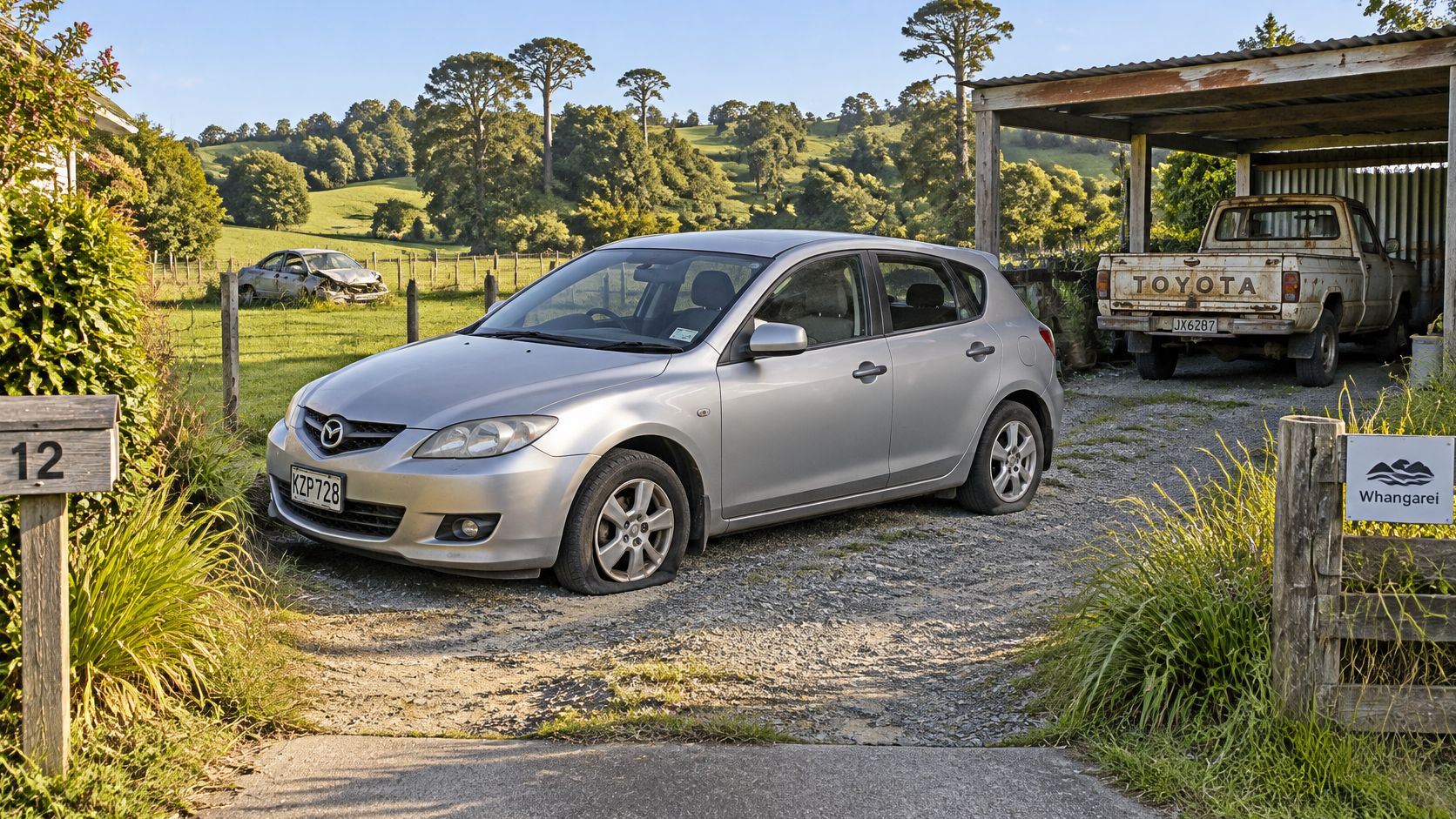
A rusted Hilux behind a farm shed and a seized hatchback in a Whangarei driveway need different loading arrangements, but both belong in the same conversation. Neither has to run, hold a current WOF or look presentable before you ask for removal. The important questions are what remains, where it's sitting and who has authority to release it.
Junk auto removal covers collection for dismantling, parts recovery and appropriate disposal. That includes complete vehicles with mechanical failures as well as shells that have already lost engines, wheels or interior fittings. Don't assume a vehicle is unsuitable just because you couldn't drive it onto a trailer.
More than written-off cars
The work can include several quite different jobs:
- Everyday vehicles: Sedans, hatchbacks, wagons and people movers with failed WOFs, seized engines or repair bills the owner no longer wants to carry.
- Working vehicles: Hilux, Ranger and Navara utes, Hiace vans and other commercial vehicles with blown motors or damaged chassis.
- Damaged stock: Accident write-offs, flood-exposed cars, fire losses, hybrids and EVs requiring specialist assessment.
- Property clearances: Abandoned vehicles, non-rolling shells, trucks, small machinery and implements, subject to authority and suitable loading equipment.
Northland owners may be dealing with coastal rust, vehicles stored on rural land or machinery tucked behind buildings rather than parked beside a clear road. Those circumstances make recovery planning as important as identifying the vehicle.
New Zealand's ageing fleet provides historical context. A Ministry of Transport scrappage report recorded an average fleet age of 12.49 years in 2009, while vehicles scrapped in its trial averaged 20 years old and approximately 214,500 kilometres. Those are historical figures, not a description of today's fleet.
Practical rule: Ask about acceptance before moving or stripping anything. A complete description is more useful than trying to make an unwanted vehicle look ready for collection.
For landlords and farm managers, acceptance also depends on lawful authority. A vehicle being unwanted on your land doesn't, by itself, settle who can authorise its disposal.
How the Removal Process Works From Quote to Pickup
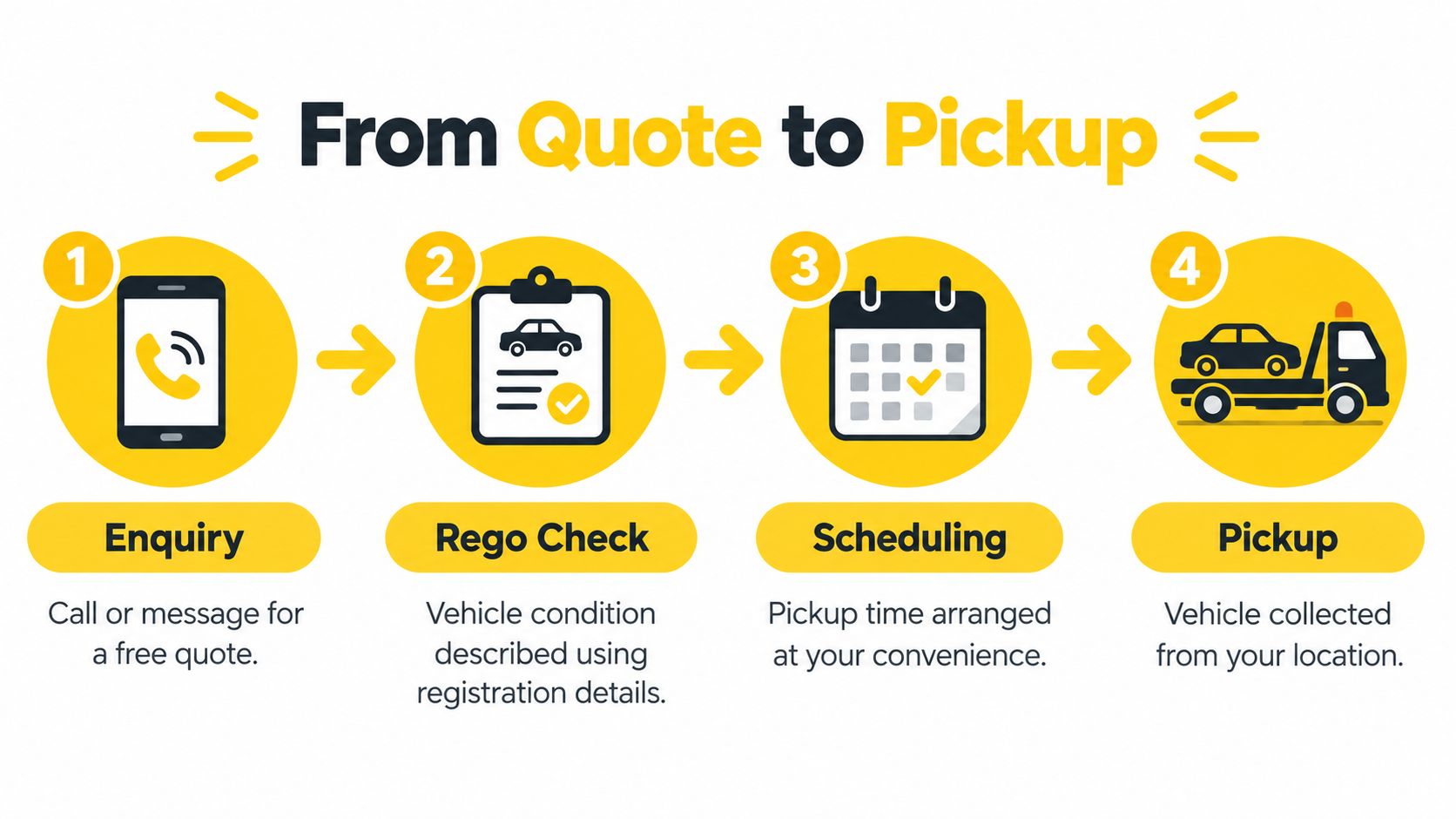
Start with the rego, make, model, location and an honest condition description. Say whether it runs, rolls, steers and brakes, then identify missing components. “Not running” is useful, but “engine seized, rear wheels locked, parked behind a shed” gives the operator something they can plan around.
Photos should show the vehicle and its surroundings. Include the damaged side, missing wheels and the route from its parking spot to the road. Flag hybrid or EV status during the first enquiry, rather than after the truck has been allocated.
Get the agreement clear before booking
A firm phone quote should follow a proper condition discussion. The operator needs enough information to assess recoverable parts, metal value and collection requirements, rather than offering an attention-grabbing figure and sorting out the details at your gate.
Before accepting, ask the operator to confirm:
- The amount payable: Establish whether the offer is firm for the vehicle as described.
- Collection costs: Confirm whether towing is included for your location and access conditions.
- Payment arrangements: Agree on cash or instant bank transfer and payment before loading.
- The collection window: Get an achievable arrival window, plus instructions for delays or access changes.
Payment shouldn't become an awkward conversation after the winch cable is attached. With a bank transfer, check receipt through your own banking access rather than relying solely on a payment screenshot.
City pickups and rural runs need different planning
Whangarei city collections can suit same-day scheduling, while rural Northland jobs are better organised around planned routes. Ask whether next-day collection is available, but don't rearrange farm work around an assumed arrival time. The booking confirmation should settle that.
An owned tow fleet gives a dismantler more direct control over dispatch and loading equipment, although weather and access still need to be considered. Ask who will arrive and whether they've received the photographs and condition notes.
A well-run booking call ends with both parties agreeing on the vehicle, the payment and the collection conditions. It shouldn't leave the driver to renegotiate the job on arrival.
At pickup, the driver should compare the vehicle with that description and check the release authority before collection proceeds. Keep the agreed quote and messages available so there's a clear record of what was booked.
What Affects the Price You're Offered
A heavier vehicle isn't automatically worth more to the seller. The operator has to consider usable components, recoverable metal, safe handling and the work needed to collect it. A complete sedan with desirable parts may justify a different offer from a heavier shell that's already been stripped.
For a non-rolling shell, kerb weight provides a starting reference, but it doesn't describe what's left. Missing engines, transmissions and other assemblies change the recoverable material and parts inventory. Tell the operator what has been removed rather than quoting the vehicle's original specification.
Typical price drivers by vehicle type
| Vehicle category | Main price driver | Typical range |
|---|---|---|
| Sedans and hatchbacks | Completeness, usable components and metal recovery | Vehicle-specific phone quote |
| 4WDs, utes and vans | Drivetrain condition, recoverable panels and parts demand | Condition-dependent offer |
| Stripped or non-rolling shells | Remaining metal and components, plus recovery requirements | Assessed from what remains |
| Hybrids and EVs | Traction battery condition, safe recovery and reusable parts | Assessment-dependent offer |
| Trucks, buses and machinery | Recoverable assemblies, size and loading requirements | On-site assessment |
A Hilux with a blown motor might still have useful driveline components or body panels. A Hiace with a damaged body may have a different recovery case. Neither example supports a guaranteed payout without knowing the model, condition and current parts demand.
Damage type matters as much as appearance
Hail damage and flood exposure shouldn't be treated as interchangeable. When comparing an insurance salvage tender with a removal offer, provide the same damage information to each buyer and compare the net payment, transport arrangements and paperwork, not just the headline amount.
Fire and collision damage also need an honest description. Photos of the clean side alone won't help the operator assess damaged components or decide what equipment to send.
For hybrids and EVs, the traction battery must be assessed separately from ordinary steel value. Its condition and recoverability matter, so a vehicle shouldn't be priced on the assumption that every battery is reusable. EECA's guidance on EV batteries explains that used batteries may be refurbished, repurposed or recycled, with high-voltage work left to qualified providers.
Rural distance and difficult loading can affect whether a collection makes economic sense. Disclose those details before accepting a firm offer, rather than relying on a quote that assumes roadside access.
The useful approach to turning scrap vehicles into cash is straightforward: document what's intact, explain what's missing and compare offers on the same terms.
Access, Preparation and What to Flag Before Pickup
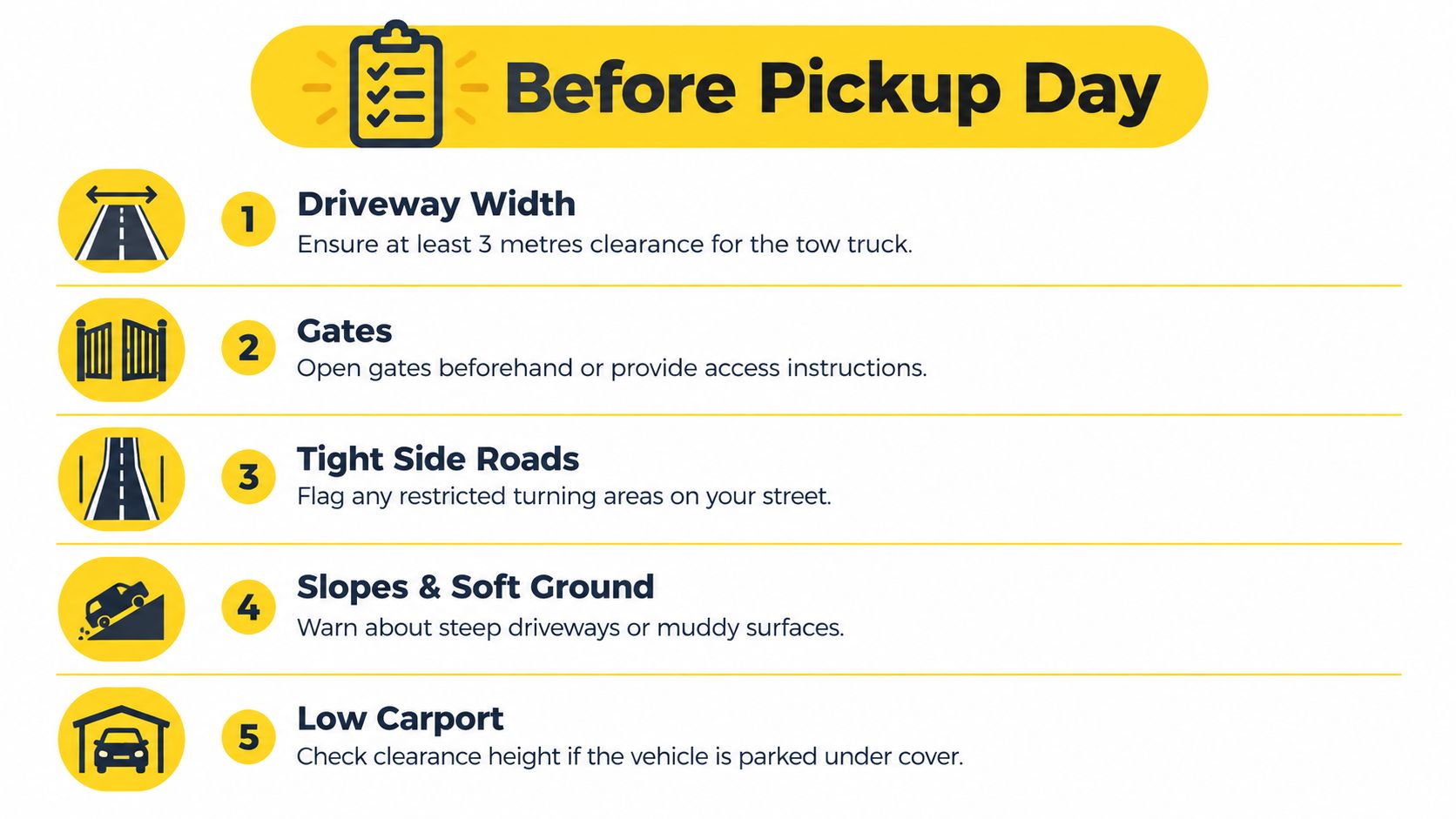
Describe the route to the vehicle, not just the address. A tow truck reaching your gate doesn't mean it can reach a shell behind the woodshed. Driveway width, gate openings, tight side roads, slopes, soft ground and overhead clearance all belong in the booking conversation.
Send access photos from the road inward. Show the narrowest point and any awkward turn, then include the vehicle beneath its carport or beside surrounding equipment. Let the operator confirm clearance for the truck they intend to send.
Tell the operator what won't move
Missing wheels, locked brakes and damaged steering change the loading plan. A non-rolling shell may need winching or different recovery equipment, while a tractor with an attached implement needs assessment as a combined job. Don't remove the implement or drag the vehicle somewhere else without agreeing on a safe plan.
Flag LPG tanks, loose batteries, leaking fluids and stripped interiors as well. Identify whether the vehicle is on private land or beside a public road, and make sure the person authorising collection can be contacted.
EV and hybrid owners should disclose crash damage, flood exposure, warning lights, charging problems and any known battery damage. Share the state of charge and charging history if you know them, but don't energise an unsafe vehicle just to obtain information.
Safety first: Don't jump-start, cut into or dismantle a crash-damaged or flood-exposed EV to make collection easier. Leave assessment and isolation to suitably equipped personnel.
A good operator asks these questions to choose the right handling method, not to make the booking difficult. New Zealand's waste and resource efficiency work programme identifies the need for controlled handling of large batteries and their associated risks.
Pickup-morning checklist
- Clear the approach: Move other vehicles and loose equipment, open agreed gates and keep the loading area clear.
- Have documents ready: Put identification, authority to release the vehicle and relevant vehicle records together.
- Remove belongings: Check storage areas for tools, personal papers, remotes and anything you intend to keep.
- Report changes: Tell dispatch if rain has softened the access track or the vehicle's condition has changed.
- Leave recovery to the driver: Don't crawl beneath an unstable shell, release it on a slope or improvise towing points.
You don't need to make a derelict vehicle roadworthy. You need to give the collection crew accurate information and a safe opportunity to assess it.
How Responsible Disposal Actually Happens After Pickup
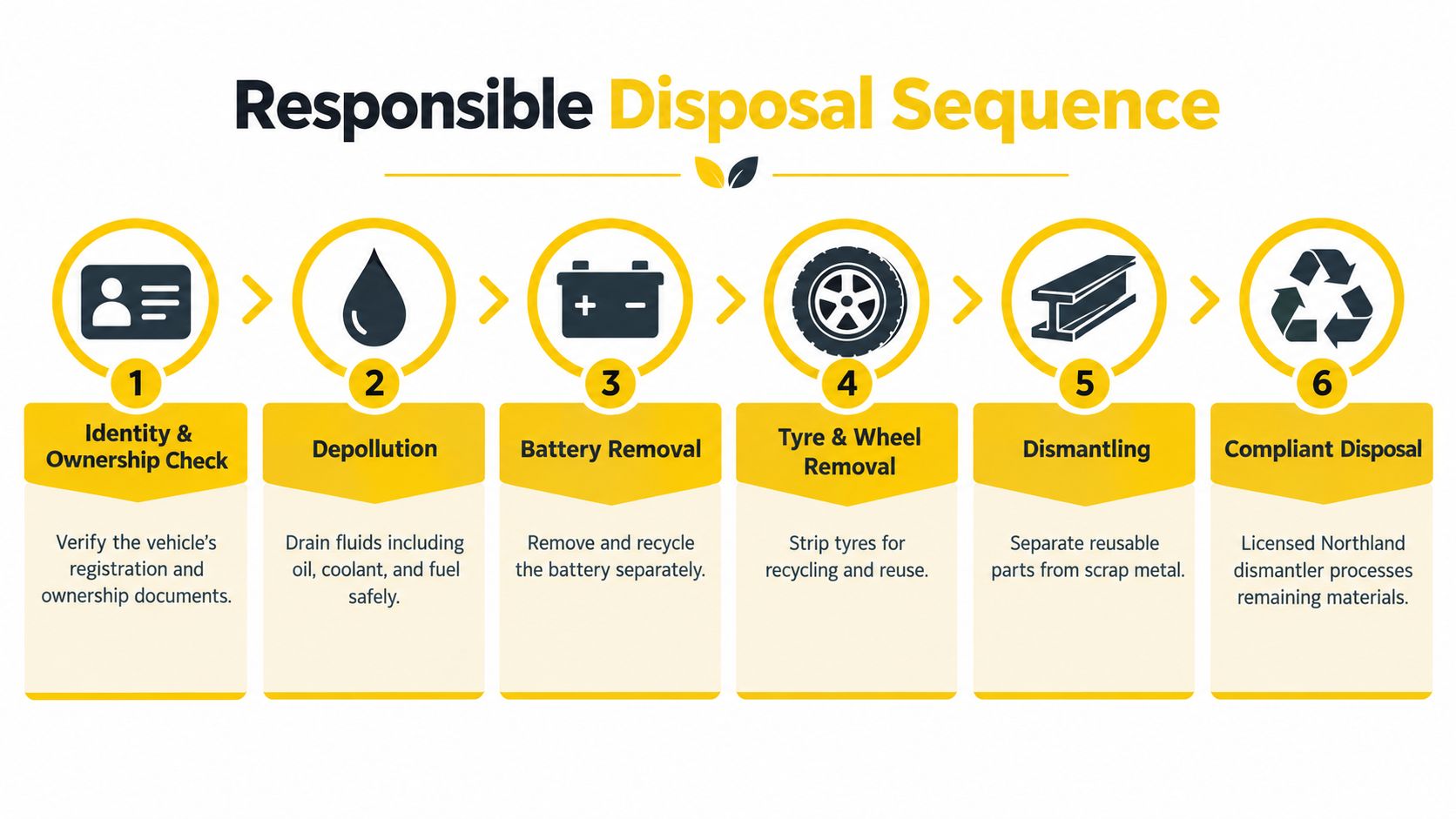
“We scrap everything” isn't much of an explanation. Responsible disposal means separating hazards and reusable materials before the remaining shell reaches a metal processor. A truck taking the car away is only the collection stage.
The environmental reason isn't new. In its Environment New Zealand 2007 waste assessment, the Ministry for the Environment reported approximately 25,000 illegally dumped cars annually, costing authorities an estimated NZ$6 million a year. Those historical estimates aren't current annual counts, but the assessment also identified oils, refrigerants, batteries and circuit boards as materials requiring appropriate treatment.
Depollution comes before metal recovery
The receiving dismantler should verify identity and release authority, record the registration or VIN, photograph the vehicle and assess its hazards. Once it's stable, trained staff can carry out the appropriate electrical isolation and dismantling work.
Engine oil, transmission fluid, coolant, brake fluid and fuel need separate containment. Air-conditioning refrigerant requires appropriate recovery rather than release. Batteries, airbags, tyres and reusable parts also need controlled handling before the remaining shell goes downstream.
Ask what the operator records:
- Fluids and hazardous components: What was removed and where it was directed.
- Tyres and batteries: Which collection or recovery channels received them.
- Parts and shell: What was harvested and how the remaining metal was transferred.
The Ministry for the Environment estimates that New Zealand generates about 6.5 million end-of-life tyres annually, with only around 40% recycled or exported and the remainder landfilled, stockpiled or dumped, according to its priority waste streams discussion document. That's why a compliant Northland dismantler should use registered Tyrewise collection channels rather than informal farm storage.
Traction batteries need their own pathway
A conventional starting battery and a high-voltage traction battery aren't interchangeable dismantling jobs. Trained personnel should follow the manufacturer-specific shutdown procedure, using appropriate equipment, before high-voltage work begins.
Damaged or swollen packs require specialist assessment and controlled isolation from ignition sources and other vehicles. They shouldn't enter the ordinary crushing or scrap-metal stream, and owners shouldn't attempt battery removal themselves.
A practical vehicle disposal guide for New Zealand should make these downstream arrangements clear. The meaningful test is whether the operator can explain the route for each material, not promise that the car will be recycled.
Paperwork and Ending Your Liability the Right Way
Don't treat the tow truck leaving as proof that your registered-person responsibilities have ended. Waka Kotahi NZ Transport Agency requires both seller and buyer to notify it when a vehicle changes hands, and the seller must notify it immediately. Its registered-person responsibilities guidance warns that failing to notify can leave the former registered person exposed to the buyer's tolls, speeding tickets, licensing fees and other penalties.
The notification is free and can generally be completed online, with phone or contact options available when online processing isn't possible. Overdue registration-related fees remain the seller's responsibility until the sale is reported, so leaving the task until later creates an avoidable gap.
Finish the transaction at collection
Complete your side of the notification at pickup and confirm the dismantler's details match the receipt. If the vehicle requires deregistration or another disposal process, have the operator explain which transaction applies rather than assuming every scrap vehicle follows an identical route.
Keep the following together:
- Collection receipt: Vehicle identity, buyer details and the collection date.
- Payment confirmation: Evidence that the agreed payment reached you.
- Notification reference: Confirmation of your completed NZTA notification and any applicable disposal records.
Check the NZTA registration and change-of-ownership process before collection if you're unsure which details you'll need. The paperwork should match the handover, with neither party relying on a promise to sort it out later.
Car Removals Whangarei offers unwanted-vehicle purchasing, collection and licensed dismantling for Northland owners, with payment before loading and NZTA notifications completed at pickup. Visit Car Removals Whangarei with your rego, condition photos and access details to request a firm quote and arrange collection.
- junk auto removal
- cash for cars
- car removal Whangarei
- scrap car removal
- Northland vehicle disposal