· Car Removals Whangarei
4x4 Dismantlers Auckland: How They Value Your Vehicle
The usual advice is to ring around and take the highest cash offer. That's incomplete. A good dismantling deal needs a clear valuation, suitable recovery equipment and a completed legal handover, not just a tow truck arriving at your driveway.
If you're searching for 4x4 dismantlers Auckland, check the collection area before comparing offers. We're based in Port Whangarei and serve Whangarei and Northland, not Auckland. Wherever your vehicle sits, the important distinction is the same: physical pickup and NZTA paperwork are separate jobs.
Table of Contents
- How a 4x4 Dismantler Processes Your Vehicle
- What Sets a 4x4's Value at the Yard
- Hybrid and EV 4x4s Need Special Handling
- Checking a Dismantler Before You Book
- Completing the NZTA Paperwork When You Sell
- Confirm Coverage and Book With Confidence
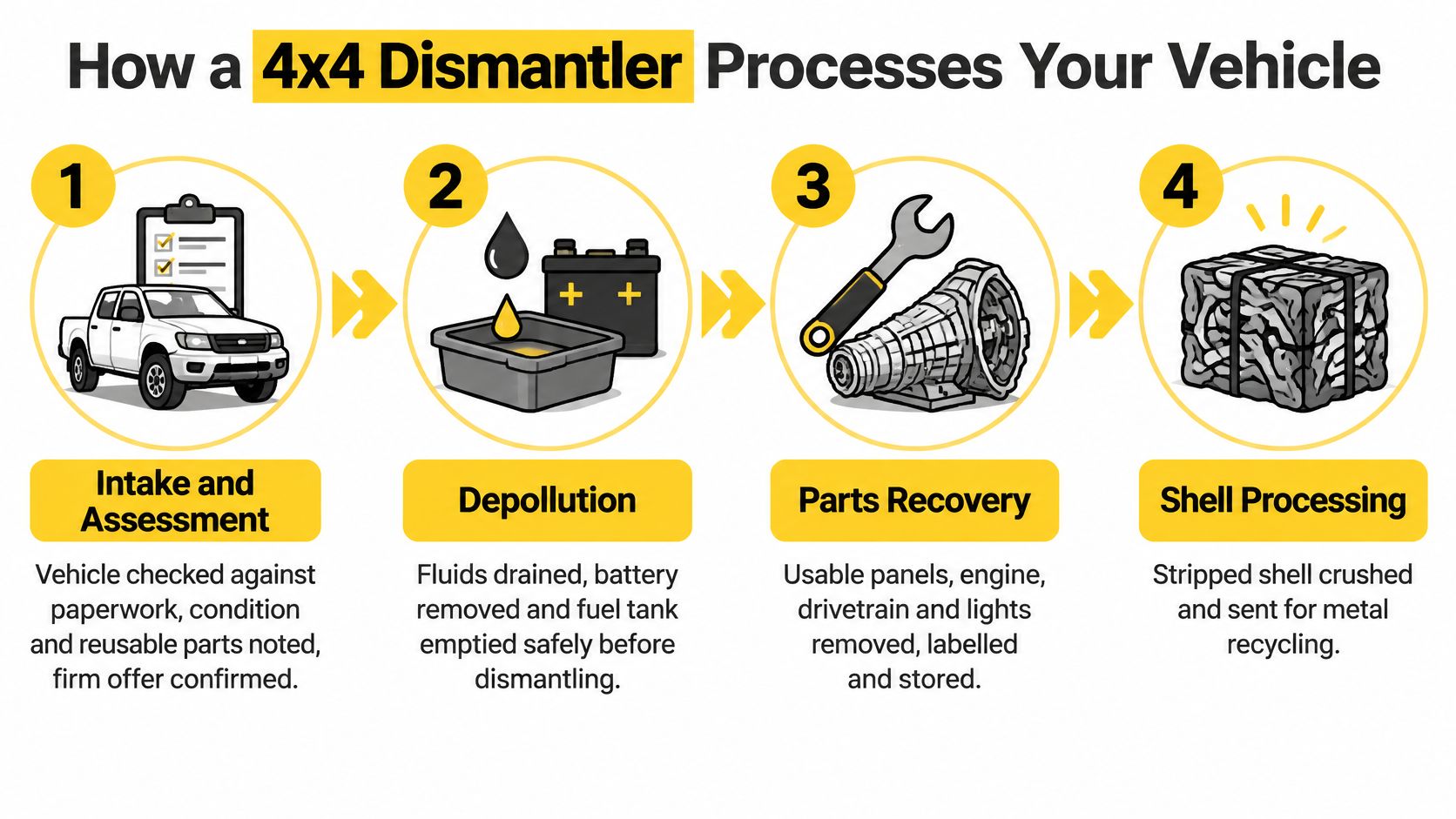
How a 4x4 Dismantler Processes Your Vehicle
Dismantling stages and what each means for value
| Stage | What happens | Effect on value |
|---|---|---|
| Intake and assessment | Make, model, year, damage and completeness are recorded | Sets the starting offer |
| Depollution | Fluids drained, batteries and tyres removed for separate recycling, airbags handled | Required before parts are pulled; affects cost, not payout directly |
| Parts recovery | Engines, gearboxes, diffs, axles, cabs and body panels tested and removed | Reusable parts drive most of the value |
| Shell processing | Remaining body baled for steel recycling | Sets the scrap floor based on weight |
At intake, the dismantler checks what the vehicle contains, not just what the badge says. Make, model, year, running condition, damage and missing components establish the starting offer. A complete non-runner can still contain useful assemblies, while an apparently tidy ute may have little recoverable driveline value.
The process follows a controlled order.
Why depollution comes first
The Ministry for the Environment's waste chapter identifies used oil, refrigerants, batteries and circuit boards as hazardous or potentially hazardous materials requiring appropriate removal and treatment at the scrap stage. That's why dismantling isn't taking a socket set to the most saleable components.
Fluids need controlled drainage before assemblies are disconnected. Refrigerant needs appropriate recovery, rather than release, and airbags need controlled handling. Many utility 4x4s also carry substantial drivetrain assemblies, fluid volumes, batteries and tyres, increasing the handling work compared with a small car.
At our yard, fluids, batteries, tyres and airbags are removed and handled to New Zealand environmental standards. Tyres are separated for recycling rather than left attached to the shell.
What happens to the useful parts
Engines, gearboxes, differentials, axle assemblies and transfer cases are assessed for reuse. Doors, bumpers, grilles and mirrors can also matter, particularly when they're straight and match a vehicle someone is repairing. Good parts are tested and returned to Northland vehicles.
The remaining shell is baled for steel recycling. Kerb weight helps establish a scrap baseline, although missing assemblies mean the stripped vehicle no longer contains its original mass.
As the seller, expect condition questions before collection, confirmation at intake and a receipt for the transaction. You don't need to supervise dismantling, but you should understand the offer before releasing the vehicle.
Ask at intake: What is the offer based on, reusable components, recoverable metal, or both?
What Sets a 4x4's Value at the Yard
Value drivers for a 4x4 at the yard
| Factor | Why it matters | Typical effect on offer |
|---|---|---|
| Model and year | Parts demand differs between popular and niche 4WD and ute models | Higher parts demand raises the offer |
| Engine and drivetrain condition | Engines, gearboxes, transfer cases and diffs are sought-after parts | Working or repairable driveline lifts value; a seized engine lowers it |
| Body and chassis rust | Rust limits reuse of panels and frame sections | Heavy rust pushes the offer towards weight-based scrap |
| Accident or flood damage | Damage determines which parts can be safely reused | Lowers the offer where reusable components are affected |
| Kerb weight | Steel content establishes the scrap floor | Heavier vehicles generally carry a higher weight-based floor |
| Fuel type | Changes which engine and fuel components are wanted | Strong local demand for that fuel system supports value |
| Completeness | Missing wheels, batteries or key components reduce resale | Missing parts lower the offer |
| Traction battery, hybrid or EV | Battery value and handling are separate from the body | Battery condition and the dismantler's acceptance policy determine its contribution |
Model, driveline condition and weight usually explain the biggest differences between offers. A popular ute with a usable gearbox and transfer case offers more recovery options than the same model with those assemblies missing.
The Ministry of Transport's annual fleet statistics recorded more than 4.5 million vehicles in New Zealand's 2021 fleet. That establishes the national vehicle base supporting repairs and dismantling, but it doesn't establish demand for your particular engine or differential.
Condition matters more than the badge alone
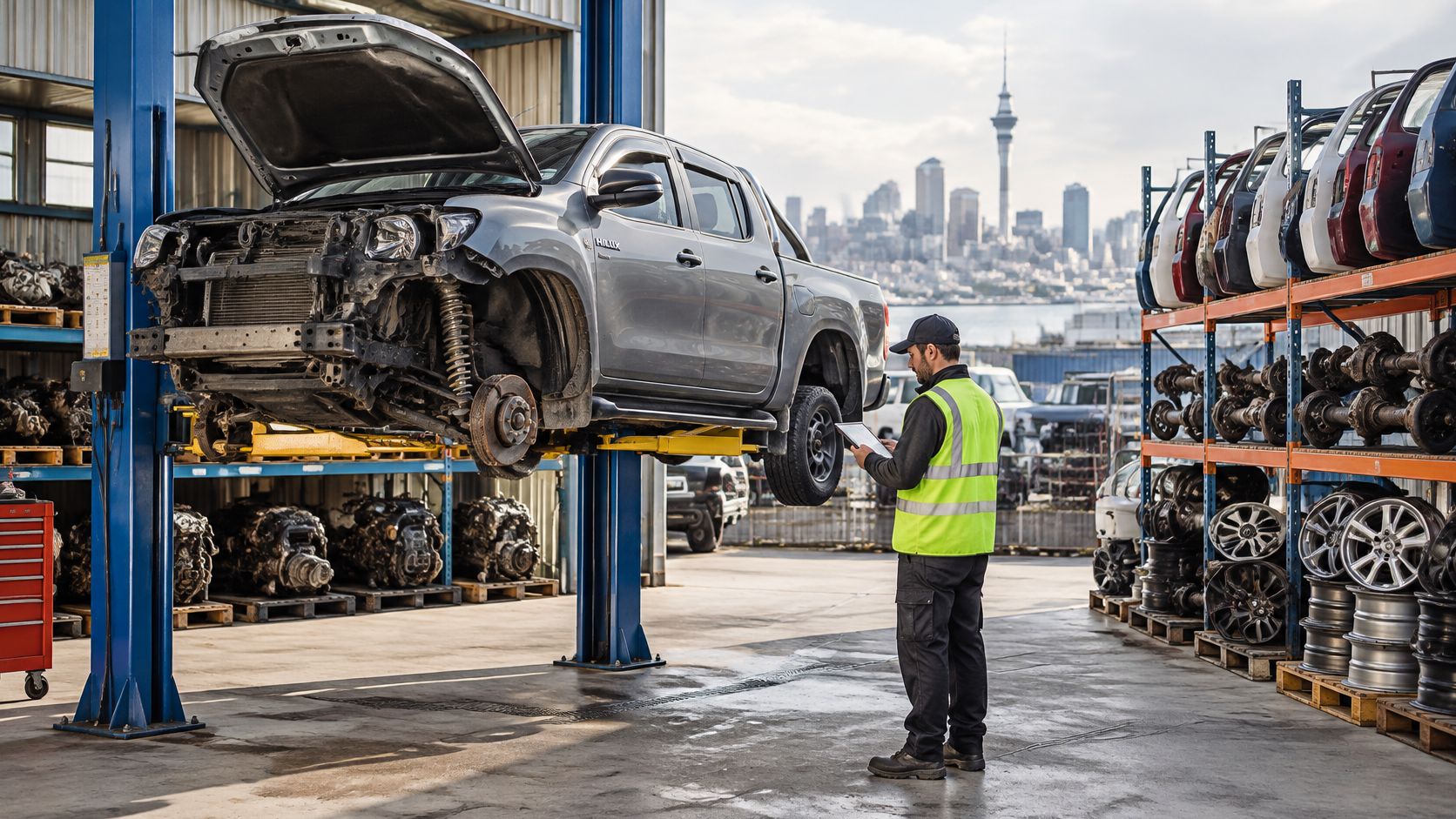
A seized engine removes a major resale opportunity, but it doesn't automatically make the whole vehicle worthless. The gearbox, axles and bodywork may remain useful. Heavy chassis rust is different: it can rule out structural reuse even when the vehicle looks presentable from above.
Accident damage needs component-by-component assessment. A damaged front corner doesn't necessarily condemn the rear differential; flood exposure can affect electrical and mechanical components well beyond the visible waterline.
Utility vehicles also require heavier lifting and storage arrangements. Larger tyres, batteries, diesel fuel equipment and four-wheel-drive assemblies influence both recovery costs and what the yard can reuse.
Before calling, check the following without trying to start an unsafe vehicle:
- Movement: Does it roll, steer and have accessible wheels?
- Engine completeness: Are the engine, gearbox and major accessories still fitted?
- Body condition: Where are the rust, impact damage or flood marks?
- Missing parts: Have the battery, wheels, exhaust equipment or driveline components been removed?
Use our online car valuation guide to organise those details. A common 4x4 stripped of useful components can attract less than a less popular model that's complete.
Hybrid and EV 4x4s Need Special Handling
A crash-damaged hybrid is a handling question before it's a valuation question. Don't treat a traction battery as an ordinary starter battery, and don't assume a vehicle is safe because it's silent.
NZTA's electric and hybrid inspection requirements identify insecure, damaged, deteriorated, inadequately insulated or leaking high-voltage batteries as defects, along with damaged or missing shields around batteries and wiring. These are safety conditions, not merely reasons to adjust an offer.
Before arranging collection, disclose warning lights, crash damage, water immersion, smoke, battery leakage and exposed wiring. Say whether the vehicle can be moved without energising the drivetrain, if you know. If you don't know, leave that assessment to the recovery team.
Keep assessment separate from dismantling
Don't jump-start a damaged hybrid to demonstrate that it runs. Don't disconnect orange high-voltage cables, open the battery enclosure or attempt an improvised isolation procedure. Tell the collector about any unusual heat, smell or previous smoke before anyone approaches to load it.
The appropriate sequence is:
- Safe collection assessment. Establish the vehicle's condition, access restrictions and suitable loading method.
- Specialist isolation. Have the high-voltage system made safe by a competent person using the appropriate vehicle-specific procedure.
- Recoverable-parts valuation. Assess the battery and other components for their actual recovery route, rather than assuming everything is reusable.
- Remaining-shell valuation. Account for the body and recoverable metal separately from the traction battery.
Our guide to EV battery recycling in New Zealand explains the battery's separate recovery pathway. The key distinction is between a battery with a viable reuse route and one requiring specialist treatment.
A generic cash-for-cars figure doesn't tell you how the traction battery has been valued.
Have the quote identify whether battery value is included and how its condition affects that allowance. Also confirm who assesses isolation and transport safety before collection, not after the vehicle is already on the truck.
Checking a Dismantler Before You Book
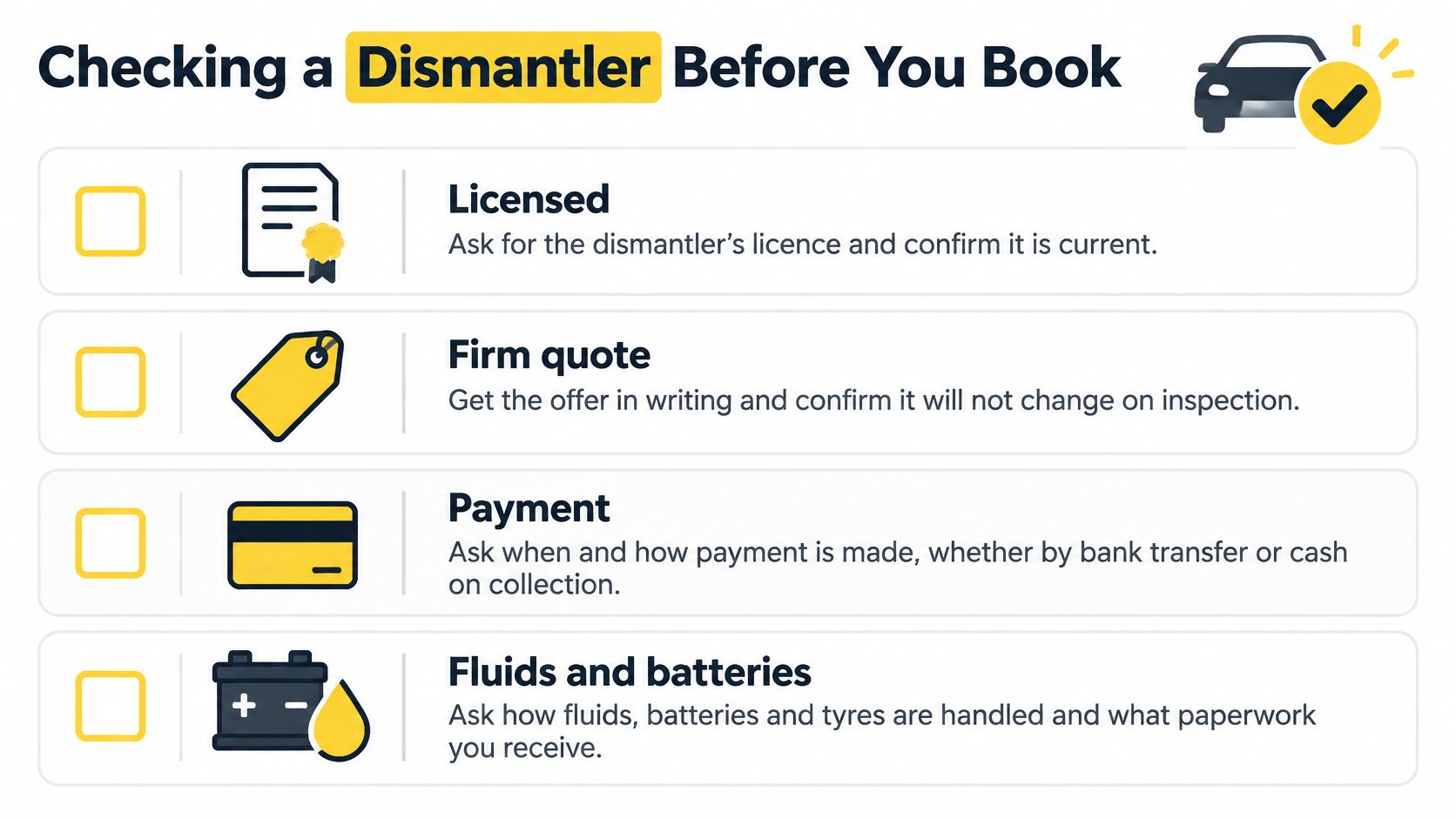
Provider checks before booking
| Check | What to ask | Red flag |
|---|---|---|
| Licence | Is the business a licensed dismantler, and can it show the licence? | No licence details offered |
| Quote | Is the phone quote firm at pickup, and what is it based on? | The price changes after inspection without explanation |
| Payment timing | Is payment made before loading, and by cash or bank transfer? | Cheques, hold-backs or payment after the vehicle leaves |
| Environmental handling | How are fluids, batteries, tyres and airbags handled? | No clear answer on depollution or steel recycling |
The business name on the quote should match the business you're dealing with. We're a licensed Northland dismantler. Keep the quoted name and the person's contact details so there's no uncertainty about who agreed to buy the vehicle.
A high headline offer isn't useful if the collection driver treats it as an opening negotiation. Get the condition assumptions recorded before booking, including missing parts and whether the vehicle rolls.
Get the agreement into writing
Our phone quotes are firm and honoured at pickup, based on the vehicle details supplied. They're calculated from parts demand and steel pricing. Accurate disclosure lets the yard price the actual vehicle rather than an assumed complete, accessible example.
Send clear photographs of the vehicle, damage and access route. A picture of the driveway entrance can be as useful as a picture of the bonnet when the vehicle is behind a shed or parked on soft ground.
Your written record should include:
- Vehicle identity: Registration, make, model and the condition described.
- Agreed amount: The offer and any expressly stated collection terms.
- Payment arrangement: Method and confirmation that payment happens before loading.
- Named contact: Who gave the quote and when it was agreed.
If the offer changes at pickup
Stop the handover and ask for the specific reason before the vehicle is loaded. There's a difference between discovering an undisclosed missing gearbox and making an unexplained deduction because the truck has arrived.
We issue payment before loading, by cash or instant bank transfer, without cheques or hold-backs. If you choose a transfer, check your own banking app for receipt rather than relying solely on a payment screenshot.
For environmental handling, expect a concrete account of depollution and recycling, not a vague assurance that everything is sorted. Keep the written quote with the collection receipt so the transaction can be checked afterwards.
Completing the NZTA Paperwork When You Sell
Pickup doesn't complete every NZTA duty. Under NZTA's selling-a-vehicle guidance, you must notify the agency immediately when you sell, give away or otherwise dispose of a vehicle, and seller and buyer must each complete their notification.
The seller's notification can generally be completed online, free of charge. NZTA distinguishes the registered person from legal ownership and warns that an outdated record can leave the former registered person exposed to licensing fees, speed-camera tickets and fines.
NZTA steps by vehicle situation
| Situation | NZTA step | Who completes it |
|---|---|---|
| Roadworthy vehicle sold or given to a dismantler | Change-of-registered-person notice, online and free | Seller and buyer each complete their notice |
| Vehicle no longer roadworthy | Deregister the vehicle | Registered person |
| Destroyed, permanently unusable or insurer write-off | Apply to cancel registration using MR15 and return plates where possible | Registered person, with identification |
A sale notification and registration cancellation solve different administrative problems. Don't assume one replaces the other, particularly when a vehicle is permanently unusable or has already been through an insurance process.
Complete the handover while everyone is present
We complete NZTA ownership notifications at pickup. That gives you an opportunity to check the vehicle details and retain confirmation before the truck departs, rather than trying to obtain evidence later.
Use this handover checklist:
- Record the transaction. Keep the disposal date, registration number, buyer's name and agreed amount together. Check that the receipt identifies the correct vehicle.
- Keep notification evidence. Retain your seller confirmation and evidence of the buyer's notification. If cancellation applies, keep the cancellation documentation as well.
- Resolve separate accounts. Remove the vehicle from your toll account and check any outstanding licensing issue. Selling the vehicle doesn't itself settle an existing balance.
- Save the receipt. Keep a readable copy with the quote, payment evidence and any insurer or holding-yard release.
Our NZTA registration and change-of-ownership guide helps distinguish the transaction record from the registration steps. For a vehicle already deregistered, establish its recorded status rather than submitting paperwork based on an assumption.
Handover rule: Keep proof of what was completed, not just a promise that someone will handle it.
Don't give away the number plates or discard insurer documents without first establishing what the cancellation process needs. A clear paper trail is especially important when the seller, registered person and person arranging collection aren't the same individual.
Confirm Coverage and Book With Confidence
Car Removals Whangarei is a licensed dismantler based in Port Whangarei, serving Whangarei and Northland. Customers in Whangarei, the Heads, Dargaville and the Brynderwyn side have sold vehicles to us. This isn't an Auckland service, so an Auckland address shouldn't be booked on the assumption that a search result confirms coverage.
Unwanted cars are removed the same day for most Whangarei addresses and within 48 hours for wider Northland. Free towing and removal are included within roughly 100 km of Whangarei. Outside that area, we tell you before booking whether a towing fee applies.
Prepare the location before the booking
Start with the vehicle's exact location, not just the town where you live. A ute stored on a farm, at a panel beater or in a holding yard may need a different collection arrangement from one parked at home.
Check the road distance to our Port Whangarei yard, then have the route confirmed when booking. Describe narrow gateways, steep drives, soft ground, locked wheels and anything blocking access. Don't drag the vehicle into a more convenient position if doing so risks injury or further damage.
Follow this booking sequence:
- Confirm coverage. Give your suburb or town and the vehicle's collection address so we can confirm whether the location falls within our Northland service area.
- Check the distance. Establish the journey to the yard and have any towing charge confirmed before accepting collection.
- Gather vehicle details. Have the registration number, make, model, year, damage description, battery type and rolling condition ready. Include missing components and access photographs.
- Request the firm phone quote. Make sure the offer describes the vehicle you're handing over, including any significant defects.
- Confirm payment before loading. We pay $200 up to $15,000 in cash per vehicle at pickup; the offer for your vehicle is the amount agreed in its quote, not an automatic entitlement to the top of that range.
- Complete the NZTA notice and retain proof. Have the necessary identification and transaction details ready so the administrative handover isn't left unfinished.
Make the booking decision on the complete agreement
For a vehicle at a panel beater or holding yard, we collect with a release from the yard and the registered owner's identification. Arrange that release before the collection appointment so the driver isn't waiting for permission to take the vehicle.
The final decision isn't whether the cash figure sounds attractive. Coverage, the quote and the paperwork should all check out in writing before collection is booked. If the location, vehicle condition or authority to release it remains unclear, resolve that first.
Car Removals Whangarei offers 4WD and ute removal across its confirmed Northland coverage, with firm phone quotes and payment before loading. Visit Car Removals Whangarei with your vehicle details and collection address to confirm coverage, obtain an offer and organise the NZTA handover.
- 4x4 dismantlers Auckland
- 4WD dismantling NZ
- vehicle salvage NZ
- sell a 4x4
- NZTA vehicle disposal