· Car Removals Whangarei
Free to Sell Cars Whangarei Cash Pickup Guide

You've got a dead WOF car in the driveway, maybe a ute that won't fire, or a van that's taking up space behind the shed. In Whangārei, free to sell cars usually means two things that matter right away, no towing fee and cash paid before loading, not a drawn-out private sale with ads, tyre-kickers, and no-shows. If the vehicle is in the right condition, in the right place, and you want it gone without drama, that's the difference that counts. 
For people comparing options, I also keep seeing the same mistake, they focus on the word free and ignore the rest of the deal. A proper pickup should spell out the price, the loading plan, and the paperwork before the truck shows up. This Whangārei guide on free vehicle removal sits in that same lane, but the practical test is simple, if the quote changes on the driveway, it wasn't firm enough.
Practical rule: a real pickup quote should still be the price when the truck arrives, not a starting point for haggling.
Table of Contents
- What Free Really Means When You Sell in Whangarei
- Getting a Firm Phone Quote That Holds at Pickup
- Sorting NZTA Paperwork Before the Truck Arrives
- How Pickup Day and Payment Work Across Northland
- Handling Scrap EVs Flood Cars and Farm Machinery
- Smart Tips to Get Paid Faster and Finish Cleanly
What Free Really Means When You Sell in Whangarei
A dead sedan on a suburban driveway in Whangārei is a common job. The owner wants space back, the car isn't worth spending on, and the sooner it leaves, the better. In that situation, free should mean the towing is included, the offer was firm on the phone, and there's no charge for the seller to get the car off the property.
That's different from a private sale, where you usually pay in time, transport, and patience. For a vehicle that's non-running, rusty, deregistered, or just not worth certifying again, the private route can burn days with no result. A removal job works better when the car's remaining value is tied up in parts, metal, or both.
What actually drives the offer
The value comes from what can still be reused or recovered. A tidy ute with useful panels, engine parts, or a strong tray will usually sit above a plain old runabout with stripped bits and heavy corrosion. On the other hand, a very tired shell can still be worth taking if it saves the owner the cost and effort of arranging transport.
The other big difference in Northland is timing. City pickups can be handled quickly, while rural collections often need a planned route so the truck can reach you efficiently. If the vehicle is parked off a long driveway, behind stock fencing, or on a lifestyle block, that detail matters as much as the make and model.
A good free pickup isn't just “we'll take it”. It's a clean handover, a clear price, and no extra towing bill turning up later.
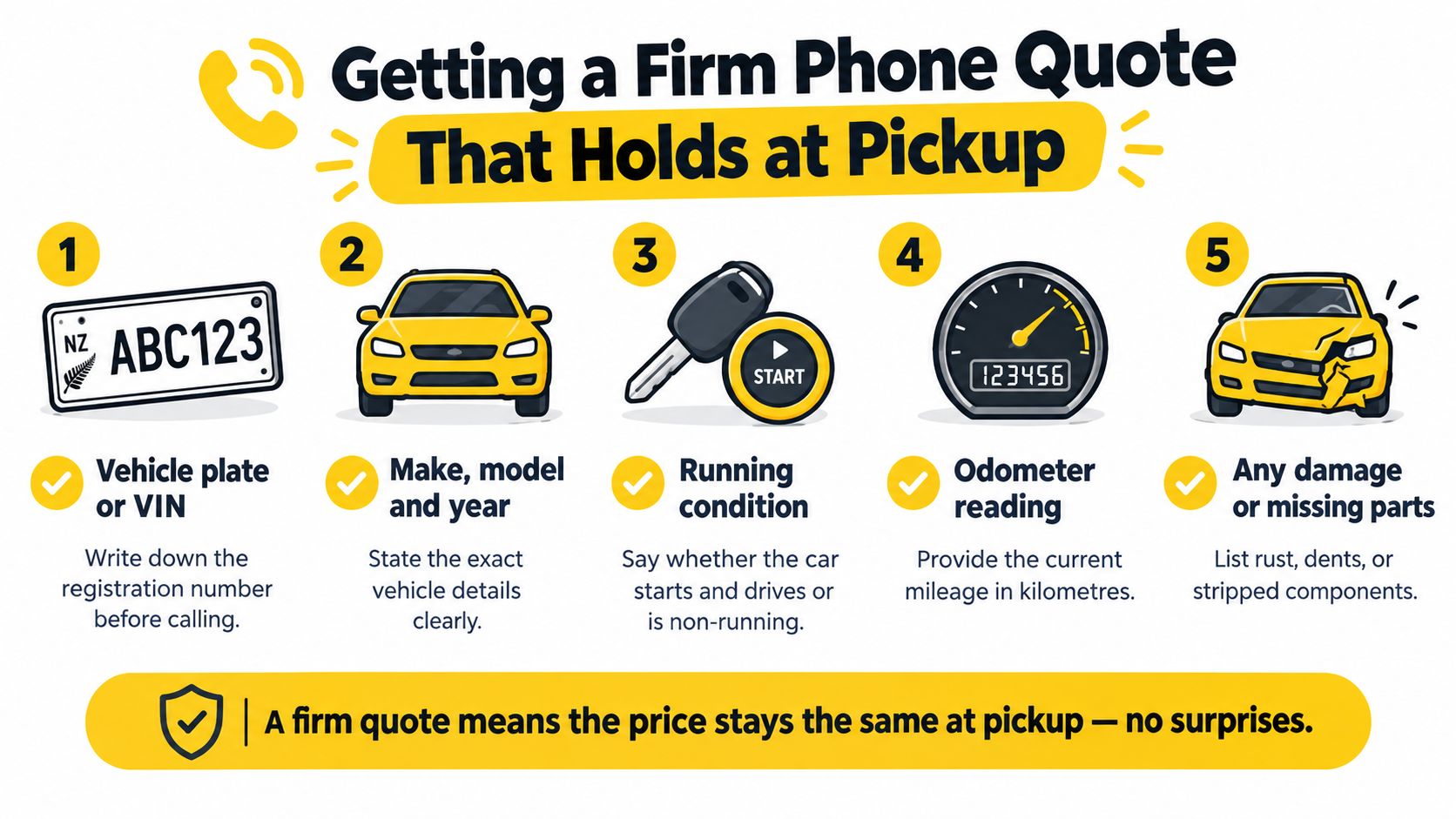
Getting a Firm Phone Quote That Holds at Pickup
A solid phone quote starts with clean information. Have the plate or VIN, the make, model, and year, and the current running condition ready before you ring. If you leave those details vague, the offer can only be vague too.
The details that matter most
The person pricing the vehicle is weighing what can be recovered against the effort of collecting it. That means the quote improves when they know whether the car starts, rolls, or is a dead shell with missing parts. A straight answer about dents, rust, missing wheels, broken glass, or stripped components saves time for both sides.
- Plate or VIN: write it down before calling, because the wrong digit causes delays.
- Make, model, and year: say the exact vehicle details, not just “it's a Toyota”.
- Running condition: tell them if it starts and drives, or if it's non-running.
- Odometer reading: share the current kilometres if you've got them handy.
- Damage or missing parts: note rust, dents, wheel issues, or stripped parts.
Once those basics are clear, ask whether the quote is firm, whether towing is included, and whether the pickup sits inside the normal Northland travel area. That avoids the common trap of getting one number on the phone and a lower one at the gate. The cleanest calls are the ones where the seller answers upfront and the collector can lock in the price without guessing.
If the operator won't say the quote is firm before pickup, treat it as an estimate, not a deal.
For a more detailed ownership handover checklist, I'd point people to the NZTA change of ownership notes after they've got the quote sorted. That keeps the money side and the legal side moving together instead of leaving either one hanging.
Sorting NZTA Paperwork Before the Truck Arrives
A clean handover starts with the right NZTA steps. Confirm the plate and the registered person details first, then, once the vehicle is collected, submit the seller's notice of disposal straight away so the record follows the truck out of your driveway.
That matters because the name on the register is not always the same as the legal owner. If you are dealing with a family vehicle, an insurance write-off, or a car left on property you control, check that you have the right authority before anyone loads it. Otherwise, the pickup can turn into a dispute instead of a simple removal.
Keep the handover tidy
Have ID ready, any insurer paperwork handy if the vehicle has been written off, and the key details visible for the truck driver. If the car is going to a wrecker because it has failed its WOF or cannot safely go back on the road, complete the disposal at pickup, not later in the week. That keeps the liability tied to the vehicle as it leaves.
If the car is already deregistered, the process is still straightforward. The NZTA change-of-ownership walkthrough covers both the seller's notice and the buyer's side, so follow that sequence and keep the handover clean. The point is to avoid leaving the vehicle in limbo while someone assumes the transfer will sort itself out.
- Verify the plate: make sure the vehicle details match the seller details.
- Check authority: confirm you are allowed to release the vehicle.
- Complete disposal immediately: submit the notice when the truck takes the car.
- Keep a record: hold onto the paperwork or confirmation for your own file.
A tidy handover is worth more than a rushed one. It keeps the vehicle history clear and stops later arguments about who was responsible when it left.
How Pickup Day and Payment Work Across Northland
On pickup day, the truck shouldn't be a mystery. The driver needs access to the vehicle, room to load it safely, and a clear answer on whether it's rolling or stuck where it sits. If the car is in a tight driveway, up a slope, or behind other vehicles, say so before the truck rolls out.
A Maunu sedan parked at the kerb is usually straightforward. The driver can confirm the details, inspect the vehicle, complete payment, and load it without much delay. A farm ute on a rural route takes more planning, because the collection is often fitted into a wider run across Northland rather than squeezed in between city stops.
What to prepare before the truck gets there
Have the keys ready if you've got them. Remove your personal gear, check the glovebox and boot, and take off anything you want to keep before loading starts. If the vehicle is being deregistered, sort out the plates according to the paperwork you're using so the handover stays clean.
Payment should be settled before the car is lifted. That can be cash or instant transfer, depending on the arrangement, but the point is the same, the money is handled before the vehicle leaves your sight. No one should be asking you to wait around for a cheque that clears later.
| Pickup type | Timing | What to prepare |
|---|---|---|
| City collection | Often same day | Plate details, keys, clear driveway, personal items removed |
| Rural collection | Usually planned on a route | Access notes, photos if the driveway is tight, gate or farm entry details |
If the car doesn't roll, the truck needs the right loading equipment and enough room to work. That's routine for a removal crew that does this daily, but it's still worth mentioning before the booking is locked in. A bad surprise at the gate slows everything down for no reason.
Handling Scrap EVs Flood Cars and Farm Machinery
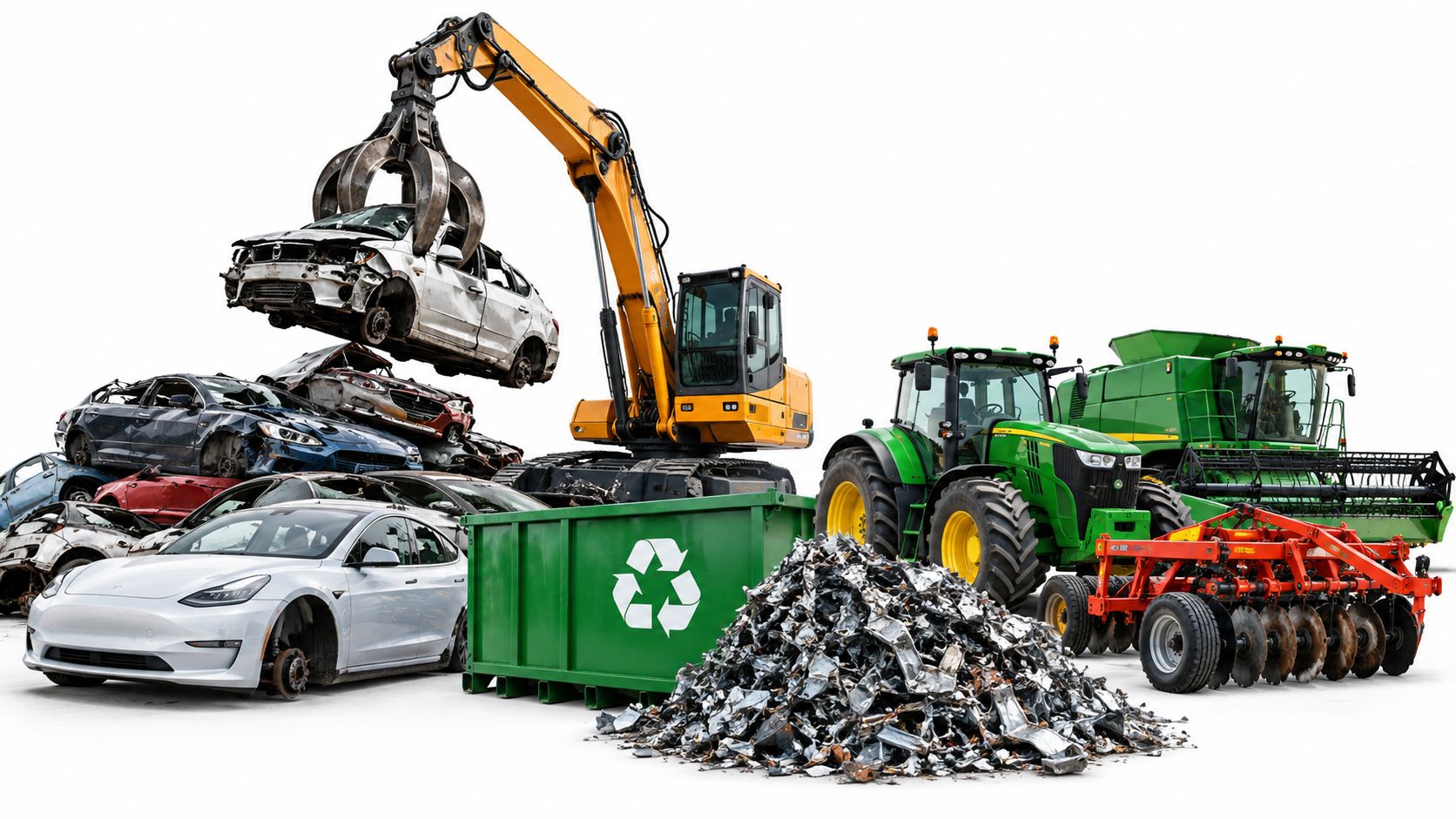
A rusted shell in a paddock, a flood car in a driveway, or a stripped ute on a rental site each needs a different pickup. Value comes from what can still be recovered, but the work also depends on access, weight, and how the vehicle sits on the land. Farm machinery brings the same practical test, whether it is a tractor, a digger, or an old implement that has to be dragged from private property.
Different vehicles need different handling
A flood-damaged car may arrive with insurer paperwork and a clear write-off decision. Fire damage can still leave recoverable metal and parts, but the load still needs care because the condition can change fast once the vehicle is touched. On farms, the harder part is often the site itself, with narrow gates, soft ground, and machines that do not roll.
EVs and hybrids need special care. WorkSafe New Zealand's EV and hybrid dismantling guidance says to treat these removals as a high-voltage isolation job, with trained personnel and approved equipment handling the intake, inspection, and isolation steps. Start by identifying the vehicle and battery type, check for crash, flood, fire, or battery damage, then isolate the traction system only when the right gear and people are in place. A quiet vehicle can still carry serious charge.
For property jobs, get authority first. If the vehicle is on a rental property, body-corporate site, or farm, the person controlling the land needs to be part of the call, especially when more than one unit is being cleared. With the access sorted, one visit can take care of several vehicles instead of dragging the job out.
A silent battery pack can still hold lethal charge, so isolation comes before any lifting.
The details that help most are plain: battery type for EVs, insurer documents for write-offs, and a clear note on whether the machine rolls or needs specialist loading. With that in hand, the pickup can be matched to the actual risk and the site can be cleared without avoidable delays.
Smart Tips to Get Paid Faster and Finish Cleanly
A few small habits save a lot of back-and-forth. Take photos of all sides before the truck arrives, remove toll tags and personal items, and be honest about battery damage, flood damage, or missing parts when you ring for the quote. That honesty protects the price and avoids awkward changes when the driver is standing beside the vehicle.
I also tell people to group vehicles together if they've got more than one sitting on a site. One rural run can clear a yard, a farm edge, or a rental property much more efficiently than spacing the jobs out. That matters when the goal is to free up space, not create another round of calls.
For scrap buyers, Rightcar recommends deregistering a vehicle before sending it for scrap so it's less likely to reappear on the road, and checking practical details such as pickup, collection fees, and what happens after collection. Those checks make sense whether the vehicle is a rusted hatchback or a stripped shell headed for dismantling. They also force the seller to think about the final destination, not just the first truck that answers the phone.
If the vehicle is coming from a business or private fleet, keep the handover discreet and documented. That's especially useful when the vehicles are spread across different sites, or when property access needs to stay low-key. Clean records, clear photos, and a firm quote do most of the heavy lifting.
Car Removals Whangarei takes unwanted cars, vans, 4WDs, trucks, machinery, and scrap vehicles across Northland, with firm phone quotes and free towing within roughly 100 km of Whangārei. If you want the cash side and the disposal side handled properly, visit Car Removals Whangarei and request a pickup for the vehicle you want gone.
- free to sell cars whangarei
- car removals
- cash for cars
- Whangarei towing