· Car Removals Whangarei
Free to Sell Cars in NZ: A Practical Step-by-Step Guide

You've got an unwanted car sitting in the driveway, a farm paddock or behind the workshop. The warrant has expired, the battery is flat, and every day it stays there is another day you're responsible for a vehicle you no longer use. Selling through a private listing can mean repair costs, delays and time-wasters. Free to sell cars services take a simpler route, but only if you handle the payout, pickup and NZTA record properly.
The important distinction is this: a truck taking the car away is not the same as your liability ending. In New Zealand, the legal record centres on the registered person, not a formal ownership certificate. Both sides must notify Waka Kotahi NZTA when the vehicle changes hands, and the seller must act straight away through the official vehicle selling guidance. The following process keeps the deal clean, from the first phone quote to the final confirmation.
Table of Contents
- When Going Free to Sell Cars Makes Sense in NZ
- Getting a Firm Free Quote for Your Car
- Booking Free Tow and Pickup in Whangarei
- Handling the NZTA Ownership Transfer at Pickup
- Payment Methods That Keep the Deal Free
- Tips to Maximise Your Payout When You Sell
- A Quick Checklist Before You Sign Anything Over
When Going Free to Sell Cars Makes Sense in NZ
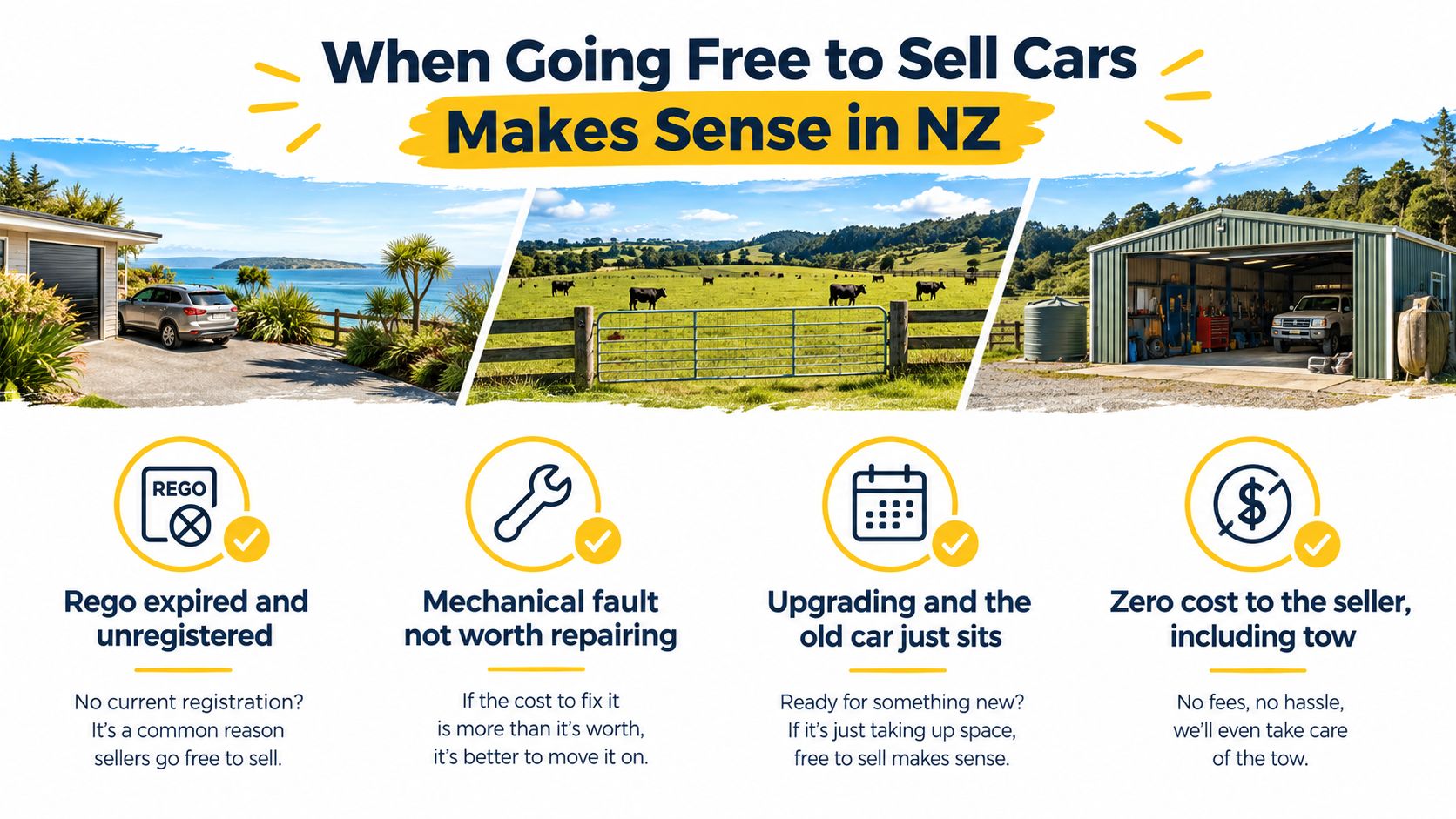
Northland owners regularly inherit the same problem. An old sedan sits outside a Whangarei home, a rusted ute is parked beside a Kerikeri shed, or a non-running car has become part of the farm scene. It may still have parts value, but repairing it, advertising it and arranging transport can cost more effort than the vehicle deserves.
Going free to sell cars makes sense when the vehicle has an expired warrant, no current registration, serious mechanical trouble, accident damage or rusted panels. It also works when you've upgraded and the old car is just taking up space. A private buyer usually wants a road-ready vehicle, while a dismantler can assess parts, metal and salvage value without requiring you to make the car presentable first.
New Zealand's disposal stream is substantial. An academic report estimates that about 150,000 end-of-life vehicles are generated annually, compared with roughly 3 million registered automobiles at the time of the study, as detailed in this report on New Zealand's used-vehicle and auto-parts trade. That flow supports dismantling, parts recovery and recycling across the country, including regions such as Northland.
Start with the record, not the tow truck
The right route is straightforward:
- Describe the car accurately and request a firm quote.
- Confirm the pickup address and access conditions.
- Agree how and when payment will be made.
- Complete the registered-person notification at collection.
- Keep proof of payment and the signed paperwork.
Northland rule: A car isn't properly sold just because the keys have changed hands. The NZTA registered-person record must change as part of the pickup.
NZTA says the administrative change of registered person is free, and the practical process can be completed online or through an agent using the MR13B form. That low-friction process is useful for deregistered, damaged and non-running vehicles because you can deal with the transfer at the collection point rather than arrange a separate visit.
Getting a Firm Free Quote for Your Car
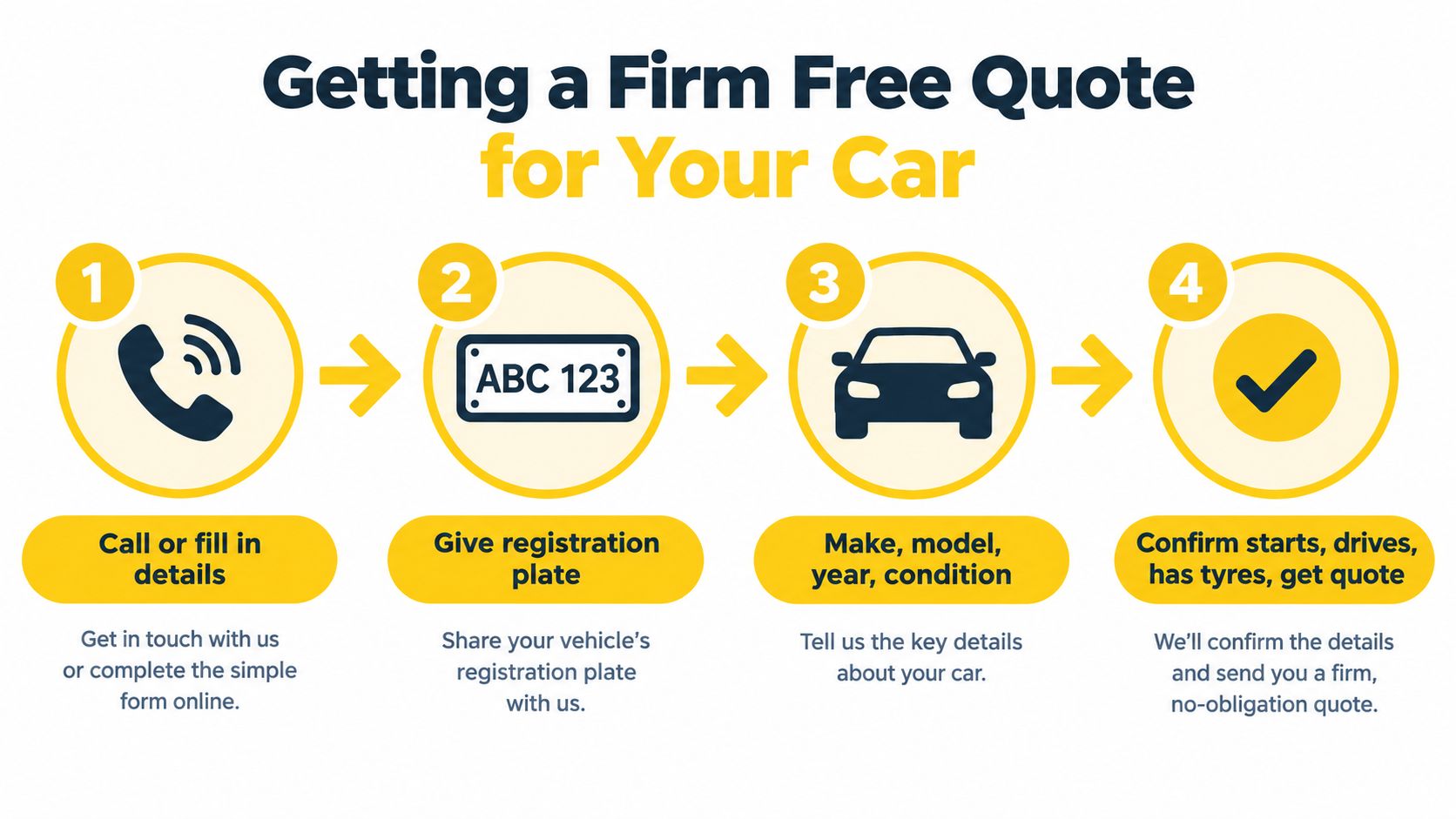
A proper quote starts with a phone conversation, not a vague calculator. Have the registration plate, make, model and year in front of you. Describe whether the car starts, moves under its own power, has wheels and tyres, and whether it has a current warrant or registration.
Tell the operator about damage that affects loading or value. A dead battery is different from a seized engine. A vehicle with missing wheels needs different equipment from one that rolls. Rust, flood damage, a written-off status or a high-voltage battery can also change the assessment, so clear information protects the quote.
Ask what the quoted amount includes
A genuine free quote should state the vehicle payout and what happens at pickup. Confirm these points before booking:
- Vehicle price: Ask whether the quoted figure is the full amount payable for the car.
- Towing: Confirm that collection from your Northland address is included.
- Paperwork: Check who completes the NZTA notification and what receipt you'll receive.
- Deductions: Ask directly whether administration, towing or diesel charges will be taken from the amount.
- Condition changes: Find out what happens if the car is materially different from the description.
Take the operator's name and ask for the quote by text or email. Written confirmation gives you something concrete to compare with the conversation and makes misunderstandings easier to resolve.
You can also request a quote through the free car removal quote form, but don't treat an online estimate as final until someone has checked the actual vehicle details. A calculator can't reliably judge whether a car rolls, whether access is difficult or whether parts are missing. A firm offer should be tied to the information you provide and honoured when the condition matches that description.
Booking Free Tow and Pickup in Whangarei
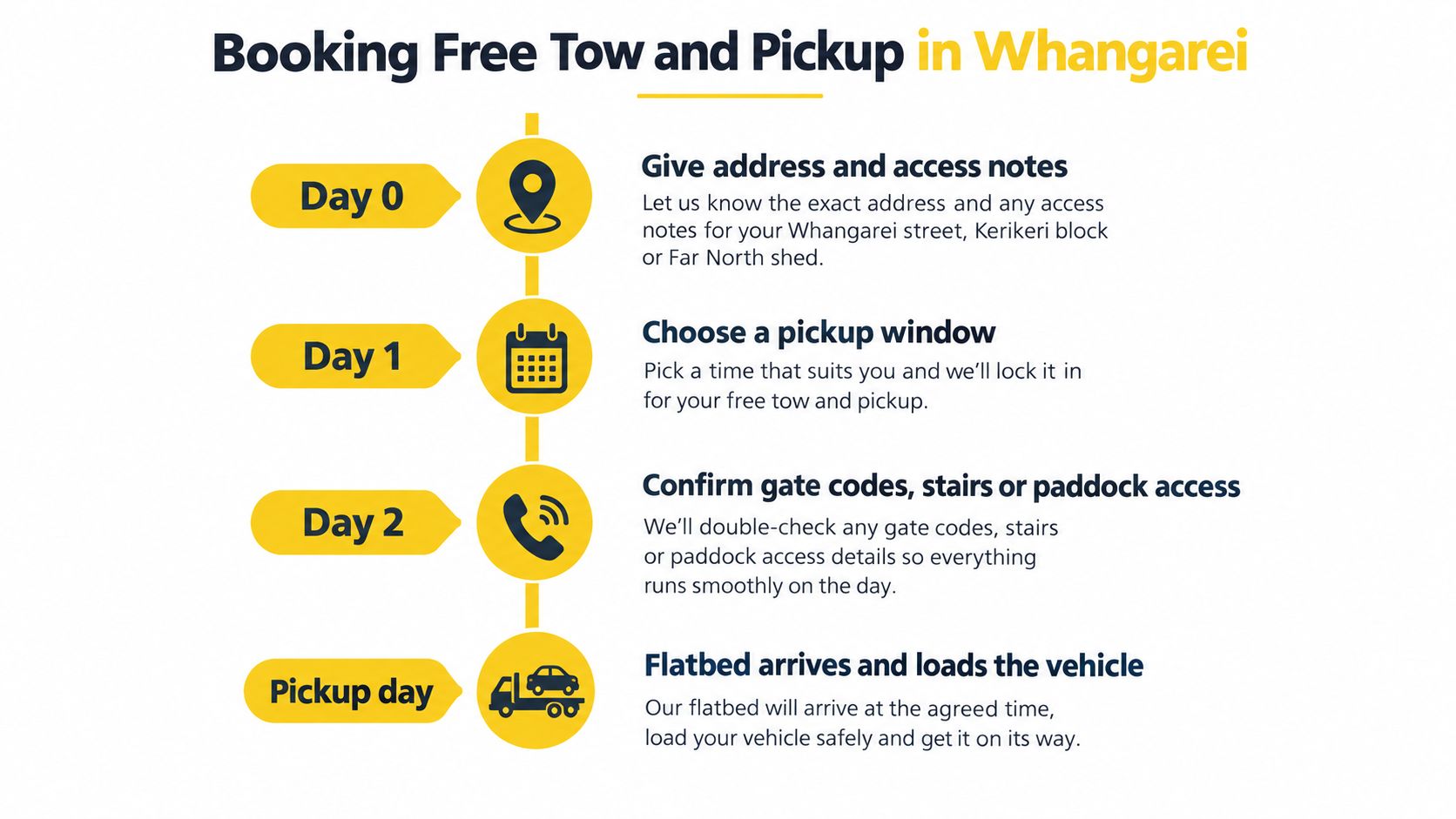
Pickup planning matters more in Northland than many sellers expect. A Whangarei city driveway is different from a narrow Kerikeri lifestyle-block entrance or a Far North farm shed reached by a rough track. Give the operator the full address, your phone number, the nearest landmark and clear access notes before a truck is dispatched.
Mention gates, steep drives, low branches, soft ground, tight turns and any four-wheel-drive-only access. If the vehicle is behind another car, inside a shed or resting on a slope, say so. The operator can then decide whether a flatbed, winch or other loading arrangement is suitable.
Make the collection slot realistic
Ask whether a same-day or next-day window is available for your location. City jobs may fit a quicker run, while rural collections are often grouped by route. If you need the car gone for a tenancy handover, workshop move or farm clean-up, say that when booking rather than assuming the truck can arrive immediately.
For practical questions about local towing access, use the Whangarei tow truck information page as a starting point, then confirm the details directly with the removal operator.
On collection day, keep the keys ready and remove personal belongings from the cabin, boot and storage compartments. Have the registration details available, check the driver's identity and don't sign incomplete paperwork. If the operator asks for plates to be removed for a deregistration process, deal with that before loading.
Most critical of all, agree that payment is released before the car is winched or loaded. The vehicle should not disappear up the road while you're still waiting for the promised money.
Handling the NZTA Ownership Transfer at Pickup
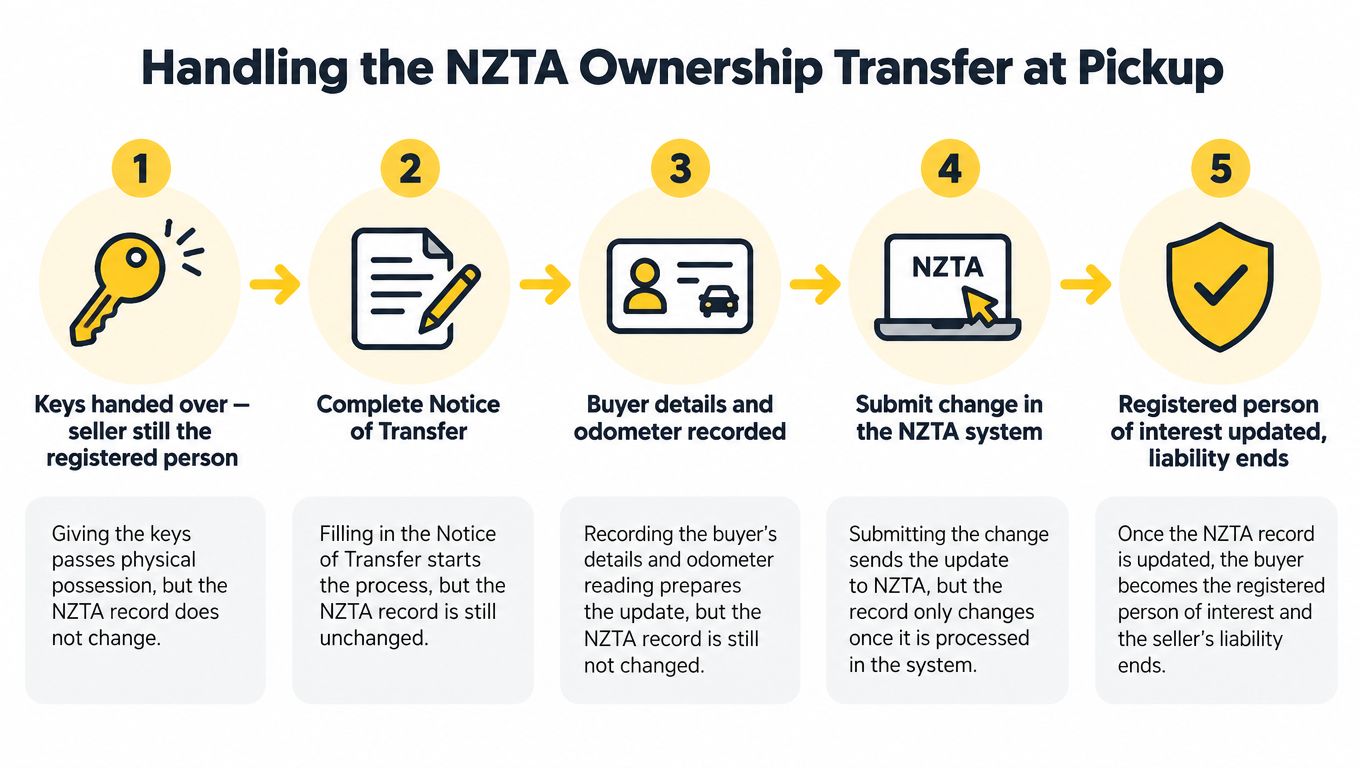
The truck arriving does not end your responsibility. Keys changing hands proves physical handover only. NZTA records the registered person, so that record must be updated when the vehicle is sold. Until the change is lodged, licensing obligations, toll notices and other vehicle-related correspondence can still reach the person listed.
The seller must notify NZTA as soon as the sale happens, while the buyer or receiving operator must update the registered-person record. Follow the guide to NZTA registration change of ownership and use the NZTA seller notification process. The seller's online notice requires the plate number and the buyer's full name and address.
Complete the change before the truck leaves
Use this order at pickup:
- Identify the buyer or receiving operator. Write down the person's name or the business receiving the vehicle.
- Complete the required notification. The transaction may require the buyer notification or MR13B process, depending on the arrangement.
- Check every detail. Confirm the plate number, buyer's full name and address, and any other requested vehicle information.
- Submit the change. Complete the online NZTA step or use an authorised agent.
- Keep evidence. Save the confirmation email, receipt or signed acknowledgement.
Ask for paperwork identifying the receiving operator and confirming the transaction. A promise to “sort it later” leaves the NZTA record open under your name. The legal change of registered person is separate from the sale, so payment, towing and signed handover paperwork do not replace the notification.
The safest handover is one where you watch the record update, receive confirmation and keep a copy before the vehicle leaves your property.
Handle the plates separately. They generally stay with the seller unless a plate transfer has been agreed. If the vehicle is permanently useless, destroyed, written off or exported, the NZTA MR15 route requires the plates to be removed and returned with the application, identification and administration fee through a registration agent. Follow the MR15 application to cancel registration. Ordinary disposal is not the same as deregistration, so recover the plates before the truck leaves.
Payment Methods That Keep the Deal Free
Payment method affects risk more than most sellers realise. The right arrangement leaves you with the agreed payout, a clear record and no argument after loading.
| Method | Speed | Risk to Seller | Best Use |
|---|---|---|---|
| Cash on the driveway | Immediate | You must count it and check the amount before loading | Local pickup where both sides agree on cash |
| Instant bank transfer | Immediate once cleared | Low if the funds show in your account before loading | Most convenient option for a documented transaction |
| Cheque or payment after pickup | Delayed | Higher, because you've lost control of the vehicle | Only where you already trust the established operator |
Cash is simple, but count it in front of the driver. Keep the receipt and don't rely on a verbal confirmation that the amount is correct. If the notes don't match the quote, stop the loading process until the difference is resolved.
An instant bank transfer is cleaner for record-keeping. Open your banking app and confirm the money has cleared into your account. A screenshot from someone else's phone, a pending notification or a claim that the transfer is “on its way” isn't payment.
Post-pickup payment puts you in the weakest position. Once the vehicle has left, recovering an unpaid amount becomes a dispute rather than a straightforward exchange. An established yard may offer a process you trust, but a stranger asking for time after loading should be treated cautiously.
Free should mean the agreed vehicle payout isn't reduced by commission, towing, administration or fuel charges. Confirm that point before booking, then apply one rule: the car doesn't go onto the truck until the full amount is in your hand or visible in your account.
Tips to Maximise Your Payout When You Sell
The easiest way to protect the quote is to describe the car as it really is. Tell the operator if it's a non-runner, has a dead battery, is missing wheels or needs winching. Hiding a major issue may produce a higher phone figure, but it creates the exact situation where a last-minute reduction becomes possible.
Small preparation jobs can also prevent delays. Clear personal gear from the boot, glovebox and cabin. Have the registration details and VIN available, and mention recent parts such as tyres or a battery if they're fitted and relevant. Don't spend money repairing a car solely to improve a removal quote unless the repair has another clear benefit.
Give the details that affect assessment
Some conditions need more than a general description:
- Rust: Point out structural rust, rusted chassis areas and badly corroded panels.
- Water or flood damage: Disclose it before the quote, even if the engine still starts.
- Accident history: Explain whether the vehicle is an insurance write-off and whether documentation is available.
- Non-rolling condition: Say if it can't steer, brake or roll freely.
- EV or hybrid system: Identify the vehicle type and share what you know about the traction battery state. Battery value can influence the assessment more than engine size.
A dismantler needs accurate information to match the right equipment and estimate recoverable parts. Honest reporting protects your payout because both sides start from the same description.
Protect yourself after the handover
Keep your insurance active until the exact pickup date and then cancel or update it from that date. Cancelling early can leave a gap while the car is still at your property or in your care. Save a photo of the signed paperwork, the payment confirmation and the truck's registration plate.
Take a few photos of the vehicle before loading, especially if it has visible damage or missing components. These records aren't a substitute for the NZTA notification, but they give you a useful file if a question arises later.
Practical rule: Every material detail shared before pickup is worth more than a surprise revealed beside the truck.
Don't remove parts that were included in the quote without telling the operator. If you want to keep the stereo, battery or wheels, agree that before the final figure is set. Clear communication preserves the deal better than trying to renegotiate while the vehicle is suspended from a winch.
A Quick Checklist Before You Sign Anything Over
Run through these checkpoints before the vehicle leaves your property:
- Confirm the quote: Make sure towing, pickup and paperwork are included, with no deductions from the agreed payout.
- Sort the plates: Remove personal plates and any number plates the operator has specifically instructed you to return or retain.
- Clear the vehicle: Check the boot, glovebox, console and storage spaces for belongings, documents and keys.
- Verify the receiver: Confirm the person or business collecting the vehicle is authorised to receive it.
- Watch the NZTA update: Complete the registered-person change and keep the confirmation email, receipt or acknowledgement.
- Receive the money: Ensure the full payment is counted or cleared in your account before loading starts.
- Keep your copy: Photograph or retain the signed MR13B, buyer notification or other transaction record.
The seventh point is the one sellers skip most often. The deal isn't finished when the truck turns into the road. It's finished when the NZTA registered-person record has been updated and you have proof of that change. NZTA's seller guidance confirms that both parties have notification responsibilities, so don't leave the administrative step to assumption.
Also cancel any toll-road or parking account linked to the vehicle, and check that your insurance and other vehicle records reflect the pickup date.
Car Removals Whangarei provides phone quotes, free towing and payout before loading for unwanted cars, vans, 4WDs, trucks and machinery across Northland. If you want the collection and NZTA registered-person notification handled together, visit Car Removals Whangarei, describe the vehicle accurately and arrange a firm pickup quote.
- free to sell cars
- cash for cars NZ
- NZTA ownership transfer
- free car removal
- scrap car pickup