· Car Removals Whangarei
Auto Wreckers Whangarei: How Local Car Removal Works
There's a failed WOF wagon in the driveway, a farm ute with a blown motor behind the shed, or a write-off taking up space you need back. It won't start, it's out of rego, and driving it anywhere isn't an option. That's the point where most Northland owners start searching for Auto Wreckers Whangarei, not because they want a repair quote, but because they want the vehicle gone, paid for, and off their name without a trailer, a tow bill, or weeks of messages from private buyers.
A proper removal does three jobs at once. You get a firm cash price, the truck collects it, and the paperwork ends your liability on the spot. What happens after the truck leaves matters just as much, from NZTA notification to how tyres, fluids and batteries are handled.
Table of Contents
- What Auto Wreckers in Whangarei Actually Do
- The Vehicle Categories a Whangarei Wrecker Will Buy
- How Phone Quotes Are Calculated for Whangarei Cars
- Towing, Scheduling and the Pickup Window
- Payment, Paperwork and the NZTA Notification That Completes the Sale
- EV, Hybrid and Accident Write Offs Need Extra Handling
- Abandoned Vehicles on Private Property in Northland
- What to Prepare Before the Wrecker Arrives
What Auto Wreckers in Whangarei Actually Do
A Northland auto wrecker buys vehicles at the end of their useful life, removes them, recovers saleable parts, and sends what's left into controlled recycling streams. That's a different job from a panel beater, who repairs a car for the road, and from a scrap metal merchant, who generally expects clean metal delivered to the yard. The wrecker handles the awkward middle ground, including non-runners, deregistered cars, rusted shells and vehicles you can't legally or safely move yourself.
Government material described this chain directly, noting that auto wreckers dismantle old vehicles, sell usable parts, and pass scrap material to metal dealers. In practice, that means the yard tests engines, gearboxes, alternators, panels and interior trim for reuse, drains fluids, removes batteries and tyres, then bales the bare shell for steel recovery. Nothing useful has to go to landfill because the car failed a WOF.
What the Service Includes
- Cash purchase: You agree a price by phone and get paid before loading, not after the yard decides what it can sell.
- Free towing: The yard brings a tilt tray or recovery truck to your address in Whangarei or wider Northland.
- Paperwork help: The driver works through the registered person change with you at pickup.
- Depollution and dismantling: Fluids, batteries, airbags and tyres are separated before crushing or baling.
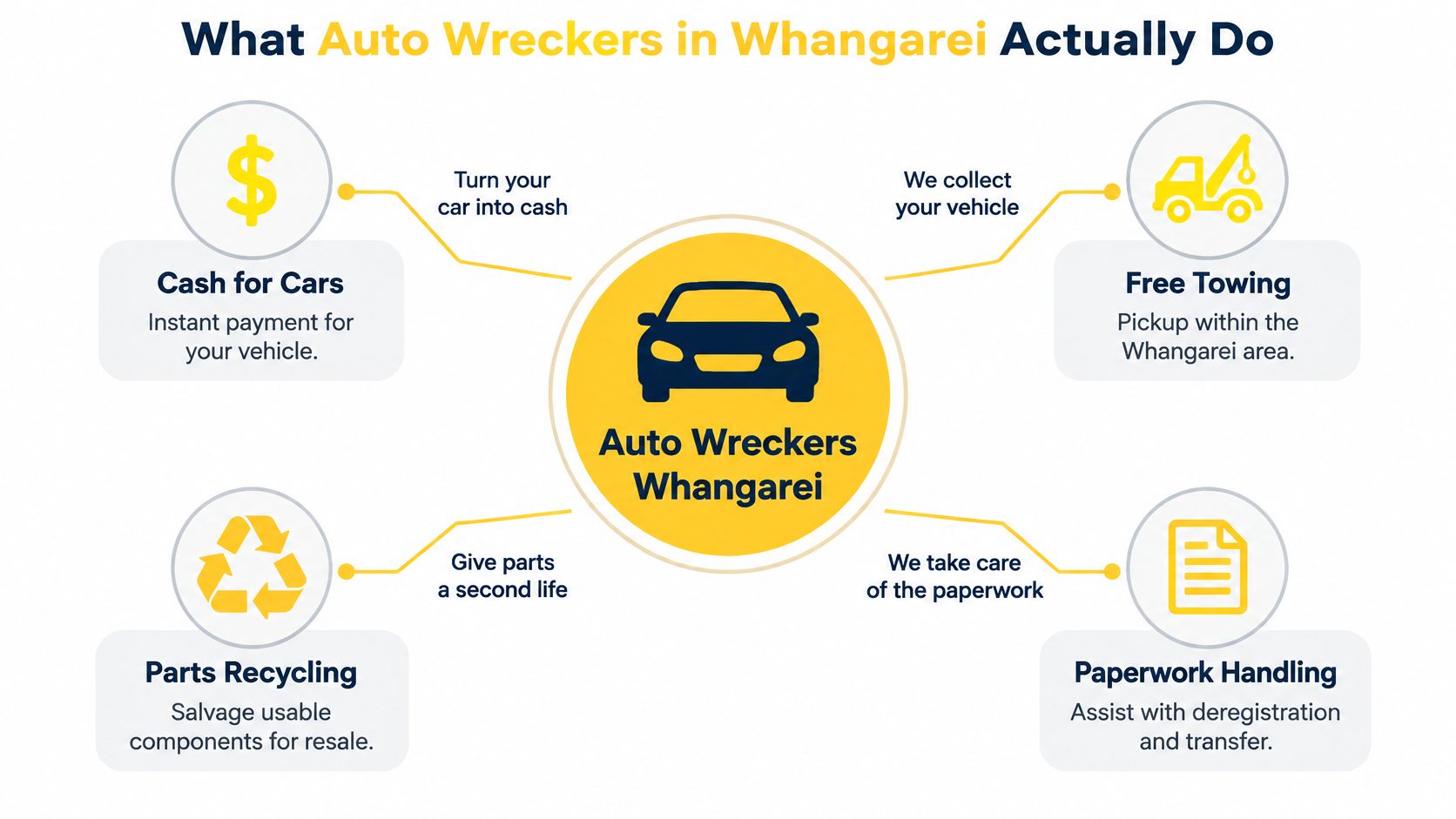
A wrecker isn't buying your car to fix it. The value is in parts other Northland drivers still need, plus the steel and other materials in the shell.
That's why condition matters differently here than in a private sale. A tidy interior or a sought after gearbox can lift the price even when the body is rusty, while a stripped shell with no drivetrain is mostly weight. If the vehicle is complete, accessible and accurately described, the whole job can be quoted, collected and closed off in one visit.
The Vehicle Categories a Whangarei Wrecker Will Buy
Northland yards don't just take old sedans. Farms, rental properties, workshops and lifestyle blocks produce a mixed stream of cars, commercials, machinery and shells, and a dismantler who can quote across that mix saves you multiple phone calls.
NZTA fleet data reflects that breadth. Its national vehicle fleet status material records categories including passenger cars, vans, goods vehicles, trucks, utilities and tractors, alongside a total active fleet of approximately 4,512,519 vehicles at 31 December in the recent series. That national total isn't a Whangarei count, but it shows why local dismantlers work well beyond hatchbacks.
Vehicle categories accepted by a Whangarei auto wrecker
| Category | Typical examples | Common condition issues |
|---|---|---|
| Sedans and hatchbacks | Corolla, Civic, Mazda 3, wagons, people movers | Failed WOF, high kilometres, blown head gasket, deregistered |
| Scrap and non rolling shells | Rusted paddock cars, stripped bodies | Missing wheels, seized brakes, no drivetrain, sitting on ground |
| 4WDs, utes and vans | Hilux, Ranger, Navara, Hiace | Rusted chassis, blown diesel motor, gearbox failure |
| Trucks and machinery | Light trucks, tractors, diggers, implements | Hydraulic leaks, worn tyres, no keys, needs loading gear |
| Accident and insurance write offs | Front hit, flood, fire or hail damaged vehicles | Structural damage, deployed airbags, insurer paperwork pending |
| Abandoned vehicles | Cars left on rentals, farms or shared driveways | No plates, unknown history, authority to remove unclear |
| Hybrid and electric models | Prius, Leaf and other hybrid or EV models | Degraded or damaged traction battery, high voltage system faults |
Why a Dismantler Fits These Vehicles
Private buyers want a runner they can test drive. They'll walk away from a ute with a cracked chassis, a van with no compression, or a shell that needs a winch and skates to move. A wrecker prices those vehicles on recoverable parts and kerb weight, so non running doesn't mean worthless, and it doesn't mean you have to pay for disposal.
Condition still changes handling. A rolling car on a concrete driveway loads in minutes. A non rolling farm shell sunk into grass needs a different truck, more time and clear access. Tell the yard upfront if wheels are missing, steering is locked, or the vehicle is behind a gate, and the right gear turns up first time.
How Phone Quotes Are Calculated for Whangarei Cars
A seller in Kamo rings with a 2011 Hilux, blown turbo, still rolling. Another in Tikipunga has a flooded Corolla, complete but dead. Same phone call, very different math, because the operator is pricing three things at once: what the parts will sell for, what the remaining shell weighs, and what it costs to collect and process the vehicle properly.
Parts demand is usually the bigger lever. Engines, gearboxes, diffs, catalytic converters, intact panels and popular trim sell to owners keeping similar vehicles on Northland roads, so a common ute with a healthy drivetrain outearns an obscure model at the same kerb weight. Steel sets the floor: once saleable parts come off, the body is valued largely on weight, which is why a stripped, rusted shell still carries a base price. As an example, quotes in this market can run from $200 for an unroadworthy shell to $15,000 for an in demand late model part out, and the same badge can sit at very different points in that range depending on completeness.
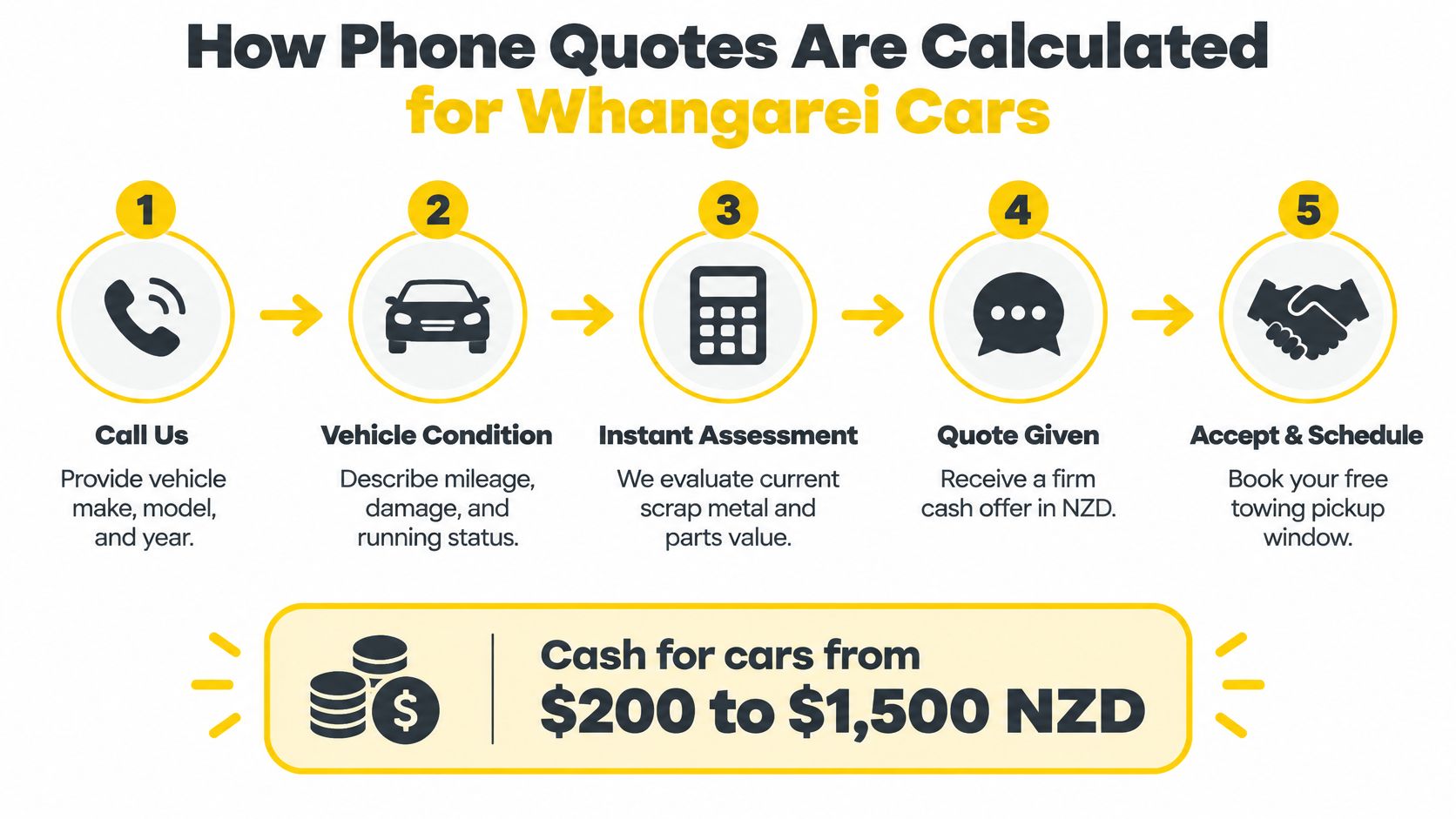
What pulls a number down is mostly labour and compliance. A cut out converter means less to recover. Fire damage means contaminated material to handle. Tyres go into the Tyrewise stewardship stream and EV or hybrid packs need isolated handling, so a car carrying a damaged traction battery costs more to process than its weight alone suggests. Running the other way: a complete drivetrain, a usable hybrid battery, panel damage rather than a bent chassis, and easy driveway access all lift the figure.
Practical rule: Send clear photos, the plate number, and an honest note on what's missing. You'll get a firm figure instead of a vague range, and there's no renegotiation at the kerb.
Don't tidy the car up for a wrecker quote. A wash won't change parts value. Accurate information will, because the yard is pricing components and weight, not presentation.
Towing, Scheduling and the Pickup Window
A Whangarei pickup usually starts with two short questions: where the vehicle sits, and whether a truck can reach it.
From there, booking is logistics. The yard wants the suburb or rural address, plate number, access notes and a mobile number for the day. City collections can often run same day. Rural Northland work is usually grouped into planned runs, often next day, within roughly 100 km of Whangarei, because an empty deck heading out can collect several vehicles on one route. That grouping is what keeps free towing workable for farms and smaller towns. If there is a ute, a shell and a dead mower or tractor on the same block, say so early and let the operator plan one visit.
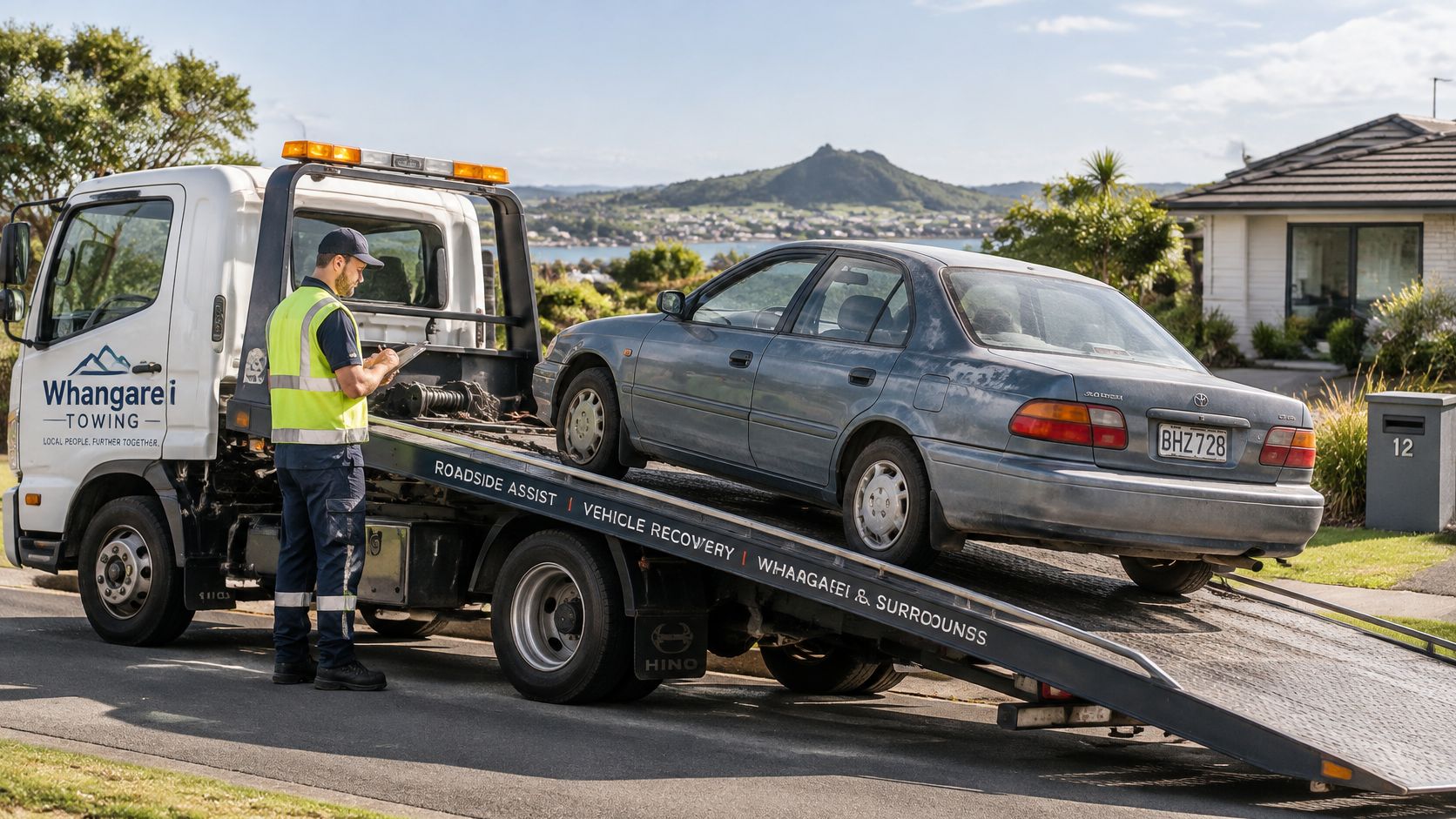
On site, the driver is reading the job in order: room for a tilt tray or light recovery vehicle to line up and winch, keys or another way to free the steering, a clear path past gates, containers and parked cars, then a quick check that the boot, glovebox, under-seat spaces and roof racks are empty. Locked or keyless vehicles can still move with the right gear, but surprises cost time.
An owned tow fleet gives tighter control over timing than subcontracted trucks, which helps with tenancy cleanups, insurer collections and estate jobs that need a discreet window. One local option is Car Removals Whangarei, a licensed dismantler based in Port Whangarei that runs its own towing for cars, vans, 4WDs, trucks and machinery across Northland.
Once loaded, the less visible work starts: depollution, parts triage, tyres into the Tyrewise stream, then the register step handled separately. If access is steep, soft after rain or under a low carport, flag it before booking so the right truck arrives first.
Payment, Paperwork and the NZTA Notification That Completes the Sale
A seller in Kamo takes the cash, watches the tray pull away, then finds an old licence invoice a month later because the register still points at them. The tow is the visible part. Your liability ends when the sale is recorded, not when the driveway is clear.
The agreed amount should be final before loading: cash or instant bank transfer, with the phone quote honoured if the car matches the description. A serious yard does not clip the price for winch time, muddy access or the tow back after it has inspected the vehicle.
Waka Kotahi is blunt about the distinction: the registered person is responsible for the vehicle in the Motor Vehicle Register, but that status is not the same as legal ownership. Keys can change hands while the register still has your name attached. NZTA's buying or selling factsheet confirms sellers must notify immediately, using identification, the plate number, and the buyer's full name and address. It is free, it can be lodged online at the kerb, and until it is recorded you can remain exposed to licensing charges, tolls, speeding camera penalties and other fines linked to that vehicle.
Keep the proof in the same place as the receipt: the NZTA confirmation email or screenshot, the yard docket showing date, plate, vehicle details and amount paid, plus a photo of the car on the deck and plates if fitted. Estates, company utes and farm vehicles need more. A driver can help you lodge the form, but executor authority, director sign-off or proof you own the machine has to exist before the truck arrives.
If the vehicle is deregistered, already off the road or headed for dismantling rather than resale, read our guide to completing the NZTA change of registered person before pickup so the names, plate and address fields are right the first time.
Deregistration is a separate decision for a vehicle permanently coming off the road, and the yard will say if plates must be surrendered. Do the seller notification first; the regulated dismantling work that follows is the yard's job, not a reason for your name to stay on the register.
EV, Hybrid and Accident Write Offs Need Extra Handling
Scrap weight isn't the whole story. A heavy vehicle can be worth solid money by weight and still cost more to process because tyres, fluids, refrigerants, airbags and batteries need separate handling. Assuming every car is just metal is how sellers get surprised, and how unsafe work happens.
The Ministry for the Environment identifies used oil, refrigerants, batteries and circuit boards as hazardous substances requiring appropriate removal or treatment from end of life vehicles. A compliant yard depollutes before crushing, captures fluids, isolates batteries and separates components into controlled streams. That's especially important for flood and accident damaged cars where fuel lines, wiring and casings may already be leaking.
Tyres are a separate stream too. New Zealand reaches approximately 6.5 million end of life tyres each year, and since 1 March 2024 tyre importers and manufacturers have funded the Tyrewise stewardship scheme through a regulated fee supporting collection and processing. Whole tyres can't just ride along with scrap steel. Stockpiles create fire and vermin risks, so they need a legal destination.
Hybrids, EVs and Insurer Write Offs
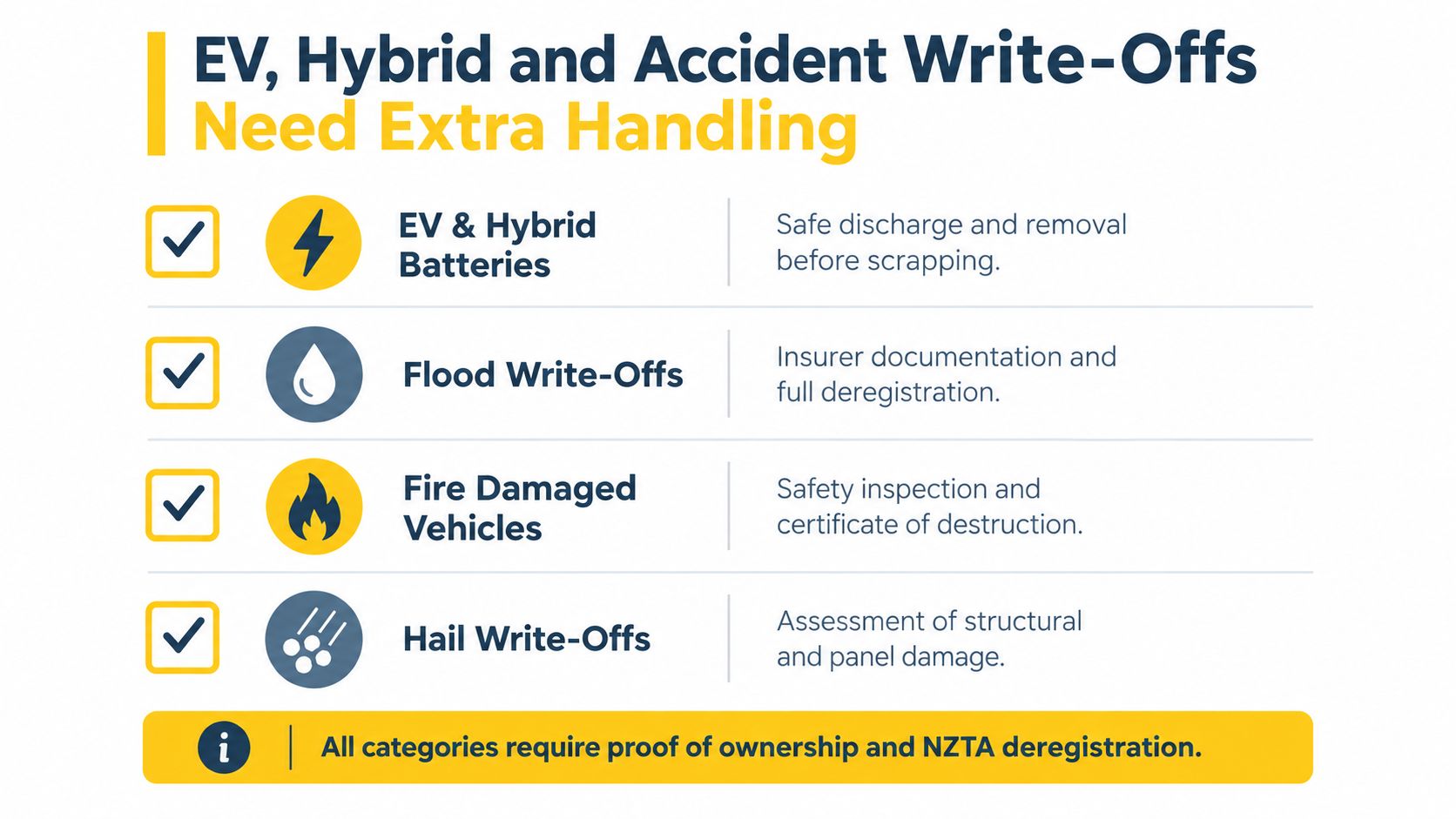
For hybrid and electric vehicles, the yard identifies the drivetrain before loading. Ministry projections estimate more than 84,000 large EV batteries will reach end of life in New Zealand by 2030, as set out in the stewardship material linked above. Traction batteries can lift a payout when they're reusable or rich in recoverable materials, but damaged packs bring fire and toxic release risks. They shouldn't be crushed, short circuited or winched carelessly, and high voltage isolation needs a competent person.
Flood, fire and hail write offs bring a different layer. Insurer documentation and deregistration status need to travel with the vehicle, and it's worth understanding what a statutory write off means before you agree to any disposal. Trucks, buses and machinery sit in the same careful category, mostly because size, hydraulics and loading equipment need assessing before anyone hooks up.
Tell the yard upfront if it's hybrid, electric, burnt, flooded or leaking. That one detail changes the truck, the crew and sometimes the quote, in your favour as often as not.
Abandoned Vehicles on Private Property in Northland
A tenant moves out of a rental in Kamo and leaves a dead Corolla on the lawn. A farm ute gives out in a back paddock and sits there three winters. Calls like these reach the yard every week, and the first question is always the same: can't the council just take it?
On private land, no. Council guidance shows Auckland Transport can investigate abandoned vehicles only on local roads and cannot take action on private property, and Whangarei's jurisdiction runs on the same line. Expired rego, missing plates or a safety hazard parked on a public street can be reported and investigated. The same car sitting on your section, your farm track or your body corporate car park is yours to resolve lawfully.
The scale explains why the problem keeps recurring. Ministry for the Environment material puts abandoned vehicles at approximately 25,000 cars each year, with councils spending about NZ$6 million annually retrieving, storing, dismantling and disposing of them. Those are national figures, not a Whangarei count, and they shouldn't be read as one. They do show why rentals, rural sections and commercial yards accumulate shells that cost more to move privately than they fetch as runners.
Clearing one properly comes down to authority before tow truck. Whoever signs the vehicle over needs legal standing to do it, which means tenancy records, estate paperwork, company authorisation or documented attempts to reach a known owner, depending on the situation. Photograph the plates and VIN before anyone moves the car. When several vehicles need clearing, fold them into a single visit, since a consolidated job prices better than repeat callouts. Where the owner is known, the NZTA registered person change still gets lodged at pickup.
Our page on lawful abandoned vehicle removal sets out the evidence and authority checks in more detail.
The one thing not to do is drag an unknown vehicle onto the road and hope it becomes a council job. Once it's on public land you've created liability rather than removed it. A licensed dismantler working under proper authorisation clears the site, depollutes the car and leaves you a record of where it went, which matters if an owner surfaces months later asking questions.
What to Prepare Before the Wrecker Arrives
Most pickups go smoothly because the seller spent ten minutes preparing, not because the truck can solve everything on arrival. Confirm the firm quote, the pickup window and the payment method the day before. Then clear the path the truck will use.
The Day Before
- Find keys and identification: You'll need ID for the NZTA notification, and keys help even on a non runner.
- Empty the vehicle: Personal plates, tools, child seats, plates you want to keep and anything in the boot.
- Clear access: Move other cars, open gates and check ground conditions after rain.
- Sort authority: Estate, company or landlord paperwork should be in hand, not in another town.
On the Day
Check the driver is from the yard you booked, confirm the amount matches the phone quote, and watch payment clear before loading starts. Lodge the NZTA notification while the driver is there, with the buyer's full name and address in front of you. Keep the confirmation, the receipt and your pickup photo together.
Payment in your account, notification lodged, receipt saved. If those three are done, you're finished when the truck pulls away.
If you're still deciding, confirm three things before you book anyone. Ask whether your vehicle category is accepted as it sits, what condition issues would reduce the quote, and whether they'll travel to your rural address. Clear answers now prevent the only frustrations that ever happen at pickup.
If you've got a non runner, write off, farm shell or unwanted hybrid taking up space, Car Removals Whangarei can quote it by phone, tow it free within the local service area, pay you before loading and complete the NZTA notification at pickup. Visit Car Removals Whangarei to describe your vehicle, send photos and book a pickup window that suits your property.
- auto wreckers whangarei
- car removal whangarei
- cash for cars northland
- scrap car removal
- whangarei wreckers