· Car Removals Whangarei
How to Scrap My Car in Whangarei Without the Hassle
The car's been sitting beside the shed since it failed its last WOF. Maybe it's a rusted sedan on a farm, a damaged ute that can't be driven, or a vehicle left behind on a rental property. You want it gone, but you also need to know what it's worth, what to do about the paperwork, and whether anything needs to be removed before the truck arrives.
In Northland, “scrap my car” can mean several different things. The right way to handle it depends on the vehicle's condition, where it's parked, who has authority to dispose of it, and whether it has a hybrid or electric traction battery. Get those details straight and the pickup can be simple. Miss the paperwork or safety issues and the car leaving your property may not be the end of your responsibility.
Table of Contents
- What Scrap My Car Really Means in Northland
- Working Out What Your Scrap Car Is Worth
- Getting the Car Ready Before the Tow Truck Arrives
- Handling the NZTA Paperwork the Right Way
- What Actually Happens to a Scrap Car After Pickup
- Scheduling Pickup and Paying for Towing
- Practical Takeaways Before You Scrap Your Car
What Scrap My Car Really Means in Northland
A rusted Corolla on a dairy block might still have parts worth recovering, even if it hasn't moved in years. A flood-damaged Hilux may look like scrap from the outside, but its gearbox, wheels or other components could affect its value. An old Laser left on a Dargaville rental property is a different problem again: before anyone removes it, the owner or property manager needs proper authority to dispose of it.
“Scrap” isn't one product with one price. It's a practical category for vehicles that may be dismantled for reusable parts, processed for metal, or sent through different waste-management routes. A non-rolling shell, a running car with a failed WOF, and a damaged hybrid all need different assessment and handling.
Start with authority, not the tow truck. If a vehicle has been abandoned on private property, don't assume that finding it there gives you the right to sell or dismantle it. Establish who can authorise its removal, and check whether anyone else has a security interest in it.
The details that change the outcome
For a vehicle you own, the key details are its condition, location, registration status and whether it can roll or steer. For someone else's vehicle, authority comes first. A landlord, farm manager or family member may be arranging the pickup, but the registered person or another person with the proper legal authority must be able to approve disposal.
Hybrids and electric vehicles need extra caution. Their high-voltage systems and traction batteries aren't ordinary scrap, so the buyer needs to know what vehicle they're collecting and whether it's damaged, flooded or fire-affected. Don't cut cables or try to remove the battery yourself.
New Zealand generates approximately 6.5 million end-of-life tyres each year, and the Tyrewise stewardship scheme supports their collection and processing. That makes tyre handling part of responsible vehicle disposal, not an afterthought. A proper scrap process deals with the whole vehicle's different materials, rather than just removing the shell or selling the easiest parts.
Working Out What Your Scrap Car Is Worth
Scrap value isn't the vehicle's weight multiplied by a steel price. A dismantler considers steel pricing, demand for reusable parts, vehicle condition and loading requirements. A car that starts and has sought-after components may be worth more than a heavier shell that's been stripped, badly rusted or damaged.
Firm phone quotes are calculated from parts demand and steel pricing, with cash-for-cars payments ranging from $200 to $15,000 before loading, depending on condition and recoverable components. That's a broad range, not a promise that any particular vehicle will reach the top end. A written-off Hilux with useful components in good condition could be assessed differently from a stripped Corolla shell with little left to recover.
What to tell the buyer
Give a clear description before asking for a quote. Mention whether the vehicle runs, whether it rolls and steers, what major parts are missing, and any known damage to the chassis, engine or transmission. Tell the buyer if it's a hybrid or EV, and disclose a damaged, flooded or fire-affected traction battery.
Send clear photos if you can. Include the vehicle from several angles and show damage or missing parts. A quote based on accurate details is more useful than a high figure based on guesswork.
Ask whether the amount is firm before loading, what could change it, and whether towing is included. A quote may be subject to reassessment if the vehicle's condition differs from what you described. If a buyer gives you a firm phone quote, confirm whether payment is made before loading and whether any deductions apply. For a closer look at the main pricing factors, see this guide to what a scrap car is worth.
Don't remove saleable parts without checking how that affects the quote. Keeping an aftermarket stereo or a set of accessories might suit you, but stripping parts can reduce what a dismantler can recover. Agree on the vehicle's condition and the payment terms before pickup, not while the truck is waiting at the gate.
Getting the Car Ready Before the Tow Truck Arrives
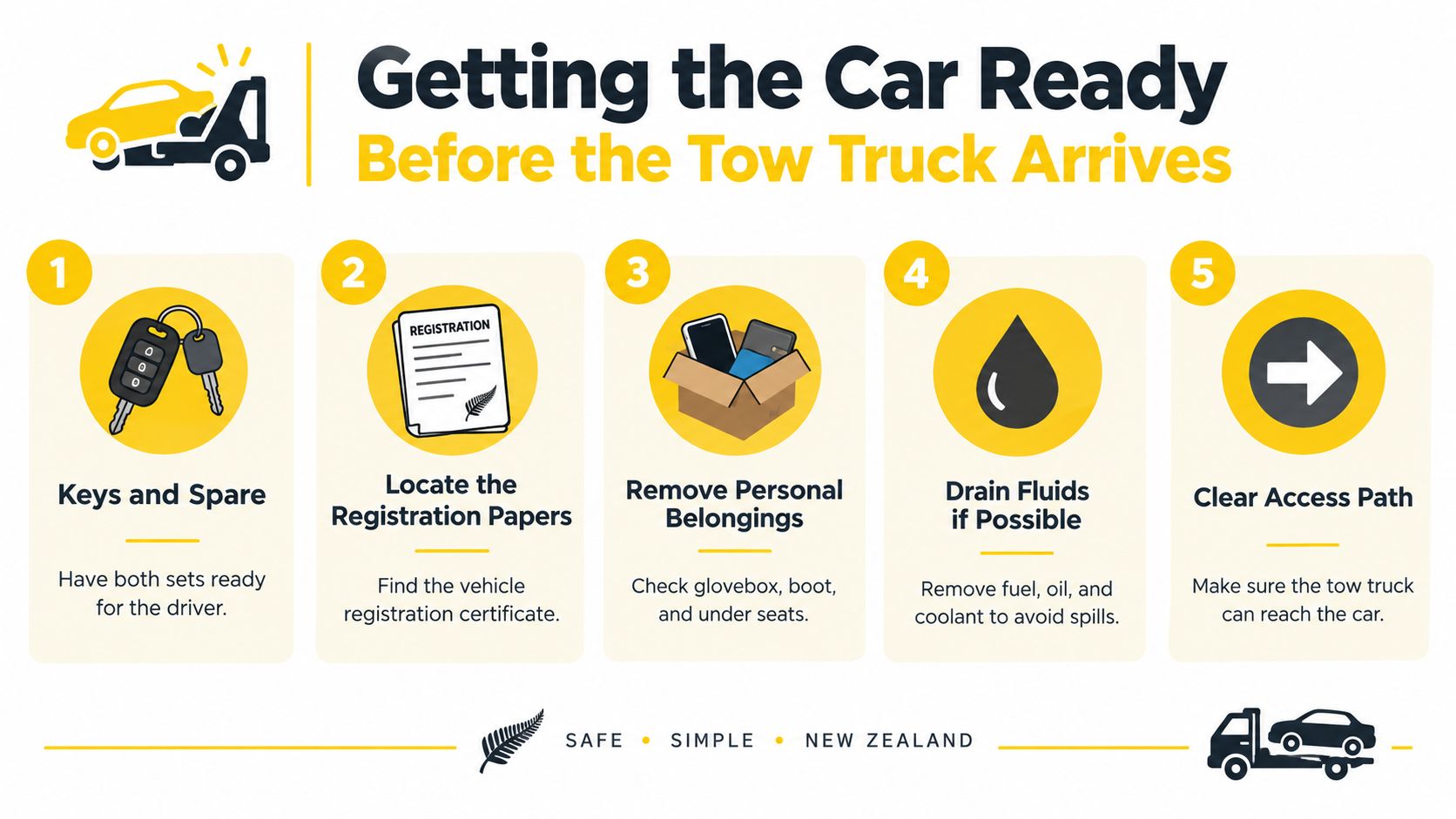
A smooth pickup starts with a few simple checks. Find the keys, clear out your belongings, and make sure the driver can reach the vehicle. Don't turn preparation into risky dismantling. The aim is to hand over the car safely and accurately, not to strip it down on the lawn.
A practical pickup checklist
- Find the keys: Put the main key and spare together if you have them. Tell the buyer if the vehicle is locked or the keys are missing.
- Locate the plates and vehicle details: Have the registration number and any relevant registration paperwork ready. Plate requirements depend on whether you're notifying NZTA of disposal or applying to cancel registration.
- Remove personal belongings: Check the glovebox, boot, centre console and under the seats. Once the vehicle has left, recovering forgotten items may be difficult.
- Keep useful accessories only if agreed: If you want to retain an aftermarket item, tell the buyer before the quote is confirmed. Removing parts can affect the agreed price.
- Clear the access route: Move other vehicles or obstacles so the tow truck can reach the car. Mention soft ground, tight access or a vehicle that can't roll.
Don't drain oil, coolant, brake fluid or fuel onto the ground. A professional dismantling process should contain and manage vehicle fluids appropriately; spills on a driveway or lawn create a mess and a risk to soil and stormwater. If you're concerned about a leak, tell the buyer before collection rather than trying to manage it yourself.
Leave airbags, refrigerant lines and high-voltage cabling alone. Don't cut hybrid or EV cables or attempt to remove a traction battery. Those jobs require the right equipment and competent handling, and a vehicle that's damaged or electrically unsafe needs to be assessed before loading.
Handling the NZTA Paperwork the Right Way
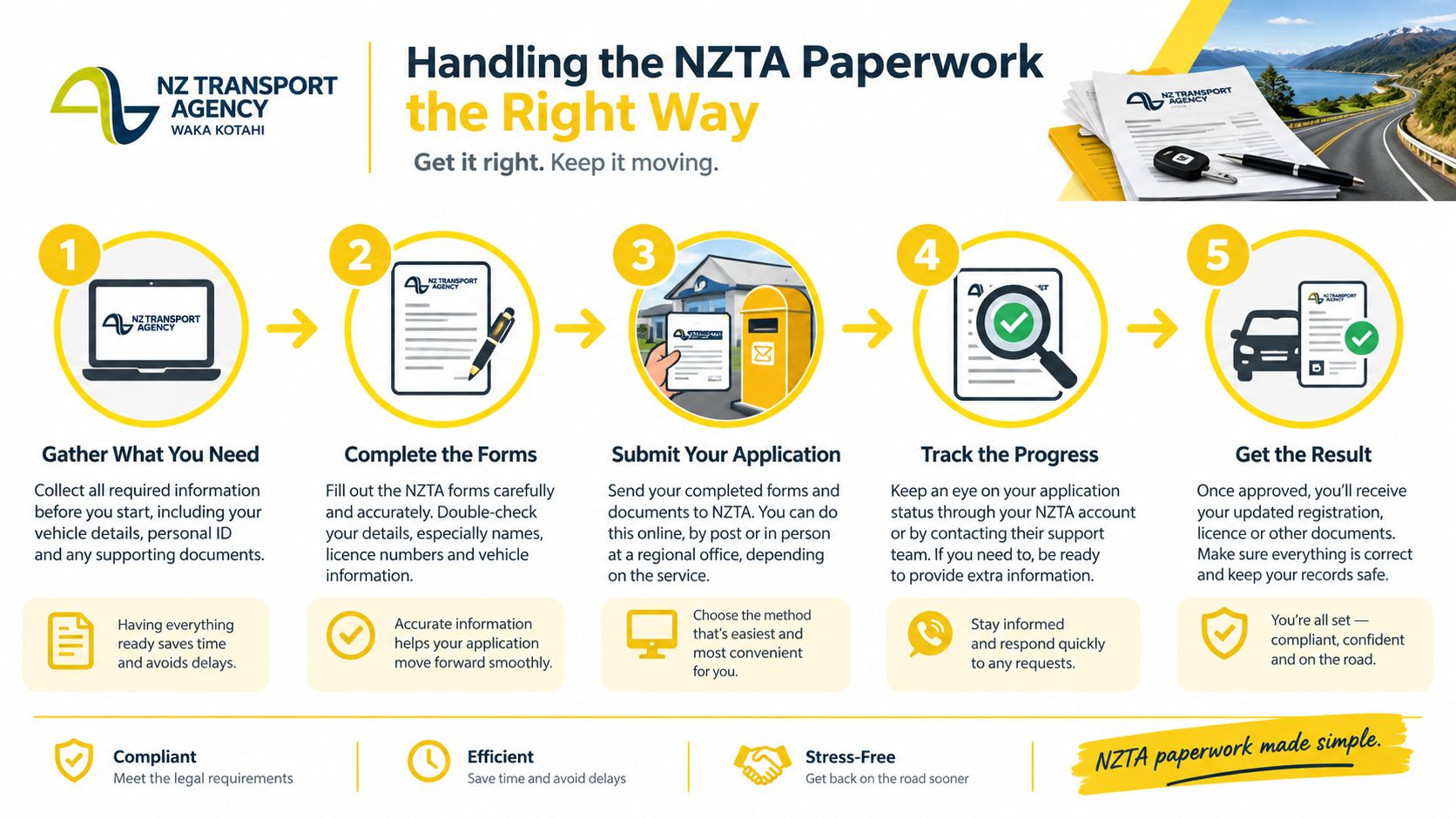
Disposal notification and deregistration aren't the same thing. When you sell, give away or otherwise dispose of a vehicle, the registered person must notify Waka Kotahi NZ Transport Agency. If the vehicle is permanently off the road and needs to be removed from the register, deregistration is a separate process.
For a disposal notification, you'll need the plate number and the full name and address of the person or organisation receiving the vehicle. The seller is responsible for submitting the disposal transaction. NZTA records the registered person, not legal ownership, and both sides have transactions to complete when a vehicle changes hands. The seller can notify NZTA of a vehicle disposal.
Which process applies?
If you're selling the car to a wrecker, report the disposal. The fact that the vehicle is going to a dismantler doesn't remove the notification requirement. Don't assume handing over the keys, or seeing the car leave on a truck, updates NZTA automatically.
If the vehicle is permanently useless, destroyed or written off and you want it taken off the road register, use the MR15 application through a registration agent and surrender the number plates. Cancelling registration before sale is a separate step, and it isn't the same as notifying NZTA that the vehicle has been disposed of. A vehicle described as deregistered may still have a record on the Motor Vehicle Register.
A useful sequence is:
- Confirm authority: Check that the person arranging the disposal can legally approve it. This matters for deceased estates, disputed family property and vehicles left on rented or managed land.
- Record the details: Have the plate number, vehicle information and recipient's name and address ready.
- Complete the correct transaction: Notify NZTA of disposal when the vehicle changes hands. Use MR15 if permanent registration cancellation is required.
- Keep proof: Save confirmation of the notification and any handover paperwork.
For a registered vehicle, completing the disposal notification promptly helps reduce the risk of later infringements, tolls, licensing issues or disputes remaining associated with you. This guide to changing a vehicle's registered person explains the distinction in practical terms. If the registered person has died, or you're dealing with an abandoned vehicle, get the right authority established before collection. A dismantler shouldn't remove or destroy a vehicle without documented consent.
What Actually Happens to a Scrap Car After Pickup
A vehicle is a mixed waste stream, not just a bundle of steel. The Ministry for the Environment identifies used oil, refrigerants, batteries, circuit boards, tyres, solvents, plastics and other residual materials as components needing appropriate treatment or disposal. A responsible dismantler separates those materials instead of letting fluids leak or sending everything together as ordinary metal waste.
A safer dismantling sequence
The dismantler first stabilises and inspects the vehicle, then identifies hazards and isolates the battery and ignition sources. Fluids such as engine oil, transmission fluid, coolant, brake fluid and fuel need to be drained and contained. Refrigerant requires suitable recovery equipment, not a punctured line or an open release.
Next, the dismantler removes items such as lead-acid batteries, tyres, airbags and mercury-containing components where present. Reusable parts are separated from ferrous and non-ferrous metals, plastics and residual waste. That sequence helps prevent contamination and makes it possible to recover useful components before processing the remaining materials.
Don't treat a leaking car as harmless scrap. Oil and other fluids can reach soil or stormwater. Tell the buyer about visible leaks before pickup, and leave hazardous components to people equipped to handle them.
Tyres need their own route. Tyrewise was introduced through regulations made in 2023, with tyre importers and manufacturers required to register and pay a stewardship fee from 1 March 2024. From September 2024, the public could take end-of-life tyres to registered collection sites without paying a collection fee. The scheme supports nationwide collection, transport, onshore processing and products or fuels derived from waste tyres. Its purpose is to increase reuse and recycling while reducing landfill disposal, stockpiling and illegal dumping. For vehicle owners, the practical point is simple: tyres shouldn't be left dumped or treated as an irrelevant add-on when a car is dismantled.
Hybrids and electric vehicles need a different stop point
A conventional dismantling sequence shouldn't continue on a hybrid or EV until the traction system has been identified and made electrically safe by a competent person. A high-voltage battery must not be cut, crushed, punctured or handled like an ordinary car battery. The vehicle's condition, isolation requirements and transport controls all matter, especially if it has been in a crash, flood or fire.
The Ministry's waste guidance also documents the consequences of poor disposal controls, including illegally dumped vehicles and the costs they create for councils. The responsibility doesn't end at the tow point. It depends on the car entering a documented process that deals with hazardous materials as well as reusable parts and metals.
Scheduling Pickup and Paying for Towing
Before you book, give the buyer the pickup address, vehicle condition, access details and whether it runs or rolls. Mention anything that changes loading, such as a blocked driveway, soft ground, a tight farm track or a missing key. If there's more than one vehicle or machinery item, list them together so the buyer can assess whether one visit and the right equipment will handle the job.
For the pickup itself, confirm the quote, payment method, towing coverage and timing. “Free towing” should be clear about where it applies and whether any special loading conditions affect the arrangement. Ask whether payment is made before loading, and don't hand over the vehicle on the assumption that money will arrive later unless that's been agreed.
A Northland run may look different in the city and on a rural property. A Whangārei city pickup may be arranged the same day, while a rural collection may need to fit a planned route. Share the exact location and a phone number the driver can reach you on. Keep the access clear and have the authority and vehicle details ready when the truck arrives.
If you're arranging a collection, this guide to scrap car collection covers the practical details to confirm. Car Removals Whangarei offers free towing within roughly 100 km of Whangārei, and handles cars, vans, 4WDs, trucks and machinery. Agree on the payment and paperwork before the vehicle is loaded, then keep your disposal confirmation.
Practical Takeaways Before You Scrap Your Car
A straightforward scrap pickup comes down to a few decisions made before the truck arrives. Know who has authority to dispose of the vehicle, describe its condition accurately, agree on the payout and towing terms, and complete the right NZTA transaction. Those steps matter more than trying to squeeze extra money out of a vehicle by stripping it yourself.
Keep these points in front of you:
- Confirm the price and payment timing: Know whether the quote is firm, whether towing is included and when payment is made. If the amount depends on an inspection, agree on what could change it before loading.
- File the disposal notification: The registered person needs to notify NZTA when the vehicle changes hands. Don't confuse that with MR15 deregistration.
- Handle plates according to the process: Surrender them when required for registration cancellation. Don't assume that every vehicle disposal follows the same plate procedure.
- Leave hazardous systems alone: Don't dismantle airbags, refrigerant lines or high-voltage components. Tell the buyer if the vehicle is a hybrid or EV, or if it's damaged by flood or fire.
- Get authority for someone else's vehicle: An abandoned car on a farm or rental property needs documented permission before removal. If there's a security interest or an estate involved, resolve that first.
The aim isn't to make every vehicle worth more. It's to make sure the price reflects what's there, the car leaves through a proper process, and you don't inherit a paperwork or safety problem after pickup. Keep the vehicle details, recipient information and disposal confirmation together, and the handover will be easier to verify later.
If you're ready to clear a damaged, unwanted or non-running vehicle, Car Removals Whangarei provides cash quotes, free towing within its Northland service area and NZTA disposal notifications completed at pickup. Share the vehicle's condition and location, then visit Car Removals Whangarei to arrange a quote and collection.
- scrap my car
- Whangarei car removal
- cash for scrap cars
- NZTA deregistration
- Northland vehicle recycling