· Car Removals Whangarei
Scrap Car Prices NZ: Your 2026 Northland Guide

A dead ute on the driveway, a failed hatchback behind the shed, or a 4WD that won't pass WOF any more all land in the same question, what is it worth as scrap? In Northland, the answer isn't a guess and it isn't a flat “cash for cars” number. Scrap car prices are built from weight, recoverable parts, towing logistics, and the metal market on the day, so two vehicles that look equally rough can still produce very different offers.
Table of Contents
- How Scrap Car Value Is Actually Calculated
- Understanding Metal Weight and Market Prices
- Finding Hidden Value in Your Car's Parts
- How Northland Location and Vehicle Type Affect Your Offer
- The Scrap Car Removal Process Step by Step
- Frequently Asked Questions About Selling a Scrap Car
How Scrap Car Value Is Actually Calculated
A lot of sellers think a scrap quote is random. It isn't. A licensed dismantler looks at the vehicle as two things at once, a pile of recoverable metal and a set of reusable parts that can be resold or recycled.
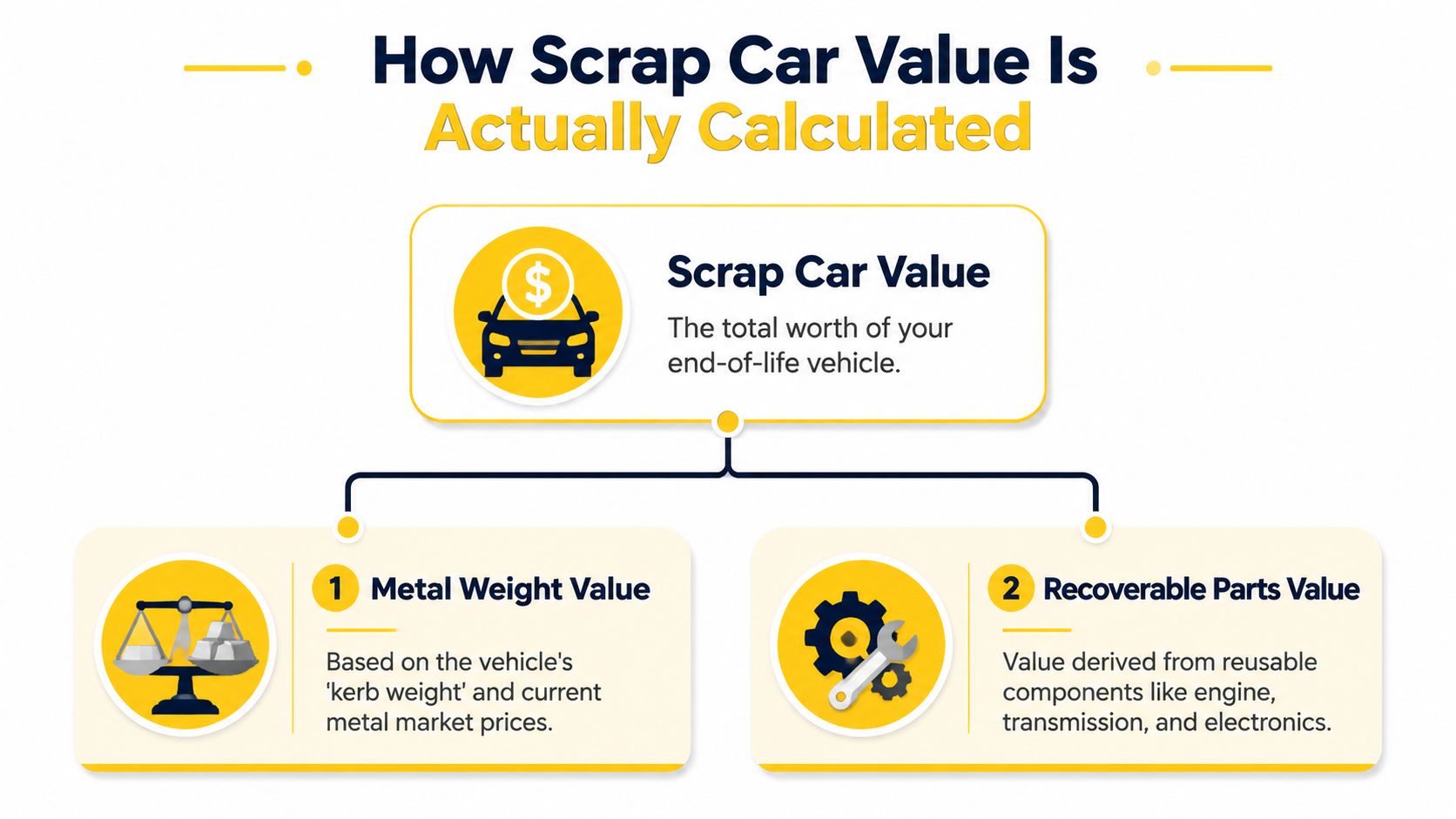
The base value comes from metal
For NZ scrap-metal pricing mechanics, the key valuation driver is vehicle mass, not just whether the car runs. Industry guidance used by New Zealand scrap buyers typically converts a vehicle's kerb weight into a scrap-metal payout by using a per-tonne metal rate, then adding value for recoverable parts like catalytic converters, alloy wheels, or batteries. That means the shell of the car still matters even when the engine is tired or the body is dented.
A complete vehicle usually carries more value than a stripped one because there's more material left to work with. A shell missing major parts has less to offer a dismantler, especially once depollution, towing, and processing are taken into account. That's why it pays to think in terms of completeness, not just condition.
Practical rule: if the car is still whole, the quote usually has a stronger floor than a shell that's already been picked over.
The second layer is parts demand
The other half of the price is what a buyer can recover and resell. A car with a good battery, intact alloy wheels, a decent catalytic converter, or usable electronics can lift the quote above bare-metal value. If the vehicle has sought-after parts, the offer can move up even when the car itself can't be driven.
That's why a quote should never be judged only by whether the car starts. A non-running vehicle can still be worth more than a runner if the non-runner is complete and the other car is missing valuable components. For Northland owners, this is the key mindset shift, the buyer isn't pricing your old car as a hobby project, they're pricing what can be recovered from it.
Understanding Metal Weight and Market Prices
A scrap quote in Whangarei or the Far North usually starts with the same blunt question, how much recoverable metal is still in the vehicle. That is why scrap car prices move differently from normal used-car values. The buyer is not pricing transport or comfort. They are pricing what can be weighed, processed, and sold on.
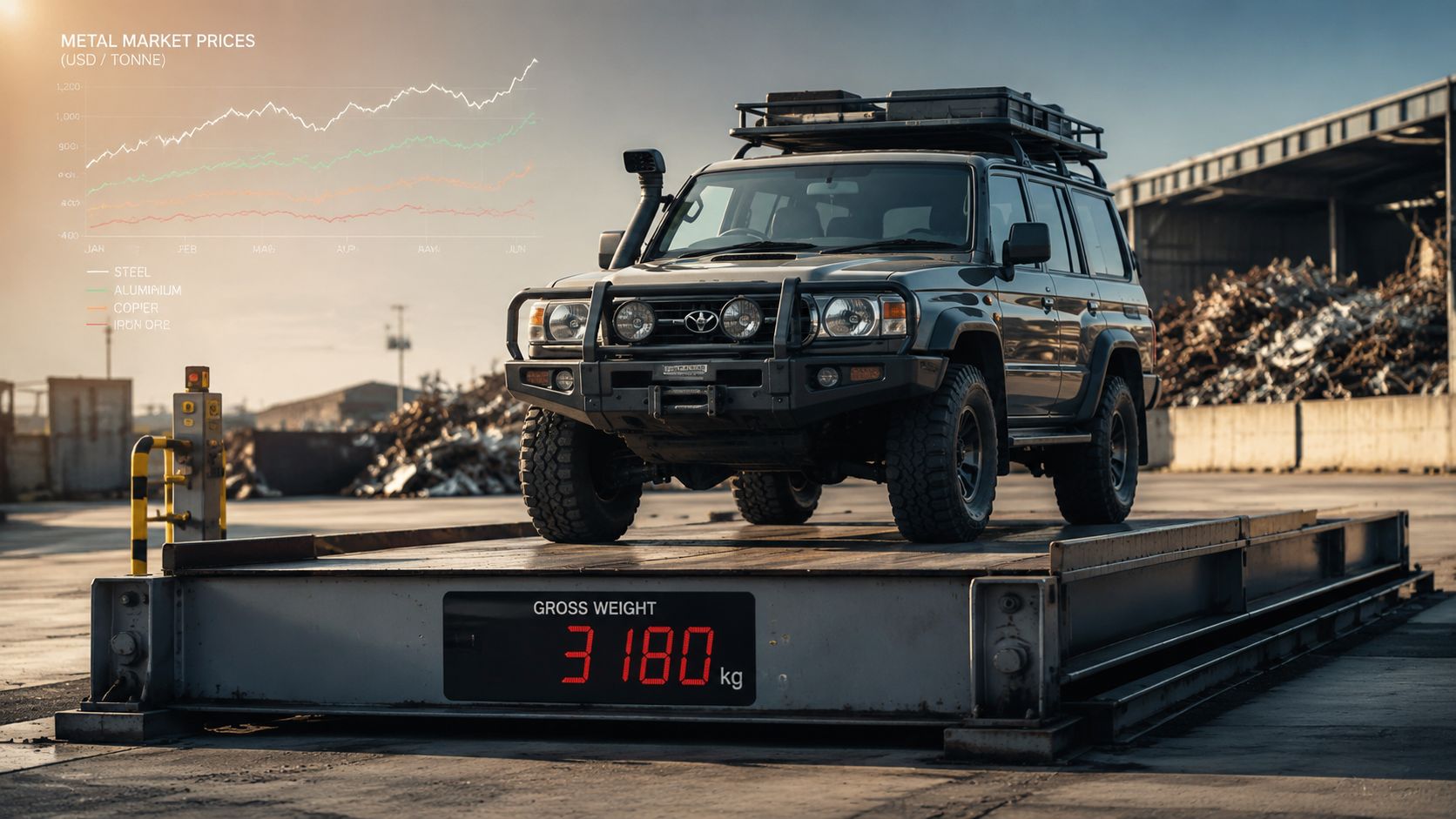
Why kerb weight matters so much
Kerb weight is the practical starting point because it shows how much vehicle is available to recycle. A heavier vehicle usually gives a dismantler more metal to work with, so utes, 4WDs, vans, and trucks often return more than small hatchbacks in the same market. That pattern shows up often in Northland, where rural vehicles can be larger and harder to move than compact town cars, and local collection costs also shape the quote.
A typical passenger vehicle is mostly metal by weight, according to the verified data, which is why the metal side of the car carries so much of the final offer according to the verified data. Once a car is past repair, the remaining metal content becomes the anchor for pricing. Clean paint, tidy trim, or a presentable interior matter far less than how much recyclable material is left in the shell.
Why the market moves your offer
Scrap offers shift because the underlying metal market shifts. The benchmark used by scrap buyers moves in step with wider steel and ferrous conditions, and that changes the floor under your vehicle even if the car itself has not changed. A quote given in one month can be out of step the next, especially when freight, processing, and export conditions move at the same time.
In practice, a dismantler looks at the vehicle's kerb weight, deducts the material that will not convert cleanly into scrap, then adds any parts value that still exists. That means the same car can produce a different offer depending on market timing, how complete it is, and whether the buyer can move it easily from your place. If you are in a rural part of Northland, collection distance can matter just as much as the metal itself. For sellers comparing offers, a local area guide like Car Removals Whangarei suburbs can help explain why a quote in town may differ from one in the Far North.
Northland takeaway: a fair quote follows the day's metal value and the real cost of getting the car off your property, not a memory of what a similar vehicle sold for months ago.
Finding Hidden Value in Your Car's Parts
A lot of sellers focus on the shell and overlook the money sitting inside the vehicle. The parts can matter just as much as the metal, and sometimes more, especially when the car is complete and the components are still usable.
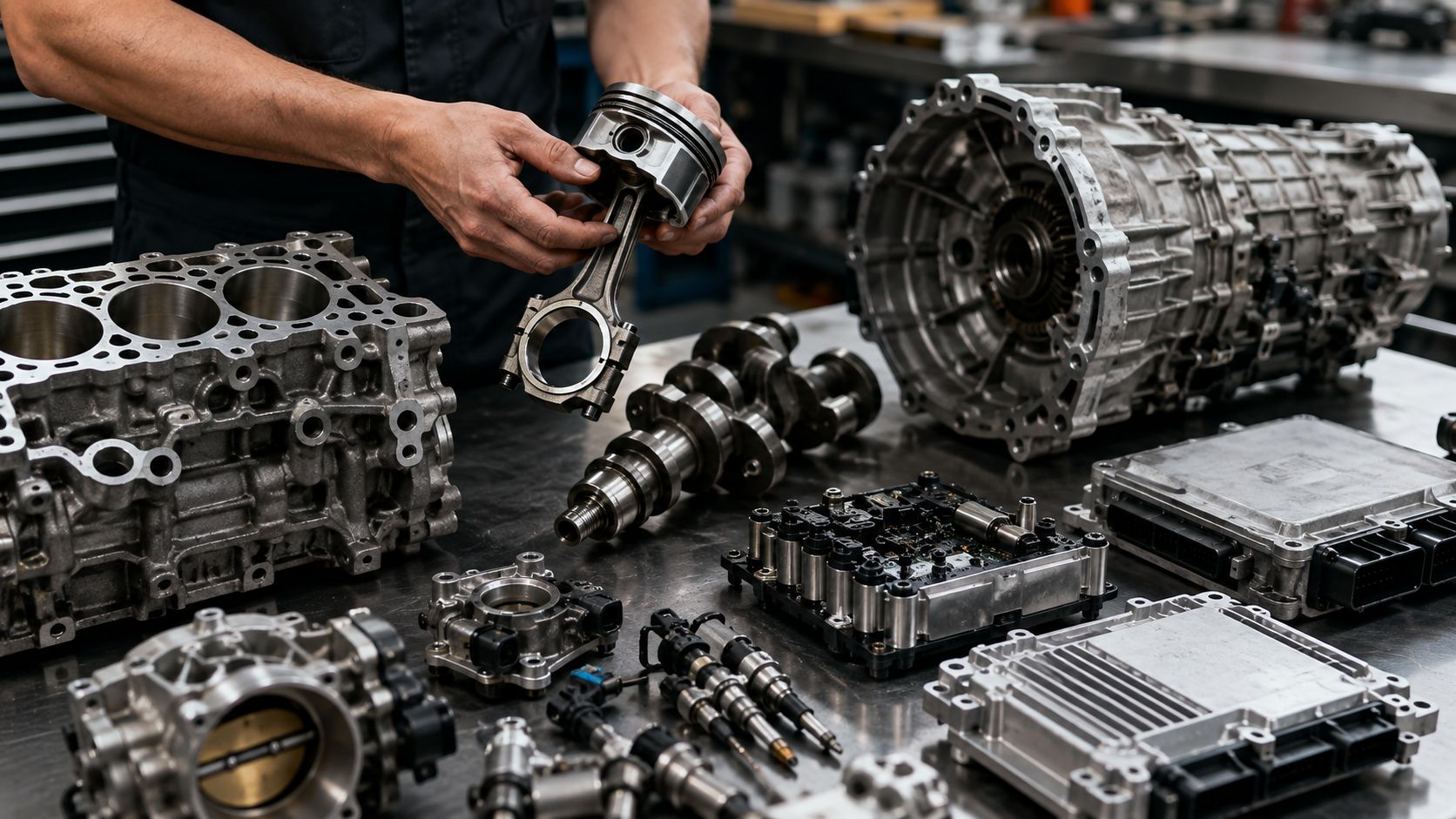
What buyers look for first
A scrap quote is not just about weight. Buyers also look at what can be removed and reused before the shell goes to metal, and that is often where a better offer comes from.
The most obvious examples are catalytic converters, alloy wheels, batteries, and reusable electronics. Engines and transmissions can also matter even when the car itself will not run, because a dismantler can sometimes recover value from those assemblies. If those items are missing, the quote usually falls back toward basic metal value.
A complete vehicle gives a buyer more to work with. They can salvage parts, depollute it properly, and still recover the remaining shell for scrap. A stripped car removes those options and leaves the buyer with less value to recover.
Why complete cars usually win
For Northland owners, honesty is the fastest way to get a fair figure. If the car still has the converter, wheels, battery, and major assemblies intact, say so up front. If you have removed anything already, mention it before the quote is finalised. That avoids wasted time at pickup and keeps the offer realistic.
Local dismantlers also price around the work involved in taking the vehicle apart and moving it off site. A car that is complete, accessible, and ready for collection is easier to assess than one with missing parts or awkward access. That practical difference matters in Whangārei and across the Far North, where collection jobs can vary a lot from one property to the next.
A useful reference point for sellers is the local dismantling approach described in Car Wreckers Whangarei, which shows how parts value and scrap value are both handled in practice. A vehicle that still holds usable components is usually worth more than a bare shell, even if both are equally rusted.
How Northland Location and Vehicle Type Affect Your Offer
Northland is not a one-price market. A sedan parked in Whangārei, a farm ute in the Far North, and a 4WD sitting behind a long gravel driveway all cost different amounts to collect and break down, so the offer shifts with location and vehicle type.
Distance and access change the economics
A pickup close to town is simpler for a dismantler than one out in a remote area. Clear access, room to load, and a direct tow all help keep the quote tidy. A vehicle that is hard to reach, sits off-road, or needs extra time to move can reduce what a buyer can comfortably pay.
That is why broad online calculators often miss the mark for Northland. The key question is not only what the car is, but where it is and how hard it will be to recover. A driveway handover in town and a rural pickup can land in different price brackets for practical reasons, not because the car has changed.
If you want a clearer local comparison, the service area list on our Northland suburbs page gives a better sense of how pickup location affects the offer.
Vehicle type matters too
Heavier vehicles usually hold a stronger scrap floor because they bring more metal into the deal, and Northland has plenty of work utes, vans, farm trucks, and 4WDs. Those vehicles often interest dismantlers because they combine weight with parts demand. A common regional model with reusable panels or drivetrain pieces can be worth more than an older small car that has little left to salvage.
Local use also changes the price picture. Cars and utes that have done hard work on rural roads often arrive with wear that limits parts value, while a model that stayed complete and unstripped gives the buyer more to recover. That matters in Whangārei and across the Far North, where a seller may have a vehicle that is technically scrap but still has useful components attached.
The practical NZ question often gets missed in generic advice. As noted in the discussion around scrap car quote comparison for New Zealand sellers, the issue is how a complete sedan, ute, or 4WD turns into a floor price through weight, parts demand, and local metal markets. That is the part owners in Whangārei and the Far North need answered.
The Scrap Car Removal Process Step by Step
A scrap pickup should feel clear from the first call to the final handover. If the operator is vague, slow on paperwork, or unwilling to explain the quote, that is a warning sign. The process should be legal, quick enough to fit real life, and handled properly before the truck leaves your place.
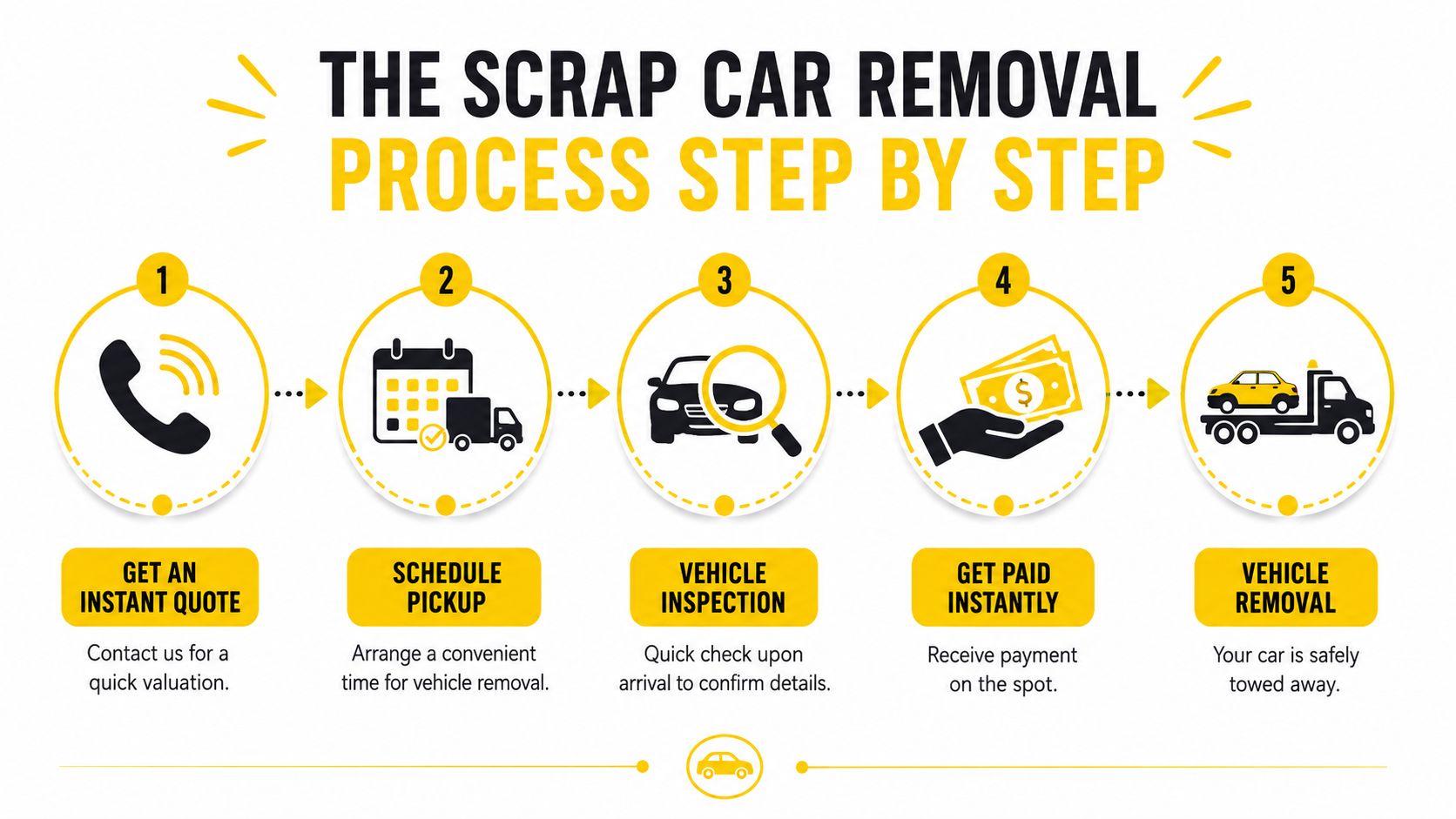
Start with the quote
The first step is a firm phone quote based on the vehicle's type, condition, location, and what parts are still there. A buyer who skips those questions is usually giving you a rough guess, not a proper offer. The quote should match your actual car, not a broad average for the make and model.
A proper scrap buyer works through the same practical checks every time. They look at the vehicle's weight, parts recovery, and the day's metal value, then they tell you what they can pay. That is the point where you can see whether the number is realistic or just a grab for the job.
Pickup should be easy, and paperwork should be handled
In New Zealand, the Motor Vehicle Register (MVR) is the legal record for ownership, and NZTA requires a seller to notify them when a vehicle changes hands as stated in the verified data. That step matters because it closes off the seller's responsibility once the vehicle leaves the property.
A proper scrap pickup should handle that at handover. Payment should also be settled before the vehicle is loaded, whether the operator uses cash or bank transfer. If you are told to sort the ownership transfer later on your own, the job has not been completed properly.
Rule from the yard: if the truck leaves before the ownership change is handled, you've kept the risk.
For Northland owners who want to see the process laid out clearly, How It Works should match what happens on the ground, quote first, pickup second, paperwork at handover, and payment before the vehicle goes.
Frequently Asked Questions About Selling a Scrap Car
Do I need a WOF or registration to scrap the car
No, not for the car to be taken as scrap. A failed WOF or lapsed registration does not stop a dismantler from assessing the vehicle, because the quote is based on condition, parts, and metal rather than roadworthiness. What matters is getting the ownership transfer handled correctly.
What paperwork should I have ready
Have proof that you are the seller and any vehicle details the buyer asks for. The main legal step in New Zealand is the ownership notification through the Motor Vehicle Register (MVR), which NZTA requires when the vehicle changes hands. If you have the registration details handy, the handover is usually easier and there is less back and forth at pickup.
Can you take a car without keys
Usually, yes, if the vehicle can be accessed and loaded safely. Missing keys are a logistics issue, not an automatic deal-breaker. The question is whether the car can be moved without damage to the yard, the truck, or your property.
How quickly can pickup happen
That depends on where the car is and how the route is scheduled. In Northland, a local operator can often fit in town pickups sooner than remote rural jobs because the tow time is shorter and the route is easier to manage. If the vehicle is already in a good spot for loading, the handover tends to be quicker.
What if the car is badly damaged or missing parts
It can still be worth something, but the quote will usually move closer to weight-based value if the reusable parts are gone. The more complete the vehicle, the more room there is for a stronger offer. If the car has already been stripped, be upfront about it so the valuation matches what is present.
Can you still get paid if the vehicle doesn't run
Yes. A non-runner can still be valuable because scrap pricing is not built around whether the engine starts. It is built around what can be recovered from the vehicle, especially the metal content and any usable parts.
If your vehicle is sitting around taking up space in Whangārei, Kaitaia, Kerikeri, or anywhere in between, ask for a quote based on weight, parts, and real Northland logistics, not a generic online estimate. Car Removals Whangarei handles scrap cars, vans, 4WDs, and machinery with pickup and ownership transfer at handover, so you can clear the vehicle and know where you stand.
- scrap car prices
- cash for cars northland
- car removals whangarei
- scrap metal prices nz
- sell my car for scrap