· Car Removals Whangarei
Mazda Car Wreckers
Whangarei Mazda owners can get a same-day, no-obligation cash quote and free towing for any unwanted Mazda, provided they complete the NZTA ownership notification at pickup. A Mazda that won't start, has been damaged, or has become too expensive to keep may be worth more as a dismantling vehicle than as a private sale.
The usual situation is straightforward. A Mazda Demio sits behind the house after a failed repair, a BT-50 has suffered chassis rust, or an older Atenza has been damaged and left waiting for an insurance decision. Months pass because arranging transport, advertising the car, meeting strangers, and sorting paperwork feels harder than leaving it where it is.
A local wrecker removes those obstacles, but the handover isn't complete when the tow truck leaves. The physical pickup, valuation, payment, and NZTA notification all need to be handled together, especially if you want to avoid later licensing fees, tolls, parking charges, or speeding notices connected with the vehicle.
Table of Contents
- Why Selling Your Mazda Locally Makes Sense
- Getting Your Mazda Valuation
- What Impacts Your Mazda's Scrap Value
- Preparing Your Vehicle for Pickup
- Handling NZTA Paperwork and Getting Paid
- Why Choose a Licensed Whangarei Dismantler
Why Selling Your Mazda Locally Makes Sense
A non-running Mazda in a Whangarei driveway can quickly become a private-sale burden. You may clean it, photograph it, advertise it, and wait for a buyer willing to inspect and transport a vehicle that cannot be driven. Flood damage, stripped parts, accident damage, or an expired WOF make that process harder.
A local Mazda wrecker assesses the vehicle by its recoverable value. The engine, transmission, panels, lights, wheels, electronics, interior, catalytic components, and other assemblies may still have a use. The shell and other unusable material can enter metal recovery channels. New Zealand handles about 150,000 end-of-life vehicles each year from a fleet of roughly 3 million registered vehicles, with at least 75% of the weight entering recycling streams recovered into reused materials, according to New Zealand end-of-life vehicle information.
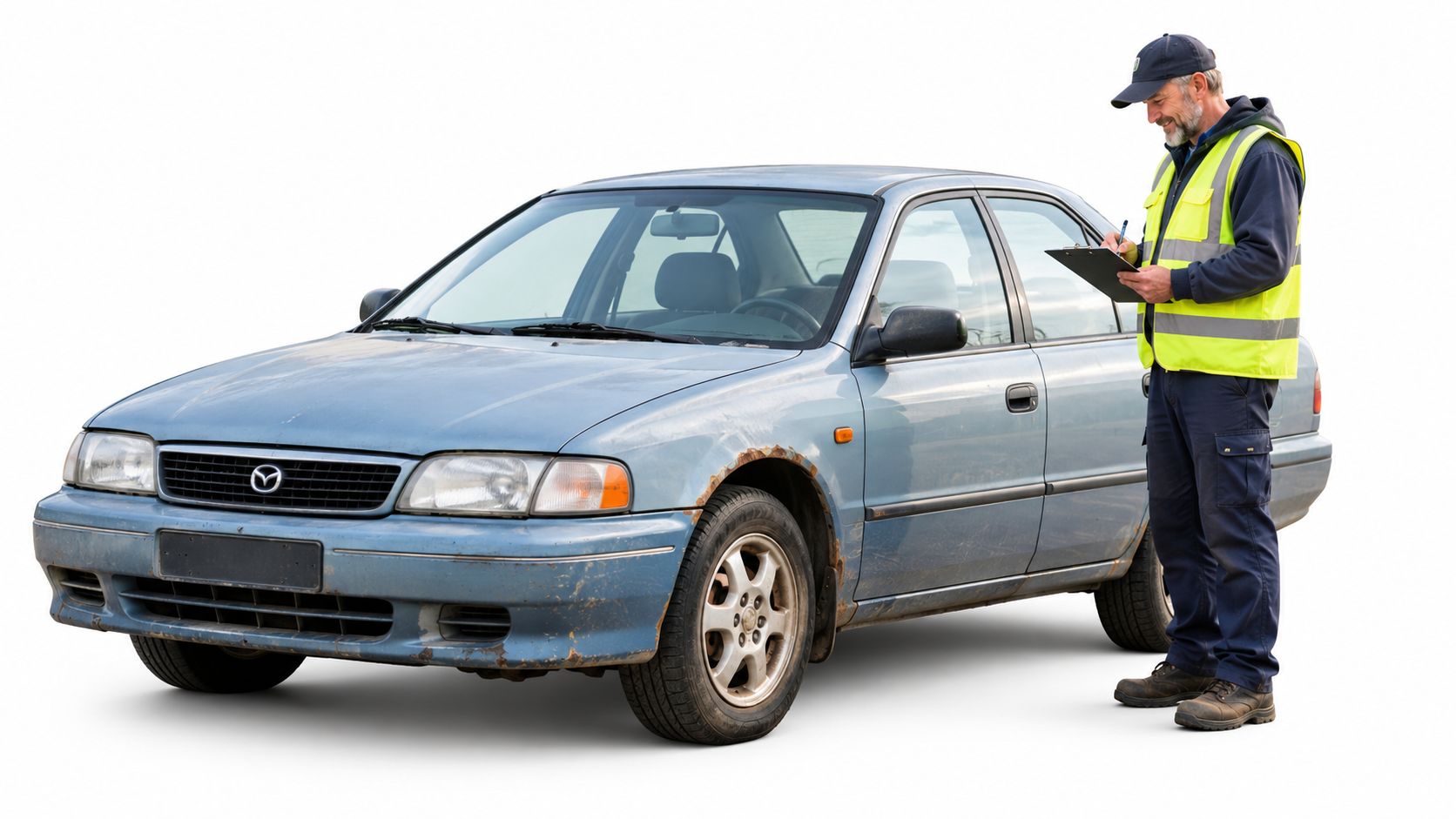
Licensed dismantling involves more than removing a car from a property. Operators depollute vehicles, drain fluids, manage batteries, recover usable parts, and send remaining materials through established channels. Ask what happens after collection, particularly if the Mazda is damaged, modified, or fitted with hybrid equipment.
Northland transport creates another practical trade-off. A private buyer may expect the vehicle to start, move, and pass an inspection. A wrecker equipped for recovery can collect a seized Mazda, flat-tyred car, non-rolling shell, or damaged vehicle from a driveway, farm, workshop, or roadside location.
Stats NZ recorded 396 motor vehicle dismantling and used-parts wholesaling enterprises nationwide in 2024, compared with 378 in 2000 and a peak of 432 in 2007, as shown in Stats NZ industry data. That history indicates an established parts and recycling supply chain.
Choose a local operator that provides a firm quote, explains the value factors, arrives with suitable equipment, and pays as agreed. You can also review how Mazda car wreckers assess value before accepting an offer. After pickup, make sure the NZTA ownership notification is completed, so later licensing charges, tolls, parking fees, or speeding notices do not remain linked to you.
Getting Your Mazda Valuation
Your Mazda is sitting in a driveway in Whangarei, it will not start, and you need a price before arranging removal. The fastest way to get an accurate valuation is to provide precise information rather than saying “old Mazda, needs work”. Have the model, year, body style, registration, engine type, drivetrain, location, and condition ready. A Mazda 3 hatchback, Mazda 6 wagon, Demio, Atenza, Premacy, CX-5, and BT-50 each have different parts demand, while the same model can attract different offers depending on what remains usable.
Give the wrecker the details that matter
Tell the operator whether the Mazda:
- Runs and moves: State whether it starts, drives, rolls, or needs winching. Easy loading can reduce collection time, although a non-runner may still contain valuable assemblies.
- Has major damage: Report flood exposure, fire, collision damage, rust, stripped panels, missing wheels, or a seized drivetrain. Photos of the front, rear, sides, engine bay, interior, and damaged areas help prevent an inaccurate quote.
- Contains its important parts: Confirm whether the engine, transmission, catalytic converter, battery, wheels, seats, and electronic modules are present. A complete donor vehicle and a stripped shell are valued differently.
- Uses hybrid technology: Tell the operator before pickup if the Mazda has a traction battery or high-voltage system. Hybrid recovery requires different handling from an ordinary petrol vehicle.
A wrecker is pricing more than the shell's weight. The valuation includes recoverable parts, inspection and removal time, transport requirements, processing costs, and the chance of finding local buyers for those components.
Ask what the quote includes
Confirm whether the offer covers towing, loading, paperwork assistance, and payment timing. Ask what could reduce the amount, including missing parts that were not disclosed or access problems that prevent the tow vehicle from reaching the Mazda.
New Zealand dismantlers may pay between $20 and $300, depending on age, condition, and whether the vehicle can be driven to the yard. A non-drivable vehicle may incur a dumping fee of around $25, according to the Stats NZ end-of-life vehicle study information. These figures are general guidance, not a guaranteed Mazda price. Access, completeness, model demand, and hybrid equipment should be discussed before collection.
After pickup, confirm that the operator has completed the NZTA ownership notification. This protects you from later licensing charges, tolls, parking fees, or speeding notices being attached to a vehicle you no longer possess.
Practical rule: Send clear photos, disclose major faults, and get the final offer in writing. A firm quote only helps when it matches the Mazda that will actually be collected.
What Impacts Your Mazda's Scrap Value
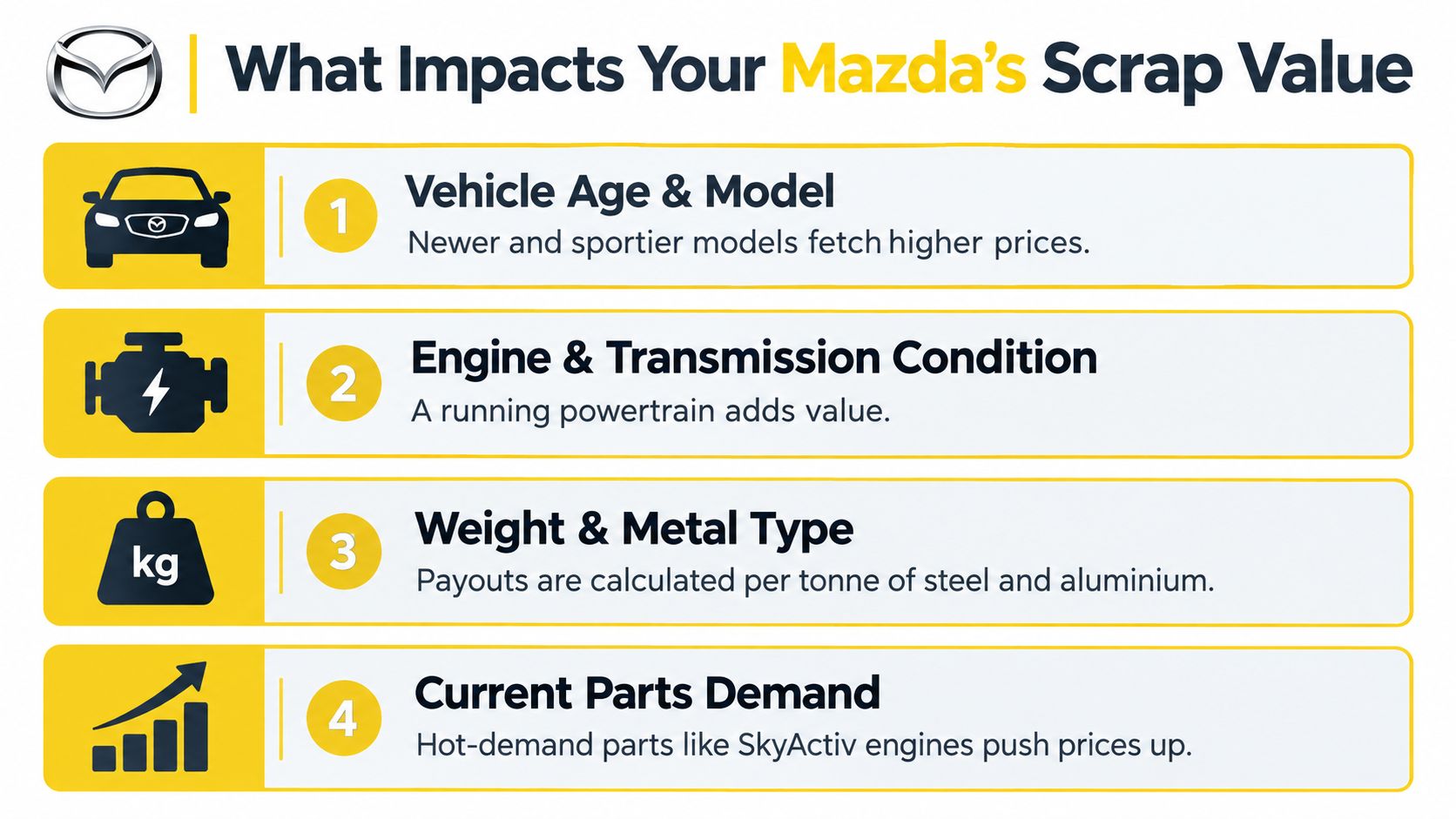
A Mazda's value to a wrecker is the combined value of its usable parts, recoverable materials, and practical collection requirements. Scrap metal matters, but it isn't the whole calculation. A complete non-runner with a sound automatic transmission may be more useful than a lighter vehicle that has already lost its engine, wheels, interior, or electronics.
Model and parts demand
Model-level demand can outweigh generic Mazda scrap value. Demio and Atenza parts may be sought after when theft recovery or collision damage leaves owners needing replacement panels, lights, locks, trim, or mechanical components quickly. BT-50 parts can attract a different buyer profile, particularly where ute components, diesel systems, suspension parts, or body panels are difficult to source locally.
CX-5, Mazda 3, Mazda 6, Premacy, and other common models can also be useful donor vehicles, but the exact year, trim, engine, gearbox, and factory equipment matter. A desirable model isn't automatically valuable if its most sought-after components are damaged or missing.
Mazda has appeared among the most stolen cars in multiple regional tables, including the Atenza and Demio in New Zealand theft tables, as discussed in New Zealand vehicle theft and scrap-market context. That creates parts demand after theft recovery, but it doesn't mean every damaged Atenza or Demio deserves a premium. The condition of the parts still decides the quote.
Powertrain and structure
A running engine and transmission can add value, but only if the wrecker can verify their condition or assess them sensibly. A blown engine doesn't make the rest of the vehicle worthless. A straight body, intact doors, undamaged lights, complete interior, usable wheels, and working electronic modules can still support a parts-based offer.
Flood and fire damage require caution because corrosion and contamination may affect systems that appear sound. Structural damage can reduce the value of panels and suspension, while a clean but mechanically failed Mazda may offer more recoverable inventory.
Weight and hybrid equipment
After saleable parts are removed, the remaining vehicle enters metal recovery. Kerb weight, steel and aluminium content, and current material pricing therefore influence the final value. However, paying only by weight can overlook a complete engine, gearbox, catalytic component, or set of undamaged panels.
Hybrid Mazdas require a separate assessment. Mazda's New Zealand environment information describes the brand's electrification and hybrid direction, so wreckers increasingly need procedures for high-voltage isolation, safe transport, and traction-battery assessment. Battery condition, electronics, and specialist handling can affect the payout, but a damaged battery may also introduce processing and safety requirements. Don't assume a hybrid is automatically worth more than a conventional Mazda.
For a broader explanation of how recoverable parts and vehicle weight combine, see this guide to scrap car valuation factors.
Preparing Your Vehicle for Pickup
Once you've accepted the quote, make the collection easy and safe. Start by removing personal property. Check the glovebox, centre console, door pockets, under-seat areas, boot, spare-wheel well, roof box, and any tool compartments. Owners regularly forget sunglasses, paperwork, child seats, tools, phone chargers, and valuables because they haven't used the Mazda for some time.
Take photographs before the vehicle leaves. Record the exterior, interior, dashboard, odometer if visible, number plates, and any obvious damage. These images give you a useful record of the vehicle's condition at handover and can help if another party later asks what was collected.
Gather the handover information
Have the registration details and proof of ownership available. NZTA distinguishes between the registered person and the legal owner. The registered person is the person recorded on the Motor Vehicle Register and is responsible for the vehicle in the registry context, as explained in NZTA's vehicle buying and selling factsheet.
You should also have:
- Keys and remotes: Provide all available keys, immobiliser remotes, and wheel-lock keys. Tell the operator if they're missing.
- Location information: Explain whether the Mazda is in a garage, behind a gate, on soft ground, down a narrow drive, or unable to roll.
- Hazard details: Mention leaking fuel, damaged high-voltage components, unstable jacking points, broken glass, or flood contamination before the crew arrives.
- Access clearance: Move bins, trailers, stored materials, or other vehicles that could block the tow truck or loading path.
A missing key doesn't necessarily prevent removal, but it can change the loading method. A professional crew needs to know that before arrival, not after the vehicle is already on the truck.
Don't dismantle it first
Removing a stereo, wheels, battery, catalytic component, or interior parts yourself may seem like a way to increase the return. In practice, it can lower the value of the complete vehicle and create safety problems. Leave fluids, airbags, wiring, and high-voltage equipment to trained operators.
New Zealand guidance notes that saleable parts are removed before vehicles are flattened and shredded, which is why a complete vehicle can be more useful than a stripped shell. Make sure the car is accessible, disclose its condition, and let the dismantler manage the removal process.
Handling NZTA Paperwork and Getting Paid
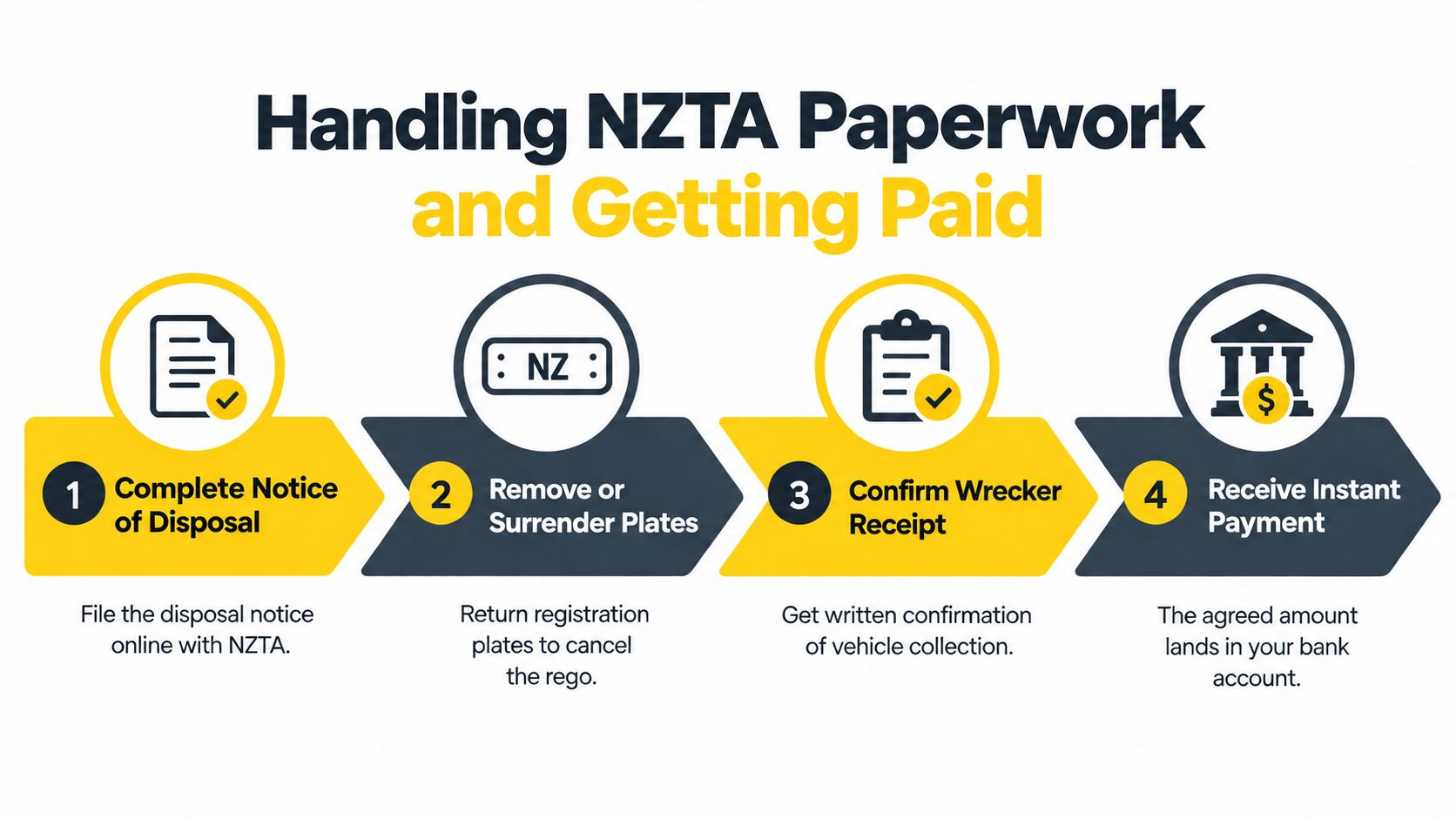
The most important mistake to avoid is treating the key handover as the end of the sale. NZTA notification protects you only when the change is recorded, not when you verbally tell a driver that the Mazda is no longer yours.
Both buyer and seller must notify NZTA when a vehicle changes hands. If the seller fails to do so, they can face the buyer's fees or fines, including tolls or speeding tickets, and remain responsible for licensing fees owed on an unlicensed vehicle up to the date NZTA is told. The official NZTA selling-a-vehicle guidance sets out that responsibility clearly.
Complete the registry step at collection
At pickup, confirm who is submitting the ownership notification and ask for evidence that it has been completed. A service that handles this on site removes the risk of forgetting later, particularly when the Mazda is deregistered, unlicensed, damaged, or being collected from a rural property.
NZTA also warns that delays in completing the MR13B online process can leave the previous registered person responsible for licence fees. If a trader sells a vehicle with an expired licence of 12 months or more, the vehicle must be licensed or placed on exemption immediately, otherwise it will automatically lapse off the Motor Vehicle Register, as set out in NZTA's trader guidance.
Match payment to the agreed quote
Before loading starts, check the agreed amount and payment method. Cash or an instant bank transfer gives you confirmation at the time of collection. Don't accept an unexplained deduction for towing, loading, or paperwork if those costs were included in the quote.
The sensible sequence is:
- Confirm the vehicle identity and agreed price.
- Complete the NZTA notification and retain confirmation.
- Receive payment before loading.
- Keep photographs, messages, and any receipt for your records.
The truck leaving your driveway is not the legal finish line. The registry record and payment confirmation are what close the transaction properly.
For a practical outline of the notification process, use this NZTA change-of-ownership guide. Government advice also says to tell NZTA as soon as the car changes hands so future speeding or parking tickets don't continue arriving in your name, as explained by New Zealand Government vehicle-selling guidance.
Why Choose a Licensed Whangarei Dismantler
Your Mazda may look ready for loading, yet a flooded, crashed, or hybrid vehicle can create hazards after it leaves the driveway. A licensed dismantler has processes for draining fuel, oils, coolant, and refrigerants, and for controlling batteries, tyres, airbags, and contaminated components before dismantling begins. That reduces the risk of spills, unsafe storage, and poor handling at the yard.
Battery handling needs a clear answer before collection. Conventional lead-acid batteries require proper recycling. Owners of hybrid Mazdas should ask how the traction battery will be isolated, transported, assessed, and stored. A casual collector may lack the equipment and trained process for that work, particularly if the vehicle has suffered collision or water damage.
Local accountability changes the experience
A Whangarei operator knows the practical differences between a city driveway, rural section, farm track, and workshop collection. Local towing equipment can reduce reliance on unknown subcontractors. It also makes same-day city pickups and planned rural runs easier when access, keys, steering, and loading conditions are explained in advance.
The quote should state what is included. Confirm the towing arrangement, payment method, agreed amount, and whether the operator will complete the NZTA notification at pickup. A written message or receipt gives you a record if the final payment differs from the quote or the vehicle remains linked to your name.
Choose a dismantler that can explain its valuation, loading method, hybrid handling, and vehicle disposal process in plain terms. The operator should also deal with fluids, batteries, airbags, and recoverable parts through suitable channels. National recycling supports the dismantling trade, but the owner still needs to check who is responsible for each step after collection.
Before booking: Ask who completes the NZTA notification, when payment is made, and how the Mazda's batteries, fluids, and recoverable parts will be handled.
Car Removals Whangarei provides Mazda removal quotes, towing within roughly 100 km of Whangarei, same-day city collections, and NZTA ownership notification at pickup. For a damaged, non-running, hybrid, deregistered, or unwanted Mazda, visit Car Removals Whangarei to arrange a local quote.
- mazda car wreckers
- sell car whangarei
- scrap car removal
- car removal northland
- nzta paperwork