· Car Removals Whangarei
How to Dispose of Vehicle in Northland Without Risk
A vehicle can sit on a Northland property for months before the owner decides it has to go. Perhaps it no longer rolls after storm damage, an old ute is taking up space behind a farm shed, or a landlord has inherited a car from a departing tenant. The temptation is to accept a quick cash offer, watch it disappear on a tow truck, and assume the problem has ended.
That assumption is where avoidable trouble starts. To dispose of vehicle responsibly, you need more than physical removal. You need a clear handover, controlled treatment of hazardous components, and a completed NZTA notice of disposal that proves when responsibility left your hands.
Table of Contents
- Why Quick Disposal Often Creates More Work
- Preparing Your Vehicle for Responsible Removal
- Understanding NZTA Liability and Notification Rules
- Choosing Between Owner-Authorised Removal and Abandoned Vehicle Clearance
- What Happens on Pickup Day
- Final Checks Before the Vehicle Leaves Your Property
Why Quick Disposal Often Creates More Work
A Whangarei owner with a damaged sedan usually wants one thing, a clear driveway. A farmer may want an immobile ute removed before it becomes a hazard around machinery. A landlord might have several vehicles left across a rental property and understandably wants the site cleared before the next tenant arrives.
The quickest-looking option is often informal. Someone offers cash, says they'll return with a truck, and promises to handle the paperwork. The vehicle leaves, but the seller keeps no proper record of who collected it, where it went, or whether the disposal was reported to NZTA. A verbal agreement can feel complete while the administrative handover remains unfinished.
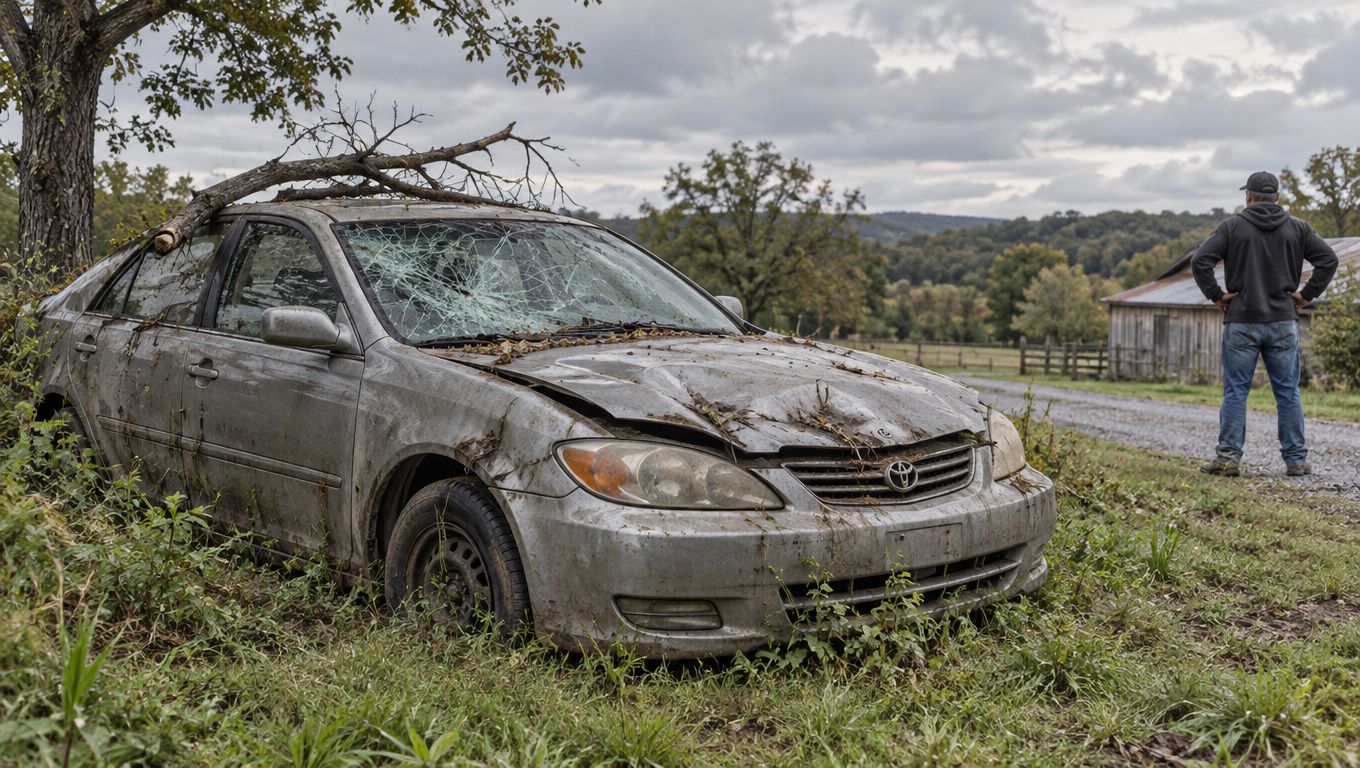
The physical problem is only half the job
End-of-life vehicles contain more than recoverable steel. The Ministry for the Environment's national waste reporting identifies used engine oil, refrigerants, lead-acid batteries, circuit boards and other hazardous substances as materials that require controlled removal and treatment. Fluids, batteries, airbags, tyres and refrigerants can create risks for land and waterways if a vehicle is abandoned or processed carelessly.
The scale of the disposal problem explains why casual dumping isn't a harmless shortcut. The same Ministry report estimated approximately 25,000 illegally dumped cars each year, with an estimated $6 million annual cost for authorities at the time of reporting. A Massey University study of New Zealand's end-of-life vehicle system estimated at least 25,500 abandoned vehicles annually and found that no standardised process guaranteed every vehicle entered the recycling system.
Practical rule: A tow truck clears the space. A documented disposal clears the responsibility.
The frustrating part is that speed and compliance don't have to compete. A prepared owner can arrange collection, confirm authority, complete the NZTA transaction, and retain evidence during the same handover. That small amount of organisation is usually easier than tracing an unknown vehicle months later after tolls, infringement notices or licensing correspondence arrive.
Preparing Your Vehicle for Responsible Removal
Preparation starts before you request a quote. The more accurately you describe the vehicle, its location and its condition, the less likely you are to face a delay when the removal vehicle arrives.
Build a useful vehicle record
Have the registration plate, vehicle identification number, location and access details ready. Check that the plate and identifying details match the information available for the vehicle, particularly if the car is deregistered, has been stored for a long time, or was damaged in an accident.
Take clear photographs before pickup. Capture the exterior, interior, wheels, engine area, number plates, visible damage and the surrounding access route. Photograph the odometer where it can be read. These images create a time-stamped condition record and can help resolve questions about missing parts, property damage or the vehicle's state at handover.
Remove personal property from the cabin, boot, glovebox and tool compartments. Check for garage remotes, fuel cards, documents, house keys, work equipment and registration papers. If the vehicle has been involved in a crash, don't reach into unstable areas or handle damaged high-voltage equipment yourself.
Resolve authority before scheduling
If finance or another security interest exists, disclose it before collection. A vehicle can have recoverable value while still being subject to another party's rights, so a removal service shouldn't be treated as a way to bypass a lender.
A failed WOF, non-running engine, missing wheels or deregistered status doesn't automatically prevent lawful removal. It does affect the equipment and loading method, which is why accurate information matters. A firm quote depends on the vehicle's condition, parts demand, steel value and access, so hiding a non-rolling shell or restricted driveway creates more risk than it saves.
Use this preparation list:
- Confirm identity: Match the plate and vehicle identification number to your records.
- Record condition: Photograph damage, missing components, the odometer and access points.
- Remove belongings: Search every storage area before the keys change hands.
- Disclose finance: Identify any lender or registered security interest early.
- Describe access: Explain whether the vehicle is on soft ground, behind a gate, under cover or unable to roll.
- Prepare authority: Have ownership or written site authority available if you aren't the registered person.
That preparation produces a cleaner quote, a more realistic pickup plan and a stronger evidence trail.
Understanding NZTA Liability and Notification Rules
Payment doesn't end your NZTA exposure. NZTA distinguishes the registered person from the legal owner, and the Motor Vehicle Register records the registered person rather than proving ownership. That distinction matters because the registered person remains the agency's recorded contact until the disposal is reported.
When you sell, give away or otherwise dispose of a vehicle, including when it is destroyed, you must notify Waka Kotahi NZ Transport Agency immediately. The NZTA notice of disposal transaction requires information including the vehicle's plate number and the receiving person or organisation's full name and address.
What the seller must control
The safest sequence is completed at pickup, not later from memory. Verify the receiving party's identity, record the vehicle identification number, photograph the vehicle and odometer, confirm the plate, and complete the electronic notice of disposal while the vehicle is still in front of you.
NZTA states that both parties must notify it without delay when a vehicle is sold or disposed of. If you sell to a wrecker, you still need to notify NZTA that you sold the vehicle. The wrecker is responsible for cancelling the registration, but that responsibility doesn't replace your own disposal notification. A practical explanation of the distinction appears in this guide to NZTA registration and change of ownership.
The cash payout is the commercial finish. The notice of disposal is the administrative finish.
Without prompt notification, the former registered person can remain exposed to tolls, speeding tickets, licensing fees or other correspondence connected with the vehicle. Outstanding licensing fees can also remain payable after disposal is reported, so notifying NZTA isn't a method for erasing an existing debt.
Don't rely on a promise that the buyer will “sort it out”. Keep the confirmation, payment record, collection details and photographs together. If a dispute arises, those records show what vehicle left, who received it, when the handover occurred and what action you took immediately afterwards.
Choosing Between Owner-Authorised Removal and Abandoned Vehicle Clearance
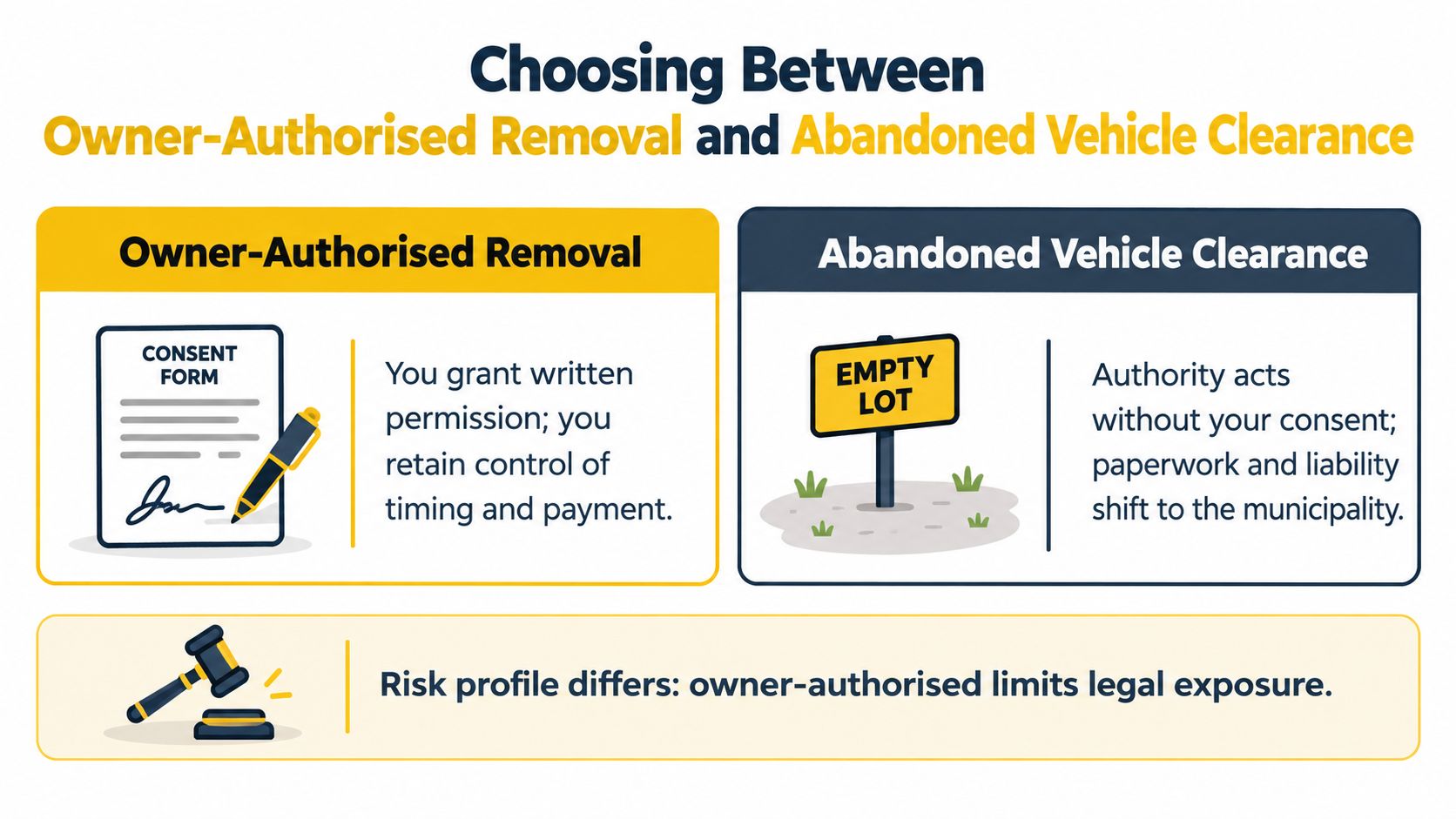
The first decision is authority. A registered person, legal owner or authorised representative can approve removal, while possession of the site alone may not give anyone that right.
Owner-authorised removal is usually the cleaner route. The person with authority agrees to collection, confirms the vehicle details and records consent. That allows the removal company to arrange access and payment directly with the person responsible for the vehicle.
Abandoned vehicle clearance is different, and the detailed process is covered in this guide to abandoned vehicle removal. A car left by a tenant, contractor, former owner or unknown person may still be tied to another person's ownership, finance or registered-person rights. A landowner cannot assume that physical possession transfers authority over the vehicle.
Compare the two pathways
| Situation | Evidence to gather | Main risk |
|---|---|---|
| Owner-authorised removal | Identity, plate, VIN, consent and payment record | The registered person forgets the NZTA notification |
| Vehicle left by a tenant or contractor | Tenancy or site records, written notices, photographs and authority to act | A former occupant or secured lender disputes disposal |
| Unknown or abandoned vehicle | Plate and VIN details, location photographs, notices and any police reference | Removal occurs before the required process is complete |
For certain unclaimed vehicles, NZTA guidance can require an intention-to-dispose notice after 10 days, notification of a registered security-interest holder, and specific vehicle and location details. Check the NZTA guidance on abandoned vehicle processes against the circumstances before arranging clearance, particularly where ownership is unclear.
Private land needs written authority
A council may not remove a vehicle from private property merely because it appears abandoned. Grey District Council's abandoned-car procedure states that it does not have jurisdiction over abandoned vehicles on private property. Permission may therefore be needed from the landowner, landlord, property manager or another person entitled to arrange disposal.
For a farm, rental property or body-corporate site, prepare a file before collection. Keep photographs, plate and VIN details, written notices, evidence of site authority, and any relevant police or NZTA references together. Free towing or a cash offer does not remove liability by itself. The handover should also include a documented NZTA notice of disposal where the authorised owner is disposing of the vehicle. Abandoned private-land vehicles follow a separate process, so speed should not replace a defensible record.
What Happens on Pickup Day
A well-managed pickup should follow a predictable order. The crew arrives, confirms the booking and checks that the vehicle described on the phone matches the one on site. The driver then assesses the loading conditions, including whether the car rolls, whether the wheels are accessible and whether extra equipment is needed.
Keep the handover in the right order
Do the verification before the vehicle disappears behind the truck. Confirm the registration plate, vehicle identification number, condition photographs and the receiving organisation's details. Hand over the keys and any relevant documents only after the identity and authority checks are complete.
Payment should be released before loading, through cash or an instant bank transfer. A phone quote should remain firm at pickup, with no towing fee, deduction or surprise adjustment where the vehicle matches the description used for the quote. A delayed payment or unexplained reduction changes a simple disposal into a dispute.
Use the vehicle wrecker pickup process as a practical reference for the questions to settle before collection. Ask how the crew handles a car without wheels, brakes or keys, and confirm whether the site allows safe loading without damaging gates, driveways or nearby structures.
Complete the record before departure
The NZTA notice of disposal should be completed at pickup, while the receiving party's full legal name and address are available. Retain the confirmation with the payment receipt, booking record, photographs and the date and time of collection.
The physical processing also matters. A licensed dismantler should manage fluids, batteries, tyres, airbags and refrigerants through controlled depollution and dismantling rather than treating the vehicle as undifferentiated scrap. That approach supports recovery of usable parts and metals while reducing the risk that hazardous material reaches land or waterways.
When the vehicle is loaded, photograph the cleared site and the departing vehicle if practical. The final image isn't a substitute for NZTA notification, but it completes the handover record and confirms that the vehicle left your possession in the agreed condition.
Final Checks Before the Vehicle Leaves Your Property
The final check should be deliberate, even when the removal feels routine. Most problems arise when one small administrative step gets postponed because the owner is focused on the truck, the payment or the cleared space.
Use a pickup-day sign-off
Keep this sequence on your phone or printed beside the keys:
- Verify the recipient: Record the receiving person or organisation's legal name, address and identity details.
- Match the vehicle: Confirm the plate and vehicle identification number against your records and photographs.
- Check the authority: Make sure the registered person, owner or authorised representative has consented to the disposal.
- Confirm security interests: Ask whether finance or another registered interest exists, and don't release the vehicle if the authority is unclear.
- Record the condition: Photograph the body, interior, odometer, missing parts and loading area.
- Complete the notice: Submit the NZTA notice of disposal immediately and save the confirmation.
- Confirm payment: Retain the receipt or bank-transfer record before loading begins.
- Document departure: Keep the booking, pickup time, recipient details and final vehicle photographs together.
A clean site is useful. A clean file is what protects you later.
Deregistration and disposal notification are separate actions. Formal deregistration cancels the vehicle's registration for road use and marks its status on the Motor Vehicle Register, while the vehicle record remains for legal and historical reference. NZTA's formal deregistration information explains that cancellation is commonly requested by the registered person or insurer, often using form MR15, with number plates usually surrendered. A deregistered vehicle cannot legally be driven on public roads unless it is re-registered.
That distinction is important for failed-WOF vehicles, write-offs and long-stored cars. Deregistration doesn't replace the seller's obligation to report that the vehicle has been sold, given away or destroyed, and disposal notification doesn't itself cancel registration.
Watch for the common gaps
The recurring failures are predictable. Owners accept incomplete identity details, forget the online transaction, overlook a lender, or release a private-land vehicle without retaining evidence that the person arranging removal had authority. Landlords and farmers clearing several vehicles should maintain a separate record for each plate and VIN, rather than assuming one general clearance note covers the entire site.
If the vehicle is abandoned, pause when authority is uncertain. Photograph it, preserve site and tenancy records, follow the relevant notice process, and contact the appropriate agency or police channel where required. The safest disposal is the one that removes the vehicle physically and leaves no reasonable doubt about who authorised the handover.
Car Removals Whangarei buys unwanted, damaged, non-running, scrap, write-off, hybrid and EV vehicles, with free towing within roughly 100 km of Whangarei and pickup arrangements for rural Northland. For a documented handover with on-site NZTA notification, firm pickup pricing and payment before loading, visit Car Removals Whangarei and request a vehicle assessment.
- dispose of vehicle
- car removal
- NZTA paperwork
- Northland cars
- vehicle disposal