· Car Removals Whangarei
Cash for Scrap Cars in Whangarei: The 2026 Owner's Guide
You can sell a dead car in Whangārei, but NZTA must be notified at the moment of pickup, and cancelling registration is a separate step reserved for vehicles that will never go back on the road. If a car has been dumped, written off, or sat in your driveway too long, the paperwork matters as much as the payout.
Table of Contents
- Understanding the Scrap Car Sale Process
- Preparing Your Vehicle for Removal
- How Scrap Car Values Are Calculated
- Navigating NZTA Requirements and Paperwork
- Scheduling Pickup and Receiving Payment
- Why Choose a Licensed Local Dismantler
Understanding the Scrap Car Sale Process
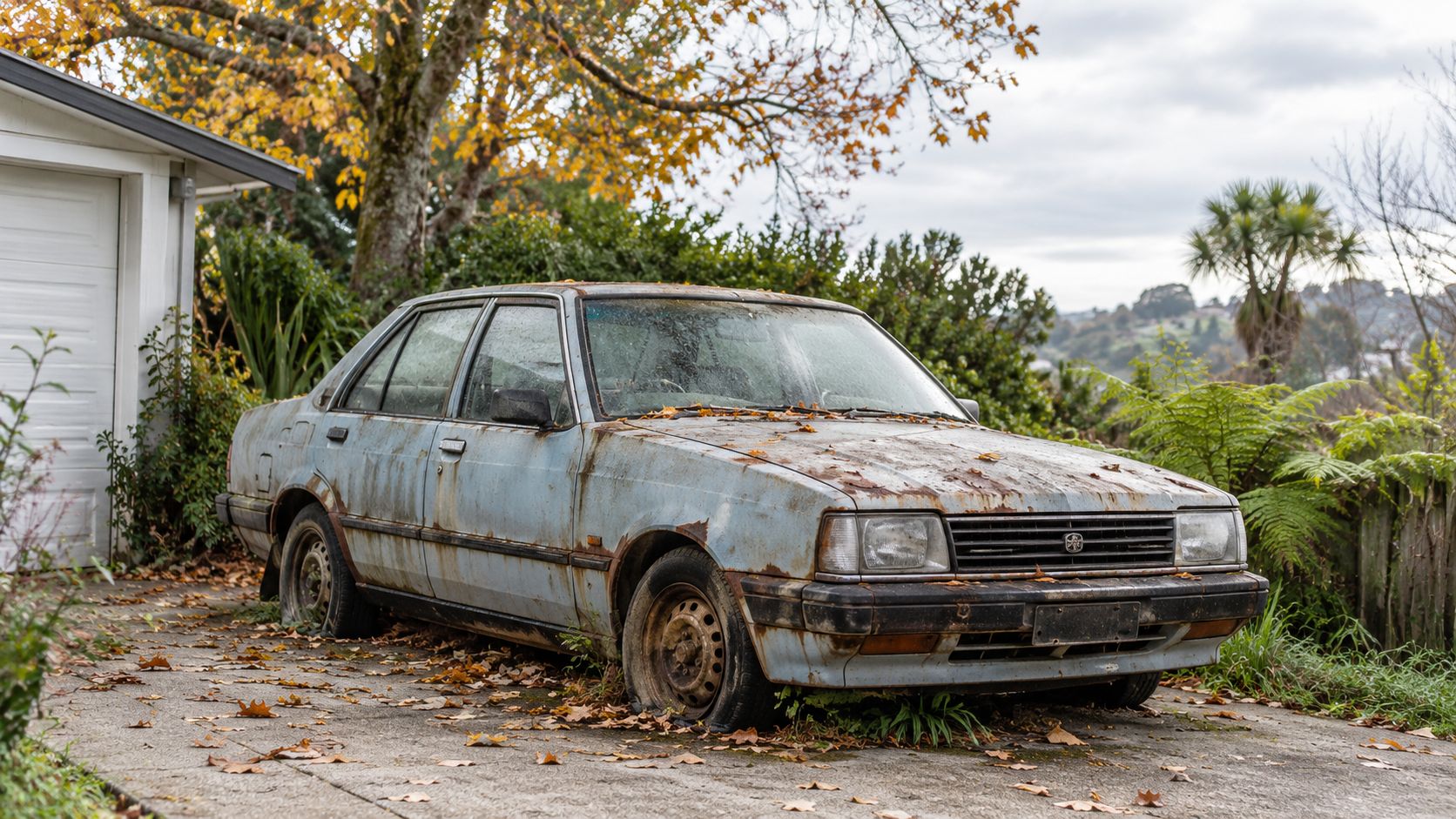
A neighbour rings from a Whangārei driveway with the same story I hear every week. The car won't start, the WOF is gone, the plates are still on it, and nobody wants to be the person who ends up responsible if it gets towed away and never properly recorded. That's the headache behind cash for scrap cars, not the rust, not the tow truck, and not even the quote.
What the pickup is really doing
The handover is meant to end the vehicle's life cleanly. New Zealand has long had a serious end-of-life vehicle problem, and the Ministry for the Environment reported approximately 25,000 illegally dumped cars each year in 2007, with an estimated public cost of NZ$6 million (Environment New Zealand 2007, waste chapter). That's why a compliant scrap-car pickup isn't just a sale, it's part of the disposal system.
Practical rule: if the car is leaving your property, your paperwork should move with it, not after it.
The same assessment also noted that end-of-life vehicles can still carry used oil, refrigerants, batteries and circuit boards that need controlled removal and treatment (Environment New Zealand 2007, waste chapter). So the job of a proper dismantler is to take something awkward, record it correctly, and move it into recovery streams instead of letting it drift into the wrong place.
If you want a plain explanation of how a pickup should run from first call to collection, the outline at How It Works is the right starting point. The point is simple, the car leaves, the responsibility leaves with it, and the seller keeps proof that it happened.
Preparing Your Vehicle for Removal
Start by clearing the car like you mean it's gone. Take your stuff out first, because once the tow operator arrives, nobody wants to be unpacking glove boxes, boots, door pockets, or seat seams while the clock is running and the driveway is blocked.
Tyres need separate handling
Tyres are not ordinary scrap. New Zealand generates an estimated 6.5 million end-of-life tyres each year, and the Ministry for the Environment says only about 40% are estimated to be recycled or exported, with the rest landfilled, stockpiled or illegally dumped (Priority product stewardship). Treating them as a side issue is sloppy and it costs sellers money.
A good handover is straightforward:
- Count the tyres properly. Know what's on the vehicle before pickup, so nobody argues over what was there.
- Separate sound casings from dead rubber. A tyre that can still be reused isn't the same as one heading for disposal.
- Keep oil and coolant off them. Contamination kills value and complicates handling.
- Record the quantities. If you want a defensible handover, write it down and keep the photos.
- Use registered Tyrewise collection channels where they apply. Since September 2024, members of the public can take end-of-life tyres to registered collection sites at no cost under the regulated scheme (Priority product stewardship).
That matters because a tyre charge shouldn't be slapped on by reflex. The right treatment depends on whether the tyres are reusable, contaminated, already separated for stewardship, or attached to machinery that doesn't fit ordinary car handling. If you're quoting the vehicle, quote the vehicle, then deal with the tyres fairly.
How Scrap Car Values Are Calculated
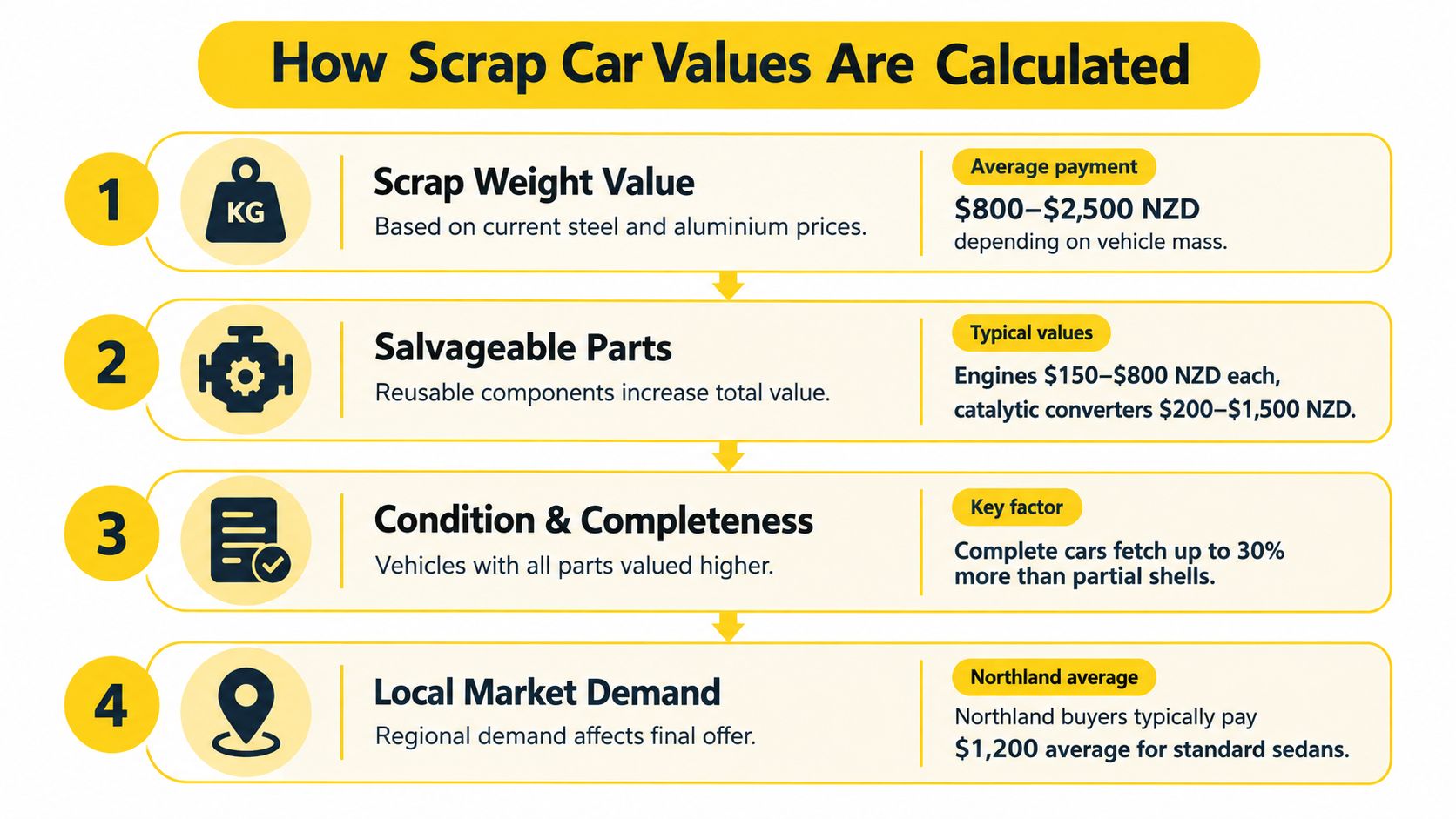
A rough shell and a tidy-looking car are not the same asset. Scrap car pricing comes from what can be recovered, what can be loaded without drama, and what still has real parts demand, so two similar vehicles can land in very different value brackets.
The offer is built from more than metal
People get this wrong when they focus on weight alone. NZTA's cancellation guidance covers end-of-life categories such as permanently useless vehicles, destroyed vehicles, insurer write-offs and vehicles removed permanently from New Zealand (MR15 cancellation guidance). Those labels describe the vehicle's status in the system, not whether it still has parts worth recovering.
A complete car can still bring more money because it is easier to strip, safer to load, and more likely to have usable components. A stripped shell can be a headache if it is non-rolling, contaminated, or awkward to transport. That is why quotes change when a car has been gutted, fire-damaged, flood-damaged, or left sitting with missing parts.
Good pricing is transparent pricing. Ask what the buyer is paying for, parts, metal, loading ease, or paperwork risk, because those are the levers that move the number.
For Northland sellers, local conditions matter too. A pickup that looks simple from the roadside can take extra equipment, extra time, or extra fuel to pull out of a rural driveway. If you want a clear breakdown, compare the structure at Price for Scrap Car with any offer that only gives you a single figure.
Navigating NZTA Requirements and Paperwork
A scrap-car handover goes wrong when the seller treats ownership transfer and deregistration as the same job. NZTA handles them separately, and if you miss that split, the old registered person can keep getting the fallout after the car has already left the driveway.
What has to happen on pickup day
Once the vehicle is sold or disposed of, the change of registered person needs to be notified straight away. The buyer also has to do their part so the record is updated properly (Vehicle ownership). If that step is skipped, tolls, tickets, or licence-related charges can still land in the seller's name.
Get the basics ready before the truck arrives, including a New Zealand driver licence, the plate number, and the full name and address of the person or organisation taking the vehicle (Motor vehicle help). If the paperwork is vague or half-finished, NZTA can still send invoices to the registered person. That is how sellers end up chasing a problem they thought was already gone.
Selling, disposing, and deregistering are different jobs
NZTA says a vehicle should be deregistered when it is not roadworthy anymore, but owners should not just cancel registration if they are selling the vehicle (Selling a vehicle). If the vehicle goes to a wrecker, the wrecker handles the registration cancellation, although the seller may cancel it before the sale instead (Selling a vehicle).
Once registration is cancelled, the vehicle cannot legally be driven on public roads unless it is re-registered, so cancellation is the wrong shortcut for a normal sale (Selling a vehicle). Sellers who have sat on an old car for months need to get this right, because the main risk is not the payout, it is staying tied to a vehicle they no longer control. For a clean handover, the process explained in NZTA Registration Change of Ownership is the checkpoint to use before the tow truck turns up.
Scheduling Pickup and Receiving Payment
Once the quote is agreed, keep the pickup simple, direct, and documented before the truck starts loading. A scrap-car collection should not turn into a roadside argument. Get the payment sorted, confirm the paperwork, and only then let the vehicle go.
Cash, bank transfer, and timing
Cash gives you immediate closure. An instant bank transfer gives you a clear record. Either is better than a promise that arrives later, after the car is already gone.
Ask for payment before loading starts, not after the vehicle is half on the truck. That keeps the seller in control and removes the usual excuse-making. If the car is a shell, missing parts, or hard to reach, expect the price and the pickup to reflect that reality upfront.
What the seller should expect
A tidy collection day should look like this:
- Confirm the vehicle details first. Plate number, condition, and location should already match the quote.
- Have the keys and access ready. If the truck cannot reach the vehicle, the pickup slows down fast.
- Finish the NZTA transaction on the spot. Do not leave it for later.
- Keep your proof. Save the payment record and the ownership confirmation.
NZTA's ownership notification rules keep the registered person tied to the vehicle until the transaction is recorded, so finish it on the spot. That is the part sellers miss when they focus only on the payout. A clean handover means the money is received, the transfer is filed, and the truck leaves without leaving the seller attached to an unwanted car.
Why Choose a Licensed Local Dismantler
A licensed local dismantler is worth more than a vague phone number because the job is not just hauling metal away. It is handling fluids, batteries, tyres, airbags, and the paperwork in one controlled handover, so the seller does not end up cleaning up loose ends.

Local knowledge reduces mistakes
Whangārei and the wider Northland catchment bring practical problems that a distant buyer often underestimates. Rural access, loading equipment, and vehicle condition all affect how a car comes out of a property, and a local operator is better placed to handle that without drama.
That matters even more for vehicles with unusual end-of-life status, because a deregistered car is not automatically worthless. NZTA's cancellation guidance shows that these vehicles can still contain reusable parts, recoverable metals, or hazardous materials that need different handling. A proper dismantler sees that value and prices accordingly.
One option that keeps the handover clean
If you want a local example of this model, Car Removals Whangarei buys unwanted vehicles in Northland and completes NZTA ownership notifications at pickup. That is the kind of process that protects the seller, because the vehicle leaves, the payment lands, and the record is closed out on the same day.
A straight transaction is worth more than a big promise. If the buyer cannot explain the paperwork, the quote is the least of your worries.
- cash for scrap cars
- scrap car removal
- sell car Whangarei
- vehicle removal Northland
- sell non running car