· Car Removals Whangarei
Cash Car Removal in Whangarei What You Get Paid
A failed WOF, a deregistered car or an accident-damaged vehicle can sit in a Whangarei driveway for weeks, especially when the nearest practical disposal option feels far away. On a Northland farm, the problem may be a rusted ute that no longer rolls. In town, it may be a non-running hatchback blocking the garage.
Cash car removal gives you another option besides advertising privately, paying for transport or arranging disposal yourself. A dismantler assesses the vehicle, provides a firm offer, collects it and manages the next stage, including parts recovery, recycling and the required NZTA notification.
By the end of this guide, you'll understand which vehicles qualify, why two apparently similar cars can receive different offers, how pickup works around Whangarei and rural Northland, and what paperwork should be completed before the vehicle leaves your property.
Table of Contents
- Introduction to Cash Car Removal in Whangarei
- What Cash Car Removal Means and How It Works
- How Pickup Towing and NZTA Paperwork Happen on Site
- How Your Payout Is Calculated and What Price to Expect
- Which Vehicles Qualify From Daily Drivers to EVs and Trucks
- Whangarei and Northland Coverage Timing and Preparation Tips
- Your Next Steps for a Fast Compliant Cash Car Removal
Introduction to Cash Car Removal in Whangarei
A farmer near Dargaville may have a rusted Navara sitting beside a shed, unable to roll and too costly to repair. In Whangarei, a landlord might need an abandoned hatchback cleared from a rental property before the next tenant arrives. In both cases, the problem involves more than finding a tow truck. The owner needs a fair assessment, safe removal and a clear way to close the vehicle's paperwork.
A private sale can leave you waiting for inspections, bargaining and transport arrangements. Paying separately to move a worthless shell may turn disposal into another bill. Cash car removal combines collection with a purchase offer, allowing the vehicle to leave the property while the dismantler handles the practical steps connected with recovery and disposal.
The service can suit complete daily drivers, damaged insurance write-offs, vans, 4WDs, trucks, machinery, non-rolling shells and hybrid or electric vehicles. A dismantler checks more than whether the engine starts. Doors, panels, engines, gearboxes, wheels, interior parts and specialist components may retain value. If reusable parts have little demand, the remaining vehicle may still be processed for recyclable metal.
Northland access can shape the job. A car on a narrow farm track, soft paddock or sloping driveway may need different loading equipment from a vehicle parked on a Whangarei street. Clear access details help the remover plan the pickup and avoid surprises.
The practical outcome: the vehicle is removed, the payment is settled and the transfer paperwork is dealt with at the point of pickup.
New Zealand has a steady flow of vehicles reaching the end of their useful service. Older cars may be difficult to sell privately because buyers expect repairs, transport and registration work. A dismantler can still find value through parts recovery, depollution and metal recycling.
Cash car removal is therefore a liability and compliance solution as well as a transport service. It connects valuation, on-site collection and administration, so an unwanted vehicle can move into the appropriate recovery channel.
What Cash Car Removal Means and How It Works
Cash car removal is a three-part process: valuation, collection and administration. The valuation estimates what the vehicle may return through reusable parts and recoverable materials. Collection moves it safely from your property. Administration covers the ownership notification and records connected with disposal.
A private buyer usually wants a car they can drive or repair for personal use. A dismantler assesses a wider range of value. A blown engine can make a vehicle unsuitable as a daily driver, while its transmission, wheels, catalytic converter, electronics, seats or body panels may still be useful. If demand for those parts is low, the offer may depend mainly on the vehicle's weight and recyclable metal.
A scrap-yard drop-off follows a different arrangement. You organise transport, deliver the car and discuss its material value at the yard. With cash removal, the buyer coordinates collection and includes loading, towing, depollution and dismantling costs when preparing the offer.
Your payout reflects the combination of reusable parts and recyclable materials. Roadworthiness is only one part of the assessment.
Completeness also affects the valuation. A complete vehicle usually provides more components to recover than a stripped shell, even when both contain similar steel. Safe processing matters because end-of-life vehicles can contain fluids, fuel systems, batteries, tyres, airbags and refrigerants. These items require controlled handling before further processing, as described in NZ vehicle dismantling and recycling guidance.
The process normally starts with the vehicle details provided by phone. The dismantler then makes an offer and arranges collection. At pickup, the vehicle is checked against the information supplied, the required paperwork is completed and payment is made before loading if the agreed conditions remain unchanged.
How Pickup Towing and NZTA Paperwork Happen on Site
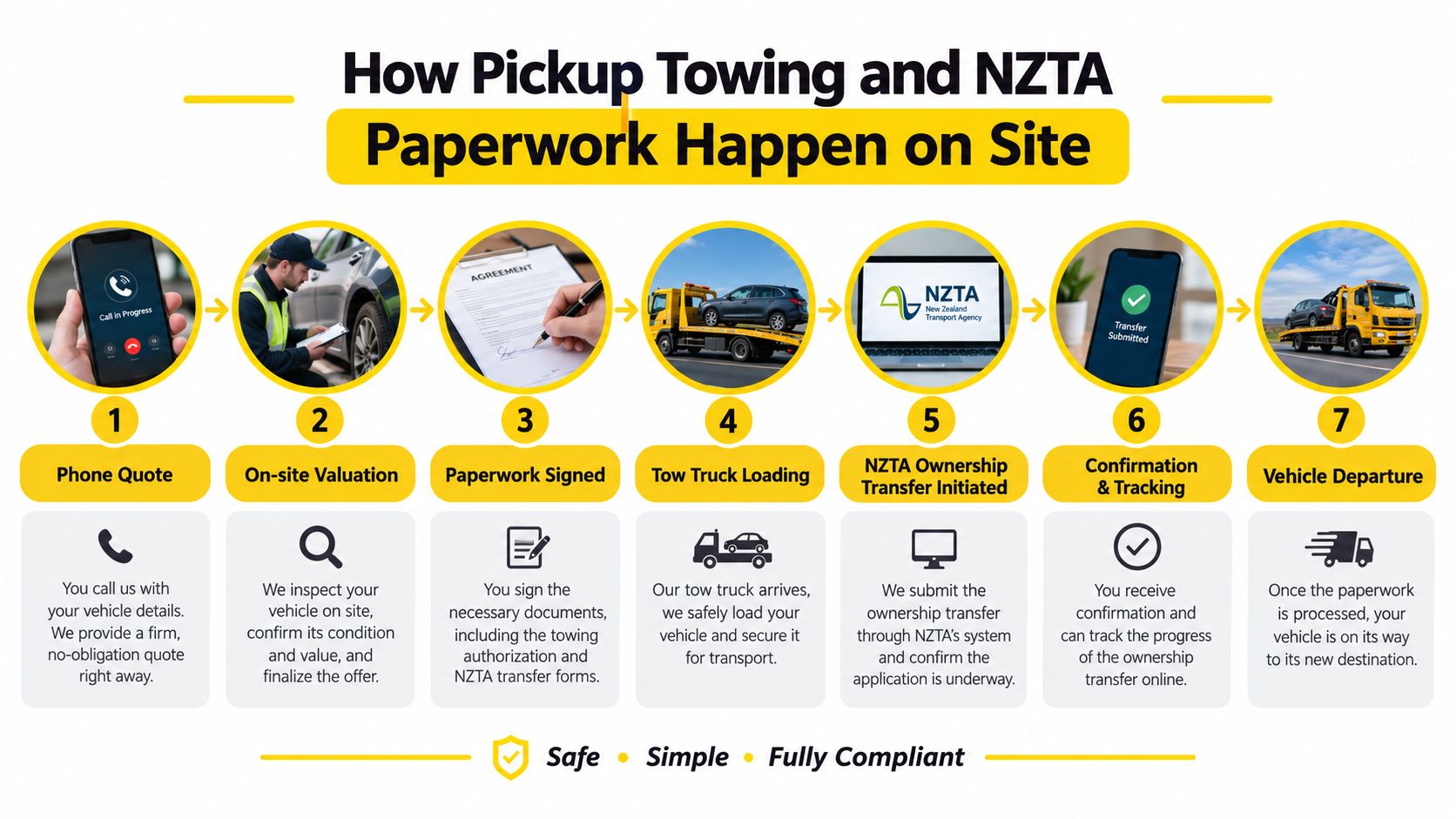
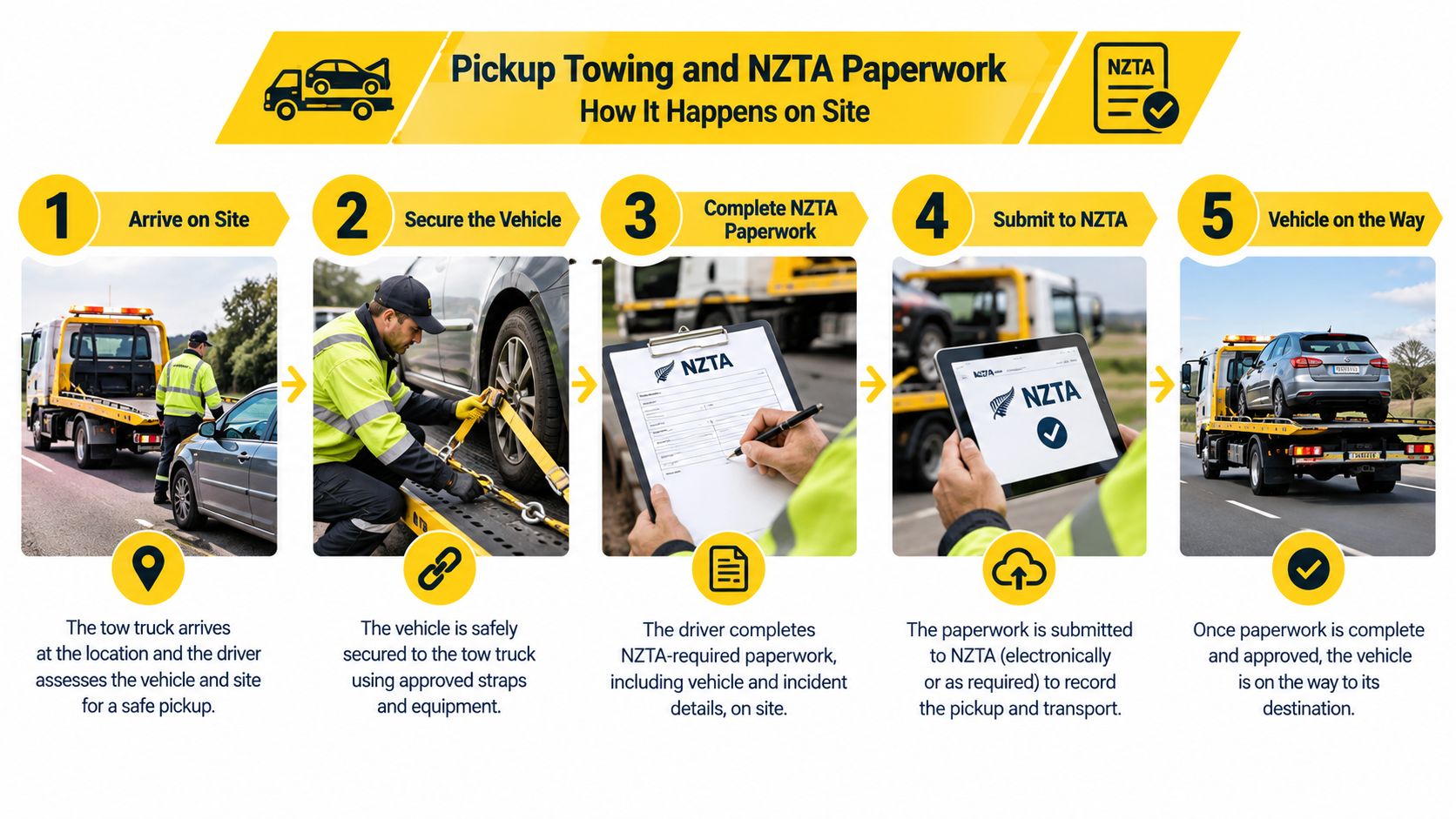
A failed car can be sitting beside a rural shed, behind a locked gate or on ground that a standard tow truck cannot reach easily. Accurate details help the remover plan the right loading method. Provide the make, model, approximate year, location and condition. Say whether the vehicle starts, rolls and steers, and mention locked wheels, missing panels, stripped parts, accident damage, flood or fire damage, narrow access and uneven ground.
Before the truck arrives
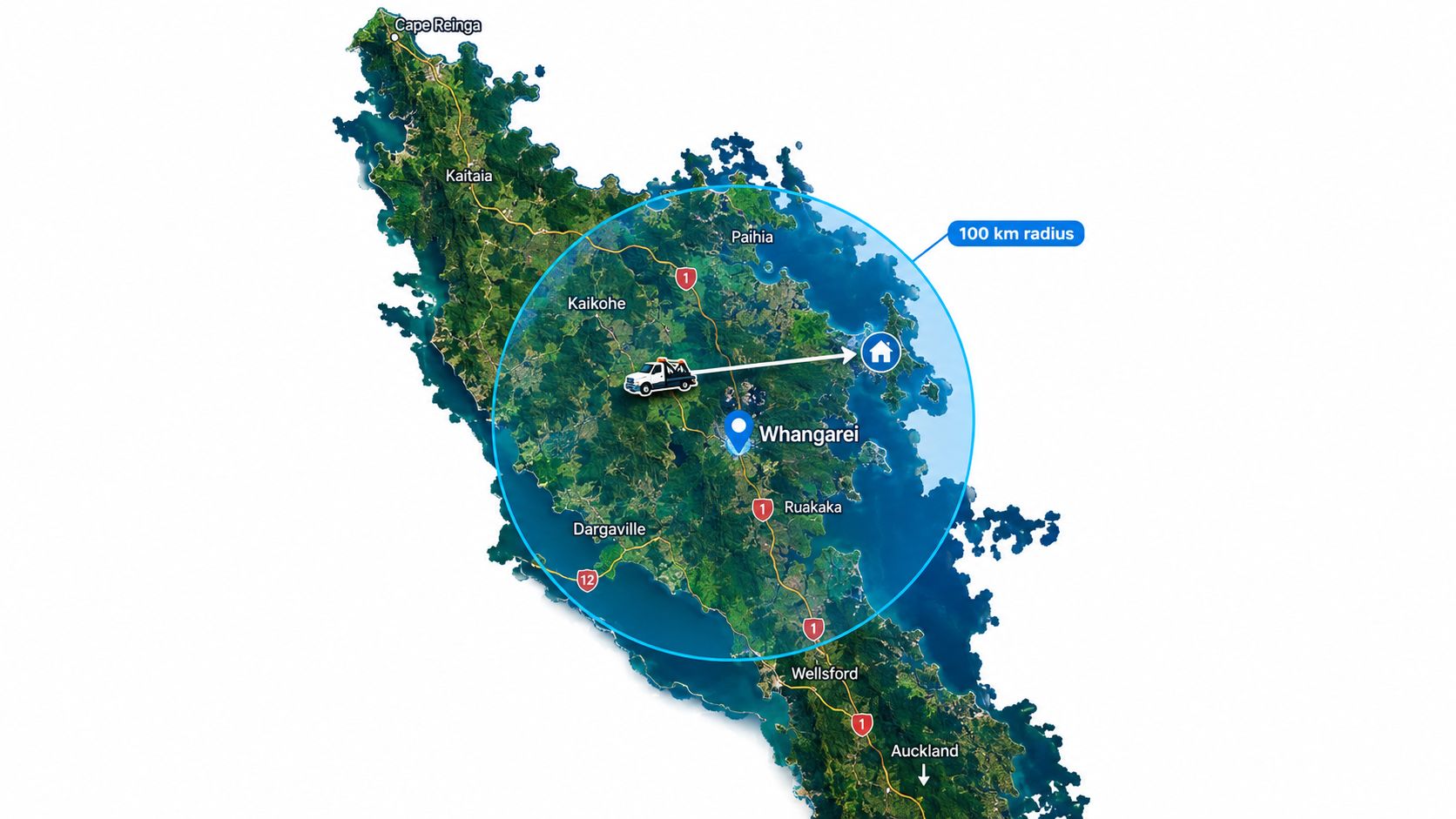
Whangarei city collections can often be arranged for the same day. Rural Northland pickups are usually fitted around scheduled runs, so confirm the address, preferred time and whether someone needs to attend. The stated service area includes free towing within roughly 100 km of Whangarei.
Have the keys ready if available, even when the vehicle does not run. Remove belongings from the cabin, boot and storage areas. Keep identification and vehicle details nearby. Clear blocked gates, parked machinery and other obstacles, and check that the truck can approach without crossing unstable ground.
At the property
The driver compares the vehicle with the information supplied by phone and confirms the agreed offer. A car that rolls and steers can be loaded differently from a non-rolling vehicle. Explaining the condition beforehand reduces delays and prevents an unsuitable truck or loading setup from arriving.
The NZTA notification is part of the handover, not an optional extra. The seller provides the plate details and the recipient's full name and address, while the authorised person confirms the vehicle can legally be disposed of. Estate, business or insurance vehicles may require supporting authority or documents.
The change-of-registered-person record confirms that a sale or disposal was notified. It does not, by itself, prove legal ownership. Treat the paperwork like a receipt for responsibility changing hands: keep the confirmation and any agreed payment record after the vehicle leaves.
Payment and departure
Under the stated service terms, payment is made by cash or instant bank transfer before loading. Once the transfer notification is completed, the payment is recorded and the vehicle is secured, the seller has a clear trail showing that removal took place. That helps close the liability window instead of leaving the former keeper to complete the administrative task later.
The collection itself includes loading and securing the car for transport, with extra handling agreed for damaged or immobile vehicles. See the guide to professional car wreckers' pickup procedures for a closer look at how that work is arranged on site.
How Your Payout Is Calculated and What Price to Expect
A blown-engine Hiace and a stripped Hiace may occupy the same driveway, yet their offers can differ sharply. The first may still have a gearbox, doors, seats, wheels and electronic components worth recovering. The second may contribute mainly steel and require more sorting before recycling.
A cash car removal quote is therefore based on several connected factors: parts demand, metal value, vehicle completeness, condition, location and handling cost. The dismantler is working out what the vehicle can provide and what it will cost to collect, process and depollute it. Rural access in Northland can matter too, particularly if loading needs extra equipment or time.
The first pricing question is reuse. A sought-after model with a usable engine, gearbox, panels, lights, wheels or interior can create several recovery opportunities. Fire damage, missing components and heavy corrosion reduce that potential. A vehicle that cannot supply many usable parts is valued more heavily for its remaining materials.
Metal weight and type form another part of the calculation. NZ market examples describe whole-scrap pricing around NZ$0.21 per kilogram and heavy steel around NZ$0.25 per kilogram, while some yard price sheets show complete cars offered as flat sums around NZ$100 to NZ$120 (NZ scrap metal pricing context). These examples use different valuation methods, so they do not guarantee the amount for a particular vehicle.
The main quote signals
| Vehicle Factor | Higher Value Signal | Lower Value Signal |
|---|---|---|
| Completeness | Engine, gearbox, panels, interior and wheels remain | Major parts have already been removed |
| Make and model | Strong local demand for reusable components | Limited demand for the vehicle's parts |
| Condition | Repairable damage or usable mechanical assemblies | Severe fire, flood or structural deterioration |
| Vehicle type | Complete ute, van, 4WD or specialist vehicle | Lightweight or heavily stripped shell |
| Location | Easy access near a regular collection route | Difficult rural access or extra loading requirements |
| Battery and systems | Safe, identifiable components with recovery value | Damaged or uncertain high-voltage systems |
For a practical explanation of the factors behind an offer, read this guide to what affects a scrap car price. It helps separate the vehicle's recoverable value from the work required to collect it.
A clear quote should state whether towing is included, when payment is made, and whether the vehicle's condition or access could change the offer. Ask these questions before agreeing, just as you would check what is included in a repair estimate.
Send accurate details and clear photographs when requested. Show missing parts, accident damage, difficult access and the vehicle identification details. Honest information gives the dismantler a usable picture before travelling to a rural property or roadside location.
The final payout belongs to the individual vehicle. An advertised range indicates the type of cars the service handles, not a promise that every old vehicle will receive its highest figure.
Which Vehicles Qualify From Daily Drivers to EVs and Trucks
A car can be too worn for another WOF and still suit cash car removal. The practical test is whether it can be collected safely and whether its parts, metal or specialist systems have recovery value. That includes vehicles parked on Northland farms, behind sheds or at coastal properties where corrosion has continued unnoticed.
Cars and family vehicles
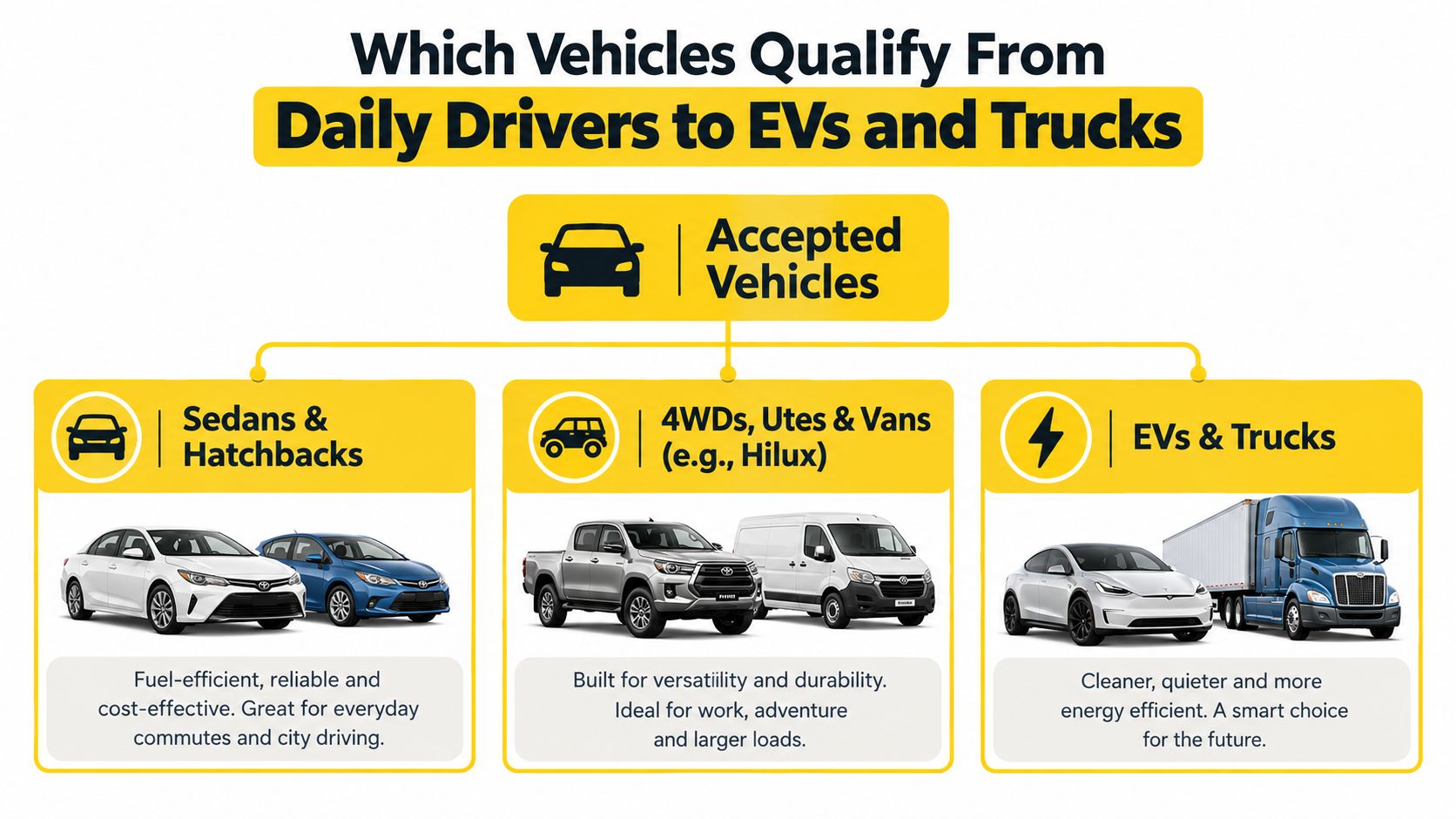
Sedans, hatchbacks, wagons and people movers may qualify as failed-WOF cars, non-runners or accident-damaged vehicles. A repair bill can exceed the car's useful value, while its doors, lights, seats, wheels and mechanical assemblies may still help another vehicle. In that situation, removal deals with the unwanted car and separates reusable material from waste.
Utes, 4WDs and vans
Work vehicles often stay on Northland roads long after a passenger car would have been replaced. Utes and vans may have worn drivetrains, rusted trays or tired interiors, yet still contain useful engines, gearboxes, axles, panels or fittings.
A Toyota Hilux, Ford Ranger, Nissan Navara or Toyota Hiace may therefore attract parts interest even with a blown motor. A farm ute left beside a Te Kuiti property through two winters may need more assessment for rust and access than a complete vehicle on a Whangarei driveway. Coastal salt can create a similar problem around Opua, especially underneath the body and around brake or suspension components.
Heavy vehicles and machinery
Light trucks, buses, tractors, diggers and farm implements need an assessment of their dimensions, condition and loading requirements. A machine that will not roll may require different equipment from a complete ute. Tell the remover about slopes, soft ground, narrow tracks and locked wheels before collection, so the visit can be planned safely.
Damaged, abandoned and electrified vehicles
Flooded, fire-damaged and insurance write-off vehicles can qualify, but their condition affects handling and depollution. A vehicle abandoned on private land also needs approval from its owner or the authorised property manager. NZ Police provide information for suspected abandoned vehicles through 105, so an unwanted car cannot be treated as available for removal (NZ Police abandoned-vehicle information).
Hybrids and EVs require high-voltage isolation before dismantling. Their batteries may have recovery value, depending on condition and demand, but a damaged pack needs specialist handling. Traditional lead-acid batteries are widely recycled in New Zealand, while EV and hybrid battery recovery follows different practical requirements (AA information on EV battery recycling). Provide honest details about damage, battery status and access before a truck is dispatched.
Whangarei and Northland Coverage Timing and Preparation Tips
A pickup in Whangarei may be simple, while a rural Northland collection can require careful planning. A car beside a city driveway is easier to load than one behind a locked farm gate, down a narrow track or resting on soft ground without wheels. Give the remover the exact location and access conditions during the first call. That information helps the crew choose suitable equipment and avoid delays.
Collections around Whangarei are generally arranged for the same day when the schedule allows. Rural pickups are fitted around regular routes, with operating hours stated as 7am to 7pm. Coverage reaches 46 suburbs and towns from the Kioreroa Road yard, and free towing is offered within roughly 100 km, according to these Northland coverage and collection details.
Prepare the site, not the vehicle
An end-of-life car does not need cleaning or repairs before collection. The useful preparation happens around the loading area. Clear a safe route from the vehicle to the road, especially on farms or private properties where trailers, machinery, bins, gates and low branches may restrict the truck.
Tell the remover if the vehicle is on a slope, soft ground or a narrow track, or if the site has limited turning space. These details affect whether the crew can load it directly or needs different recovery equipment. If access depends on a gate, arrange entry before the agreed time.
Keep authority and ownership information available where another party is involved, such as a landlord, estate, insurer or business. This helps prevent a dispute at collection and supports the required paperwork. A private-property clearance also needs the owner or authorised manager's approval.
Car Removals Whangarei's own tow fleet can help coordinate collection without waiting for a separate transport contractor. That can matter when a damaged car blocks a driveway, a rural shell occupies working space or a landlord needs an unwanted vehicle removed discreetly.
The compliance work continues after loading. Vehicles need depollution before further processing, including controlled removal of engine oil, transmission fluid, brake fluid, coolant, fuel, batteries, tyres, airbags and refrigerants. The process is outlined in this guidance on end-of-life vehicle depollution. Cash car removal therefore addresses site access and environmental liabilities, not only towing.
Your Next Steps for a Fast Compliant Cash Car Removal
Before you call, make the decision around your local situation, not just the vehicle itself. A car beside a steep driveway in Whangamomona or behind a locked farm gate north of Kaitaia may need a different collection plan than a roadside hatchback.
Will removal solve the property problem? Share the vehicle type, condition and location, including whether it is a non-runner, farm ute, truck, machinery item, hybrid or EV. The right question is whether it can be collected safely without leaving a liability on the property.
What makes the quote workable? Give an accurate description and photographs if requested. Ask whether towing is included, whether the offer remains fixed at pickup and when payment is made. That clarity matters when a rural collection requires extra planning.
What must be completed before the vehicle leaves? Confirm that the seller-side NZTA change notification will happen on site. Keep the plate details, recipient information and your authority to dispose of the vehicle ready.
A licensed dismantler should explain the offer, disclose loading conditions, pay under the agreed terms and handle hazardous components through controlled recycling. You should receive a pickup record and notification confirmation, rather than inherit the paperwork later.
Car Removals Whangarei provides firm quotes, free towing within roughly 100 km, on-site NZTA notification and compliant dismantling for cars, utes, vans, trucks, machinery, hybrids and EVs. Arrange the location and vehicle details, then visit Car Removals Whangarei for a removal quote.
- cash car removal
- car removal Whangarei
- cash for cars
- scrap car removal
- NZTA car disposal