· Car Removals Whangarei
Car Body Removal Made Simple: A Practical Guide
If there's a dead ute on the farm, a flood-damaged wagon in the driveway, or a shell that's been sitting too long to be worth fixing, the job usually feels simple on the surface. Get it gone, clear the space, move on.
In practice, car body removal has two separate outcomes that need to happen on the same day. The vehicle has to leave the property, and the ownership record has to leave your name so the problem doesn't come back as liability, paperwork, or a blocked yard later on.
Table of Contents
- Why Car Body Removal Is More Than a Tow
- Getting the Vehicle and Paperwork Ready
- What Happens When the Truck Arrives
- Inside a Licensed Dismantling Yard
- Why Two Similar Cars Get Very Different Offers
- Ending Liability the Right Way After Pickup
Why Car Body Removal Is More Than a Tow
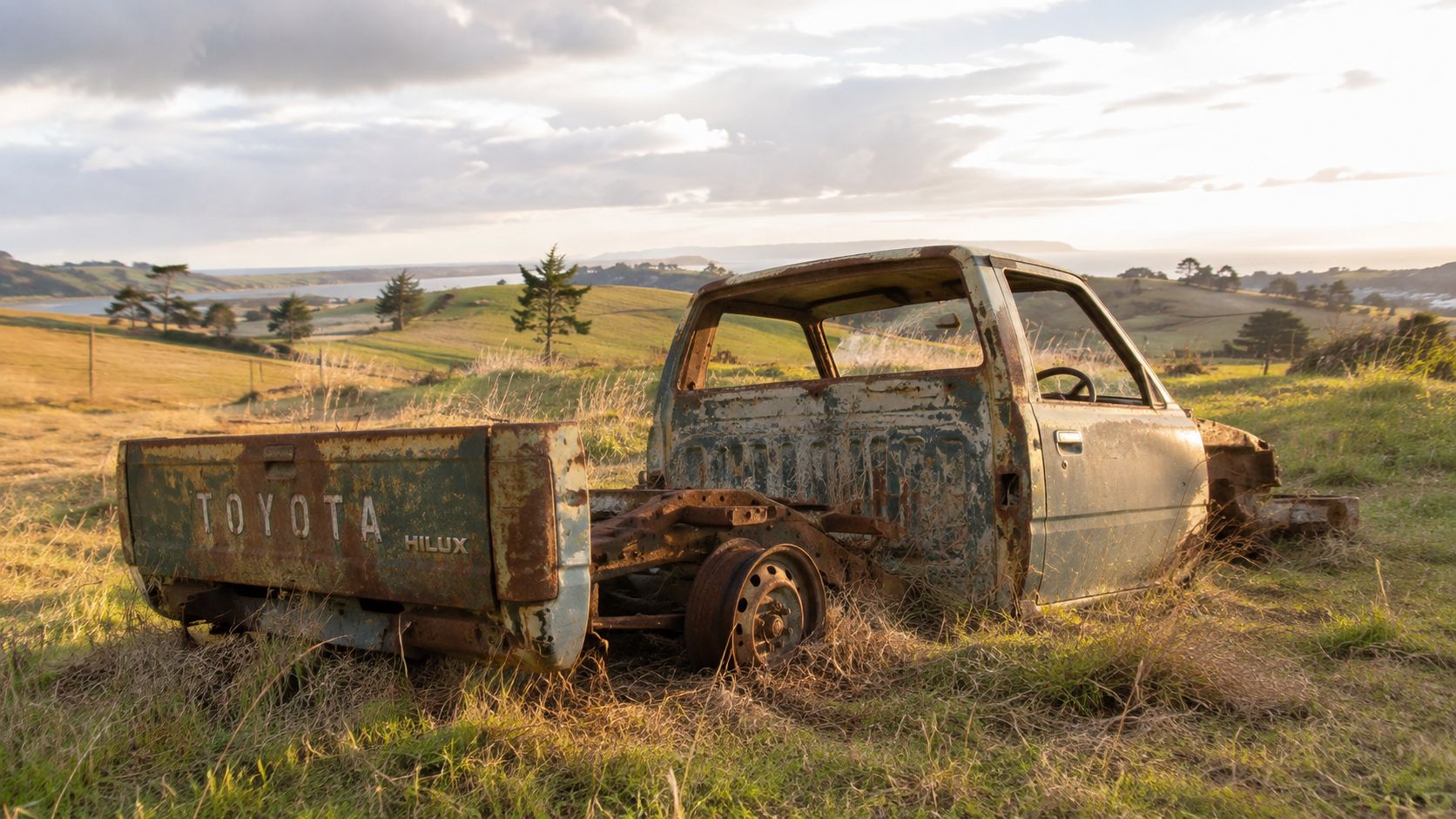
A rusted Hilux chassis half sunk into a paddock looks like a towing problem until someone has to deal with what's left behind. A flood-damaged hatchback sitting beside a Whangārei driveway is the same story. The truck's arrival is only half the job.
Car body removal is really a handover from one owner to a recycling chain. New Zealand's vehicle end-of-life system sits inside the Waste Minimisation Act 2008, and the MTA-ARA describes vehicle recycling as a mature industry that recovers usable parts and materials from old vehicles, not just scrap metal (MTA-ARA industry statistics). That matters because the shell being taken away is usually the start of dismantling, fluid draining, parts recovery, and metal sorting.
Practical rule: if the tow happens but the paperwork doesn't, the problem hasn't really left.
That split matters in Northland because many vehicles are non-runners, missing WOF, or parked where they're slowing down the property. The physical removal clears space, but the legal removal clears responsibility. New Zealand's registered-person system is the formal mechanism, and until that change is completed, liability doesn't just disappear with the truck.
What the job actually solves
A proper pickup removes the body, checks the ownership details, and sets the vehicle up for safe dismantling. That's very different from a simple scrap tow where nobody cares what's inside the shell or who still sits on the record. The shell can be worthless as transport but still valuable as parts, metals, and recoverable components.
The rest of this guide keeps those two jobs together. First comes the practical prep, then the truck arrival, then what a licensed yard does after collection, and finally how the paperwork ends your side of the responsibility.
Getting the Vehicle and Paperwork Ready
The fastest pickups are the ones where the seller has already done the boring bits before the truck rolls up. That usually means clearing the cab, finding the right documents, and making sure the vehicle can be reached without reversing through half a farm gate or moving three trailers first.
Start with the small things people forget. Check the glovebox, centre console, under the seats, and the parcel shelf for personal items, garage remotes, toll tags, chargers, and old receipts. If the car still has aftermarket gear you want to keep, pull it out before collection, because once the vehicle is gone, those parts are hard to recover cleanly.
What to have ready on the morning
A good operator will usually want enough information to confirm the vehicle and the authority to sell it. That means photo ID, the vehicle's location, and a clear answer on whether it rolls, steers, or has locked wheels. If the vehicle is on a rural block, behind a locked gate, or buried in a cluttered yard, say so early. It saves a wasted trip and stops the driver arriving with the wrong equipment.
If you want the rego plates returned, mention that before pickup. Some shells still wear plates, some don't, and on stripped or abandoned vehicles there may be nothing left to hand over. Keep the plates separate if you've already removed them, and keep any ownership details with you so the paperwork can be done on-site without hunting through drawers.
Clear access is worth more than people think. A truck can winch a dead car, but it can't waste time finding the car first.
For older or badly damaged vehicles, the access question matters as much as the paperwork. If the car is buried behind a shed, sunk in soft ground, or missing wheels, that changes the loading method and the time on site. It also changes whether the operator brings a tilt tray, winch gear, or a different lift plan.
What to tell the operator before they arrive
Give the location, the condition, and the contact details in one go. If the car is non-rolling, has no keys, or has been partially stripped, say that plainly. A clean, complete vehicle and a shell with missing parts are not the same job, and a serious operator will price them differently.
For practical scheduling and pickup flow, the process outline on how it works is the sort of detail sellers should be checking before the truck arrives. The whole point is to make sure the driver can load, pay, and complete the handover without friction.
What Happens When the Truck Arrives
A good arrival feels calm, not theatrical. The driver usually starts with a visual check, confirms the vehicle details, and matches what was described on the phone against what's sitting on the property. If the car is as described, the quoted figure should stand, because the value was already set from parts demand, kerb weight, and recoverable material, not from guesswork in the driveway.
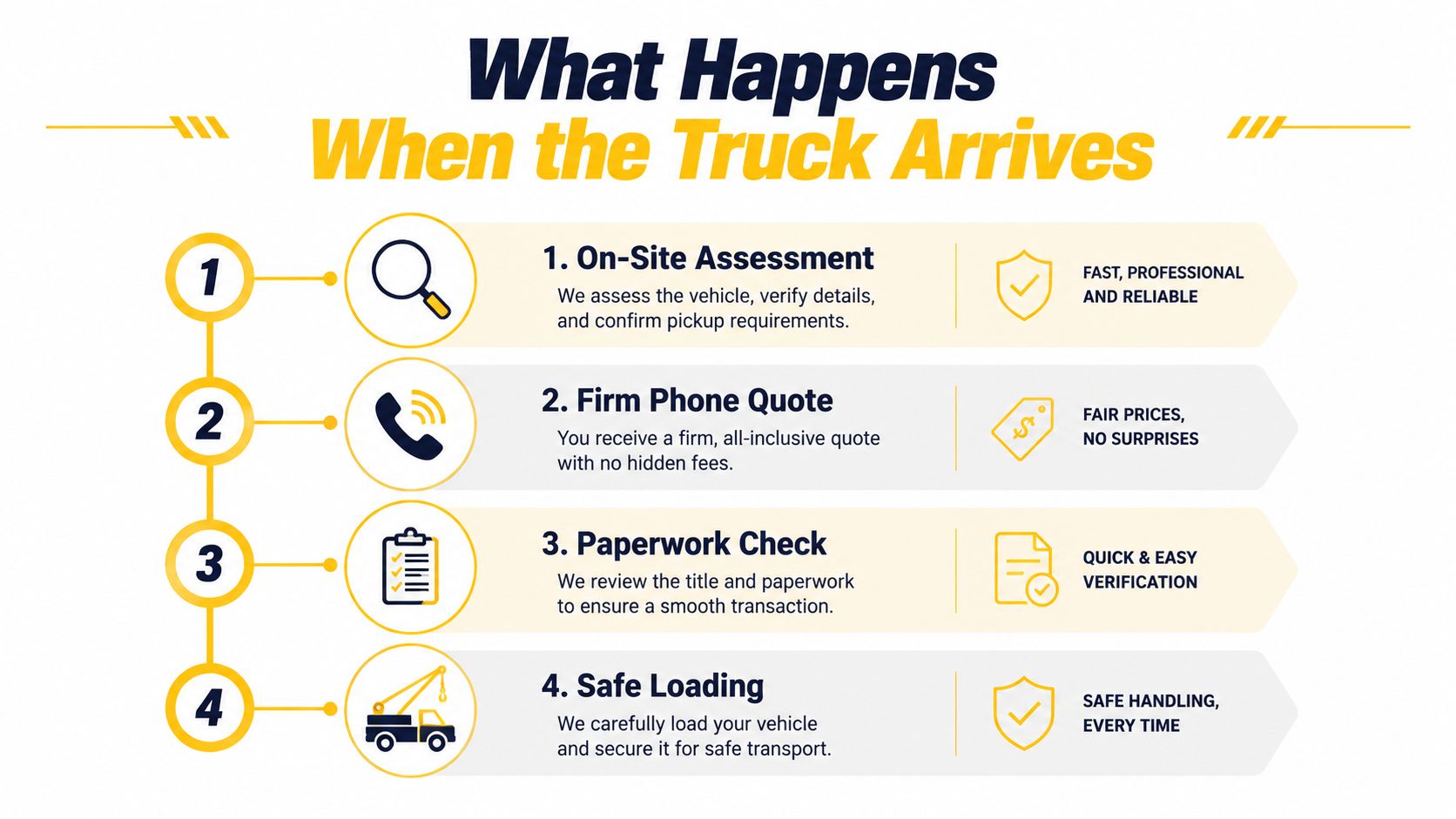
The pickup sequence that usually works
Payment comes first, then loading. That matters because once the shell is on the truck, nobody wants to argue about a quote while machinery is parked across the drive. Cash or instant bank transfer keeps the handover clean, and the paperwork moment can happen before the winch line tightens.
A clean sedan in a Port Road driveway is usually straightforward. A non-rolling shell on a rural block near Maungaturoto is a different story, because the operator may need to free space, check the angle, and set the truck so the winch line doesn't load the shell sideways. The lift itself should be controlled, not rushed, because binding or a bad angle can damage what's left of the vehicle and slow the job down.
If the vehicle doesn't roll, say so early. That single detail changes the loading plan more than most people expect.
Same-day Whangārei city collections and next-day Northland runs are usually about route planning, access, and fleet control rather than luck. An owned tow fleet makes those bookings easier to manage because the operator isn't waiting on a third party to appear. That's one reason scheduled pickups tend to move faster than ad hoc subcontracted jobs.
Why the quote still matters at the truck
The quote isn't just about whether the car still starts. It reflects the likely recovery path, how much of the body shell can be reused or recycled, and whether the vehicle still has value in parts that matter to the yard. That's why the pickup moment is usually brief when the vehicle matches the description. The value was already worked out before the truck left base.
Inside a Licensed Dismantling Yard
A licensed yard doesn't just crush cars. It strips risk out of the vehicle first, then turns the rest into parts, metals, and separated waste streams. That's the part many never see, and it's the reason the removal job has to be handled by someone who knows the downstream process.
Depollution happens before the shell is reduced
Accepted dismantling guidance starts with the 12V battery isolated first, then refrigerants, then fuel handled in a ventilated area, then other fluids and hazardous items, including airbag systems (vehicle dismantling procedures). That order exists for a reason. You don't want an energised, pressurised, or fuel-filled vehicle being cut, crushed, or stripped without those hazards removed first.
The practical work that follows is just as important. Dismantling guidance prioritises reusable parts and valuable components before the shell is sent on, because accessories, doors, glass, interior trim, drivetrain items, and wiring tend to hold the highest value before final body recovery. The shell itself is the last stage, not the first.
Why yard controls matter
Fluid draining should happen on a sealed, contained surface with labelled containers, because spills and residue don't stop being the operator's problem just because the vehicle has been picked up. New York's dismantling regulation is a strong technical benchmark here, requiring fluid draining and crushing on a bermed, sealed asphalt or concrete surface, with daily cleaning and closed, labelled containers for fluids, while lead-acid batteries are stored off the ground and covered (New York dismantling regulation). That isn't New Zealand law, but it shows the standard of control a compliant yard needs to mirror.
A clean pickup is only half the environmental story. The yard has to keep the mess from moving downstream.
The reason this matters to the seller is simple. If the operator is licensed and handles depollution properly, the vehicle can be quoted on the value that remains in parts and metal recovery, not just on whether it still drives. That's the practical difference between a real dismantler and someone only chasing a tow fee.
Why Two Similar Cars Get Very Different Offers
Two non-running cars can look almost identical from the street and still land very different offers. That's not random, and it's not just the steel price. The difference usually comes from what can be recovered after pickup, how complete the shell is, and whether the vehicle still carries parts the yard can resell.
The benchmark from mature salvage markets helps explain the logic. North American recyclers processed 12.3 million end-of-life vehicles in 2021, and the U.S. auto salvage industry recycled 95% of vehicle materials by weight in 2022, totalling 25 million tons (auto salvage industry statistics). Those figures aren't New Zealand quotes, but they show why recovery value is built around parts, metals, and materials instead of the simple question, “does it run?”
What lifts or drops a quote
| Pricing factor | Effect on offer | Why it matters |
|---|---|---|
| Parts demand for the make and model | Lifts the offer when demand is strong | Reusable parts can be more valuable than scrap metal |
| Complete shell versus stripped shell | Lifts the offer when the vehicle is complete | Missing high-demand items reduce recoverable value |
| Kerb weight and metal yield | Lifts or lowers the offer depending on the shell | Heavier recoverable metal usually gives more recovery value |
| Hybrid or EV battery condition | Can lift the offer, or add handling complexity | Traction batteries change both value and safety work |
| Current steel pricing | Moves the metal component of the quote | Scrap metal value is only one part of the payout |
The contrarian part catches a lot of sellers out. A badly damaged vehicle can be worth more when it's still complete than when it has already been stripped. If the doors, trim, wiring, or drivetrain bits have been pulled off, the shell may weigh the same, but the recoverable value drops because the yard has less to resell.
The Northland reality behind the offer
Older utes, 4WDs, and light commercial vehicles often stay in demand for parts longer than people expect. That's why a rough Hilux, Ranger, Navara, or Hiace can still have a meaningful offer even when it won't move under its own power. For an example of how some operators frame that pricing logic, see cash for scrap cars near me, where the key point is the same, value comes from what can be recovered.
Ending Liability the Right Way After Pickup
The truck leaving the driveway doesn't end the job if the ownership record still sits in your name. In New Zealand, the change of registered person process is the relevant official pathway, and Waka Kotahi's position is clear enough, the registered person remains responsible until the change is completed. That's why same-day paperwork at pickup is more than a convenience.
What should happen at handover
If both parties are present, the ownership change can be recorded immediately through the online process. Keep a copy of the details, the date, and the identity of the vehicle or shell that left your property. If the vehicle is a write-off, a deregistered shell, or an abandoned unit on rural land, verbal handover alone is not enough to close the loop.
For abandoned vehicles on private, rural, or rental property, the right authority matters as much as the truck. The operator needs clear permission to remove the vehicle, and there should be a disposal record that shows where it went and why it was taken. A clean record matters because you don't want future questions about who authorised the removal or who still had responsibility when the vehicle departed.
What to keep after pickup
- Proof of transfer: Keep the details of the ownership change and the pickup date.
- Vehicle description: Save the rego, chassis details, or any identifying information that was used.
- Authority record: Keep evidence that you authorised the removal if the vehicle was not plainly yours to dispose of.
- Receipt or payment note: Hold onto any proof that the handover was completed.
If the paperwork doesn't show the change, the law usually still sees the old owner first.
For sellers who need a concise version of the official steps, the FAQ is the place to check the normal questions around pickup, authority, and disposal. The clean finish is simple, the shell leaves, the record changes, and your name comes off the vehicle properly.
If you need a Northland pickup that handles both the vehicle and the paperwork side properly, Car Removals Whangarei can remove cars, 4WDs, vans, trucks, and machinery, then complete the ownership notification at pickup. Visit Car Removals Whangarei to arrange a removal that's set up to clear the shell and end the liability in one visit.
- car body removal
- scrap car removal
- cash for cars NZ
- NZTA ownership transfer
- Whangarei car removals